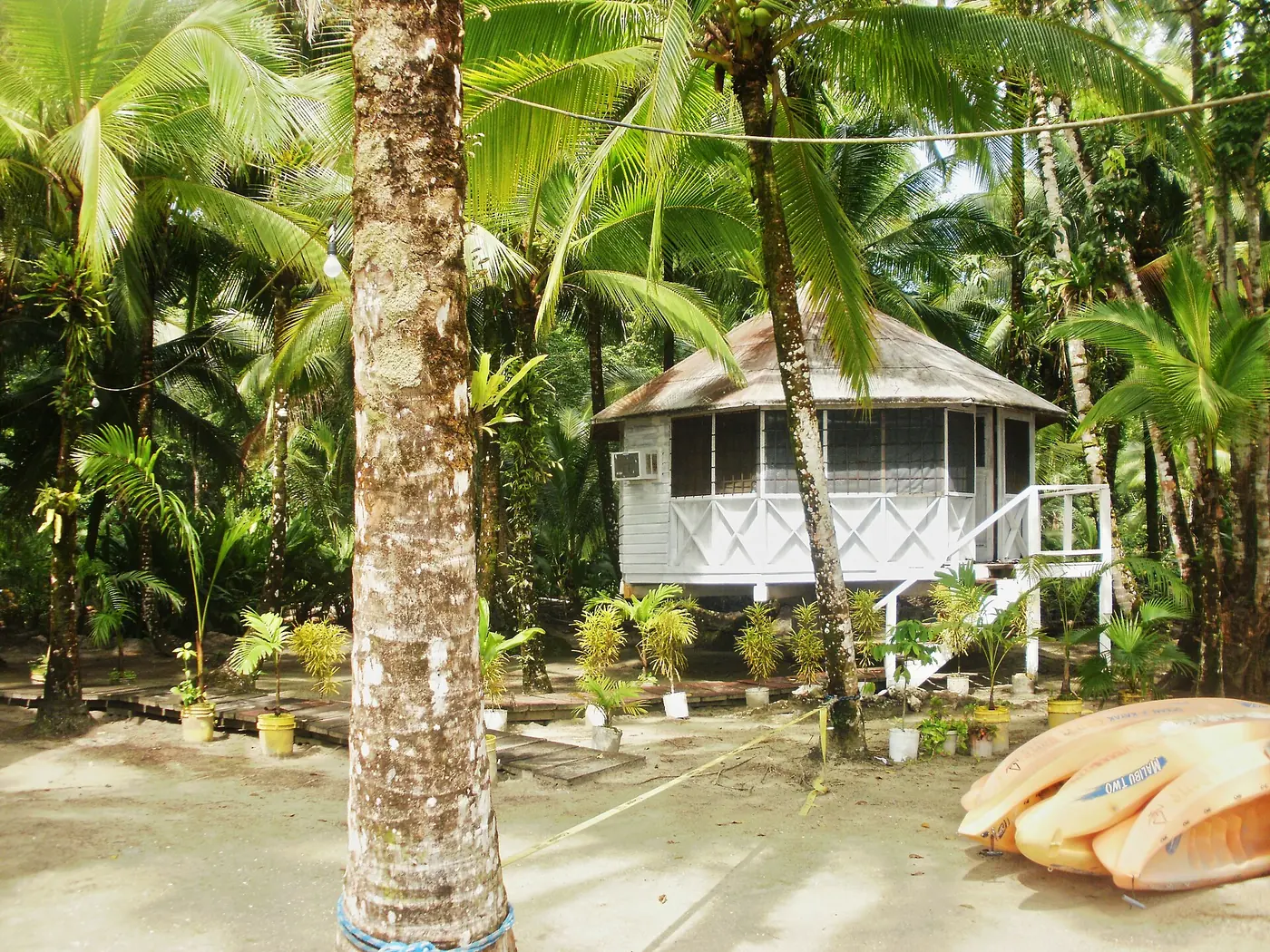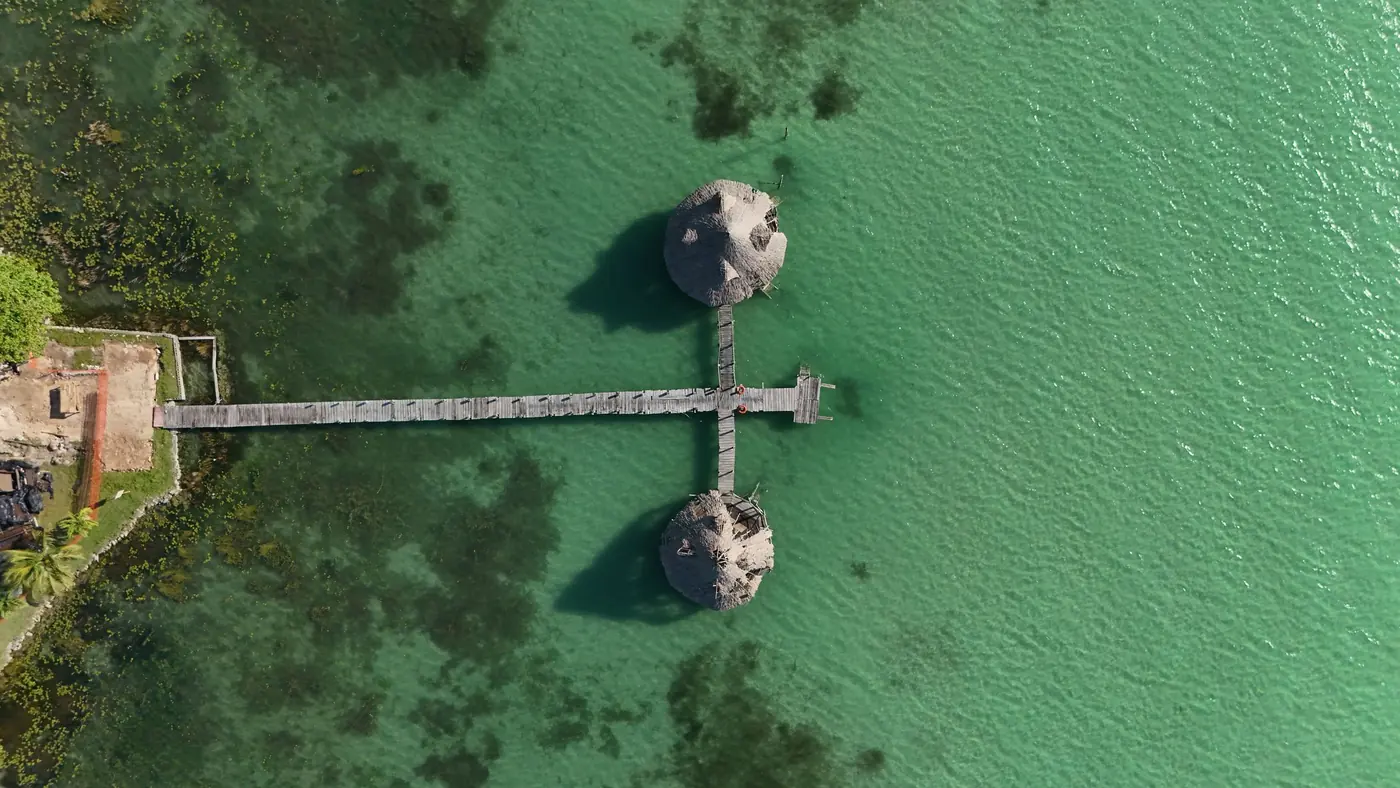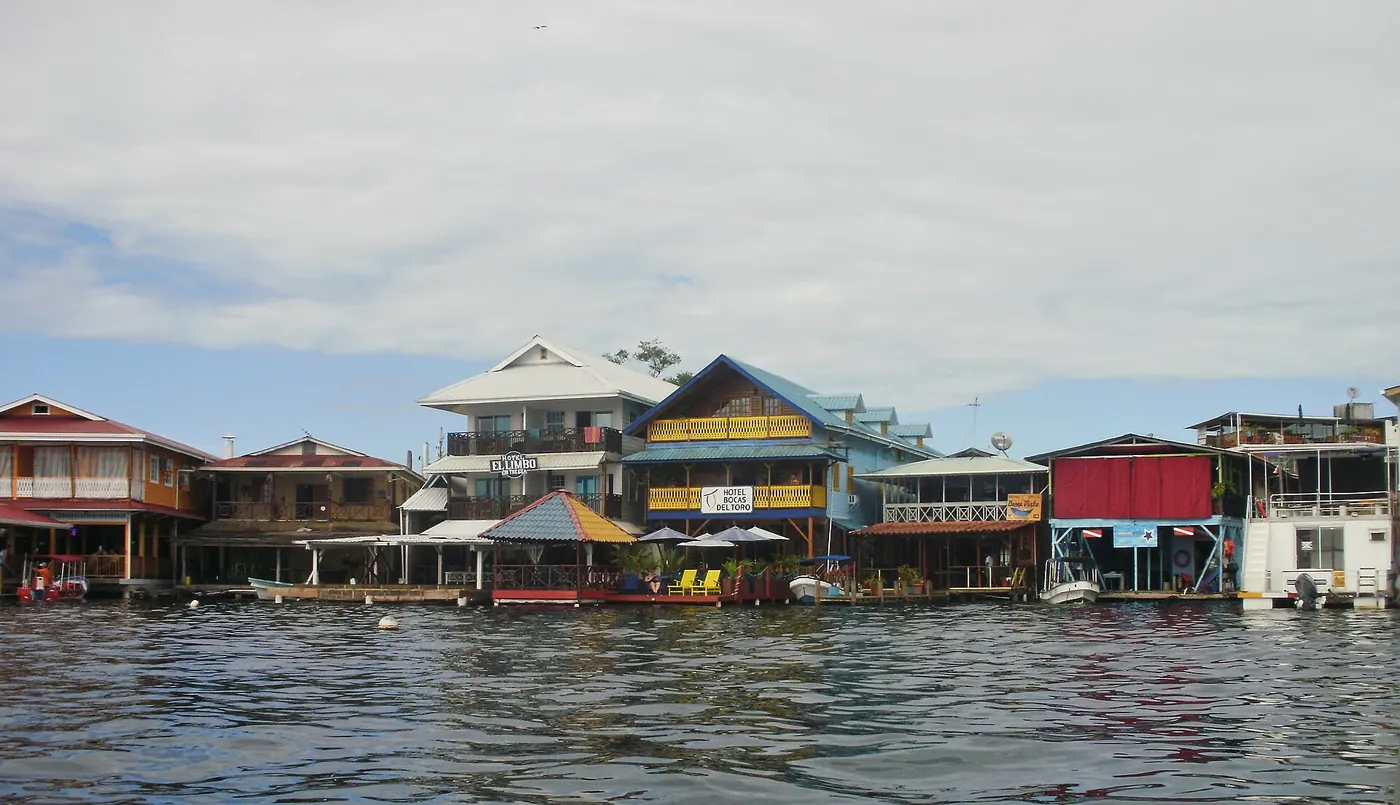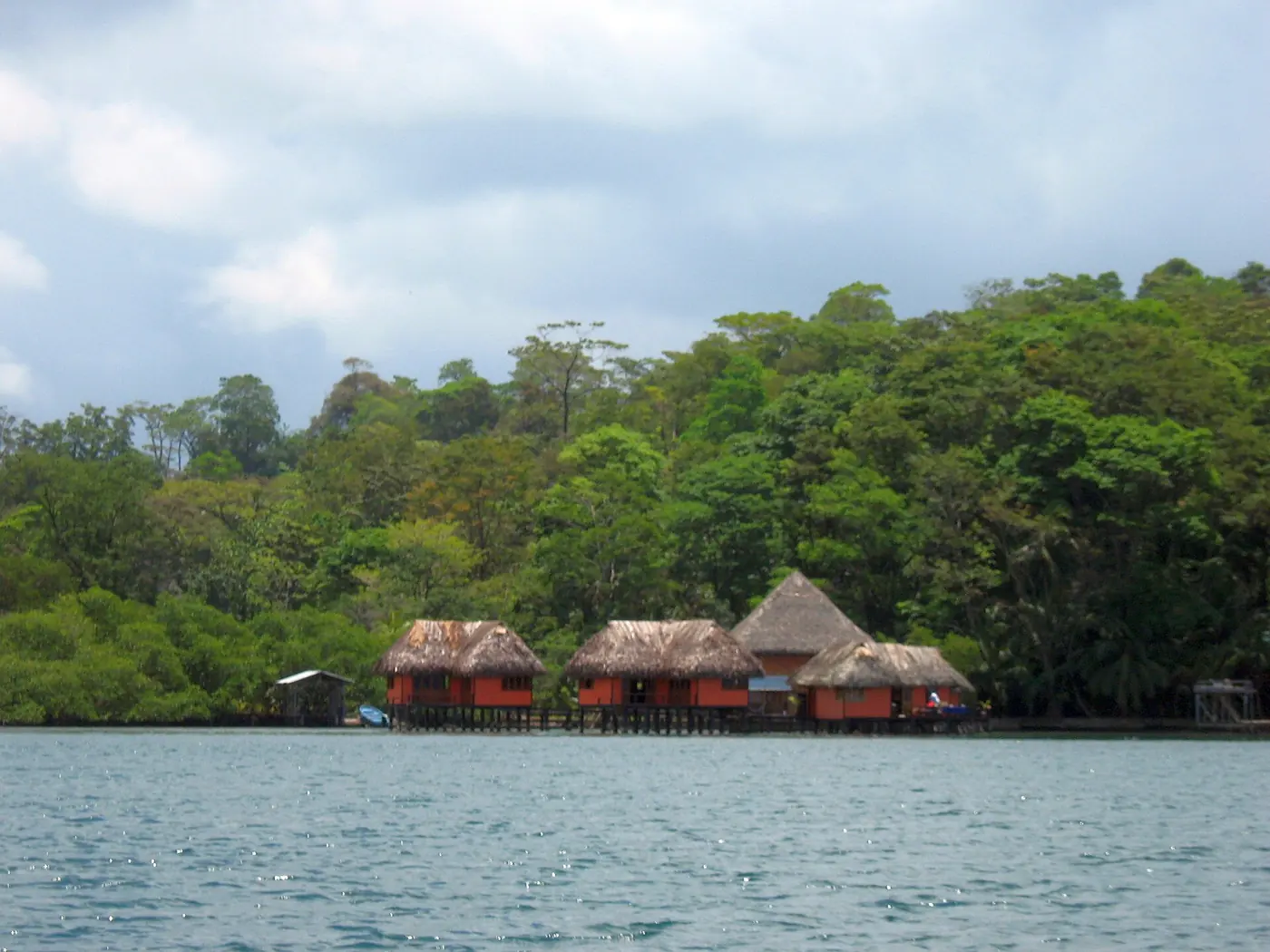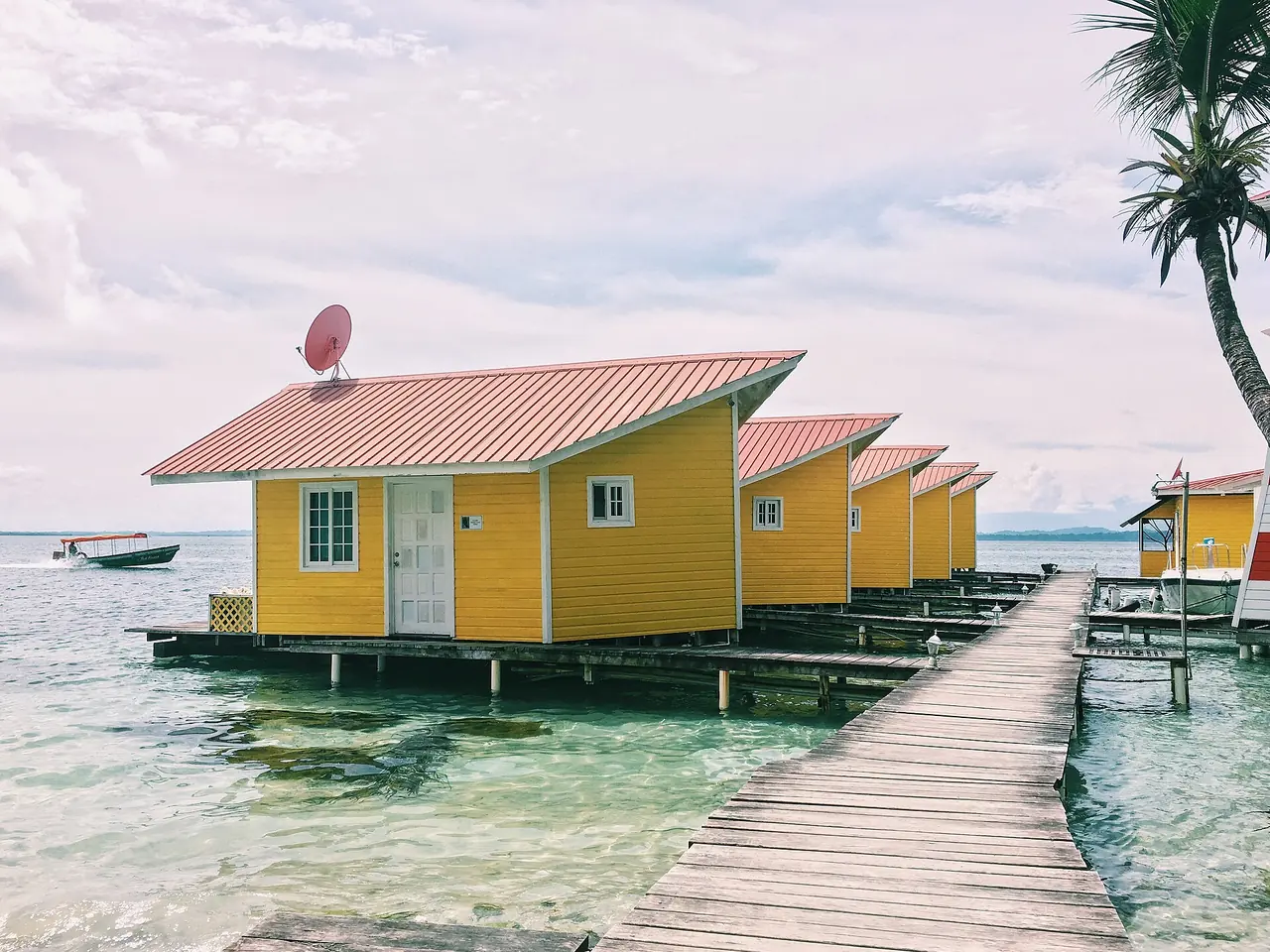
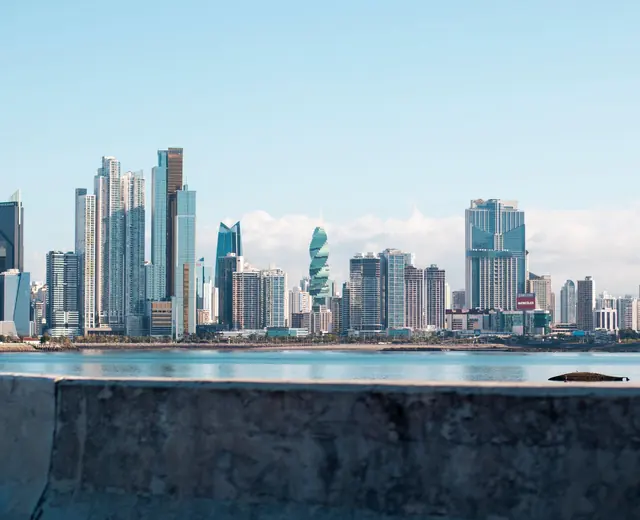
 Panama CityCapital and canal
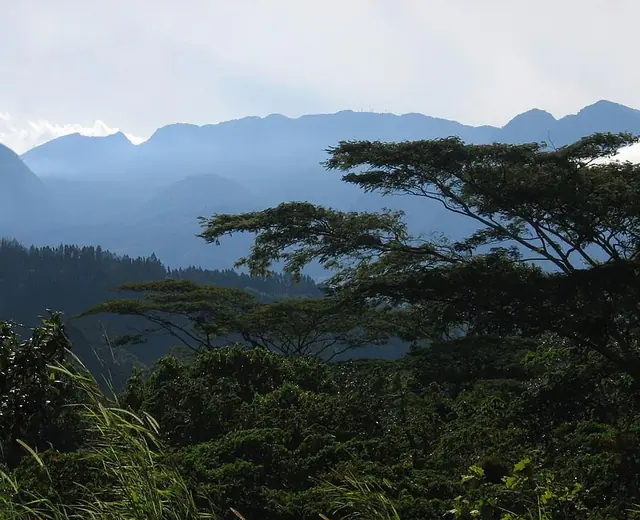 BoqueteCoffee highlands
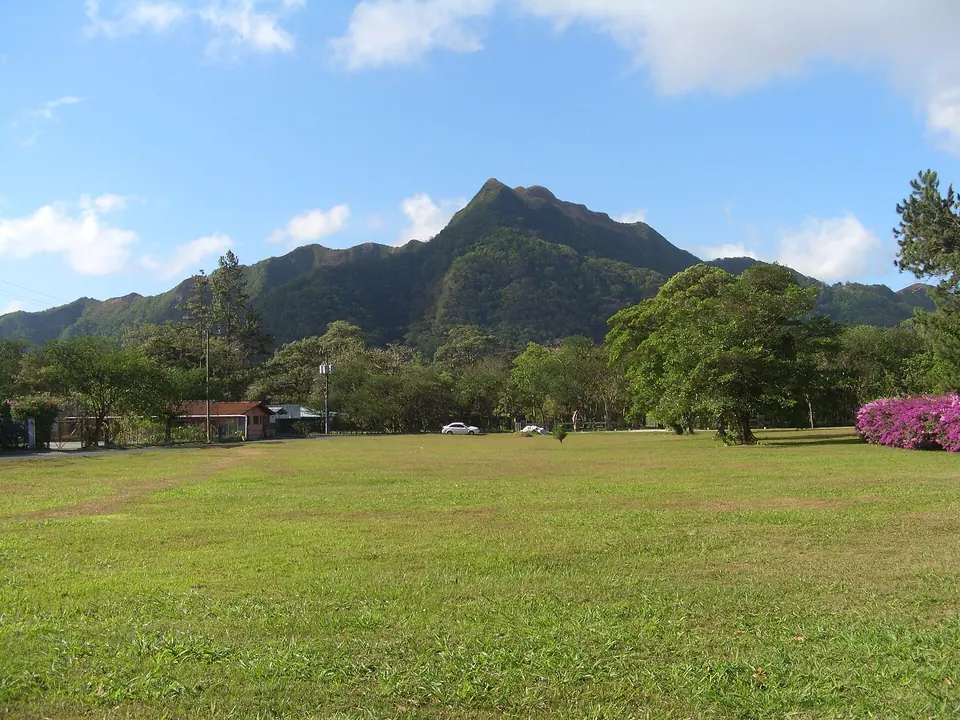 El Valle de AntónVolcanic crater
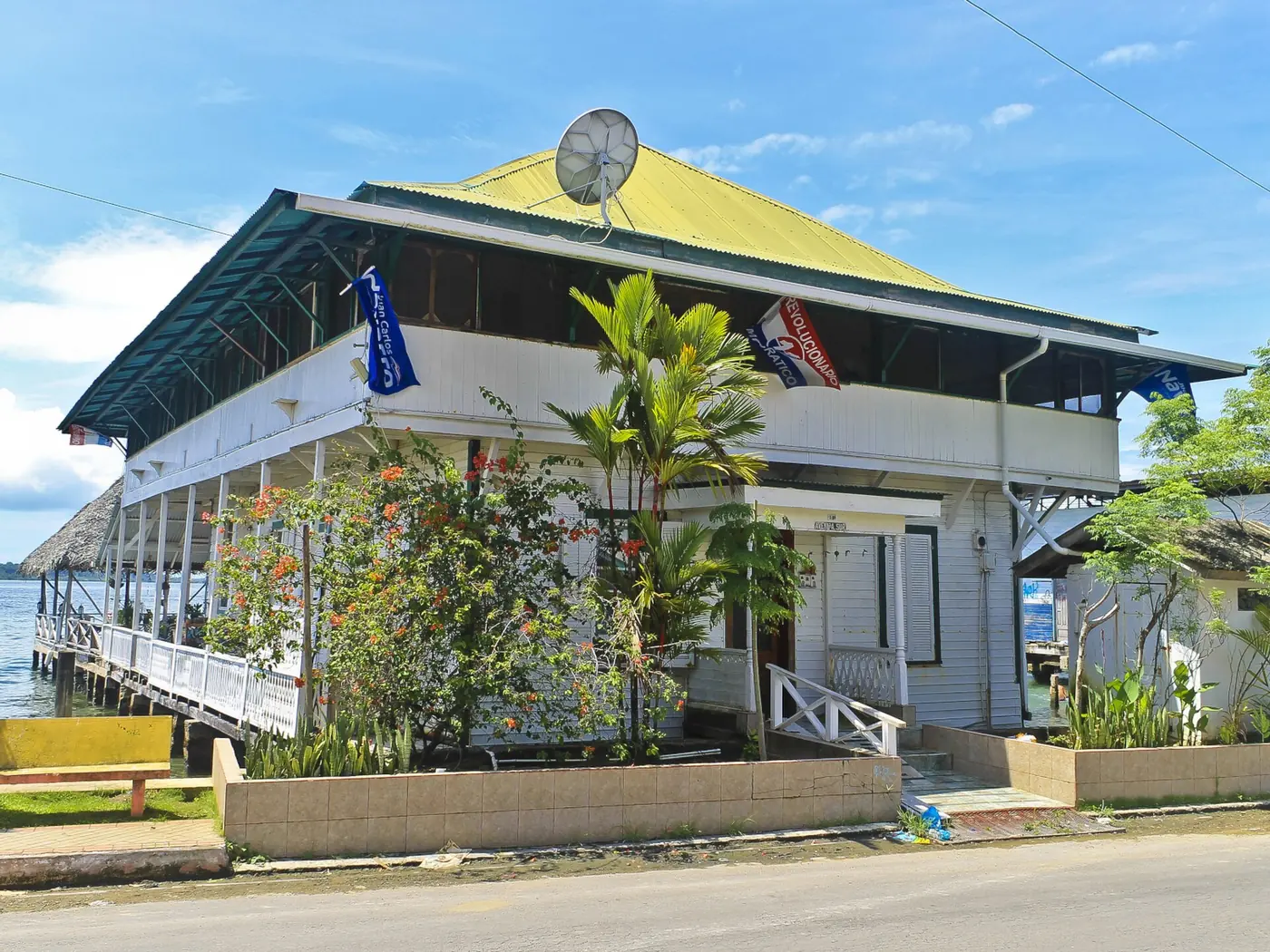
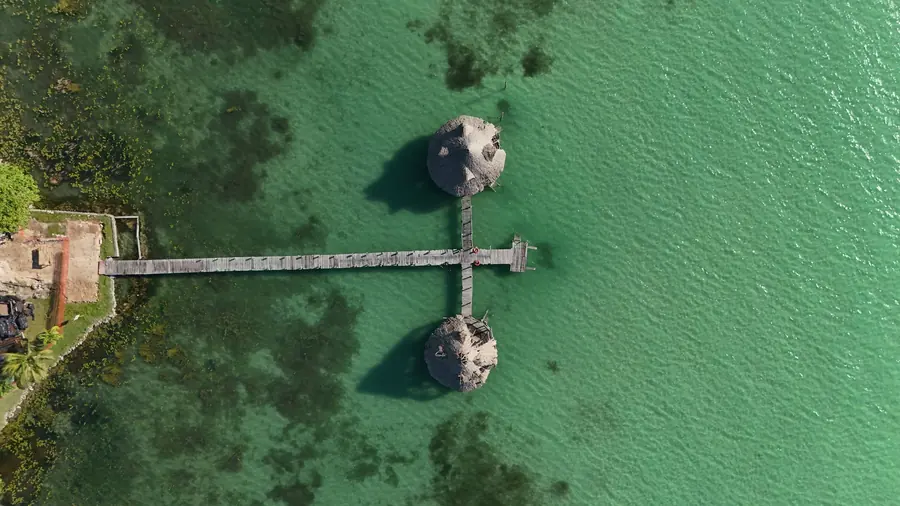
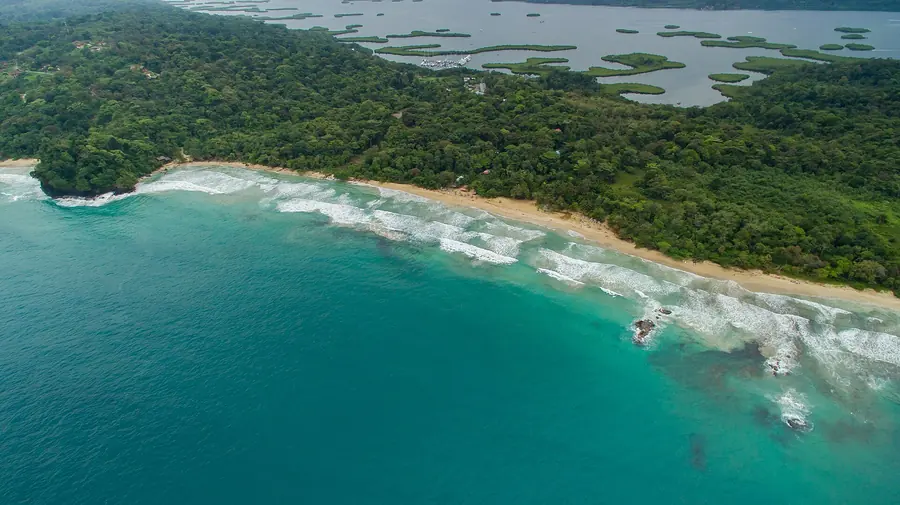
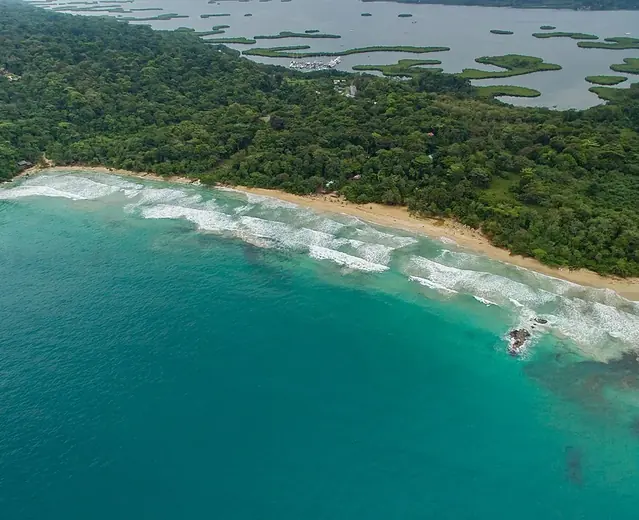 Bocas del ToroCaribbean islands
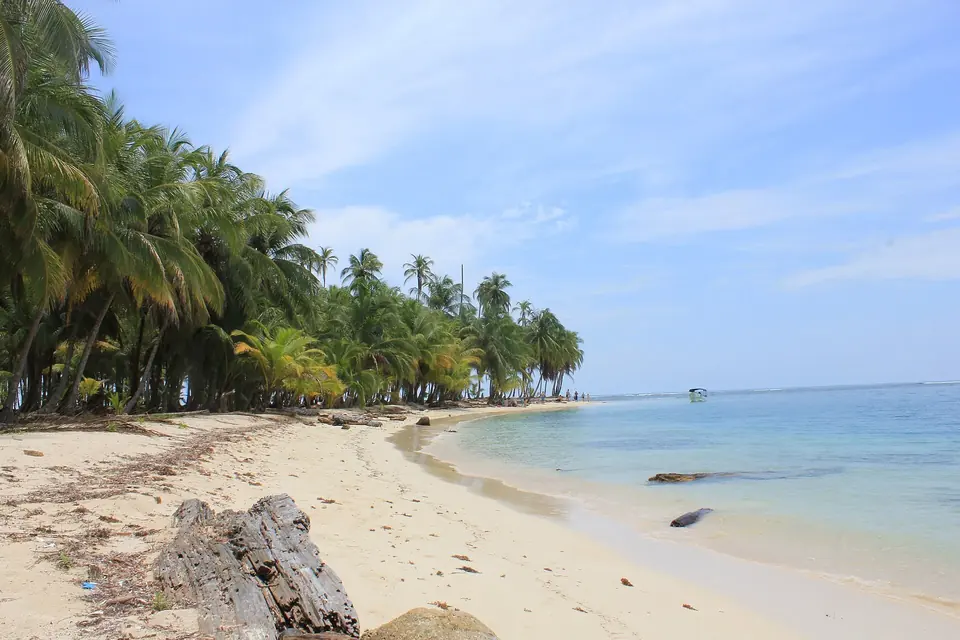 San BlasGuna Yala
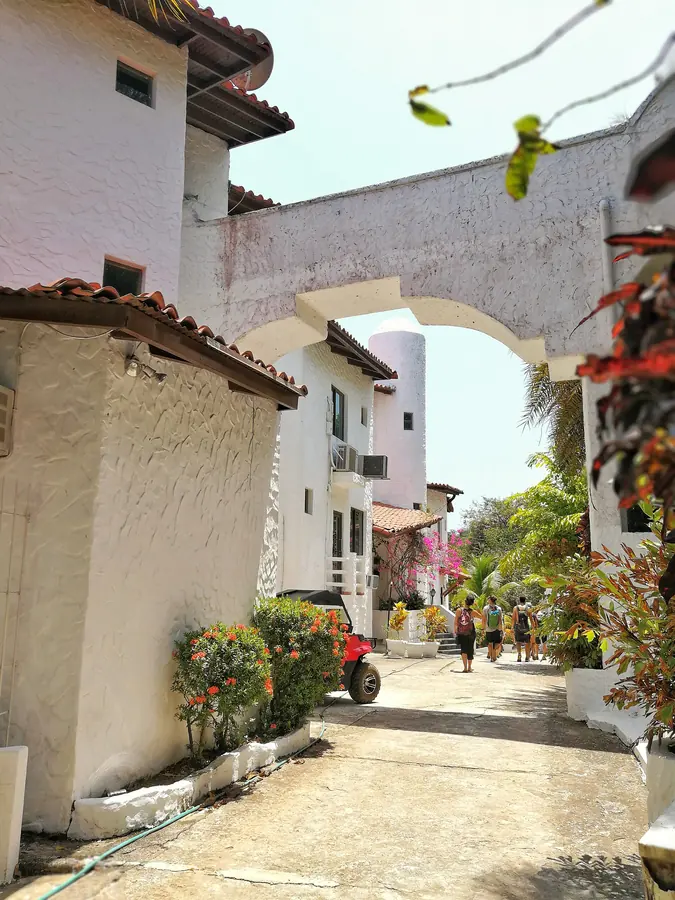
Bocas del Toro real estate runs from small houses on Isla Colón listed around $150,000 to oceanfront estates and private islands well above $1 million, but the price is the easy part. The real risk is the title. Much of the island land is sold as rights of possession (ROP) rather than registered title, so the safest buys are titled properties, mostly on Isla Colón, checked by your own lawyer before any money moves. Banks rarely lend on ROP land, it does not count for residency by investment, and it has to go through a separate legal process to become title.
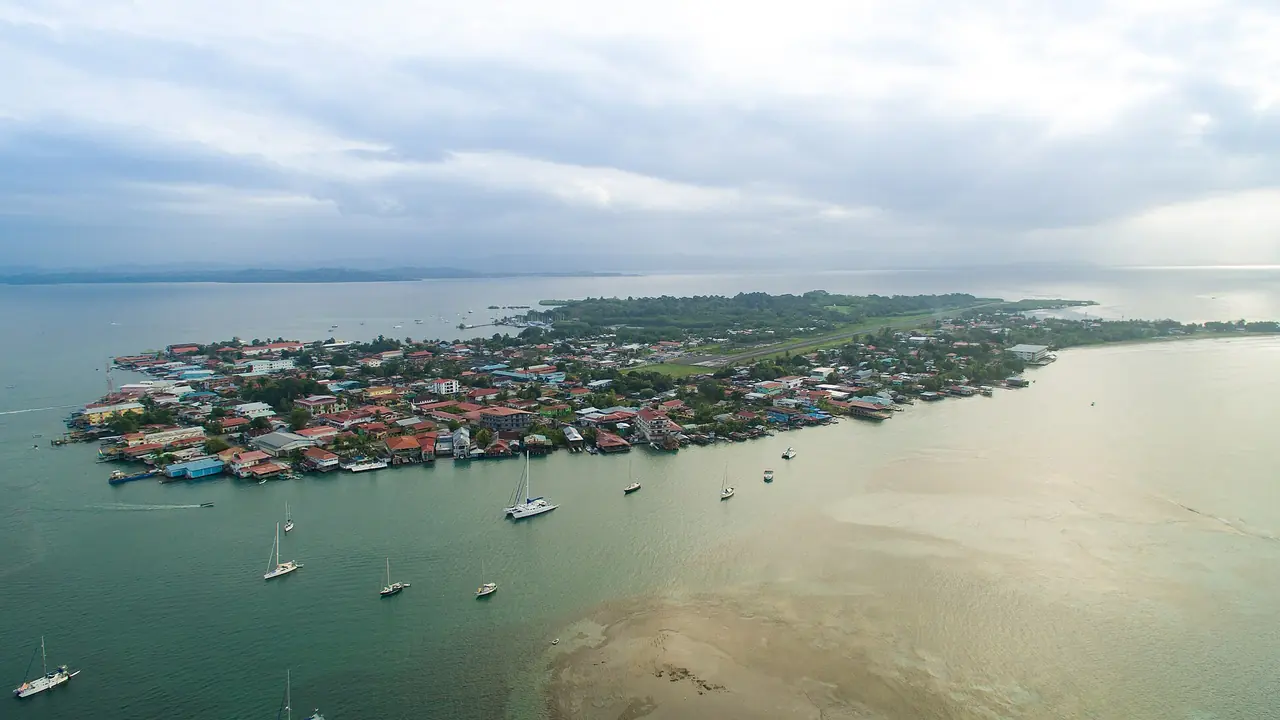
The province is nine main islands plus a large piece of mainland in Panama's northwest corner, on the Costa Rican border.[1] Most foreign buyers looking at Bocas del Toro real estate want the archipelago, not the mainland.[2] Asking prices in late 2026 run from about $59,000 for a new two-bedroom house in mainland Almirante to $22.5 million for private islands and estates.[3]
This guide covers what that range buys, which islands have titled land, how ROP works and how it gets titled, what a purchase costs on top of the price, and what daily life looks like when water comes from the sky and the commute is a boat.
Buying Bocas del Toro Real Estate: The Honest Picture
Bocas is a small, cash-driven, title-sensitive market where the paperwork decides whether you own an asset or an argument. Buyers from the US, Canada, Europe and Latin America have been coming for about two decades.[4] Over that time the area has also built up a history of property scams, usually land sold without a clear chain of possession or with boundaries nobody surveyed.
Three facts shape almost every deal. First, a lot of island land is ROP rather than titled.[5] Second, buyers usually pay cash, because Panamanian bank financing is mostly unavailable in Bocas.[6] Third, outside Bocas Town and a few developments, a home means solar panels, rain tanks and a boat.
The national rules are friendly to foreigners. Foreign buyers generally have the same ownership rights as Panamanian citizens on titled property.[4] Our guide to buying property in Panama as a foreigner explains the countrywide process. This page covers what is different on the islands.
Who Bocas Suits, and Who Should Look Elsewhere
Bocas works for buyers who can pay cash, are comfortable with boats and rain, and want a Caribbean home or a small rental business more than a fast resale. It is a poor fit in four cases:
- You need a mortgage. Banks generally will not lend against ROP land, and even titled Bocas property is usually bought for cash.[3][6]
- You want residency through the purchase. ROP land does not qualify for residency by investment, so your choice narrows to titled property at the right price.
- You need regular specialist care. Isla Colón has a public hospital and private clinics, with more in Changuinola, but specialists mean a trip to David or Panama City.[3]
- You dislike rain. Annual rainfall in the province reaches 6,000 mm.[7]
Living costs are not low either. There are no large supermarkets, only smaller shops, and food costs more than elsewhere in Panama because most goods arrive by boat.[1] For a countrywide comparison of budgets and towns, see the guide to living in Panama as an expat.
Portals disagree wildly on how much is for sale. One shows 1,807 "houses" in the province and another 40. Duplicates, mainland lots and stale listings inflate the big numbers, so a local agent's current inventory is a better read of the market.
Isla Colón vs Carenero vs Bastimentos vs the Mainland: Where to Buy
Isla Colón is the safest first purchase for most foreigners. It has the airport, roads, grid power in parts and the deepest stock of titled lots. The other islands trade convenience and paperwork certainty for quiet, water views and lower land prices per square meter.
| Area | Getting to Bocas Town | Grid power | Land you will meet | Asking prices seen (Nov 2026) | Best for |
|---|---|---|---|---|---|
| Isla Colón (Bocas Town, Big Creek, Paunch, Drago) | By road, about 5-25 min | In parts | Most of the titled stock; ROP lots too | $149,500 small house to $1.3M pool house | First-time buyers |
| Isla Carenero | Short water-taxi ride | In some areas | Titled parcels and surf-side lots listed | Few listings; beachfront homes, B&Bs | Surfers who want town close |
| Isla Bastimentos (Old Bank, Red Frog, Salt Creek) | Boat | Old Bank, Red Frog | Development lots, plenty of ROP | $225,000 lots to $750,000 villas | Beach and jungle, resort-style living |
| Solarte and outer islands (Popa, San Cristóbal, Pastores) | Boat, minutes for Solarte, longer beyond | Mostly off-grid | Frequent ROP; some titled | $375,000 for 8 ha to $22.5M islands | Off-grid compounds, lodges |
| Mainland (Almirante and the bay shore) | Road to Almirante, then 25-35 min boat | In towns | Acreage; border zone in parts | $59,000 new 2-bed to $2.06M golf home | Low budgets, large land |
Asking prices from published listings as of November 2026, not sold prices.
Isla Colón: Services, Roads and Most of the Titled Land
Bocas Town is the commercial center, with the airport, the grocery stores and the services everyone else on the archipelago boats in for.[4] Big Creek, just outside town, has road access and larger plots.[4] Paunch, near the surf break, is where new houses with pools are listed at $445,000 to $609,000 and apartments at $179,500 to $414,000.[3]
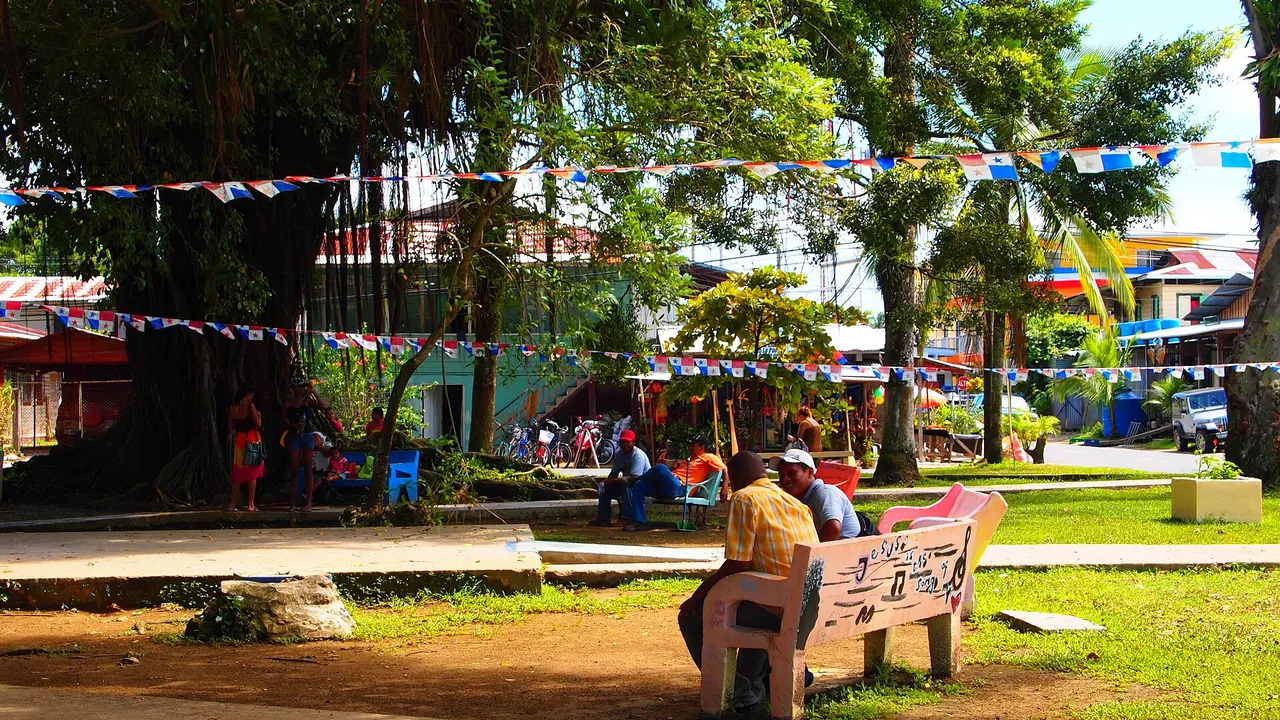
Titled lots on the island's west coast are advertised at 5 to 12 minutes' drive from town, and lots on the road to Drago at 20 to 25 minutes.[8] Some of these advertise electricity at the road or a few hundred meters away, which is the detail that decides your build budget.
Isla Carenero: Town Across the Water
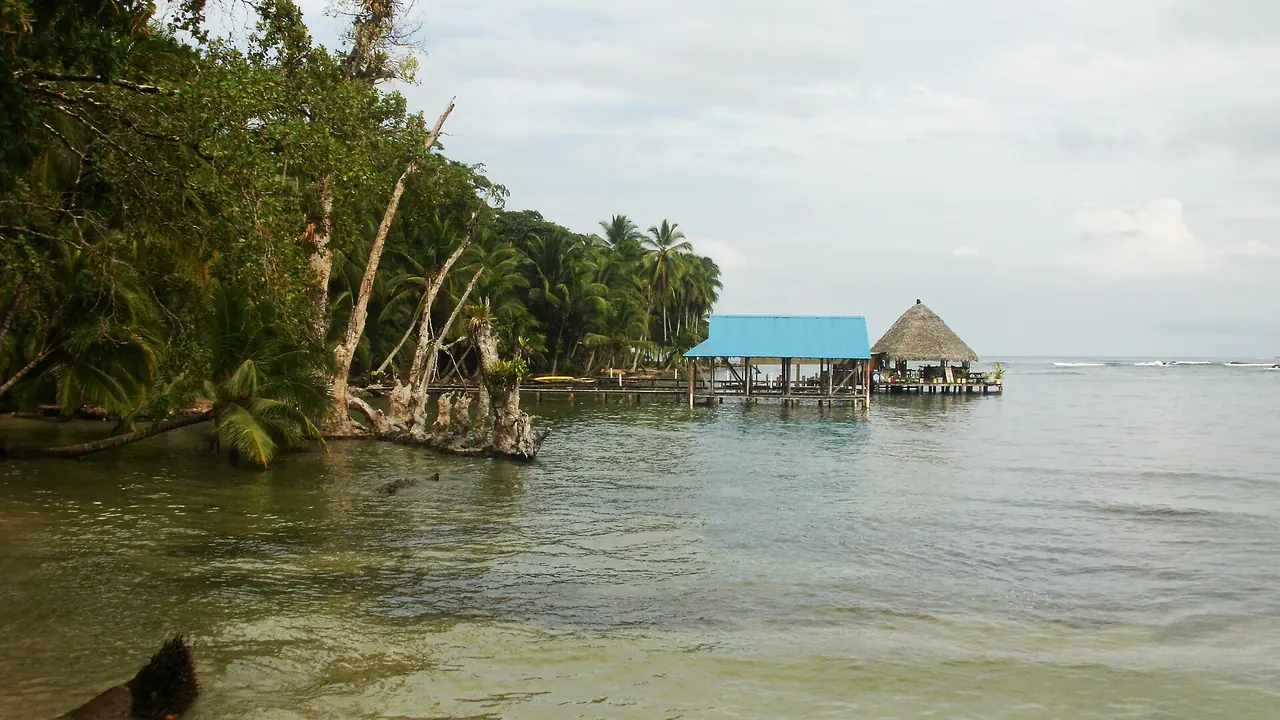
Carenero sits a short water-taxi ride from Bocas Town and draws surfers. Listings include a titled parcel "with concession options" and beachfront lots near the north-side surf break.[9][6] Inventory is thin, so prices swing with whatever is on the market that month.
Isla Bastimentos: Old Bank and Red Frog
Bastimentos mixes Old Bank village, the Red Frog Beach development and long stretches of national park. Red Frog listings run from $225,000 for ocean-view lots to $750,000, with two-bedroom condos at $399,000 and marina slips at $79,500.[10] A house in Old Bank is listed at $325,000.[11] Marine-park land cannot be privately titled.[3] Developments here usually come with community fees, so ask for the current amount and what it covers before you make an offer.
Solarte and the Outer Islands
Solarte is a few minutes by boat from Bocas Town and known for jungle homes, waterfront houses and private compounds.[4] Many homes out here are sold as ROP: a Discovery Bay house on Solarte and a bayfront home with a shared pool are both listed that way.[8] Private islands and estates are listed from about $1.3 million to $22.5 million.[3]
Whole islands come with an extra rule. Island land can be sold for tourism only within an approved tourism development zone, and no more than 50% of an island may go to foreigners or a majority-foreign company.[12]
The Mainland: Cheap, Large, and Partly Off-Limits
Almirante has the lowest entry prices in the province, with new two-bedroom houses from about $59,000 and 27 hectares of acreage listed at $500,000.[3] At the other end, a four-bedroom home at Santa María Golf in Almirante is listed at $2,056,768.[11]
The mainland has two catches. Parts of it fall inside the 10 km border zone where foreigners cannot own land.[5] Changuinola and Almirante also sit in flood-prone ground, and both were put on yellow alert for flooding in July 2026.[13]
If you want to live on one island before committing, our guide on which Bocas del Toro island to stay on compares Isla Colón, Carenero and Bastimentos by area and budget.
Titled vs ROP Land in Bocas del Toro
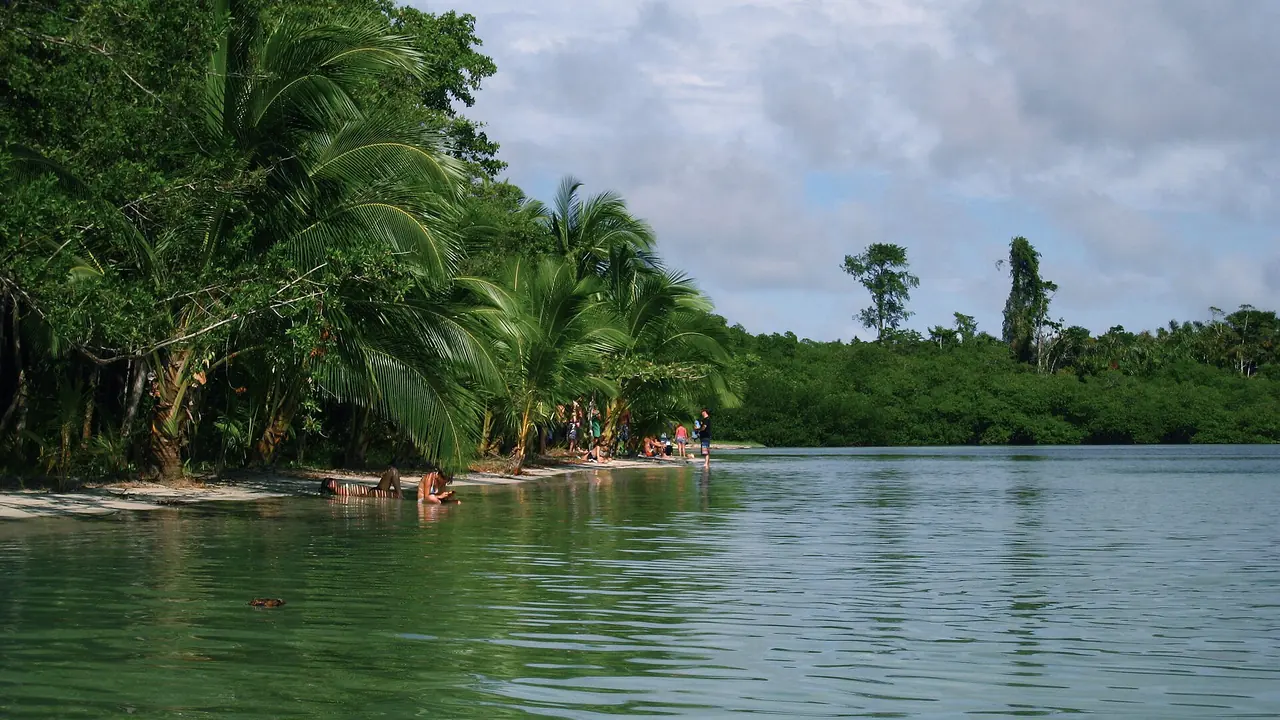
Titled land is registered property you own outright. ROP is a recognized right to occupy national land, with no registry record behind it. The difference decides whether you can borrow, get residency, insure the title and resell cleanly.
- Titled (titulada)
- Registered at the Public Registry with a finca number, a registered survey and a searchable history. Eligible for bank mortgages and title insurance.[3]
- Rights of possession (ROP, derechos posesorios)
- No registry record, boundaries that can be informal, and purchases that are almost always cash.[3] You buy the seller's possession, not a title.
- Overwater concession
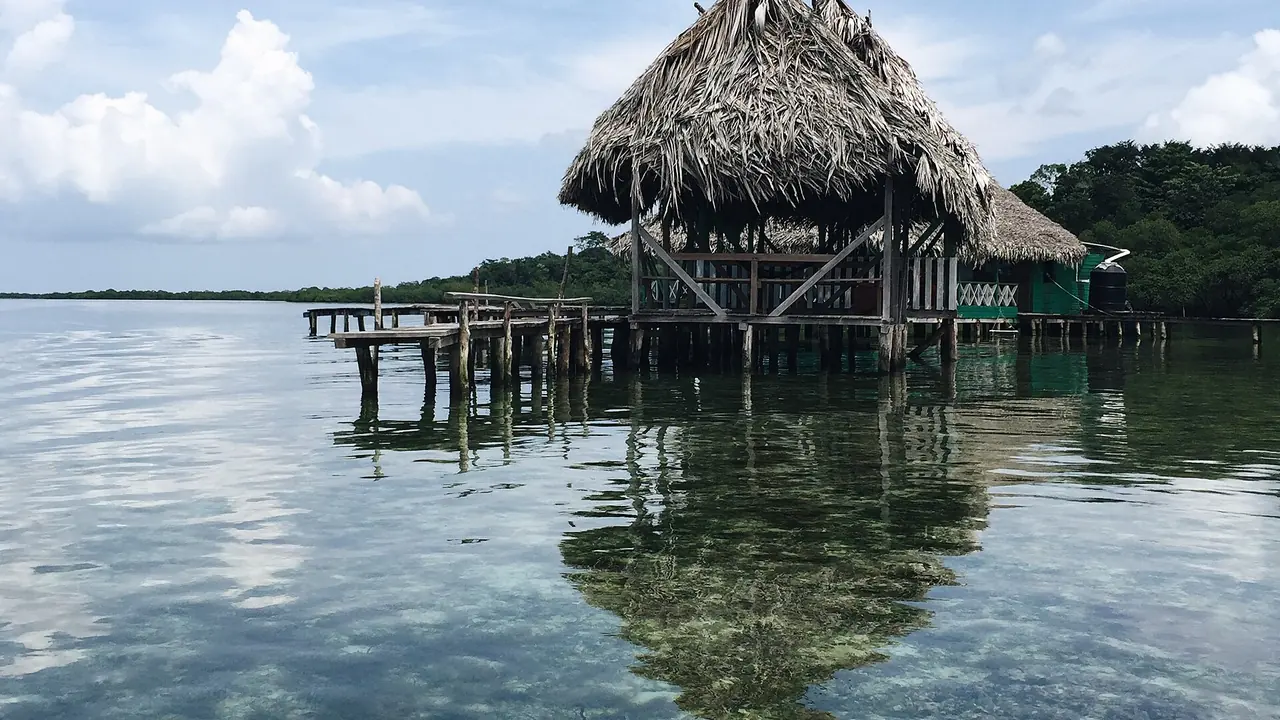
- Structures over the sea are allowed through a state concession, not ownership. The water and seabed are never part of the title.[3]
- Public domain
- Beach strips, mangroves, national and marine parks, comarcas and other public land cannot be privately titled at all.[3]
"Titled" in a listing is a sales claim, not proof. Ask for the finca number and have your own lawyer pull the record at the Public Registry before you sign a promise to purchase.
Turning ROP into Title: Law 80 of 2009
ROP on coastal and island land can become title through ANATI, the national land authority, under Law 80 of 2009. The law requires peaceful, uninterrupted possession as owner for more than five years.[14] ANATI's own procedure sets the same threshold.[15] You may read elsewhere that seven years are needed; the statute and ANATI both say more than five.
The five years do not have to be yours. A buyer can step into the prior possessor's time, so a seller's documented years count toward your claim.[16] That makes the paper trail of past possession as valuable as the land. ANATI accepts proof such as certifications from the corregimiento or the mayor's office, at least three sworn statements from neighbors, photographs, appraisals and utility contracts.[15]
Parcels of up to 50,000 m² can receive a free title, with no administrative charges and free registration.[14] Possession can rest on tourism, residential, commercial or agricultural use, among others.[17] Lawyer and surveyor fees still apply, though. One firm quotes $3,500 to $12,000 for the full process and 12 to 36 months when nobody files an objection.[18] Not every ROP parcel can be titled: if it sits in a park, a mangrove or a beach strip, no amount of possession changes that.
Beachfront: The 10-meter Strip and What Can Never Be Titled
On the Caribbean coast, the first 10 meters inland from the high-tide line are public beach.[16] Beyond that strip, land out to 190 meters further inland is the coastal zone that can be titled under Law 80.[16] Riverbanks, lakes, ports, estuaries, Indigenous territories and ecological reserves are excluded.[16]
Titles granted under Law 80 must keep public access to the beach open. Blocking it is fined from B/.1,000 to B/.5,000, or B/.5,000 to B/.20,000 for repeat offenses.[16] Our guide to beachfront and land in Panama covers these rules countrywide.
Building Over the Water
Overwater houses are what many buyers picture, and they are the most regulated thing you can build. Owners who have been through it describe a sequence: you hold the land behind the water, apply for a concession usually granted for 20 years and renewable, and get further permits including an environmental impact study. Applications can be rejected, especially over coral. Check the concession's term, holder and renewal date on any overwater home before you buy it.
The Border Zone
Foreign individuals cannot own land within 10 km of the national border.[3] The ban also covers companies with foreign capital, so a Panamanian corporation does not get around it.[5] The islands are outside the zone, but parts of the mainland province are inside it.[5] For any mainland parcel, your lawyer should confirm its distance to the Costa Rican border.
Why Title Matters for Residency
The Qualified Investor visa needs $300,000 in a new, first-sale property or $500,000 in a resale property, and the property must be titled.[3] The value that counts is the lower of the price paid and the market value, minus any mortgage. The funds must come from abroad, and you must keep the property for five years. Government fees are $5,000 to the National Treasury plus $5,000 to the National Immigration Service for the main applicant. ROP land never qualifies.
The Friendly Nations visa accepts a titled property of $200,000 or more if your country is on the list.[3] The list covers 51 countries; Colombia, Venezuela, Italy and India are not on it. The Pensionado visa rests on a lifetime pension of at least $1,000 a month, or $750 with a $100,000 property, so ask your lawyer whether a specific property qualifies before you rely on the lower figure. The guide to Panama residency visas compares all three, and retiring in Panama covers the Pensionado route in depth.
Bocas del Toro Homes and Land for Sale: What They Cost in 2026
Most Bocas del Toro houses for sale are listed between about $150,000 and $1 million, with land priced far more by access and title than by size. Every figure here is an asking price. Sold prices are not published, and negotiation room varies a lot, especially on listings that have sat for months.
New two-bedroom house, road access.
Two bedrooms, one bath at Las Cabanas.
Two bedrooms, two baths.
Six bedrooms on Isla Colón.
Asking prices as of November 2026.
Houses, Villas and Condos
On Isla Colón, a one-bedroom house in Paunch is listed at $179,000, a three-bedroom at Sunset Point at $699,000 and the five-bedroom Pool House at Paunch at $1,300,000.[19] A luxury estate in Big Creek is listed at $975,000.[20] Developer projects add jungle homes in Burn Brae Plantation at $339,000 to $599,999.[1] Bocas Homes describes Burn Brae as villas built on titled lots.[21]
On Bastimentos, Red Frog has jungle rental lodges at $344,000 and a five-bedroom ocean-view house at $650,000.[10] Old Bank has a three-bedroom house at $325,000, and Dolphin Bay a three-bedroom at $450,000.[11] Bocas del Toro condos for sale are mostly in these developments: two-bedroom Red Frog condos at $399,000 and Paunch apartments from $179,500.[10][3]
Land and Lots
Land prices fall steeply with distance from town and road. Titled ocean-view lots on Isla Colón start around $315,000 and oceanfront lots run about $480,000.[3] One local agency puts smaller lots near town at around $80 to $120 per square meter.[4] Further out, the price per square meter drops fast:
| Land listing | Size | Asking price | Per m² |
|---|---|---|---|
| Playa Bluff, Isla Colón | 3,667 m² | $199,000 | about $54 |
| Drago, Playa Lagarte, Isla Colón | 24,000 m² | $375,000 | about $16 |
| Isla Solarte | 80,000 m² | $375,000 | about $5 |
| Tierra Oscura | 1,100,000 m² | $6,000,000 | about $5 |
Asking prices as of November 2026; title status not stated in the listings.
Use portal listings with care. Some are clearly mis-sized, such as an 80 m² "land" listing at $795,000, and should never be used as comparables.
Hotels, Overwater Buildings and Income Property
A large share of what is for sale is business property. One agency's inventory is 32% land, 27% business and 24% homes.[6] Examples include the titled El Pelícano Hotel at $490,000 and an overwater hotel and rental building in town at $695,000.[20] There is also an overwater resort in Big Bight at $625,000, an eco-resort on Isla Pastores at $475,000 and a titled downtown commercial building with a dock at $475,000.[10]
Claims such as "high occupancy" or "strong rental history" come from the seller. Ask for booking records and bank deposits, and check whether the overwater part has a current concession.
Panama taxes only Panamanian-source income, and rent from a property in Panama counts as Panamanian-source. Budget for tax on any rental income, wherever you live.
Closing Costs, Taxes and Mortgages for a Bocas Purchase
On a titled resale, the buyer's main closing cost is the lawyer, at about 1% to 1.5% of the price, plus small notary and registry fees.[3] The bigger extra on the islands is often making the house livable off the grid.
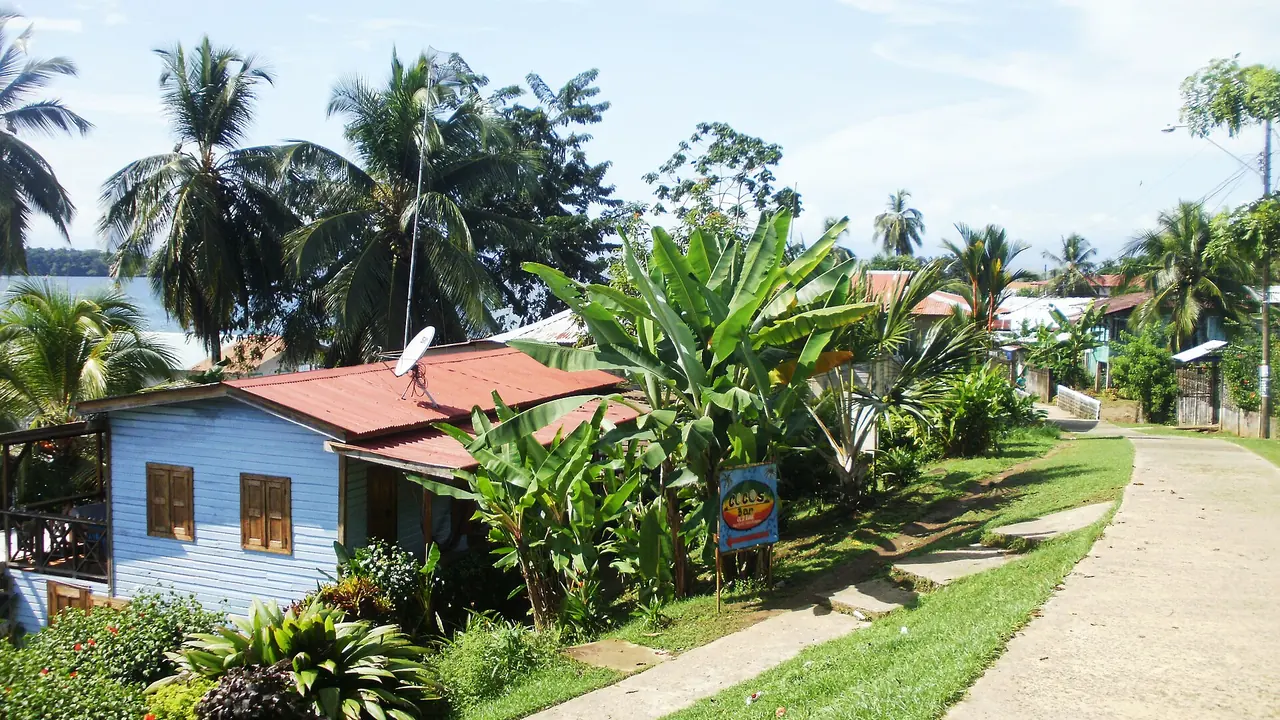
| Item | On a $350,000 titled home | Paid by | Note |
|---|---|---|---|
| Purchase price | $350,000 | Buyer | Asking prices are negotiable |
| Buyer's lawyer (1-1.5%) | $3,500-5,250 | Buyer | Due diligence and closing |
| Notary and Public Registry | Small fees | Buyer | Ask your lawyer for the figure |
| Transfer tax (ITBI, 2%) | $0 to you | Seller | Clauses shifting it to you are void |
| Solar system, if off-grid | From about $10,000 | Buyer | Size depends on use |
| Rain catchment, pump, heater, septic | From about $5,000 | Buyer | If not already in place |
| Realistic total for an off-grid island home | About $368,500 and up | Buyer | Before buying a boat |
Example figures as of November 2026. Off-grid costs are owner-reported ranges.
Transfer Tax and the 2026 Exemption
The 2% property transfer tax (ITBI) is the seller's tax, calculated on the higher of the price and the cadastral value. Any contract clause making the buyer pay or reimburse it is void.[22] Since 1 September 2026, Law 546 of 2026 exempts the first B/.120,000 of the taxable base on the first sale of a new home, if the sale is formalized within two years of the occupancy permit.[22] Above that, reduced rates apply up to B/.200,000, and the general rate applies beyond.[23][24] This mostly affects developers selling new builds, but it can show up in their pricing.
Annual Property Tax and Costs When You Sell
Titled property pays annual property tax under Law 66 of 2017. The brackets run from 0% to 1%, with a separate regime for a primary residence. Paying the full year before 30 April with no arrears earns a 10% discount.
When you sell, capital gains tax is 10% of the gain, with an advance of 3% of the price paid before the sale is registered. Factor that into any plan to buy, build and flip.
Can You Get a Mortgage in Bocas?
In practice, plan on cash. Bank financing is mostly unavailable for Bocas purchases, though some private sellers finance short term.[6] Several island listings advertise owner financing.[8]
Panamanian banks do lend to foreigners on titled property in general. Foreign buyers usually need at least 30% down, and terms rarely exceed 15 years.[25] Down payments of 30% to 50% and rates of roughly 4% to 7% are the figures commonly quoted for foreign buyers in 2026.[26][27] Expect to provide 12 to 24 months of bank statements, two bank reference letters, two years of tax returns and an appraisal by a bank-approved valuer.[25] Developer financing may be offered on pre-construction condos.[1]
Water, Power, Boats: Island Logistics
Off Isla Colón, plan on generating your own power, catching your own water and owning a boat. Many outer-island homes run entirely on solar and rainwater. On-grid living is possible in parts of Isla Colón, Isla Carenero, Old Bank and the Red Frog area. Elsewhere, assume you are on your own.
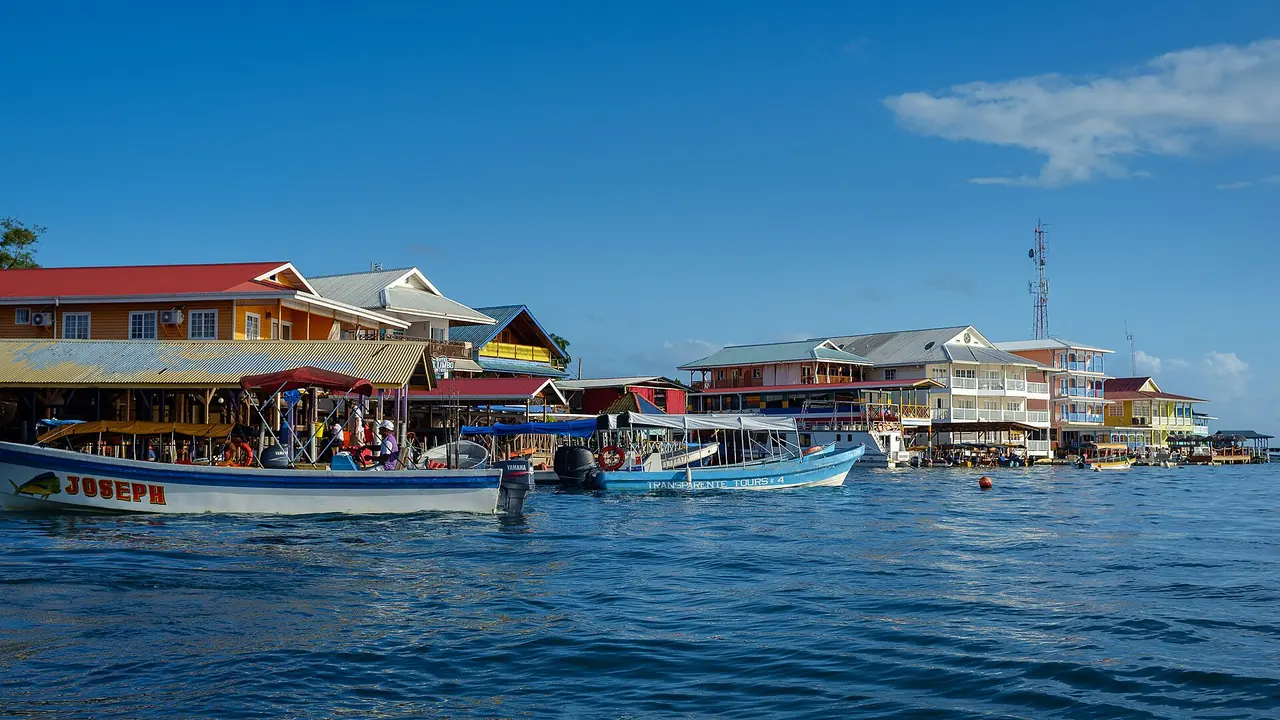
Getting to Bocas and Between Islands
Flights from Albrook take about an hour.[3] Check current schedules, which change by season. Copa also flies from Tocumen to David, the nearest airport on the Pacific side.[28]
By road, the trip to Almirante takes 8 to 9 hours, then about 30 minutes by water taxi.[3] Shared water taxis from Almirante leave about every 30 minutes from 6:00 to 18:00 and take 25 to 35 minutes.[29] Fares are $5 or $6 per person depending on the operator, paid in cash.[29][30] The full route options are in our guide on how to get to Bocas del Toro.
For building materials and vehicles, a car ferry runs daily except Monday, leaving Almirante at 7:00 and Isla Colón at 15:00.[31] Ferry Bocas lists one-way rates of $40 for a car with up to five passengers and $80 to $380 for trucks and trailers by size.[32]
Between islands, water taxis are everywhere, but most island residents end up wanting their own boat.[33] Fares climb the farther you are from Bocas Town, which adds up if you commute daily for groceries.
No water taxis cross from Almirante at night. Arrive by about 5:30 pm or plan to sleep on the mainland.
Electricity
Grid power reaches parts of Isla Colón, Carenero, Old Bank and Red Frog, and almost nothing beyond. Under Law 6 of 1997, the distributor must connect users within 100 meters of a line in its area without charging a contribution. Farther away, connection is still mandatory but may need extra investment.[34] That is why listings stress "electricity at the road" or "200 meters away".[8]
Panama's tourism master plan lists a power line project for Isla Colón and Isla Bastimentos, with no date attached.[35] Do not buy on the assumption that it will arrive. For off-grid homes, owners report solar systems costing upwards of $10,000.
Water and Septic
Rainwater is the default supply on most islands, and with rainfall reaching 6,000 mm a year, quantity is rarely the problem.[7] Storage, filtration and pumps are what cost money. Owners put a combined rain catchment system, pump, water heater and septic at $5,000 or more. Some Isla Colón developments have piped water: one west-coast gated community lists an aqueduct for its canal-front lots.[8]
Flooding, Storms and Sea-Level Rise
Panama lies south of the main hurricane belt, so hurricanes are not the main threat.[3] Rain and the sea are. Panama's national climate report singles out the Bocas archipelago for its exposure to sea-level rise.[36] In August 2026, the civil protection agency SINAPROC put Isla Colón, Changuinola, Almirante and Chiriquí Grande on green alert for rain and flooding.[37]
Low lots next to mangroves are the most vulnerable. Panama's own development plan for the province flags housing built in mangrove areas and calls for flood zoning.[7] Check a lot's elevation and drainage after heavy rain, and get an insurance quote before you sign.
Groceries, Building and Healthcare
Most shopping is in Bocas Town, so living elsewhere means a boat ride to stock up.[1] Building materials also arrive by sea and then by boat to your dock, which adds cost and delay to any construction or repair.
For healthcare, Isla Colón has a public hospital and private clinics, Changuinola has more, and specialists are in David or Panama City.[3] The guide to healthcare in Panama for foreigners covers the private hospitals and insurance options. Ask any seller for a real internet speed test at the house, since service varies a lot from island to island.
How to Buy Property in Bocas del Toro Without Getting Burned
Buying safely in Bocas comes down to two habits: rent before you buy, and pay for your own lawyer's due diligence before any deposit. Most bad Bocas stories involve skipping one or the other.
The Purchase, Step by Step
Rent first a few months to a year
Long-time residents' most common advice is to rent in Bocas for a season before buying. It shows you which island suits you, what rain and boat life really feel like, and which agents are reliable.
Talk to several agents before you shortlist
Each agency carries different listings. Local names include Buena Vista Realty, Paradise Found Real Estate, United Country Bocas del Toro and Bocas Locals Properties. Treat for-sale-by-owner posts in Facebook groups with extra caution.
See it in person and walk the boundaries by boat if needed
View the property in person, by boat or by video, and walk the boundaries of any land. On ROP land, the boundaries may exist only as neighbors' agreement.
Your own lawyer's due diligence before any deposit
The lawyer checks the title or the ROP chain, surveys, the shoreline strip, protected areas and the border zone.[3] On ROP, insist on documented possession history good enough for a Law 80 application. On overwater homes, check the concession.
Promise to purchase with escrow
Agree on the price and sign a promise-to-purchase agreement, with the deposit held in escrow, never paid straight to the seller.
Red Flags Specific to Bocas
- A seller who cannot show how long, and from whom, they have held an ROP parcel.
- Lots that include beach, mangrove or water inside their "boundaries".
- An overwater house sold with no concession document, or one close to expiry.
- Pressure to wire a deposit before your lawyer has seen the file.
- Mainland acreage near Changuinola or the Sixaola river with no check against the 10 km border zone.
- Rental income figures with no booking records behind them.
For the trip-planning side of the islands, from beaches to boat routes, our Bocas del Toro travel guide is the starting point.
Before you go
Can a US citizen buy real estate in Bocas del Toro?
Yes. Foreigners, including US citizens, have essentially the same rights as Panamanians to own titled property. The exceptions are land within 10 km of the national border, which affects parts of the mainland but not the islands, and special rules for selling whole islands. Rights of possession (ROP) land can be bought too, but it is not a title. See buying property in Panama as a foreigner.
What is the difference between titled land and ROP in Bocas del Toro?
Titled land is registered at the Public Registry with a finca number and survey; ROP is a right to occupy national land with no registry record. Titled land can be mortgaged, title-insured and used for investor residency. ROP is almost always bought for cash, can have informal boundaries and does not qualify for residency by investment.
Can ROP land be turned into a title?
Often yes, through ANATI under Law 80 of 2009, after more than five years of peaceful, uninterrupted possession. A buyer can add the seller's documented years to their own, which is why the paper trail matters. Land in beach strips, mangroves, parks or Indigenous territories can never be titled.
How much does a house in Bocas del Toro cost?
Most houses are listed between about $150,000 and $1 million as of November 2026. A small two-bedroom on Isla Colón is listed around $149,500, island homes on Bastimentos around $325,000 to $356,000, and large Big Creek houses near $980,000. New two-bedroom houses in mainland Almirante start around $59,000.
Can I get a mortgage to buy property in Bocas del Toro?
Rarely. Most Bocas purchases are cash. Banks generally will not lend against ROP land, and even on titled property, Bocas financing is mostly unavailable. Where Panamanian banks do lend to foreigners, expect at least 30% down and terms of up to about 15 years. Some sellers and developers offer short-term financing.
Is it expensive to live in Bocas del Toro?
It costs more than most of Panama for everyday goods. Food and supplies arrive by boat, there are no large supermarkets, and living off Isla Colón adds water-taxi or boat costs. An off-grid home also needs solar and water systems, reported at upwards of $10,000 and $5,000 respectively.
Do I need a boat to live in Bocas del Toro?
On any island except Isla Colón, practically yes. Water taxis serve all the main islands, but fares rise with distance and most residents end up buying a boat. Isla Colón is the only island with roads linking town, Big Creek, Paunch and Drago.
Can I build an overwater house in Bocas del Toro?
Only under a state concession, never as owned property. The water and seabed are not part of any title. You generally need the land behind the site, a concession, often granted for 20 renewable years, plus permits including an environmental impact study, and projects over coral can be rejected.
Does buying property in Bocas get me residency in Panama?
Only if the property is titled and meets a visa's minimum. The Qualified Investor visa needs $300,000 in a new first-sale property or $500,000 in a resale, and the Friendly Nations visa accepts a $200,000 property for eligible nationalities. ROP land never qualifies. Compare the options in Panama residency visas.
What are the downsides of living in Bocas del Toro?
The main ones are title risk, cash-only buying, heavy rain and limited healthcare. Rainfall in the province reaches 6,000 mm a year, low lots near mangroves can flood, and specialist care means traveling to David or Panama City. Everything from groceries to building materials costs more because it comes by boat.
Sources
Prices, schedules and rules change. The small numbers in the text point to these sources.
- 1Panama Equity - Bocas del Toro real estate listings guidepanamaequity.com
- 2Inside Panama Real Estate - Bocas del Toro real estate guideinsidepanamarealestate.com
- 3Panama Properties - Bocas del Toro buyer guide and price listpanama-properties.com
- 4Living in Bocas del Toro - Real estate guidelivinginbocasdeltoro.com
- 5
- 6Buena Vista Realty - Agency profile and inventory statisticsbestbocasrealestate.com
- 7Gabinete Social - Plan Colmena Bocas del Torogabinetesocial.gob.pa
- 8Panama Bocas Property - Caribbean Properties listing cataloguepanamabocasproperty.com
- 9Bocas Locals Properties - Listings and company profilebocaslocalsproperties.com
- 10Latin Carib - Bocas de Toro real estate listingslatincarib.com
- 11
- 12Oldemar Villarreal - Foreign buyers legal guide 2026oldemarvillarreal.com
- 13
- 14Gaceta Oficial - Ley 80 de 2009 (31 December 2009)gacetaoficial.gob.pa
- 15Panamá Digital (ANATI) - Ley 80 possession titling procedurepanamadigital.gob.pa
- 16
- 17Gaceta Oficial (FAOLEX) - ANATI Resolución 243 de 2017faolex.fao.org
- 18
- 19
- 20Best Bocas Real Estate - Bocas del Toro property listingsbestbocasrealestate.com
- 21Bocas Homes - Company profile and Burn Brae Plantationbocashomes.com
- 22
- 23
- 24
- 25Kraemer & Kraemer - Mortgages for real estate in Panamakraemerlaw.com
- 26Studio Panamá Italia - Buying real estate in Panama 2026 guidestudiopanamaitalia.com
- 27Panacrypto - Financing a second home in Panamapanacrypto.com
- 28
- 29
- 30Saigon Bay BnB - Getting to Bocas del Toro guidesaigonbaybnb.com
- 31Puerto Viejo Satellite - Travel between Bocas and Puerto Viejopuertoviejosatellite.com
- 32Ferry Bocas - Ferry ratesferrybocas.com
- 33EscapeArtist - Bocas del Toro real estate listingsrealestate.escapeartist.com
- 34Gaceta Oficial - PLAN-ER rural electrification plan 2025gacetaoficial.gob.pa
- 35
- 36MiAmbiente - Third National Communication on climate changecdn.miambiente.gob.pa
- 37SINAPROC - Alerta Verde for Bocas del Toro, August 2026sinaproc.gob.pa
Image credits
- Casa en Bocas del Toro, PanamaTim Cook · CC0
- Bocas del Toro PanamaDronepicr · CC BY 3.0
- Bocas del DragoKent MacElwee · CC BY 2.0
- Bocas del Toro, Changuinola, Panama (Unsplash)Pablo Garcia Saldaña garciasaldana_ · CC0
- Old Bank, Bastimento, Panama - panoramio (10)hh oldman · CC BY 3.0
- Bocas del Toro water taxisFelipe Valduga · CC BY 2.0
- Mangroves, driftwood and a moored white boat at…Pexels · Pexels License
- Isla Carenero, Panama - panoramio (4)hh oldman · CC BY 3.0
- Overwater thatched structures and wooden dockPexels · Pexels License
- Hotel El.Limbo ^ Hotel Bocas Del Toro - panoramiohh oldman · CC BY 3.0
- Nice looking hotel on BastimentosMia & Steve Mestdagh · CC BY-SA 2.0
- 01-001 2013 Casa Chen - Bocas del Toro 2Jaime Massot Hernández · CC BY-SA 4.0
This guide is general information, not legal advice. Laws, fees and requirements change; confirm the details for your situation with a Panamanian lawyer before you act.