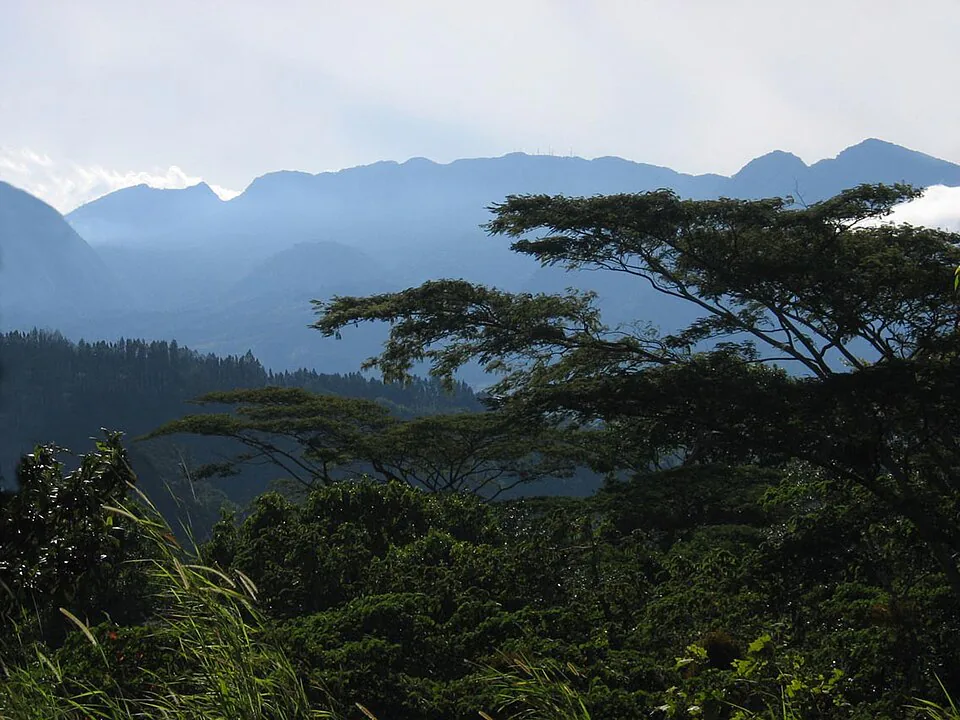
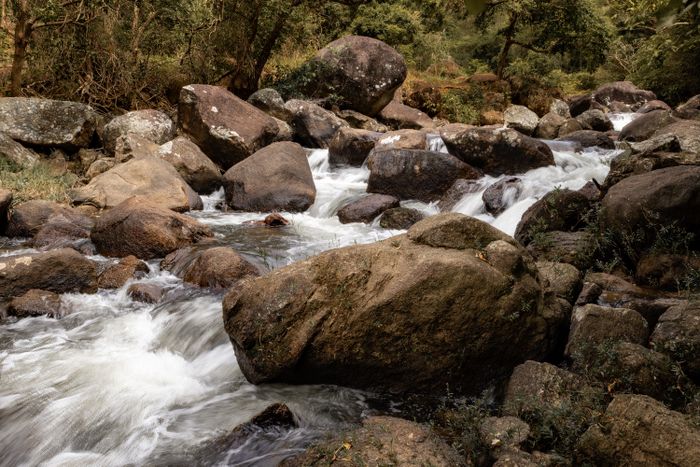
Two sets of geothermal pools sit within a few kilometers of each other in the Caldera Valley, southeast of Boquete. Both are volcanic, both are cheap, and both are genuinely good. But they are not the same experience — and choosing the wrong one for your travel style will leave you either underwhelmed or stranded on a bad road.
This guide covers everything the other pages skip: the honest road conditions, the actual pool temperatures, what facilities exist (spoiler: very few at either site), how crowds behave by season, and the one question every visitor eventually asks — which is actually better? The answer depends entirely on what you want from a morning in the Chiriquí highlands.
Section 01The short answer
If you want the most atmospheric, well-known experience and do not mind a rougher drive, go to the Caldera Hot Springs (also called Pozas Calientes or Aguas Termales de Caldera). Three to four geothermally heated pools range from 38°C to 45°C (100°F–113°F), the cold Río Caldera runs a few steps away, and the setting — a working farm in an open river valley — feels genuinely wild.

If you want something even more secluded, slightly easier to reach on foot once you park, and are happy with smaller, shallower pools that fit only a handful of people, go to Los Pozos de Caldera (sometimes called Pozos Termales). The water temperature at the hottest pool sits around 42°C (108°F), the pools are tucked into forest near the Río Chiriquí, and you will likely have the place almost entirely to yourself on a weekday.
Both are located in the same broad Caldera Valley. Both require cash on arrival. Neither has a restaurant, a proper changing room, or reliable phone signal. Plan accordingly.
Section 02Caldera Hot Springs — what you actually find
The Caldera Hot Springs sit on a private farm in the Caldera Valley, roughly 25 minutes south of Boquete town by car. The name is not accidental — Caldera means "boiling pot" in Spanish, and the town earned it. Geothermal seepage from the volcanic system anchored by Volcán Barú, Panama's highest peak at 3,474 meters, pushes mineral-rich water up through the valley floor at temperatures that make a long soak genuinely challenging in the hotter pools.

What you find when you arrive is not a spa. There is no reception desk, no lounge chairs, no poolside bar. There are three to four rock-lined depressions in the earth, each fed by its own geothermal vent, each a slightly different temperature. The pools are not large — the biggest comfortably holds six to eight adults — but they are deep enough to sit in up to your chest. The water is clear, faintly sulfurous in smell (though not offensively so), and visibly bubbling in the hottest pool.
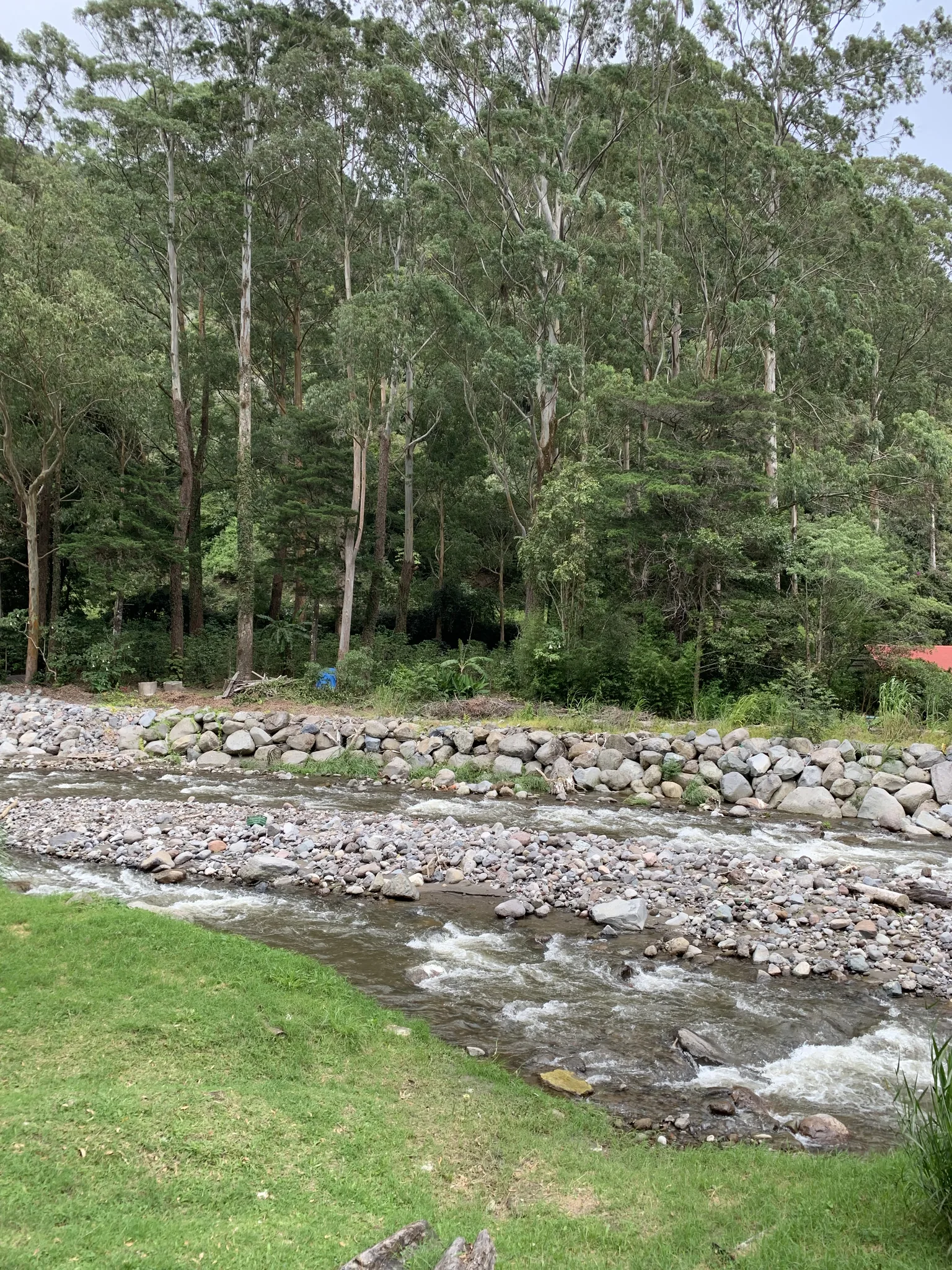
The Río Caldera runs cold and fast about thirty meters from the pools. Alternating between a ten-minute soak in the 45°C pool and a two-minute plunge in the river is the local ritual, and it is as good as it sounds. The river is shallow enough to stand in safely during the dry season, though it rises considerably after heavy rain.
The farm setting means you share the valley with cattle, horses, and the occasional local family having a weekend picnic. This is not a negative — it is exactly the kind of lived-in, unpolished atmosphere that makes the springs feel authentic rather than curated. The surrounding landscape is open and warm, noticeably drier and hotter than Boquete town, which sits several hundred meters higher in elevation. Come prepared for direct sun.
Section 03Los Pozos de Caldera — what you actually find
Los Pozos de Caldera is less famous than its neighbor and, as a result, consistently quieter. The site is also located in the Caldera Valley and is also on private land, but the setting is different: the pools are tucked into a forested section near the banks of the Río Chiriquí rather than in open farmland. The tree cover means more shade, a slightly cooler ambient temperature, and a more enclosed, jungle-adjacent feel.

The pools themselves are smaller and shallower than those at Caldera Hot Springs. There are typically three to four active pools, the largest of which fits around five people and is usually waist-deep. The hottest pool runs at approximately 42°C (108°F). The cooler pools sit closer to 38°C (100°F). You can see geothermal bubbles rising through the substrate in all of them — the same volcanic plumbing that feeds the Caldera springs feeds these.
The small size of the pools is the most important thing to know before you go. On a busy weekend morning with a tour group present, you may find yourself waiting for a pool to free up. On a Tuesday in February, you may have all of them to yourself for hours. The experience is more intimate than Caldera Hot Springs by design — or rather, by accident of geology.
A small tributary near the pools leads to a series of waterfalls a short hike further into the forest. The trail is not well-marked, so ask the landowner or your guide for directions before setting off. Do not hike it alone. The waterfall detour adds roughly 45 minutes to an hour to your visit and is worth the effort if conditions are dry.
Three rides. One unforgettable Boquete.
Premium Orbea e-bikes that do the climbing for you. Helmet, gloves, water and route support included — and you pay when you arrive.
Coffee Farm E-Bike Tour
Ride to a working farm and see how Geisha — the world's most expensive coffee — is made. Tasting at Altieri Specialty Coffee, geisha ice cream included.
Guided Highlights Ride
Lost Waterfalls, Library Park and the highland viewpoints locals love — the spots most visitors never find.
Self-Paced Rental
Hourly or full-day. Take a recommended route or just wander. The e-bike means hills don't decide your day.
Section 04Head-to-head comparison
Here is every meaningful variable between the two sites, side by side. Use this table to make your decision before you leave Boquete.
| Feature | Caldera Hot Springs | Los Pozos de Caldera |
|---|---|---|
| Water source | Geothermal / volcanic seepage | Geothermal / volcanic seepage |
| Pool temperatures | 38°C, 40°C, 45°C (100–113°F) | ~38°C to 42°C (100–108°F) |
| Number of pools | 3–4 active pools | 3–4 active pools |
| Pool size | Medium — up to 8 adults | Small — up to 5 adults |
| Water depth | Chest-deep in main pools | Waist-deep maximum |
| Setting | Open farm valley, full sun | Forested, shaded, more enclosed |
| River access | Río Caldera — cold, nearby Great contrast | Río Chiriquí — accessible nearby |
| Entry fee | Small cash fee — confirm locally | Small cash fee — confirm locally |
| Facilities | Minimal — basic area only | None — truly rustic |
| Changing rooms | Basic area available | Abandoned structure only |
| Food & drink | Nothing on site | Nothing on site |
| Waterfall nearby | Cascada de Caldera (short drive) | Forest waterfalls (45 min hike) Bonus |
| Crowds | Low to moderate; busier on weekends | Very low — often empty midweek |
| Best for | First-timers, therapeutic soaking, river contrast | Solitude-seekers, hikers, repeat visitors |
| Tour availability | High — most operators include it | Low — fewer operators run here Check ahead |
Section 05Getting there — road conditions and vehicle requirements
Getting to either site requires leaving the Pan-American Highway and heading into the Caldera Valley. The first part of the drive — from Boquete town down through the valley toward Caldera — is on a paved, well-maintained road and presents no difficulty for any vehicle. The problems start when you turn off toward the springs themselves.
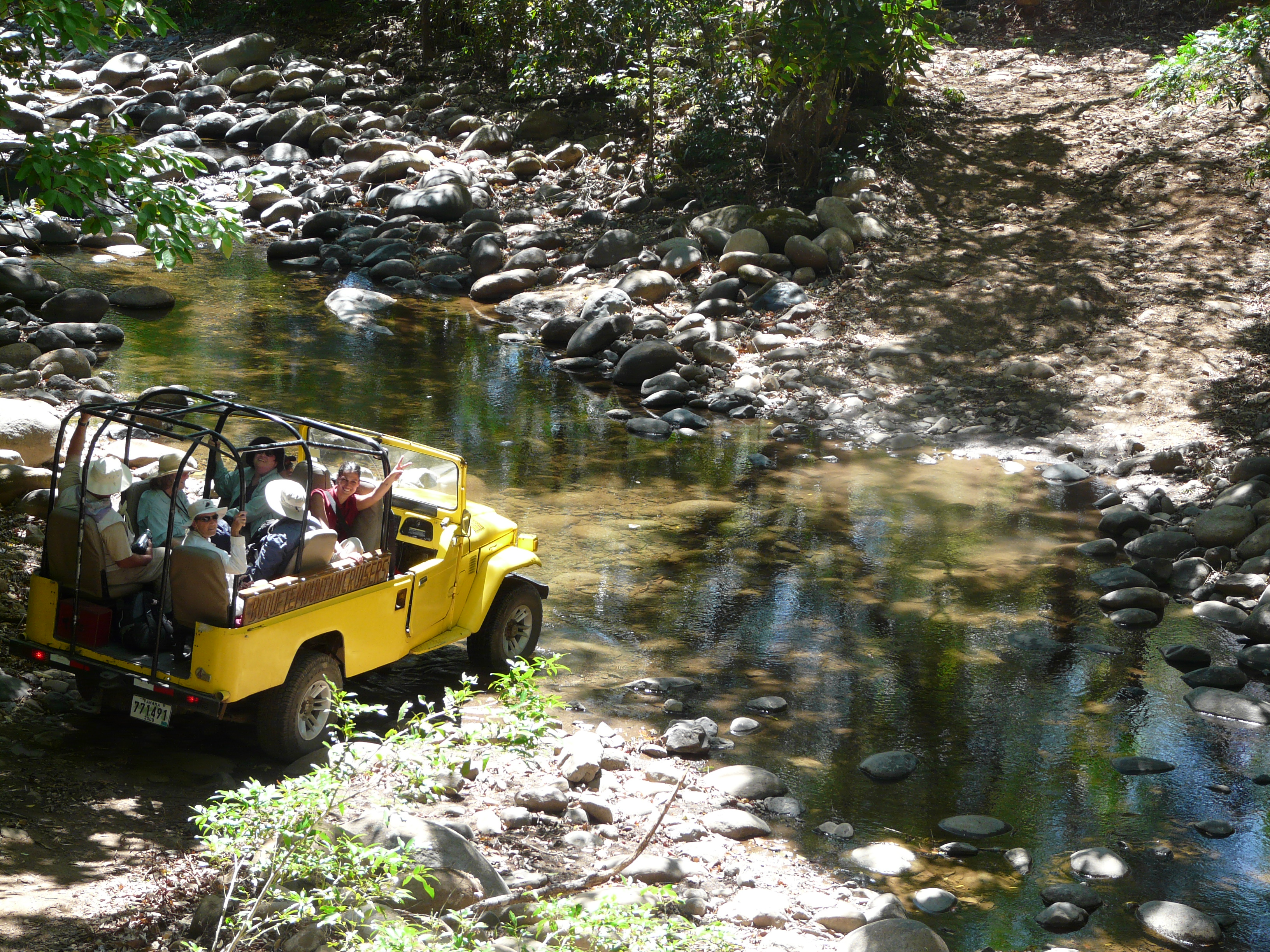
Caldera Hot Springs: the final stretch
From Boquete, head south toward David and look for the signed turn toward Caldera. The turn is clearly marked; missing it is the most common navigation error. Once you are on the Caldera road, you will drive through the village and continue toward the springs. The surface starts as paved road, transitions to compacted gravel, and then — in the final kilometer or so before the bridge crossing — becomes a potholed dirt track that requires your full attention.
The final stretch is not long, but it is genuinely rough. Large potholes, loose rock, and uneven camber make it uncomfortable in a low-clearance sedan and potentially damaging if you are not careful. A 4x4 or high-clearance SUV removes the stress entirely. If you are in a standard rental car, it is doable at very low speed, but you will be nervous the whole way. If it has rained heavily in the past 48 hours, do not attempt it in a standard car — the track becomes slick and the potholes fill with water that hides their depth.
Once you cross the suspension bridge (yes, you drive over it — it is functional and not as alarming as it looks), you park and walk roughly 10–15 minutes to the pools on a flat path.
| Route | Drive time from Boquete | Road condition | Verdict |
|---|---|---|---|
| Boquete → Caldera village | ~20 min | Paved, good | No issues |
| Caldera village → springs parking | ~10 min | Gravel then rough dirt track | 4x4 strongly recommended |
| Parking → pools (on foot) | 10–15 min walk | Flat dirt path | Easy |
Los Pozos de Caldera: access
Los Pozos de Caldera sits in the same general valley but is accessed via a different track. The road conditions are broadly similar — paved to a point, then gravel and dirt. The final approach is slightly less severe than the worst section of the Caldera Hot Springs road, but a high-clearance vehicle is still the sensible choice. The walk from parking to the pools is short, roughly 5–10 minutes on a flat path through light forest.
If you are arriving by public transport, colectivos (shared minivans) run from Boquete to Caldera village on an infrequent schedule — roughly every hour or two during daylight hours. The drop-off point in the village is not close to either set of springs, and the final distance to either site is not walkable in reasonable time with bags and towels. A taxi from Boquete (around $20–25 one way) or a rental car is the practical solution for most visitors. Negotiate a return pickup time with your taxi driver before they leave.
Section 06Facilities and what to bring
The honest answer is that neither site has meaningful facilities. This is not a complaint — it is the entire point. These are natural springs on private farmland, not resort pools. But it does mean you need to arrive self-sufficient.
At Caldera Hot Springs, there is a basic changing area — essentially a covered structure with no privacy partitions. There are no flush toilets; expect a latrine-style facility at best. There is nothing for sale on site: no water, no snacks, no sunscreen, no towel rental. The landowner or a family member typically collects the entry fee at the entrance.
At Los Pozos de Caldera, facilities are even more minimal. There is reportedly an abandoned structure that functions as a rough changing area, but its condition varies. No toilets, nothing for sale. The site is more remote-feeling than Caldera Hot Springs, and you will feel it if you arrive underprepared.
Pack the following for either site, without exception:
- Water — at least 1.5 liters per person. The valley is hot and you will sweat.
- Snacks or a packed lunch — there is nothing to buy within easy reach of either site.
- Swimwear and a towel — obvious, but worth stating. A second dry set of clothes is useful.
- Cash in small bills — for the entry fee. No card readers exist at either location.
- Flip-flops or water shoes — the pool surrounds are rocky and can be slippery.
- Sun protection — Caldera Hot Springs in particular is fully exposed. The valley sits at lower elevation than Boquete and is noticeably hotter.
- Insect repellent — especially for Los Pozos, which has more tree cover and standing water nearby.
- Offline maps — downloaded before leaving Boquete.
Section 07Water temperatures, minerals, and the geology behind both sites
Both sets of springs are fed by the same volcanic system. Volcán Barú — dormant but geologically active — sits at the center of a geothermal field that extends across much of the Chiriquí highlands. Rainwater percolates deep into fractured volcanic rock, is heated by residual magmatic energy, picks up dissolved minerals, and resurfaces under pressure in low-lying valley areas. The Caldera Valley, sitting at the geological foot of the volcano's eastern flank, is one of the most active discharge zones.
The mineral content of both springs includes sulfur compounds, calcium, magnesium, and trace amounts of silica and iron. The sulfur is detectable as a faint egg-like smell, most noticeable at the hottest pools. It is not overwhelming. The calcium and magnesium content is what gives the water a slightly silky feel on the skin — the same quality that drives the local belief in the springs' therapeutic properties for joint pain and skin conditions. These claims are traditional rather than clinically verified, but the warmth alone is genuinely good for tired muscles after a day on the Lost Waterfalls trail or any of Boquete's more demanding hikes.
At Caldera Hot Springs, the temperature gradient between pools is pronounced. Pool 1, the entry pool, runs around 38°C (100°F) — warm and comfortable for an extended soak. Pool 2 steps up to approximately 40°C (104°F). Pool 3 — the hottest — reaches 45°C (113°F) and is genuinely challenging to stay in for more than a few minutes. Most visitors cycle between Pool 3 and the river repeatedly. At Los Pozos, the temperature range is narrower, topping out around 42°C (108°F), which makes for a slightly more accessible experience for people who find extreme heat uncomfortable.
Neither site treats or filters its water. The high temperature of the hotter pools provides natural bacterial inhibition. The cooler pools and any stream-fed additions are less reliably clean, particularly after heavy rain when surface runoff enters the system. This is standard for natural thermal springs worldwide — the same caveats apply here as at any untreated geothermal site.
Section 08Crowds and the best time to visit
Both sites are genuinely uncrowded by global hot-spring standards. Neither has the infrastructure to handle large groups, and neither is on the main tourist circuit in the way that, say, the Caldera Hot Springs page on this site covers in detail. But there are still better and worse times to go.
Dry season (December to April) is the best time to visit for road conditions and weather. The dirt tracks are firmer, the river is lower and clearer, and the sky is reliably blue. This is also when visitor numbers peak — Panamanian families and international tourists both concentrate their Chiriquí trips in the dry months. Weekends in January, February, and March can see Caldera Hot Springs with 20–30 people present at peak hours (roughly 10am–1pm). Los Pozos remains quieter even in peak season, simply because fewer people know about it.
Rainy season (May to November) brings the valley back to near-solitude. The landscape is dramatically green, the air is cooler, and you may well have Caldera Hot Springs entirely to yourself on a weekday morning. The trade-off is the road: the final dirt track to Caldera Hot Springs becomes significantly more difficult after sustained rain, and a 4x4 transitions from strongly recommended to essentially required. Los Pozos is similarly affected. The river also rises and runs brown after heavy rain, eliminating the hot-cold contrast that is one of the best things about the Caldera experience.
The optimal visit window, if you want to combine good conditions with low crowds, is a weekday morning in January or February, arriving before 9am. By mid-morning on a weekend in high season, the pools at Caldera Hot Springs can feel crowded relative to their size.
Section 09Guided tours versus going self-guided
The majority of visitors to Caldera Hot Springs arrive on an organized tour from Boquete. This makes logistical sense: the road is tricky, the navigation is confusing, and a guide handles the entry fee and the walking route. Tour prices for a half-day Boquete hot springs excursion typically run between $40 and $90 per person depending on group size, operator, and what is included. Most depart at 8:30am or 1:30pm and allow roughly two hours at the springs.
The main operators running Caldera Hot Springs tours from Boquete include several well-established agencies in the town center. Quality varies. The better tours combine the springs with a stop at the nearby Caldera petroglyphs — pre-Columbian rock carvings that most visitors drive straight past — and some include the Cascada de Caldera waterfall. If you are booking a tour, ask specifically whether the petroglyphs are included; they add almost nothing to the travel time and are genuinely interesting.
Los Pozos de Caldera is less commonly included in standard tour itineraries. A handful of operators run it as a standalone or combined with Caldera Hot Springs, but you will need to ask specifically. If your priority is Los Pozos, confirm with the operator that they actually go there and not just to the main Caldera site.
Going self-guided is entirely viable if you have a 4x4 or high-clearance rental and have downloaded offline maps. The entry process at both sites is informal — you will be met by a family member or caretaker at the gate who collects the fee. No advance booking is required or possible at either location.
One underrated option: hire a local taxi driver from Boquete for a half-day. A knowledgeable driver will know the road, can wait for you at the springs, and often knows both sites. Negotiate the full round-trip price before departing — expect to pay around $50–70 for a half-day including waiting time, depending on your negotiating and the driver.
Section 10Which one should you choose
Choose Caldera Hot Springs if:
- This is your first time visiting hot springs in Panama and you want the full, well-known experience.
- You want the widest temperature range and the hottest pool (45°C).
- The hot-cold river contrast is important to you — the Río Caldera is the best feature of the site.
- You are on a tour and do not have your own vehicle.
- You want to combine the springs with the Caldera petroglyphs or the Cascada de Caldera waterfall.
Choose Los Pozos de Caldera if:
- You have already visited Caldera Hot Springs and want something different.
- Solitude matters more to you than temperature range — Los Pozos is reliably quieter.
- You prefer shade and a forested setting over open farmland.
- You want to add the waterfall hike as part of the same visit.
- You find extreme heat (45°C) uncomfortable — the slightly lower maximum temperature at Los Pozos is more accessible.
If you have a full day and your own vehicle, doing both in sequence is feasible. Allow three to four hours total, including driving time between sites. Start at Los Pozos (quieter, better in the morning light) and finish at Caldera Hot Springs for the river contrast in the warmer midday heat.
Section 11Building a full day around the hot springs
The Caldera Valley rewards a slow day. Neither set of springs requires more than two to three hours on site, which leaves time for other stops. Here is a logical full-day sequence from Boquete:
7:30am — Leave Boquete. Stop for breakfast in town before departing; there is nothing to eat in the valley. Fill water bottles.
8:15am — Caldera petroglyphs. These pre-Columbian rock carvings are a five-minute walk from the roadside and are passed by almost every visitor without stopping. They are worth 20 minutes of your time. Ask your driver or guide to stop.
9:00am — Los Pozos de Caldera. Arrive early for the best chance of having the pools to yourself. Allow 90 minutes to two hours. If conditions are right, take the waterfall hike.
11:30am — Drive to Caldera Hot Springs (10–15 minutes). Soak, use the river contrast, and take your time. This is the main event for most visitors.
1:30pm — Leave the springs. Drive back toward Boquete via the Cascada de Caldera if you have not already seen it.
2:30pm — Back in Boquete. Lunch at one of the restaurants on the main street. The afternoon is free for coffee farm visits, a walk along the Río Caldera trail through town, or simply recovering from the heat.
If you are based in Boquete and looking for a different kind of day — one that covers more ground with less effort — the e-bike tours run by E-Valley Bikes offer a good complement to a hot springs morning. Their guided routes cover the highland roads and coffee country around Boquete at a pace that lets you actually look at the scenery rather than navigate it.
For the broader context of what to do in the Chiriquí highlands, the Caldera Hot Springs deep-dive guide on this site covers the main site in granular detail, including exact GPS waypoints and a full self-guided vs. tour breakdown. If you are planning a longer stay in western Panama, the Boquete destination guide covers everything from the Volcán Barú summit hike to the best coffee farms open to visitors.