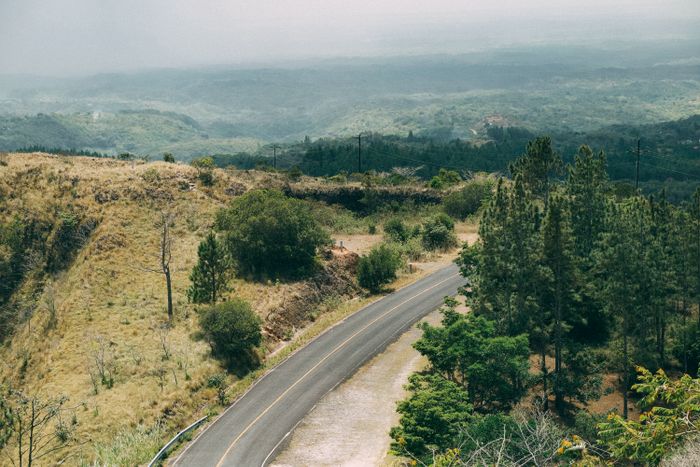
Boquete sits at 1,200 metres in the Chiriquí highlands and enjoys what Panamanians call "eternal spring" — but the month you choose still determines whether you hike Volcán Barú in sunshine or spend three days wrapped in cloud. Here is the honest, specific breakdown that most guides skip.
Temperature barely moves across the year — highs stay between 70°F and 75°F (21–24°C) almost every month, with nights in the high 50s (around 15°C) year-round. What changes dramatically is rain, cloud cover, crowd density, accommodation prices, and the presence of one of Panama's most distinctive weather phenomena: the bajareque. Get those variables right and Boquete rewards you generously. Get them wrong and you may spend your mornings waiting for mist to lift off a trail you drove four hours to reach.
Section 01The bajareque — Boquete's signature weather, properly explained
Every travel guide to Boquete mentions the bajareque. Almost none of them explain what it actually is, when it happens, or what it means for your plans. Here is the full picture.
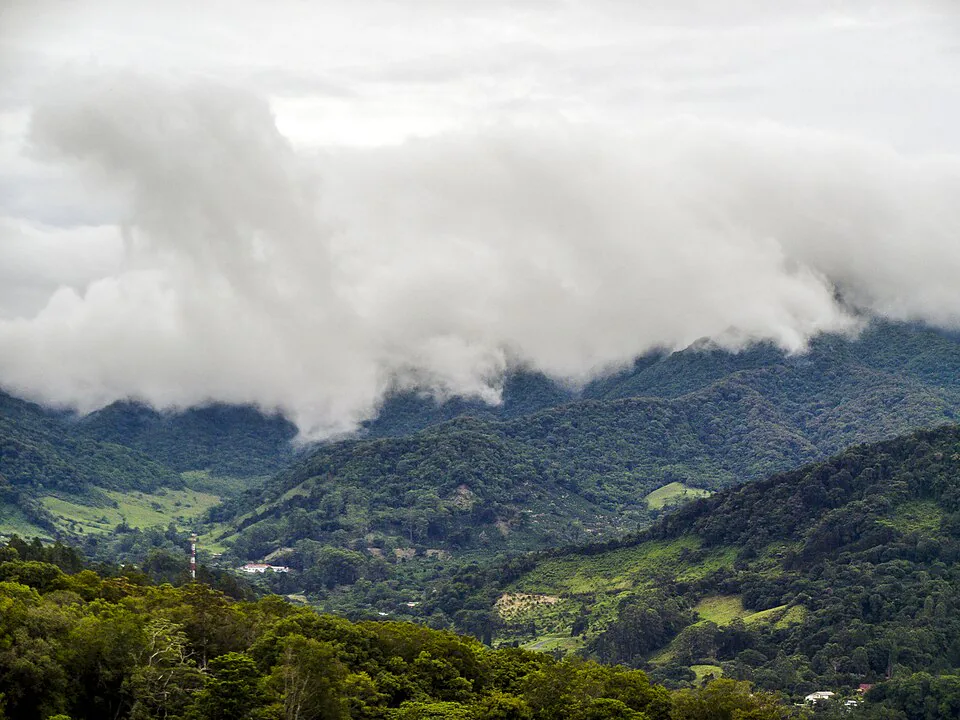
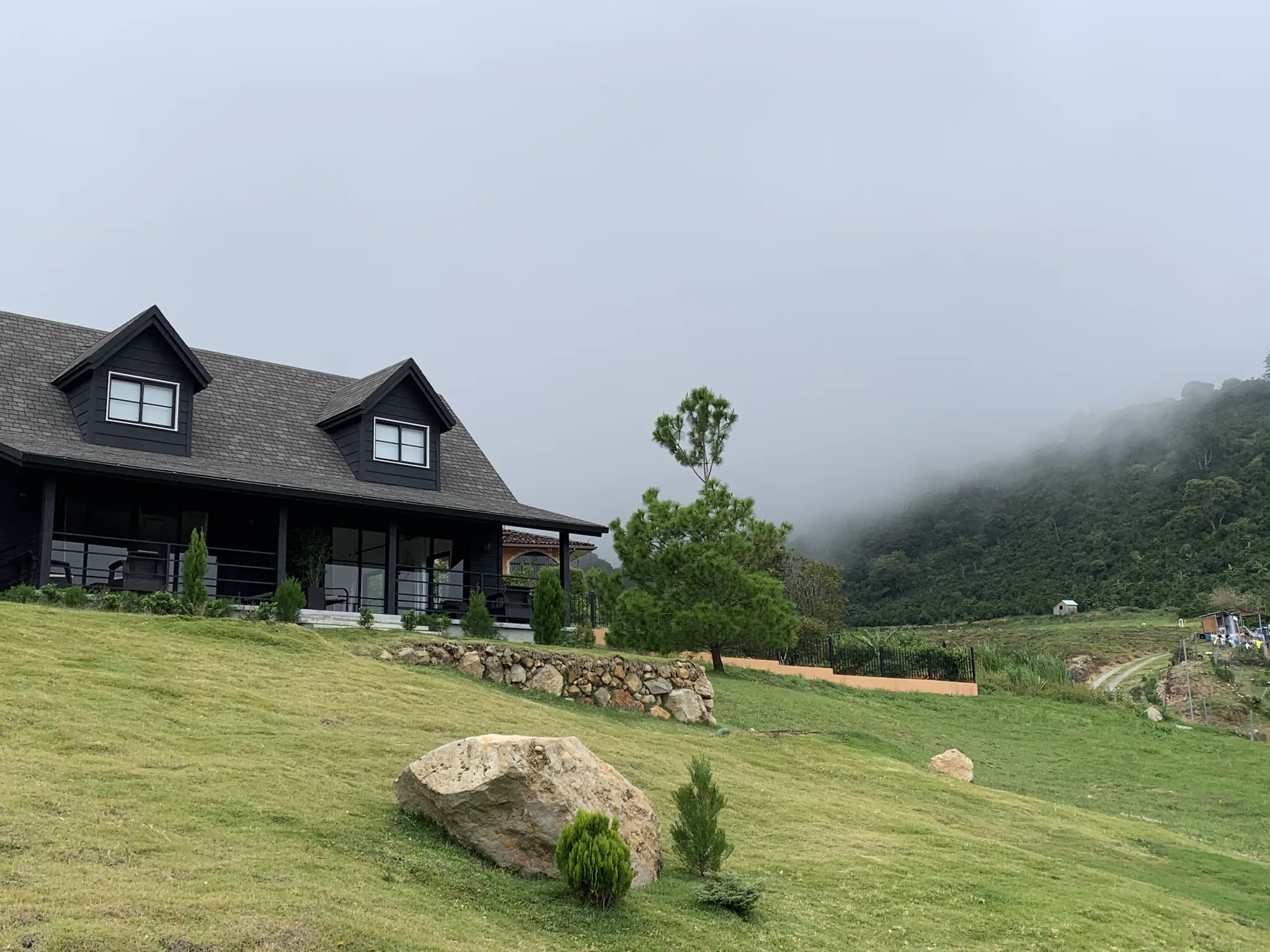
The bajareque (bah-hah-REH-keh) is a fine, wind-driven mist — not quite rain, not quite fog — that forms when trade winds push moisture-laden Caribbean air up and over the continental divide and down into the Caldera River valley where Boquete sits. The droplets are so small they barely wet your sleeve, but they accumulate. Walk through a bajareque for twenty minutes and your hair is damp. Walk through it for an hour on an exposed ridge and your jacket is soaked through.
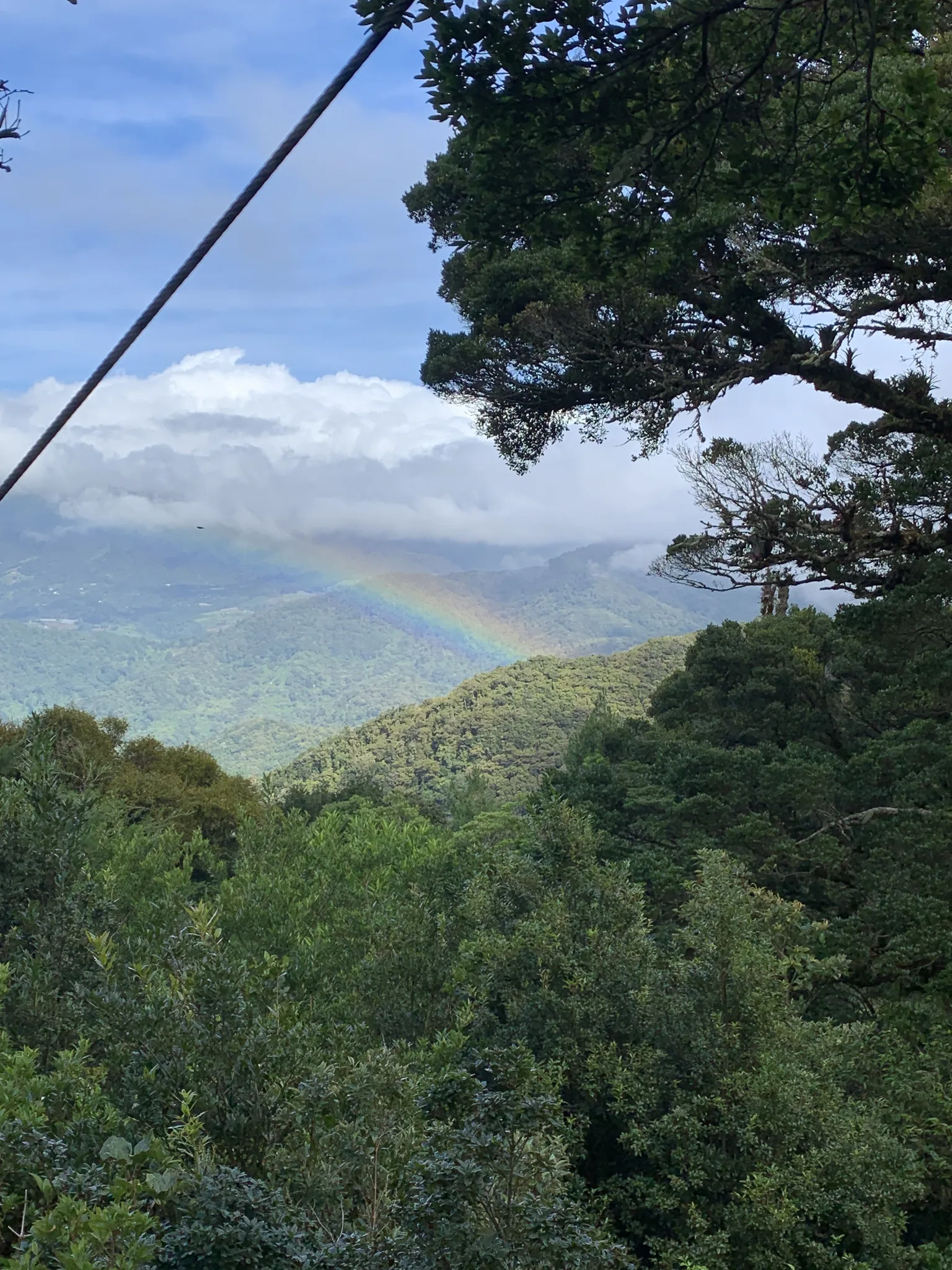
What makes it unusual is the timing and the light. The bajareque frequently arrives while the sun is still shining, producing a diffuse golden glow through the mist and, almost invariably, a rainbow arching over Volcán Barú. Locals consider it a point of local pride. Visitors who are not expecting it sometimes mistake it for the start of a full rainstorm and retreat indoors — which is a mistake.
The bajareque occurs year-round but has clear seasonal patterns:
- December–March: Light and intermittent, usually lasting under thirty minutes. Often appears in the afternoon. Does not significantly affect hiking or outdoor plans.
- April–May: More frequent and slightly heavier as the transition to green season begins. Can reduce visibility on upper trails above 2,500 m.
- June–October: Merges with afternoon rain. The distinction between bajareque and rain becomes academic — you will be wet either way by 2 p.m. Plan accordingly.
- November: Eases noticeably in the second half of the month as the dry season approaches. The classic rainbow-and-mist bajareque returns.
For hikers, the practical implication is this: the bajareque alone is rarely a reason to cancel a hike. Heavy afternoon rain is. Learn the difference and you will make better decisions on the ground.
Section 02Two seasons at a glance
Boquete runs on two seasons, defined entirely by rainfall rather than temperature.
| Season | Months | Rainfall | Crowds | Verdict |
|---|---|---|---|---|
| Dry season | Mid-Dec to Apr | Low — Feb averages just 0.9 in (23 mm) | High, peak in Jan–Feb | Best for hiking |
| Shoulder (start) | Late Apr–May | Rising — Apr averages 8.2 in (209 mm) | Low | Best value |
| Green season | Jun–Oct | Heavy — Oct peaks at 20.5 in (520 mm) | Very low | Mornings fine, afternoons wet |
| Shoulder (end) | Nov–mid-Dec | Falling — Nov around 6 in (152 mm) | Low | Underrated sweet spot |
One number to hold in your head: Boquete's temperature range across the entire year is only about 8°F (4°C). You are not choosing between cold and hot. You are choosing between dry and wet, crowded and empty, expensive and affordable.
Section 03Month-by-month breakdown
January — Festival month, peak crowds
January is the most exciting and the most crowded month to be in Boquete. The Feria de las Flores y del Café (Flowers and Coffee Festival) runs for ten to twelve days in mid-January, drawing tens of thousands of visitors from across Panama and abroad. The fairground on the edge of town fills with coffee booths, flower displays, live music, and artisan stalls. Accommodation books out weeks in advance; budget rooms that normally cost $30 jump to $60 or more. Book at least six to eight weeks ahead if you are coming for the Feria.
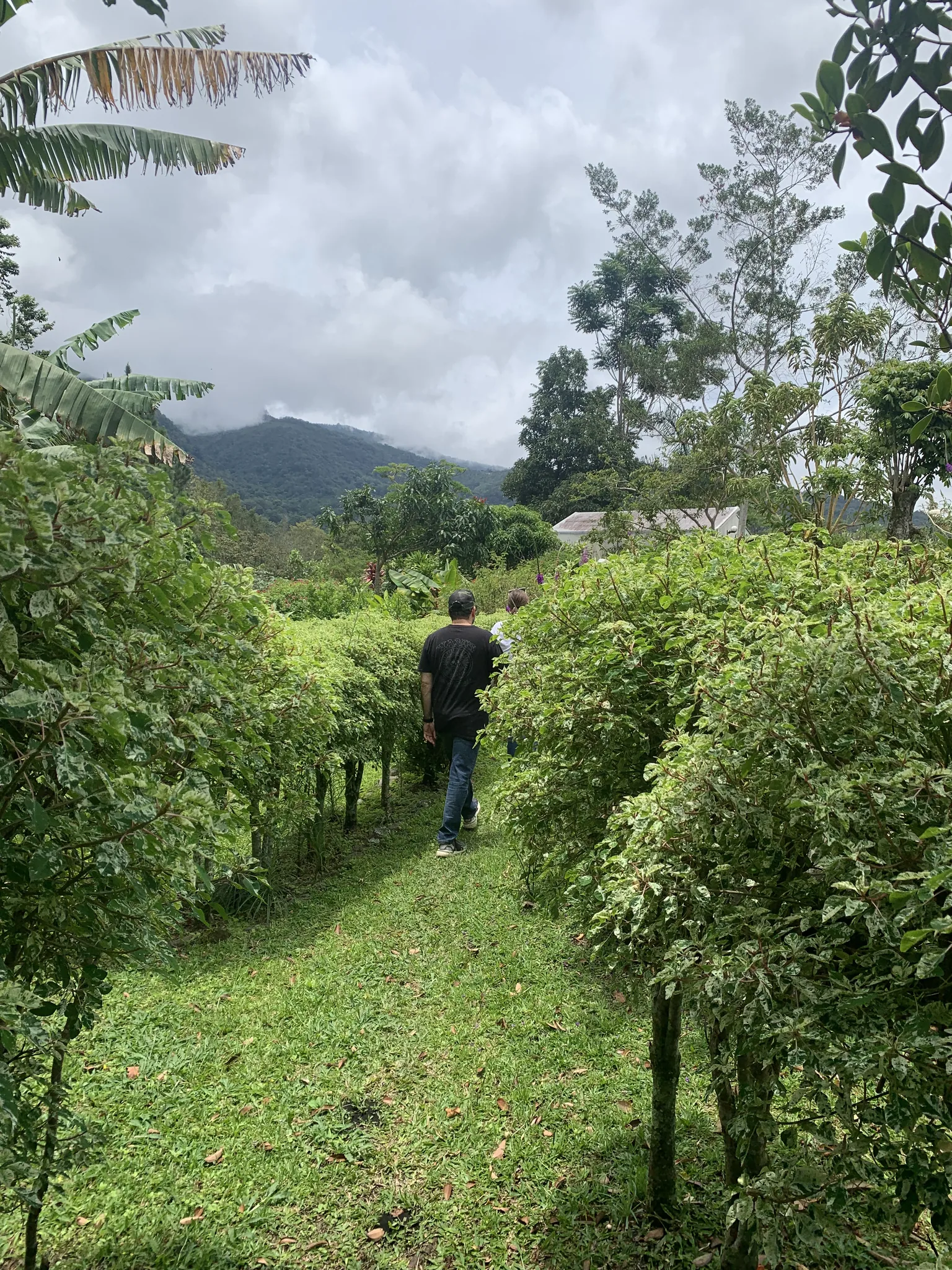
Weather-wise, January is excellent. It is the clearest month of the year — skies are clear or partly cloudy roughly 55% of the time. Average high: 70°F (21.5°C). Rain is possible but rare. The bajareque appears briefly most afternoons. Ideal for the Volcán Barú summit hike and the Pipeline Trail.
February — The sweet spot of dry season
February is the driest month on record, averaging just 0.9 inches (23 mm) of rain across the month and only about 2–3 wet days. Skies are reliably blue by 7 a.m. Temperatures peak around 72°F (22°C). Crowds are high but slightly below the Feria frenzy of January. This is the month most experienced travelers choose: all the good weather, slightly fewer people, and accommodation still available with a week's notice rather than two months. Coffee harvest is winding down but farms are still processing; cupping tours are excellent in February.
March — Last of the dry season
March is the tail end of the dry season and remains excellent for outdoor activities. Average high nudges up to 73°F (22.8°C) — the warmest month of the year. Rain starts to increase slightly (about 3.9 inches / 98 mm average) but is still concentrated in brief afternoon showers. The quetzal breeding season peaks in March and April, making this the best month to spot resplendent quetzals on the trails above Boquete, particularly on the Finca Lérida trail and the Pipeline Trail above 1,800 m. Crowds thin from February levels. A very good month overall.
April — Best value in dry season
April is the transition month and, for independent travelers, arguably the single best month to visit. Rainfall increases noticeably — averaging 8.2 inches (209 mm) — but the pattern is predictable: clear mornings, cloud building after noon, rain in the afternoon. If you start hikes by 7 a.m. and are back in town by 1 p.m., you will have excellent conditions. Accommodation prices drop 20–30% from peak season. Quetzal sightings remain good through mid-April. The hillsides are beginning to green up after the dry months. Fewer tourists on every trail.
May — Shoulder season begins
May is when the green season arrives in earnest. Rainfall jumps to 17.3 inches (439 mm) — a significant increase — and humidity rises to around 90%. Mornings are still frequently clear and usable for hiking, but afternoon rain is reliable and sometimes heavy. The waterfalls around Boquete (including the three cascades on the Lost Waterfalls Trail) are at their most dramatic. Accommodation prices are at their lowest. The town is quiet. This is a genuinely good month for travelers who are flexible about timing their days and who want to see Boquete at its most intensely green.
June, July, August — Deep green season
These three months are statistically the wettest and cloudiest. June averages 15.9 inches (403 mm) of rain; July 15.8 inches (401 mm); August 16.6 inches (422 mm). The sky is overcast or mostly cloudy roughly 96% of the time in June. That said, mornings — especially before 9 a.m. — are often workable. The Volcán Barú summit hike is not recommended in these months: the upper section above 3,000 m is frequently socked in cloud, and the trail becomes slippery and potentially dangerous. The Pipeline Trail, which stays below 2,000 m, remains doable in the morning. Coffee farms are in their growing phase; no harvest activity. Prices are rock-bottom. Mosquito pressure is at its highest (see Section 07). This is the month for travelers who want solitude, dramatic landscapes, and very low costs — not for those who need reliable outdoor access.
September — Wettest shoulder
September is similar to August in rainfall (16.7 inches / 423 mm) and humidity (89–92%). The Atlantic hurricane season is at its peak during September and October, and while Boquete itself is not in a hurricane zone, the associated weather systems push additional moisture into western Panama, intensifying the green season rains. Expect heavier-than-average rainfall in September and October compared to June and July. Not the month to plan a summit hike or multi-day trek. Good for coffee farm visits, cooking classes, and exploring the town itself.
October — Peak rainfall, coffee harvest begins
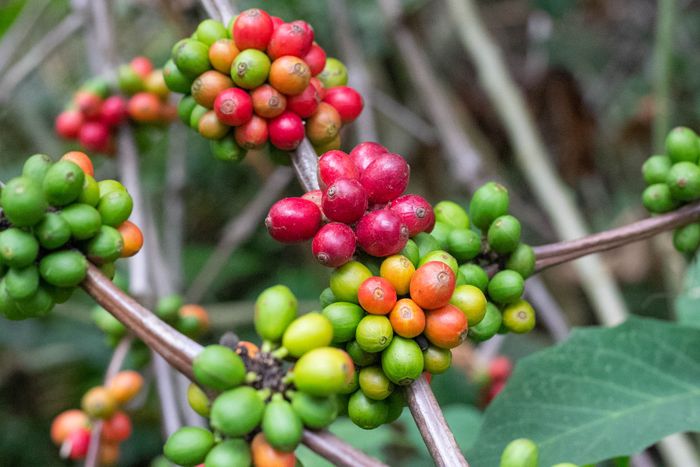
October is the wettest month of the year, averaging 20.5 inches (520 mm) of rain and humidity around 93%. It is also, paradoxically, when the coffee harvest begins on the lower-elevation farms around Boquete. The cherries start turning red on the Catuai and Typica plants, and some farms begin selective picking by mid-October. If coffee is your primary interest, this is a fascinating time to visit — you will see the harvest in its early stages — but you need to accept that outdoor hiking will be significantly limited by rain. The town is very quiet and accommodation is cheapest of the year.
November — The underrated transition month
November is the most underrated month in Boquete's calendar and one that almost every guide either ignores or lumps vaguely into "rainy season." The reality is more nuanced. Early November (the first two weeks) is still firmly in green season — expect 6 inches (152 mm) of rain across the month, with most of it front-loaded. But from around November 15 onward, the rains begin to ease noticeably. By the last week of November, you can have three or four consecutive dry days — a rarity in the preceding six months. The hillsides are at their most intensely green. Coffee harvest is in full swing across all elevations. Crowds are minimal. Accommodation prices are still at low-season rates. If you can visit in the second half of November, you are getting close to dry-season conditions at green-season prices. This is a genuine blindspot in most travel advice about Boquete.
December — Dry season returns
The dry season officially reasserts itself around mid-December. The first two weeks can still see residual rain from November, but by December 15 the pattern has typically shifted. Skies clear, the bajareque becomes light and picturesque again, and the town begins to fill with Panamanian families and international visitors heading toward the Christmas and New Year holidays. The last week of December is busy and festive. Coffee harvest is at full intensity across all farms — this is one of the best months for farm tours, cupping sessions, and buying freshly processed beans directly from producers. Book accommodation for the Christmas–New Year period at least four to six weeks in advance.
Three rides. One unforgettable Boquete.
Premium Orbea e-bikes that do the climbing for you. Helmet, gloves, water and route support included — and you pay when you arrive.
Coffee Farm E-Bike Tour
Ride to a working farm and see how Geisha — the world's most expensive coffee — is made. Tasting at Altieri Specialty Coffee, geisha ice cream included.
Guided Highlights Ride
Lost Waterfalls, Library Park and the highland viewpoints locals love — the spots most visitors never find.
Self-Paced Rental
Hourly or full-day. Take a recommended route or just wander. The e-bike means hills don't decide your day.
Section 04Activity feasibility by month
| Activity | Best months | Avoid | Notes |
|---|---|---|---|
| Volcán Barú summit hike | Jan–Mar | Jun–Oct | Dry only — summit above 3,400 m clouds over fast in wet season; trail is dangerous when wet |
| Pipeline Trail | Nov–Apr (all day); May–Oct (mornings only) | None entirely | Year-round — lower elevation keeps it manageable; best quetzal sightings Mar–Apr |
| Lost Waterfalls Trail | May–Nov | Feb–Mar (waterfalls low) | Better wet — cascades are dramatically fuller; trail is slippery but safe with proper footwear |
| Coffee farm tours | Oct–Mar (harvest); year-round (tours) | None | Year-round — harvest tours most interesting Oct–Feb; processing tours good Dec–Mar |
| Quetzal spotting | Mar–May | Jul–Sep | Breeding season — males display most actively Mar–Apr above 1,800 m |
| Whitewater rafting (Río Chiriquí) | Jun–Nov | Feb–Mar (water low) | Better wet — water levels are too low in peak dry season for Class III–IV runs |
| Feria de las Flores y del Café | Mid-January only | All other months | Annual event — book accommodation 6–8 weeks ahead |
| Bird photography | Nov–Apr (light); May–Oct (lush backgrounds) | None | Trade-offs — dry season gives better light; wet season gives richer foliage backdrops |
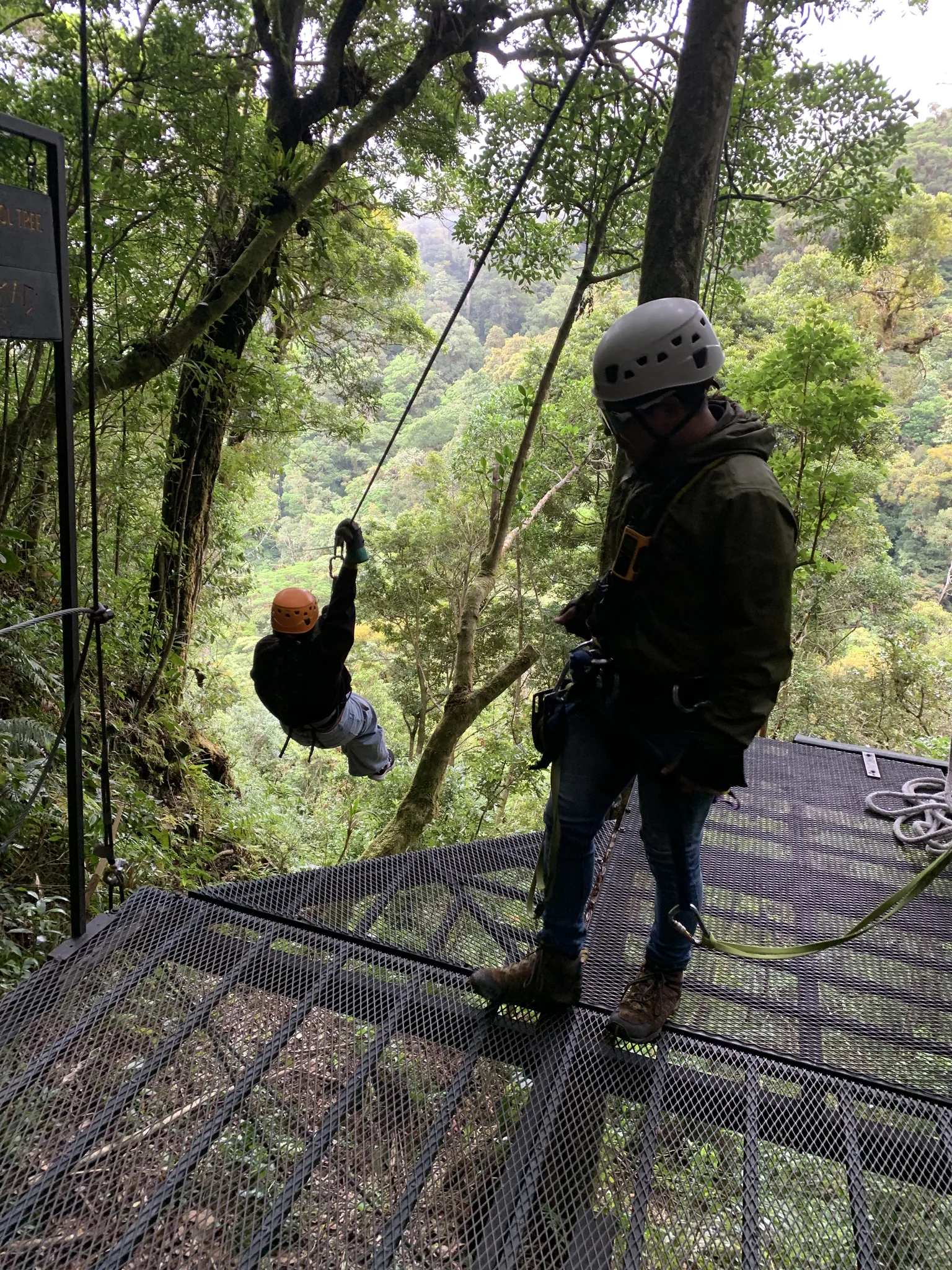
One activity that works beautifully in almost any month is an e-bike tour of the valley. The roads around Boquete — through coffee farms, past the Caldera River, and up into the lower highland neighborhoods — are rideable year-round, and the morning window before afternoon rain opens up the green season considerably. E-Valley Bikes operates guided and self-guided e-bike tours out of Boquete that cover terrain most visitors never reach on foot.
Section 05Micro-climates and altitude within Boquete
Almost no guide mentions this, but Boquete is not a single weather zone. The valley has meaningful micro-climate variation that can make a real difference to your experience.
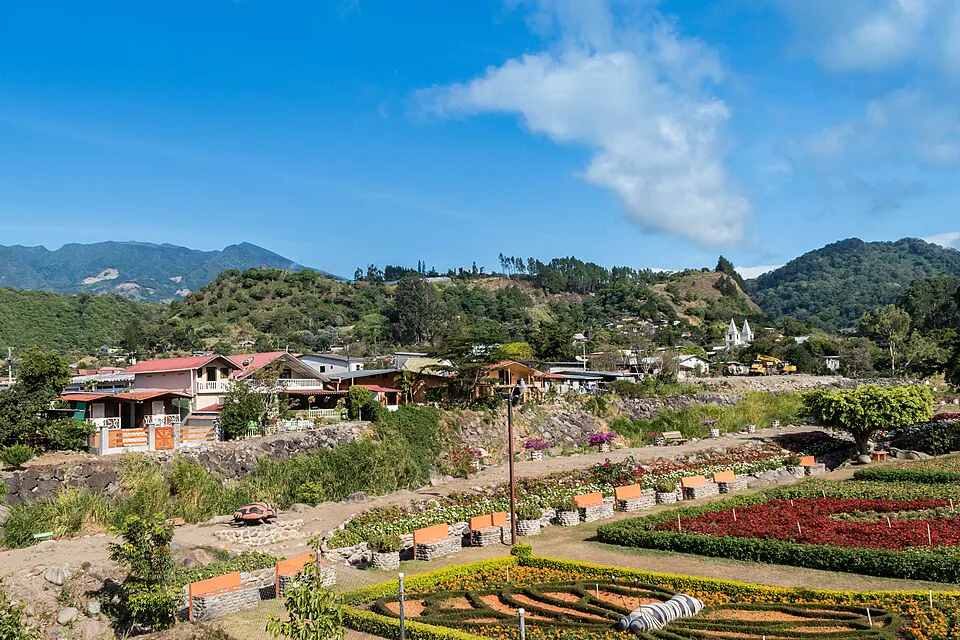
Town center (1,100–1,200 m): The most sheltered part of the valley. During the green season, the town itself often stays drier than the surrounding hillsides because the mountains to the north and east catch the incoming moisture first. If it is raining heavily on the slopes, the main street of Boquete may only be getting a bajareque.
Alto Boquete and upper neighborhoods (1,300–1,500 m): Neighborhoods like Jaramillo and the areas above the Finca Lérida road sit higher and catch more cloud and mist. These areas are noticeably cooler (sometimes 5–7°F / 3–4°C colder than town) and receive more rainfall. Beautiful for coffee farm stays but pack warmer layers than you think you need.
Volcán Barú upper slopes (above 2,500 m): A completely different climate. Even in the dry season, the summit area above 3,000 m can be in cloud by 9 a.m. The famous summit sunrise hike requires leaving town at midnight specifically to reach the top before cloud closes in — typically around 7–8 a.m. even in January. In the wet season, the upper slopes are almost permanently clouded.
The Caldera River valley floor: Slightly warmer and more humid than the town center, with less wind exposure. The bajareque is less common here. Good for cycling and farm visits even when the upper slopes are in cloud.
Section 06Crowds, prices, and festivals
Boquete's crowd and pricing calendar is more compressed than most highland destinations. The town goes from genuinely busy to nearly empty in the space of a few weeks.
| Period | Crowd level | Accommodation price index | Key events |
|---|---|---|---|
| Feria week (mid-Jan) | Extremely high | 150–200% of base rate | Feria de las Flores y del Café |
| Jan–Mar (non-Feria) | High | 120–140% of base rate | Dry season peak; book ahead |
| April | Moderate | 100% (base rate) | Best value dry season |
| May–October | Low to very low | 65–80% of base rate | Green season; walk-in availability |
| November | Low | 70–85% of base rate | Underrated; harvest begins |
| Dec 1–14 | Low to moderate | 85–100% of base rate | Transition; good value |
| Dec 15–Jan 1 | High | 130–160% of base rate | Christmas/New Year; book early |
Beyond the Feria de las Flores y del Café in January, Boquete hosts a smaller Orchid Festival (typically February or March) and various coffee-harvest events in November and December organized by individual farms. The Finca Lérida, Kotowa, and Elida Estate farms all run special harvest-season experiences from October through February that are worth booking directly.
One practical note on crowds: even at peak season, Boquete is not overwhelmed in the way that, say, a Caribbean beach town can be. The town has genuine infrastructure for visitors, the trails are well-maintained, and the Feria, while busy, is genuinely worth experiencing rather than avoiding.
Section 07Insects, mosquitoes, and practical health by month
It is the question almost everyone asks before booking, and it rarely gets a straight answer. Here is the honest breakdown.
Boquete's elevation (1,200 m and above) keeps it significantly cooler and drier than Panama's lowlands, which dramatically reduces mosquito pressure compared to coastal Panama. You are not in the same situation as someone visiting Bocas del Toro or the Pacific beaches.
Dry season (December–April): Mosquitoes are minimal. The low humidity and cooler temperatures suppress breeding. You may encounter the occasional mosquito at dusk near standing water, but insect repellent is largely a precaution rather than a necessity. No significant risk of dengue or malaria at this elevation in this season.
Green season (May–October): Mosquito pressure increases meaningfully. The heavy rainfall creates standing water in the coffee farms and forest understory, and humidity stays above 90%. Bring DEET-based repellent (30% concentration is sufficient) and apply it before any afternoon outdoor activity. The risk is still considerably lower than Panama's lowland areas, but it is not negligible. Wear long sleeves and trousers for evening outdoor dining.
October–November: Peak mosquito season coincides with peak rainfall. This is the one period where insect management requires active attention. Apply repellent consistently, use accommodation with screens or air conditioning, and avoid standing water areas at dawn and dusk.
Other insects worth knowing about: sand flies (jejenes) are occasionally present near the Caldera River in the wet season. They are small enough to pass through standard mosquito nets and their bites itch intensely. A DEET spray handles them. Biting ants are present year-round on forest trails — wear closed shoes, not sandals, on any trail above town.
Section 08Verdict: which month is right for you
The honest answer is that Boquete has no truly bad month — only months that suit different priorities. Here is the direct recommendation by traveler type.
You want reliable hiking weather and do not mind crowds: January through March. February is the single driest month. Book accommodation at least three weeks ahead outside Feria week, six to eight weeks ahead for Feria itself.
You want dry-season weather at green-season prices: April is the answer. Mornings are excellent. Afternoons bring rain. Prices are 20–30% below peak. Quetzals are still active. This is the month experienced Boquete visitors return to.
You are a birder specifically hunting the resplendent quetzal: March through early May. Males are in breeding plumage and displaying actively. The Pipeline Trail above 1,800 m and the Finca Lérida trail are your best bets. Start before 6:30 a.m.
You are a coffee enthusiast: October through February covers the full harvest arc — from first picking through processing, drying, and milling. November and December are the most active harvest months. January and February are when freshly processed lots are available to taste at the farms.
You want maximum solitude and the lowest prices: June through August. Accept that afternoons will be wet. Plan all outdoor activity for before noon. The waterfalls are spectacular, the town is quiet, and accommodation rates are at their floor.
You want the best of both worlds — green landscapes, lower prices, and mostly dry conditions: The second half of November. This is the most underrated window in Boquete's calendar. The rains are easing, the hillsides are electric green, the coffee harvest is in full swing, and you will have the trails and restaurants largely to yourself.
You want to experience the Feria de las Flores y del Café: Mid-January, no other option. It runs for ten to twelve days. Check the exact dates for your year, as they shift slightly. Book everything early.
The bajareque is not a weather warning. It is a welcome. Boquete's mist and its coffee and its cloud forest are the same system — the same moisture that rolls over the continental divide feeds the beans and the quetzals and the waterfalls. You came for all of it. The mist is part of the deal.
However you time your visit, the valley rewards those who move through it slowly. The coffee farms, the forest trails, the morning light on Volcán Barú — none of these are things you absorb at speed. Whether you are on foot, in a 4WD, or rolling through the lower valley roads on an e-bike with the morning mist still on the coffee plants, Boquete pays back the time you give it.