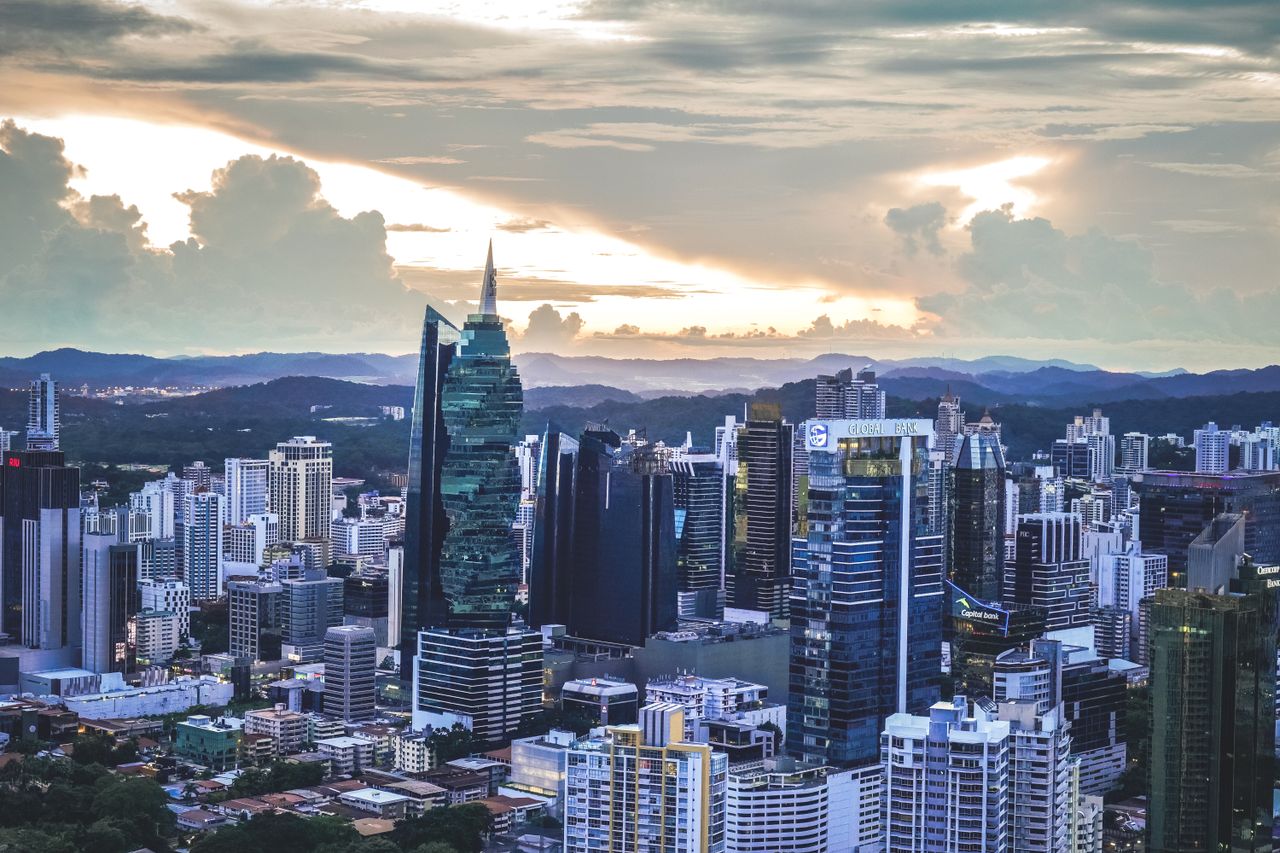
Panama is not one climate. It is a narrow land bridge between two oceans, draped over a mountain spine, punctuated by archipelagos, and cut through by a canal — and the weather on the Caribbean side can be the exact opposite of what is happening on the Pacific coast on the same day. Almost every guide you will find online tells you "December to April is the dry season." That is true for the Pacific. It is largely irrelevant for Bocas del Toro. This guide gives you the actual breakdown: coast by coast, region by region, month by month, with specific price and crowd data so you can plan a trip that matches what you actually want to do.
The short answer, if you need one: January through March is the safest all-round window — Pacific beaches are dry, highland trails are clear, and the canal is photogenic. But "safest" is not always "best." October is the cheapest month to fly and sleep in Panama, and the Bocas del Toro islands are at their calmest. November brings back-to-back national holidays and a festive energy in Panama City that rivals Carnaval. The rest of this guide exists so you can make the call for your own trip.
Section 01Two coasts, one country — why the standard advice is incomplete
Panama sits at roughly 9 degrees north of the equator. The Pacific coast faces southwest toward the open ocean; the Caribbean coast faces northeast into the trade winds. The two coastlines are separated by the Cordillera Central, a mountain range that intercepts moisture moving off the Caribbean and wrings it out as orographic rainfall. The result is that the Pacific side has a textbook tropical wet-dry cycle, while the Caribbean side is wet for most of the year — but with its own dry windows that are widely misunderstood.
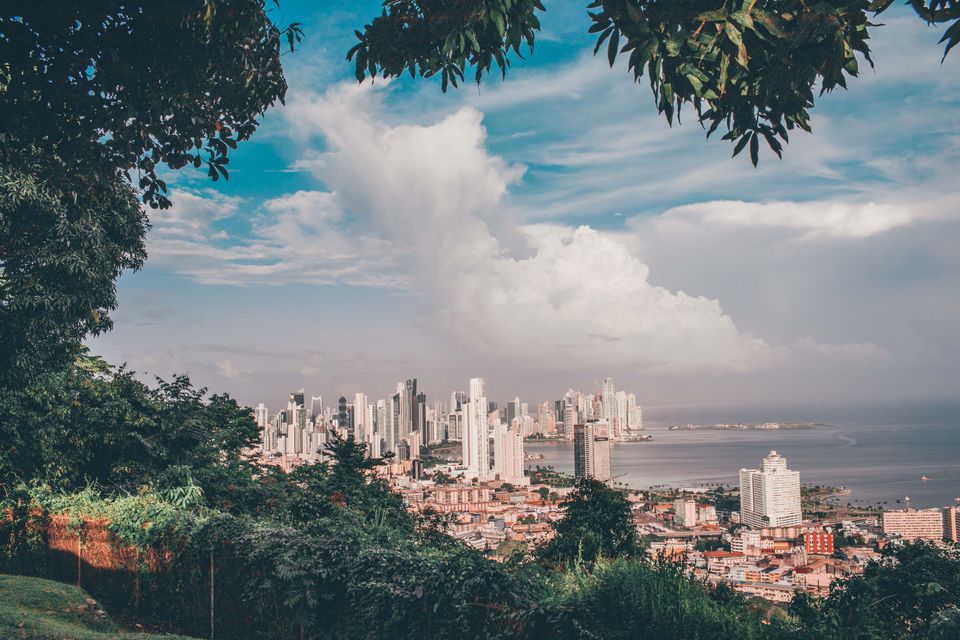
The Pacific dry season (locally called verano, "summer") runs from approximately mid-December to mid-April. Trade winds blow offshore, skies are clear, and the Pacific coast receives less than 50 mm of rain per month from January through March. Panama City, the canal, the Azuero Peninsula, Santa Catalina, and the Chiriquí highlands all follow this pattern.
The Caribbean coast — including Colón, the San Blas archipelago, and the Bocas del Toro islands — does not have a clean dry season. It rains in every month of the year. The least-wet windows are February through April (roughly 100–150 mm/month) and a shorter lull in September and October (the so-called veranillo del Caribe, or "little Caribbean summer"). Outside those windows, expect 200–400 mm per month, with October and November being the wettest months on the Caribbean side.
Elevation adds a third variable. Boquete, in the Chiriquí highlands at 1,200 m (3,900 ft), is 8–12°C cooler than Panama City at any time of year. Its cloud forest generates its own microclimate: mist and light rain are possible even in the dry season, but the heavy afternoon downpours of the lowland wet season are replaced by cool drizzle. The perceived comfort level in Boquete is high year-round; the question is whether you want hiking trails that are dry or lush.
Section 02Month by month: what to expect across Panama
The table below summarizes conditions across the four main travel zones. "Dry" means fewer than 60 mm of rain for the month and predominantly sunny days. "Mixed" means afternoon showers are common but mornings are usually clear. "Wet" means persistent rain, often all-day, with significant disruption to outdoor activities. "Lull" marks the Caribbean's brief respite windows.
| Month | Pacific Coast / City | Caribbean Coast | Bocas del Toro | Highlands (Boquete) |
|---|---|---|---|---|
| January | Dry | Mixed | Mixed | Dry-cool |
| February | Driest | Lull | Lull | Dry-cool |
| March | Dry, hot | Lull | Lull | Dry-warm |
| April | Transitional | Mixed | Mixed | Transitional |
| May | Wet starts | Wet | Wet | Mixed |
| June | Wet | Wet | Wet | Mixed |
| July | Wet | Wet | Wet | Mixed |
| August | Wet | Wet | Wet | Mixed |
| September | Wet | Lull | Lull | Mixed |
| October | Wet, heaviest | Lull | Lull | Mixed-wet |
| November | Wet, easing | Wet | Wet | Mixed |
| December | Transitional | Mixed | Mixed | Dry starts |
January is peak season. Hotels on the Pacific coast and in Panama City are at 85–95% occupancy. Expect to pay $180–$280/night for a mid-range hotel in Casco Viejo, compared to $90–$140 for the same property in September. The Panama Jazz Festival draws international crowds in the third week of January. Skies are reliably clear, humidity is lower than any other month (relative humidity around 70% versus 85–90% in October), and the Pacific is calm for snorkeling and diving.
February is statistically the driest month in Panama. Carnaval falls here most years (occasionally early March), transforming Las Tablas in the Azuero Peninsula into the country's most intense street party — four days of water fights, comparsas, and all-night dancing. Book Las Tablas accommodation six months out if you want to attend; Panama City's Carnaval is more accessible but still requires advance planning. February daytime highs in Panama City reach 32–34°C (90–93°F), with a heat index that can push the "feels like" temperature to 40°C (104°F) in the afternoon.
March is the hottest month. Temperatures on the Pacific coast peak at 34–36°C (93–97°F), and the heat index in Panama City regularly exceeds 42°C (108°F) by early afternoon. This is still a popular month — the dry weather holds, Easter week (Semana Santa) falls here or in April, and the Pacific beaches are at their most photogenic. But if you are sensitive to heat, February or January offer the same dry skies with marginally lower temperatures.
April is the transition month. The first rains arrive on the Pacific coast, usually as afternoon thunderstorms in the second or third week. Mornings remain dry and sunny. Prices begin to drop — a good mid-range room in Panama City that cost $200 in February might be $130 by late April. The Caribbean coast is still in its lull window through mid-April. Easter week (if it falls in April) causes a domestic travel surge: Panamanians head to the beach en masse, prices spike for that specific week, and roads to Pacific beaches like Santa Clara and Coronado are heavily congested.
May through August is the green season on the Pacific side. Rain arrives daily, typically between noon and 6 pm, in heavy but short bursts — rarely all-day. Mornings are usually clear and warm. The landscape turns an extraordinary saturated green. Waterfalls run full. Rivers swell enough for white-water rafting on the Río Chiriquí and Río Chiriquí Viejo. Hotel rates drop 30–50% versus peak season. A mid-range room in Boquete that runs $120 in January averages $65–$80 in June. The downside: some rural roads become muddy and difficult, and afternoon activities on the Pacific coast require flexibility.
September and October are the wettest months on the Pacific side — October averages 250–300 mm of rain in Panama City — but they are simultaneously the driest months in Bocas del Toro. This is the single most important regional inversion in Panama's weather calendar and the one most consistently missed by mainstream guides. If Bocas is your priority, September and October are your best windows. Prices across the country are at their annual low. International flights to Panama City are typically 20–35% cheaper than in January.
November sees the rains begin to ease on the Pacific coast. Two major national holidays — Día de la Independencia de Panamá from Spain (November 3) and Día de la Independencia de Panamá from Colombia (November 28) — plus Primer Grito de Independencia (November 10) create a festive atmosphere in Panama City. Domestic travel surges around these dates; book accommodation in the capital at least three weeks ahead. By late November, the Pacific coast is transitioning back toward the dry season.
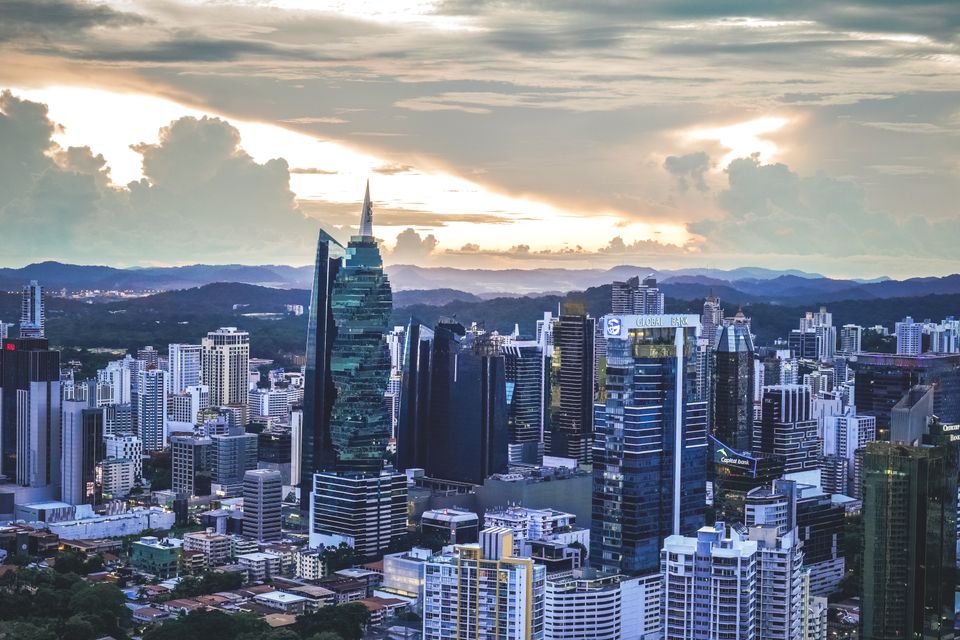
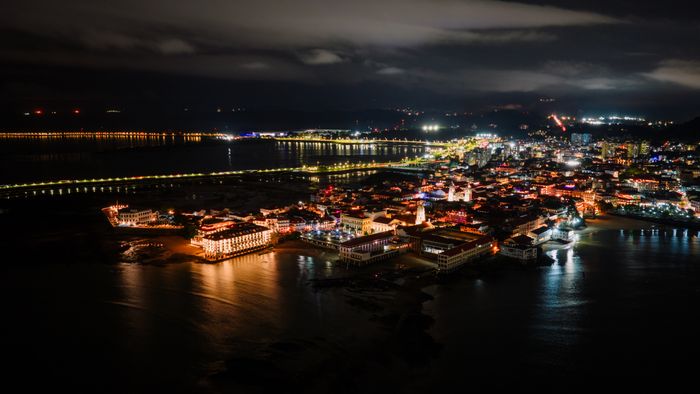
December is a split month. The first two weeks are still transitional — you may get afternoon rain, you may not. By December 15–20, the dry season is reliably established on the Pacific coast. Christmas week and New Year's are as busy and expensive as January, with Panama City hotels at peak occupancy. The Panama City skyline fireworks on New Year's Eve, viewed from Casco Viejo or the Cinta Costera, are spectacular.
Section 03Pacific coast: the dry-season heartland
The Pacific coast — from Panama City west through the Azuero Peninsula to the Chiriquí Gulf, and including Santa Catalina and Coiba — is where the classic dry-season narrative applies most cleanly. From mid-December through mid-April, rainfall is minimal, skies are blue, and the Pacific is calm enough for snorkeling, diving, and island-hopping.
The Azuero Peninsula is the driest part of Panama. Towns like Chitré, Las Tablas, and Pedasi receive less than 30 mm of rain per month from January through March — drier than many Mediterranean resorts in summer. The landscape becomes noticeably arid: cattle graze on yellowed grass, and the famous pollera festivals take place in full sun. If you want to experience Panama's deepest folkloric traditions, the Azuero in dry season is where to go.
Santa Catalina, the Pacific surf town and gateway to Parque Nacional Coiba, follows the same Pacific pattern but with an important caveat: the best surf arrives with the wet season. Swells build from April onward, peak from June through October, and the point break at Santa Catalina is most consistent from July through September. Coiba's diving is excellent year-round but visibility is best from January through April, when seas are calm and plankton blooms are minimal.
Pacific beach towns within two hours of Panama City — Santa Clara, Coronado, Playa Blanca — are popular with urban Panamanians year-round. During the dry season they are genuinely pleasant. During the wet season they are functional but not beautiful: brown waves, overcast skies, and the occasional jellyfish bloom. If beach time is the point, stick to December through April on the Pacific.
Section 04Caribbean coast: the inverted calendar
The Caribbean coast of Panama operates on a different seasonal logic. The trade winds bring moisture off the Atlantic year-round, and there is no true dry season — only windows of reduced rainfall. Understanding these windows is the difference between a good trip and a soggy one.
The two main lull periods are: February through April (the primary window, roughly 100–150 mm/month, with mostly morning sunshine) and September through October (the veranillo, with similarly reduced rainfall). Outside these windows, the Caribbean coast receives 200–400 mm per month, with October and November being the heaviest months.
The Caribbean coast town of Portobelo — a UNESCO World Heritage Site with Spanish colonial forts — is accessible year-round but is most enjoyable in the February-April window. The same applies to the diving sites around Isla Grande. Colón, the Caribbean port city, is not a tourist destination in itself but is the entry point for San Blas and the Portobelo area.
A practical note on Caribbean coast heat and humidity: the base temperature is similar to the Pacific (29–32°C year-round), but the persistent moisture means the heat index is consistently higher. In October, the "feels like" temperature in Colón regularly exceeds 45°C (113°F). February and March are the most comfortable months on the Caribbean coast, with relative humidity dropping to around 75–80%.
Section 05Boquete and the Chiriquí highlands: the cool exception
Boquete sits at 1,200 m (3,900 ft) in the Chiriquí highlands, and its climate is unlike anywhere else in Panama. Daytime temperatures range from 18–24°C (64–75°F) year-round — cool enough for a jacket in the evening, warm enough for hiking in a t-shirt by midday. There is no oppressive heat, no heat index problem, and no mosquito season to speak of.

The dry season in Boquete (December through April) brings clear mornings, occasional afternoon cloud, and the famous bajareque — a fine, cool mist that rolls in from the cloud forest. Trails on Volcán Barú, Panama's highest peak at 3,474 m, are dry enough to summit from January through March. The summit hike is a 7–8 hour round trip from Boquete; the trail is muddy and dangerous in the wet season.
The wet season in Boquete (May through November) brings heavier rain, but the town remains functional and beautiful. The Feria de las Flores y del Café in January is the region's signature event, drawing visitors from across Panama for flower displays, coffee tastings, and folkloric performances. Book accommodation in Boquete at least six weeks ahead for this festival.
Boquete's coffee farms are open for tours year-round, but the harvest season runs from November through February, when you can watch the picking and processing firsthand. This is one of the world's great coffee experiences — Geisha variety beans from the Chiriquí highlands routinely sell for $600–$1,000 per pound at auction. A farm tour costs $15–$30 per person and typically includes cupping.
The Chiriquí lowlands — David, the Gulf of Chiriquí, and the Isla Boca Brava area — follow the Pacific pattern more closely than the highlands. The Gulf of Chiriquí's islands (Islas Secas, Isla Parida) are best visited from December through April, when seas are calm and visibility is good for snorkeling.
Section 06Bocas del Toro: the inverted island calendar
Bocas del Toro is Panama's most visited Caribbean destination — a cluster of islands in a sheltered lagoon, with stilted houses, colorful boats, and some of the country's best snorkeling. It is also the destination where the standard "dry season = best time" advice fails most spectacularly.

The Bocas dry windows are September and October (the veranillo) and, to a lesser extent, February through April. The worst months for Bocas are May through August and November through January — exactly the opposite of the Pacific coast calendar. Many travelers arrive in Bocas in December or January expecting Caribbean paradise and find persistent rain and choppy seas instead.
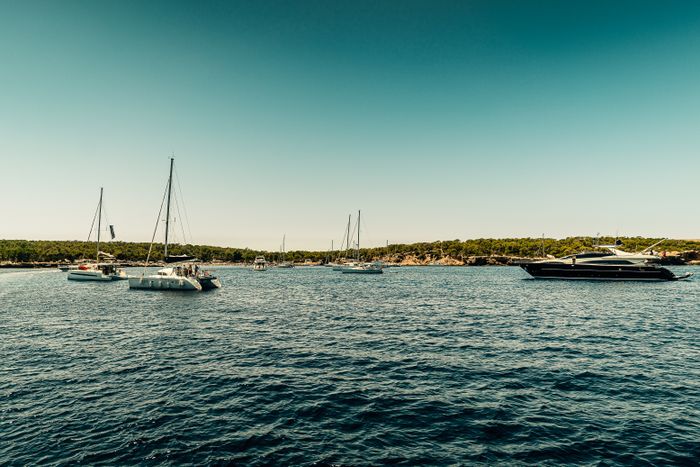
In September and October, Bocas delivers its best weather: calm turquoise water, good snorkeling visibility at sites like Cayo Coral and Polo Beach, and far fewer tourists than the February-April window. Hotel rates in September are 30–40% lower than in February. A decent guesthouse on Isla Colón that costs $80/night in February averages $50–$55 in September.
The Bocas del Toro Feria Internacional del Mar (International Sea Festival) takes place in September, celebrating the archipelago's maritime culture with seafood, folk music, and boat races. This is one of the best reasons to visit Bocas in the shoulder period.
Red frog beach on Isla Bastimentos is the most photographed spot in Bocas. The strawberry poison dart frogs (Oophaga pumilio) are present year-round but are most active after rain — paradoxically, a light shower makes frog-spotting better. The beach itself is most swimmable in September-October and February-March.
Section 07San Blas (Guna Yala): the trade-wind archipelago
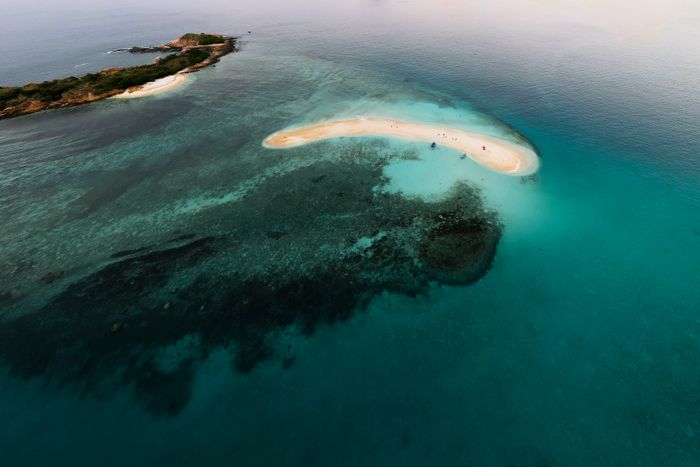
The San Blas archipelago — 378 islands administered by the Guna indigenous nation — sits off Panama's Caribbean coast and has its own microclimate driven by the northeast trade winds. The best time to visit San Blas is from December through April, when the trade winds are consistent (good for sailing), the sea is relatively calm, and rainfall is at its annual minimum.
From May through November, the trade winds weaken, seas become rougher, and rainfall increases substantially. Many of the small island camps (the primary accommodation in San Blas) close or reduce operations during the heaviest months of September through November. If you are planning a sailing trip through the archipelago — a popular route for boats transiting between Colombia and Panama — February through April offers the most reliable conditions.
Water clarity in San Blas is best from January through March, when visibility at snorkel sites like Chichimé Cays and Cayos Holandeses reaches 15–20 m. By October, visibility drops to 5–8 m and sea conditions can make island-hopping uncomfortable. The Guna communities are welcoming year-round, but the experience of sleeping in a thatched hut over crystal water is most idyllic in the dry season.
Practical note: San Blas is reached by 4x4 via the Llano-Cartí road (2–3 hours from Panama City, the last section unpaved and genuinely rough) or by small plane. The road becomes impassable after heavy rain — another reason the dry season is strongly preferred. Budget $30–$80/night for all-inclusive island camp accommodation; prices are fairly consistent year-round since the Guna communities set their own rates.
Section 08The Darién and interior: the wet frontier
The Darién — Panama's vast, roadless jungle province bordering Colombia — is one of the wettest places in the Americas. Annual rainfall in parts of the Darién exceeds 3,000 mm (118 inches), and there is no true dry season. The least-wet window is January through March, when some trails become passable and river levels drop enough for boat travel. Even then, expect rain on most days.
Organized eco-tours into the Darién — to Cana Field Station for birding, or to Emberá and Wounaan indigenous villages — operate primarily from January through April. Cana, at 500 m elevation inside Parque Nacional Darién, is one of the world's premier birding destinations: harpy eagles, crested eagles, and over 500 species have been recorded. Tours typically cost $1,500–$3,000 per person for a 5–7 day itinerary including charter flights from Panama City.
The Darién is not a destination for independent travel. Infrastructure is minimal, and the security situation in border areas requires up-to-date research. Any visit should be arranged through a reputable operator. The dry-season window (January–March) is the only practical time for most activities.
El Valle de Antón, the volcanic crater town in Coclé Province, sits at 600 m elevation and has a modified highland climate. It is accessible year-round — the two-hour drive from Panama City is paved — and its waterfalls, hot springs, and cloud forest trails are functional in all seasons. The wet season makes the waterfalls more dramatic; the dry season makes the trails easier. Weekend crowds from Panama City are heaviest from December through April.
Section 09Activity-specific windows: the precise timing generic advice skips
Generic advice says "dry season is best for outdoor activities." Here is what the data actually shows for specific activities.
Humpback whale watching: Southern Hemisphere humpbacks migrate to Panama's Pacific waters to breed and calve. The season runs from approximately late July through October, with peak density in August and September. Parque Nacional Coiba and the Gulf of Chiriquí are the primary viewing areas. Boat tours from Santa Catalina or Boca Chica cost $60–$120 per person. Success rates (defined as at least one confirmed sighting) run at roughly 85–90% in August and September, dropping to 60–70% in July and October. This window coincides with the Pacific wet season, so you will get rained on — but the whales are there.
Whale shark encounters: Whale sharks are present around Coiba and the Hannibal Bank from approximately June through November, with the highest concentration in August and September. Visibility is lower in these months (8–15 m versus 20–25 m in the dry season), but the pelagic life — including silky sharks, hammerheads, and manta rays — is significantly more abundant. This is a wet-season reward.
Surfing: The Pacific coast surf season runs from April through November. Santa Catalina has the most consistent point break in Panama; swells are most powerful from June through October, when Southern Hemisphere swells combine with local wind swell. The dry-season Pacific (December–March) is flat to small — suitable for beginners but disappointing for experienced surfers. Bocas del Toro's Playa Bluff has a powerful beach break that fires from May through August.
Sea turtle nesting: Leatherback turtles nest on Isla Cañas (Azuero Peninsula) from April through September, with peak nesting in May and June. Olive ridley turtles follow from July through November. Night tours to watch nesting cost $10–$20 per person. This is a wet-season activity — the turtles do not care about your preference for dry weather.
Birding: Panama is a year-round birding destination, but the dry season (January–April) is generally preferred because trails are drier, visibility through vegetation is better (some deciduous trees drop leaves), and migrant species from North America are still present. The Canopy Tower near Pipeline Road in Soberanía National Park is one of the world's best birding lodges; January through March sees the highest species counts, often 300+ species in a single week.
White-water rafting: The Río Chiriquí and Río Chiriquí Viejo near Boquete run best from May through November, when rainfall swells the rivers to Class III–IV levels. The dry season reduces flows to Class II or lower. If rafting is a priority, the wet season is paradoxically the better time to visit Boquete.
Panama Canal transits: The canal operates year-round, 24 hours a day. Partial transit tours (Miraflores Locks or Agua Clara Locks) run daily and are unaffected by weather. Full transit tours — crossing the entire canal on a small vessel — are available on selected Saturdays from January through April and are heavily booked; reserve 2–3 months in advance. The canal itself is most photogenic in the dry season when skies are blue and the surrounding forest is a mix of green and golden-dry.
Section 10Crowds and prices: the numbers most guides don't publish
Panama's tourism follows a clear seasonal pricing curve. The figures below are approximate averages for mid-range accommodation (3-star equivalent) in Panama City and represent the spread you can expect across the country.
| Period | Panama City hotel (avg/night) | Bocas guesthouse (avg/night) | Boquete B&B (avg/night) | Crowd level |
|---|---|---|---|---|
| Jan–Mar (peak) | $160–$240 | $70–$100 | $100–$150 | High |
| Easter week | $200–$300 | $80–$110 | $120–$160 | Very high |
| Apr (late) | $110–$160 | $60–$85 | $80–$120 | Moderate |
| May–Aug | $80–$130 | $50–$75 | $65–$95 | Low-moderate |
| Sep–Oct | $70–$110 | $45–$65 | $60–$85 | Low |
| Nov | $80–$130 | $55–$75 | $65–$90 | Moderate |
| Dec 1–15 | $90–$140 | $60–$80 | $70–$100 | Moderate |
| Dec 16–31 | $160–$260 | $75–$105 | $100–$150 | High |
International flights to Panama City (Tocumen International, PTY) follow a similar curve. January and February fares from major US cities (Miami, New York, Houston) average $350–$550 round trip. September and October average $220–$380 round trip on the same routes. The savings on a week-long trip — flights plus accommodation — can easily reach $600–$900 per person by traveling in the green season.
The Panama Canal's Miraflores Locks visitor center charges $22 per adult for the museum and observation deck. It is open daily and is busiest on weekend mornings from January through March, when cruise ship passengers arrive in organized groups. Weekday visits in the green season involve no queuing and a more relaxed experience.
Section 11Festivals and holidays: the calendar that moves prices
Panama's holiday calendar is dense, and several events cause significant price spikes and booking pressure that catch first-time visitors off guard. Here is the full picture.

Panama Jazz Festival (mid-January): Three to five days of free and ticketed concerts in Panama City, centered on the Atlapa Convention Center and various outdoor venues. International headliners plus Latin jazz acts. Hotel rates in Panama City spike 20–30% during festival week. Book two months ahead.
Carnaval (four days before Ash Wednesday — February or early March): The country's biggest party. Las Tablas in the Azuero Peninsula is the most intense celebration, with two rival queens (Calle Arriba and Calle Abajo) competing in elaborate costumes. Panama City's Carnaval is centered on the Cinta Costera waterfront. Accommodation in Las Tablas sells out months in advance; Panama City hotels are heavily booked. Carnaval dates: 2026 — February 17–20; 2027 — March 2–5.
Semana Santa / Easter Week (March or April): The entire country shuts down for four days. Beaches are packed with domestic travelers. Roads to Pacific coast beaches are gridlocked on Holy Thursday and Good Friday. Hotels at Santa Clara, Coronado, and Playa Blanca sell out entirely. If you want a beach vacation during Easter, book 3–4 months ahead and expect to pay peak prices. Alternatively, use the week to explore Panama City's Casco Viejo, which empties of locals and becomes unusually quiet.
Feria de las Flores y del Café, Boquete (mid-January): Ten days of flowers, coffee, and folk culture in Boquete. Coincides with the Jazz Festival, making the second half of January a particularly busy period across both Panama City and the highlands. Boquete accommodation books out; consider staying in David (45 minutes away) and driving up.
Corpus Christi (June, 60 days after Easter): Celebrated most elaborately in Villa de Los Santos (Azuero Peninsula) with the famous diablicos sucios (dirty devil) masked dancers. A genuinely unique folkloric event that draws Panamanian families but relatively few international tourists — a good opportunity to see something authentic without crowds.
Feria Internacional del Mar, Bocas del Toro (September): A four-day seafood and culture festival on Isla Colón. Coincides with the best weather window for Bocas. Local accommodation books up; plan two to three weeks ahead.
November independence holidays (November 3, 10, 28): Three separate independence commemorations within 25 days create a festive atmosphere in Panama City. Parades, flag ceremonies, and school performances fill the streets. Domestic travel surges; book Panama City hotels at least three weeks ahead for the November 3 and November 28 weekends.
Christmas and New Year (December 24–January 2): Peak season pricing, peak crowds. Panama City's New Year's Eve fireworks from the waterfront are exceptional. Book everything — flights, hotels, restaurants — at least two months ahead.
Section 12The shoulder seasons: early December and late April in detail
The two shoulder periods — December 1–15 and April 15–30 — are genuinely underrated windows that get mentioned in passing and never explained properly.
Early December (December 1–15): The Pacific dry season has not yet fully established itself, but rain is decreasing. Expect sunny mornings with a 40–50% chance of an afternoon shower, particularly in the highlands and on the canal watershed. Temperatures are slightly cooler than January (daytime highs of 29–31°C versus 32–34°C in January). Hotel rates are 30–40% lower than peak season — a mid-range Panama City hotel that costs $200 in January averages $120–$140 in early December. The Panama Canal area is lush and green from the wet season, making it arguably more photogenic than in the dry season when the surrounding forest turns dusty. Crowds are minimal. This is the sweet spot for travelers who want good weather, low prices, and no crowds — and are willing to accept a 40% chance of afternoon rain.
Late April (April 15–30): The dry season is ending on the Pacific coast, but the transition is gradual. The first two weeks of May typically see more rain than late April. Mornings are reliably sunny; afternoon showers arrive by 2–3 pm most days. The landscape is beginning its transformation to green. Prices are dropping fast — you can find the same hotel room at 25–35% less than in February. The Caribbean coast is still in its lull window through mid-April, making late April a viable time to combine a Pacific city visit with a Caribbean coast excursion. The surf at Santa Catalina is beginning to build. This window works well for travelers who want dry-season access to the Pacific at green-season prices, with the understanding that afternoons will be wet.
A final word on hurricane risk: Panama sits south of the main Atlantic hurricane track. Named storms almost never make landfall in Panama — the country has not experienced a direct hurricane strike in recorded history. Tropical storms occasionally bring enhanced rainfall to the Caribbean coast in September and October, but the risk is categorically lower than in the wider Caribbean or Gulf of Mexico. This should not factor into your timing decision in any meaningful way.
For more on specific destinations covered in this guide, see our detailed articles on El Valle de Antón and the wider Coclé highlands, as well as our guide to the Chiriquí region and Boquete. Each destination page links back here for seasonal context.