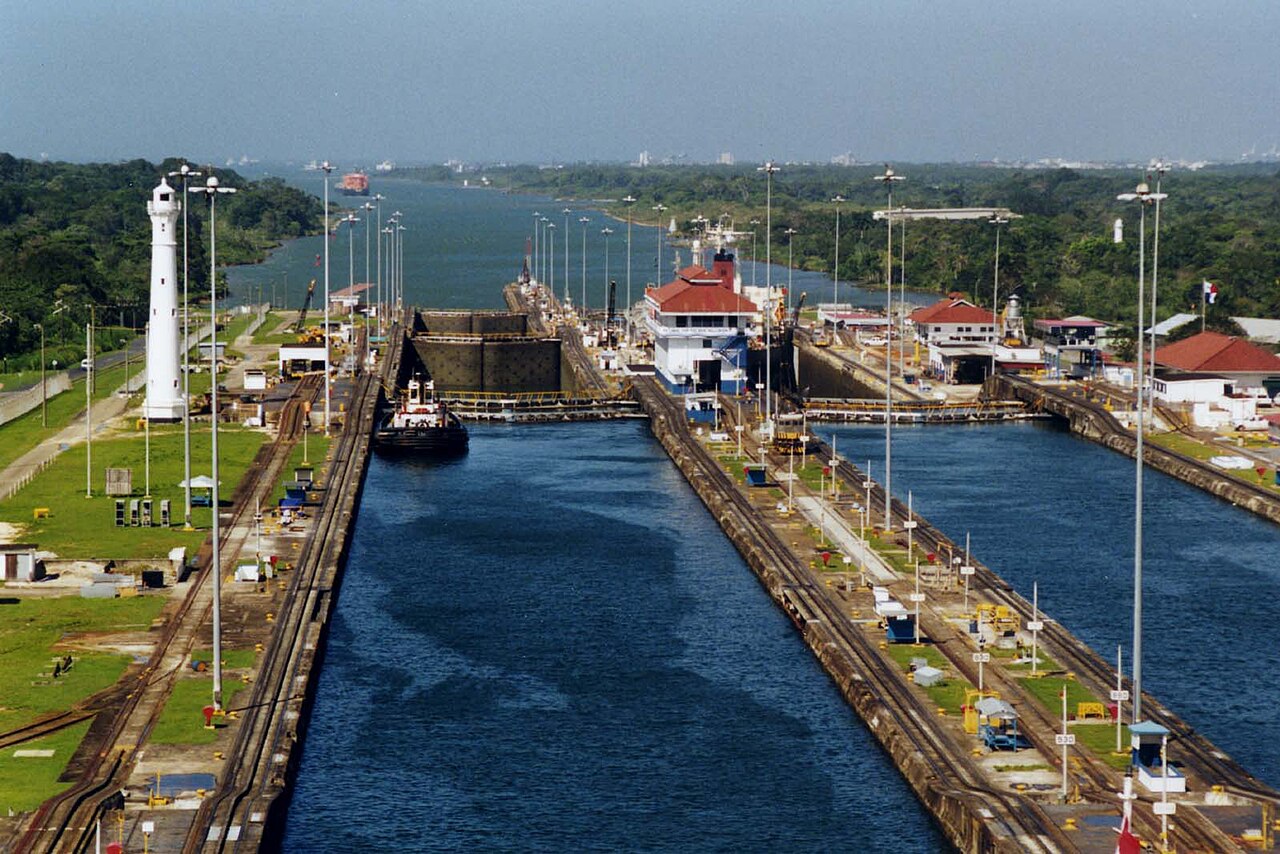
Roughly 14,000 ships a year squeeze through the Panama Canal. On a good morning at Miraflores, you will watch one of them — a container vessel the length of three football fields — rise nine metres on nothing but gravity-fed freshwater, guided by electric locomotives called mules, and slip silently toward the Pacific. It is one of the most genuinely jaw-dropping things you can witness from dry land, anywhere on earth. But the experience requires a little planning, or you risk standing on an empty deck staring at still water and wondering what all the fuss was about.
This guide is written for independent visitors. It covers exactly what you get for your $17.22, the precise windows when ships are most likely to be in the locks, which deck to stand on, how the whole system actually works, and whether the Miraflores Visitor Center is the right choice for you — or whether Agua Clara or a partial-transit boat tour would serve you better. No fluff, no filler.
Section 01What to expect — and what to reset
The single biggest cause of disappointment at Miraflores is mismatched expectations. Visitors arrive imagining a constant parade of supertankers. The reality: ships transit on a schedule managed by the Panama Canal Authority, and there can be gaps of 30–90 minutes between vessels. On a busy day you might see four or five ships in two hours. On a slow day, one. The canal handles around 36–40 transits per day across all locks combined, but Miraflores is just one of three lock complexes, and not every transit is timed to your visit.

That said, when a ship does appear — and it almost certainly will if you time your visit correctly — the scale is genuinely staggering. The lock chambers at Miraflores are 33.5 metres wide and 320 metres long. A Panamax vessel fills that space with perhaps a metre to spare on each side. The electric mule locomotives (there are up to eight per ship) run on rails along the chamber walls, holding the ship centred with taut cables while the water level changes. The whole operation takes roughly 10–15 minutes per chamber. There are two chambers at Miraflores, so a full transit of the locks takes 20–30 minutes to watch from arrival to departure.
The Miraflores Visitor Center itself is a four-storey building with an IMAX theatre, four exhibition halls, two restaurants, a food court, a gift shop, a playground, and three levels of outdoor viewing. It opened in 1997 and was significantly upgraded after the 2016 canal expansion. It is run by the Panama Canal Authority — the same body that operates the canal itself — so the information on display is authoritative. Plan on spending 1.5 to 2.5 hours here, depending on whether you watch the film and how long you linger on the deck.
Section 02Tickets and what is included
Entry to the Miraflores Visitor Center costs $17.22 for adult non-residents, $7.22 for children aged 6–12, and is free for children under 6. Panamanian nationals and legal residents pay $3.00 for adults, $1.50 for seniors, and nothing for children under 18. Tickets are purchased at the entrance or online at visitcanaldepanama.com. The ticket office is open daily from 8:00 am to 5:00 pm; the complex itself stays open until 6:00 pm.

Your ticket includes:
- Admission to all four exhibition halls and the museum floors
- One screening of the IMAX 3D film (45 minutes, narrated by Morgan Freeman)
- Access to all observation decks and the ground-level terrace
- Use of the playground area
What is not included: food and drink (the food court is reasonably priced — a full meal runs $6–10), parking (free on-site), and any guided commentary beyond what is broadcast over the PA system at the locks. If you join a guided city tour that includes Miraflores, confirm whether the entrance fee is bundled — many operators quote a tour price that excludes the $17.22 admission, which can be a surprise at the gate.
There is no separate charge for parking. The car park is large, free, and rarely full before 10:00 am. If you are driving, follow signs from the Gaillard Highway (also called the Camino de Cruces road) toward Miraflores — the visitor centre is well signposted. GPS coordinates: 8.9967° N, 79.5877° W.
Section 03Best time to actually see ships transit
This is the section every other guide skips, and it is the most important information on this page. Ship traffic at Miraflores follows a directional pattern tied to the canal's scheduling logic:

- Southbound (Atlantic to Pacific) traffic tends to move through Miraflores in the morning, roughly 9:00 am to 11:30 am. These ships enter the locks from the Pedro Miguel side (north) and exit toward the Pacific. From the observation deck, you watch them descend.
- Northbound (Pacific to Atlantic) traffic tends to move through Miraflores in the afternoon, roughly 1:00 pm to 4:00 pm. These ships enter from the Pacific side and you watch them rise.
The canal authority publishes a vessel schedule at pancanal.com/en/vessel-traffic — you can check it the night before your visit and see which ships are booked to transit and their approximate lock times. This is not widely advertised but it is publicly accessible and genuinely useful. Search for "Miraflores" in the schedule to filter relevant transits.
The best single time slot: arrive at 9:00 am, watch the first IMAX screening at 9:45 am, then head to the deck by 11:00 am for peak southbound traffic. You will almost certainly see at least one, and likely two, ships transit before noon. If you can only visit in the afternoon, aim for 1:30–3:30 pm for northbound traffic.
Seasonality matters less for ship frequency (the canal runs year-round) than for comfort. Panama's dry season runs December through April — cooler, less humid, and the observation deck is more pleasant. The rainy season (May through November) brings afternoon thunderstorms that can clear the deck quickly. If visiting in the wet season, morning visits are strongly preferred.
Section 04The observation decks — which one to use
The Miraflores Visitor Center has three distinct viewing positions, and they offer meaningfully different experiences. Most visitors default to whichever deck they stumble onto first. Here is what each one actually gives you:

Ground-level terrace (Level 1): This is the closest you get to the water. You are essentially at the same elevation as the lock chamber floor, looking across at the chamber walls and the ship's hull. The perspective is dramatic — you understand the scale because you are level with it — but you cannot see the full ship or the mule locomotives working on the far wall. Wheelchair accessible. Best for: photography of the hull and lock gates up close.
Bleacher deck (Level 2): This is where most visitors congregate and where the PA narration is loudest. You are elevated enough to see the full width of the lock chamber, the mules on both walls, and the ship's superstructure. This is the best all-round viewing position. Bring earplugs if the narration bothers you — it alternates Spanish and English and is broadcast at considerable volume. Best for: watching the full transit operation and understanding what is happening.
Upper viewing deck (Level 3/4): The highest point gives you a panoramic view of both lock chambers simultaneously, the Pedro Miguel Locks in the distance, and the rainforest of Soberanía National Park beyond. On a clear morning, you can see the Bridge of the Americas to the south. This is the best deck for photography and for appreciating the canal's geography. It can be windy. Best for: wide-angle photography, orientation, and watching a ship move from one chamber to the next.
On the narration quality issue: several visitor reviews note that the PA system at the bleacher deck can be difficult to understand, particularly for English speakers when the Spanish narration is running. The solution is to watch the IMAX film first — it covers the engineering in detail — so that you already understand what you are seeing when you reach the deck. The live narration then becomes supplementary rather than essential.
Section 05The IMAX film and museum floors
The 45-minute IMAX 3D film — Panama Canal: A Land Divided, A World United — is narrated by Morgan Freeman and covers the canal's history from the failed French attempt in the 1880s through the American construction era (1904–1914) and the 2016 expansion. It is genuinely well-made: the 3D footage of ships transiting and lock gates opening is visually impressive, and the historical context it provides makes the live lock viewing significantly more meaningful. Watch it first, not after.

Screenings run at: 8:45 am, 9:45 am, 11:00 am, 12:15 pm, 1:30 pm, 2:45 pm, 4:00 pm, and 5:15 pm. The theatre holds 500 people and rarely fills to capacity outside of holiday weekends. Your admission ticket covers one screening.
The four exhibition halls cover:
- Hall 1 – History: The French attempt, yellow fever, the role of Dr. William Gorgas in controlling malaria and yellow fever, and the American construction era. The human cost — approximately 27,500 workers died — is treated honestly.
- Hall 2 – Water and environment: How the lock system works using gravity alone (no pumps), the role of Gatun Lake as the canal's water reservoir, and the biodiversity of the canal watershed.
- Hall 3 – Commerce: The canal's role in global trade, the types of vessels that transit (container ships, tankers, bulk carriers, cruise ships), and the toll system.
- Hall 4 – The expansion: The 2016 neo-Panamax lock expansion, the new lock chambers at Agua Clara and Cocoli, and the larger vessels they accommodate.
The museum is not interactive in the way that modern science museums are — there are no simulators or hands-on exhibits. It is primarily interpretive panels, scale models, and video displays. Children under about 10 may lose interest quickly; the observation deck and playground will hold their attention better. The main Panama Canal Museum with deeper historical archives is located in Casco Viejo in Panama City, if you want the full scholarly treatment.
Section 06Getting to Miraflores from Panama City
The Miraflores Visitor Center is approximately 10 kilometres from central Panama City. There is no metro or direct public bus service that most tourists would find practical. Your realistic options are:

| Option | Cost | Time | Verdict |
|---|---|---|---|
| Uber or InDriver | $10–18 one way | 20–30 min | Best option |
| Taxi (metered or negotiated) | $15–25 one way | 20–35 min | Fine, negotiate first |
| Rental car / self-drive | Car cost + free parking | 20–25 min | Good if already renting |
| Guided tour (hotel pickup) | $35–65 per person | Half day | Convenient, pricier |
| Public bus (Corredor Sur + local) | ~$1.25 | 45–70 min, transfers | Doable, not easy |
Uber is the clear recommendation for independent travellers. The app works reliably in Panama City, prices are transparent, and getting a return ride from the visitor centre is straightforward — there is good signal and drivers are available. From Miraflores/Bella Vista or San Francisco neighbourhoods, expect a 20-minute ride. From Casco Viejo, add 5–10 minutes. From Tocumen International Airport, the drive is approximately 45 minutes and costs $25–35.
If you are driving, take the Corredor Sur westbound, exit toward Albrook, then follow signs to Miraflores. The on-site car park is free, paved, and large. There is no toll on the most direct route from the city centre.
Section 07Miraflores vs Agua Clara vs partial-transit boat — which is right for you?
There are three meaningfully different ways to experience the Panama Canal as a visitor. Each has a different price point, time commitment, and type of experience. Here is an honest comparison:
| Option | Cost | Time | What you see | Best for |
|---|---|---|---|---|
| Miraflores Visitor Center | $17.22 adult | 1.5–2.5 hrs | Original Panamax locks, IMAX, museum, observation decks | Most visitors, families, short stays |
| Agua Clara Visitor Center | $10 adult | 2–3 hrs (1 hr from city) | Neo-Panamax expansion locks, larger ships, less crowded | Ship enthusiasts, Atlantic-side trips |
| Partial-transit boat tour | $165–220 per person | Full day (6–8 hrs) | Inside the locks at water level, Gatun Lake, wildlife | Bucket-list, once-in-a-lifetime experience |
Miraflores is the right choice for most visitors. It is close to the city, affordable, and delivers the core experience — watching a ship transit the locks — with good context from the museum and film. The original locks here are smaller than the expansion locks, which means the ships are closer to the chamber walls and the whole operation looks more dramatic from the deck.
Agua Clara, on the Atlantic side near Colón, is the right choice if you want to see the 2016 expansion locks in action. The neo-Panamax chambers are enormous — 55 metres wide versus 33.5 metres at Miraflores — and the ships that use them (the very largest container vessels and LNG tankers) are correspondingly massive. Entry costs $10 for adult non-residents, making it cheaper than Miraflores. The trade-off: it is about an hour's drive from Panama City, so you need a dedicated half-day trip or to combine it with a visit to the Colón area. Crowds are noticeably thinner than at Miraflores. If you have already seen Miraflores or are particularly interested in the expansion, Agua Clara is the better choice.
The Gatun Locks Visitor Pavilion, also near Colón, is a simpler facility — no IMAX, smaller museum — but it places you very close to the Gatun Locks, the longest single lock in the canal system. It is rarely crowded and gives an intimate view of operations. Entry is cheaper still. Worth combining with Agua Clara if you make the Atlantic-side trip.
Section 08Partial-transit boat tours — the upgrade experience
If the visitor centre is watching the canal, a partial-transit boat tour is being the canal. These tours put you on a passenger vessel that actually navigates through the locks — the same chambers the cargo ships use, just in a much smaller boat. It is a fundamentally different experience, and for many people it is the highlight of their Panama trip.

A partial transit covers the Pacific section of the canal: you board at the Amador Causeway (Flamenco Marina), transit through the Miraflores and Pedro Miguel locks, cross part of Gatun Lake, and disembark at Gamboa. The journey takes approximately 4–5 hours on the water. Total day including transfers: 6–8 hours. Cost: roughly $165–220 per person depending on the operator, with breakfast and lunch typically included.
A full transit goes ocean to ocean — Pacific to Atlantic — taking 8–10 hours on the water. It is a longer commitment and costs more ($200–300+), but you transit all three lock complexes and cross the full length of Gatun Lake. Full transits typically operate on Saturdays only, as the canal authority limits the days when tourist vessels can join the commercial queue.
What makes the boat tour worth the premium: the sense of scale from water level is incomparable. When the lock gates close behind your boat and the water starts rising — 9 metres in about 10 minutes — and you look up at the chamber walls rising around you, it is viscerally impressive in a way that no observation deck can replicate. You also see the mule locomotives at eye level, watch the gate mechanics up close, and transit alongside commercial vessels in adjacent chambers on busy days.
The boat tour is not ideal for everyone. It is a long day, involves significant sun exposure on open decks, and the price point is ten times that of the visitor centre. For travellers with limited time or mobility constraints, Miraflores remains the right call. But if you have a full free day and the budget, the partial transit is the best single experience Panama City offers.
Section 09Pre-visit checklist and practical notes
A few things that will make your visit noticeably better:
- Check the vessel schedule the night before. Go to pancanal.com/en/vessel-traffic and look for ships scheduled to transit Miraflores the following morning. If you see three or four vessels listed between 9:00 and 11:30 am, you are in for a good show.
- Arrive at 9:00 am. The first IMAX screening is at 8:45 am (or 9:45 am). Watching the film before hitting the deck means you understand what you are seeing. Crowds build after 10:30 am.
- Bring sun protection. The observation decks are partially shaded but not fully. A hat, sunscreen, and sunglasses are essential, particularly in the dry season when the sun is intense by 9:00 am.
- Wear comfortable shoes. The complex involves stairs between levels. There is wheelchair access to the ground-level terrace, but the upper decks require stair climbing.
- Budget for food. The food court on the ground floor serves Panamanian staples — rice dishes, sandwiches, empanadas — at $4–8. There is also the Miraflores Restaurant, a sit-down option with canal views, at $15–25 per person. Both are decent. Skip the gift shop snacks, which are overpriced.
- The PA narration is in Spanish first, English second. If you want to understand the live commentary, position yourself near a speaker on the bleacher deck and be patient — the English version follows the Spanish by about 30 seconds.
- Photography tips: Morning light (9:00–11:00 am) falls on the Pacific side of the locks from the east, giving good illumination on the ship's hull. Afternoon light reverses. The upper deck gives the best wide shots; the ground level gives the most dramatic close-ups. A standard smartphone camera is entirely sufficient — you do not need a telephoto lens from Levels 1 or 2.
- Combine with nearby attractions. Miraflores pairs naturally with a morning visit to Casco Viejo (30 minutes away by Uber) or the Amador Causeway for lunch with views of the Pacific entrance. The Biomuseo on the Causeway — designed by Frank Gehry, covering Panama's biodiversity — is worth an hour and costs $22 for adults.
One final note on guided tours versus going independently: a guided city tour that includes Miraflores (typically $35–65 per person, half-day, with hotel pickup) is a reasonable choice if you want context and convenience and do not want to navigate logistics. The trade-off is that you spend less time at the locks — usually 45–60 minutes versus the 1.5–2.5 hours an independent visitor can take — and you are on the guide's schedule rather than your own. If seeing ships transit is your primary goal, go independently and time it yourself. If Miraflores is one stop on a broader city orientation, a guided tour is efficient.
For the rest of your time in Panama City — Casco Viejo, the Biomuseo, the Amador Causeway, and day trips to the rainforest — see our full Panama City travel guide for neighbourhood-by-neighbourhood recommendations and logistics.