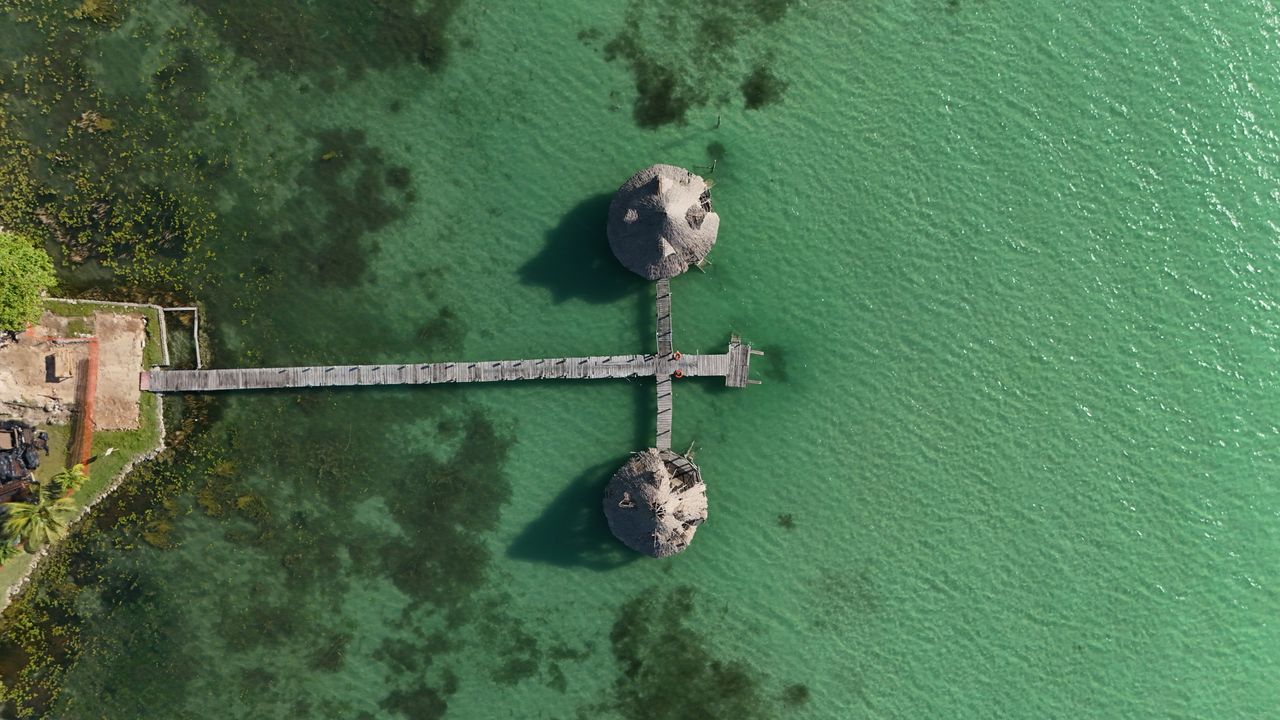
Nine islands, hundreds of islets, and one question that derails every Bocas del Toro itinerary before it even starts: where do I actually sleep? The answer matters more here than almost anywhere else in Panama — choose wrong and you'll spend your mornings nursing a headache from the bar next door, or your evenings stranded on the wrong island when the last water taxi leaves at 6 p.m.
This guide cuts through the vibe-speak. Below you'll find real transit times, honest noise assessments, price ranges by island, and a plain-language recommendation for every type of traveller. No affiliate agenda, no "it depends" cop-outs.
Section 01The quick answer
If you want one sentence: first-timers with fewer than five nights should base themselves on Isla Colón outside Bocas Town — close enough to the hub, far enough from the noise. Party-seekers stay in Bocas Town itself. Couples and nature travellers split their time between Colón and either Bastimentos or Solarte. Families and long-stayers lean toward Solarte's west end or Bastimentos' Old Bank. Carenero is the underrated sweet spot for anyone who wants proximity without the chaos.

Section 02Isla Colón — the hub island
Isla Colón is the main island, home to the airport, the ferry dock from Almirante, and Bocas Town — the archipelago's only real town. Nearly every tour operator, pharmacy, supermarket, and ATM is here. That convenience is the entire argument for staying on Colón. The counter-argument is Bocas Town itself, which is genuinely loud, perpetually under some form of construction, and home to a party culture that doesn't wind down until 3 a.m. on weekends.

The island is large enough, however, that "staying on Colón" doesn't mean staying in town. There are four meaningfully different zones:
Bocas Town (south tip): The transport hub and nightlife epicentre. Filthy Friday — the weekly island-hopping party — ends here. Barco Hundido, Aqua Lounge, and Selina keep the decibels up Thursday through Sunday. Budget hostels run $15–25/night for a dorm; midrange guesthouses $60–110. Noise peaks Friday and Saturday nights; Tuesday and Wednesday are manageable. If you're here to party, this is your island. If you're not, it isn't.
Saigon Bay / Big Creek / Paunch (central Colón, 15–20 min by taxi from town): A string of properties along the main road that offer the best of both worlds — quiet enough to sleep, close enough to town for dinner. Taxi to Bocas Town costs $5–8. Several overwater bungalows and mid-range B&Bs cluster here. This is the strongest all-around base on the island for most travellers.
Playa Bluff (northeast Colón, ~45 min from town): A long, wild Atlantic-facing beach with powerful surf and almost no services. Two or three small lodges sit right on the sand. No nightlife, no restaurants within walking distance, no water taxis — you need a taxi or rental to get anywhere. Budget $80–180/night. Best for surfers and people who genuinely want to disappear.
Boca del Drago (northwest tip, ~45 min from town): The quietest corner of Colón, close to Starfish Beach (Playa Estrella). A handful of small guesthouses and the excellent Bird Island Bungalows operate here. The public bus to town runs a few times daily and gets crowded; a taxi costs around $25 one-way. Best for travellers who want calm Caribbean water and don't need to go into town often.
Section 03Isla Carenero — the underrated pick
Carenero sits roughly 400 metres across the bay from Bocas Town. The water taxi takes one to two minutes and costs $1 each way; boats run from roughly 6 a.m. to 9 or 10 p.m., later than most other inter-island routes. That proximity is Carenero's defining advantage: you can have dinner in Bocas Town, catch a drink at Barco Hundido, and be in bed on a quiet island by 10 p.m. without paying for a private boat.
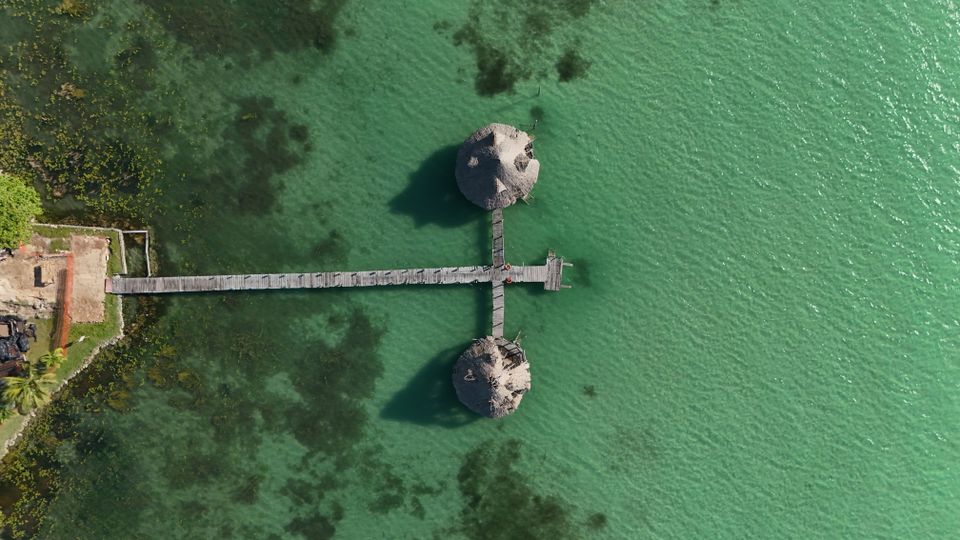
The south side of the island has a small community with a few restaurants, surf breaks (Carenero has a decent right-hand wave), and a handful of guesthouses and overwater bungalow options. El Faro del Colibrí is the most-photographed property — colourful overwater huts with free kayaks and SUPs. Midrange rooms run $70–130/night. The north side is jungle with some walking trails and hidden beaches, largely undeveloped.
The downside: you can still hear the bass from Bocas Town on Friday nights if the wind is right. It's not loud enough to keep most people awake, but it's there. There's also limited food variety on the island itself — you'll cross to Bocas Town for most meals. Carenero has no ATM; carry cash.
Section 04Isla Bastimentos — beaches and jungle
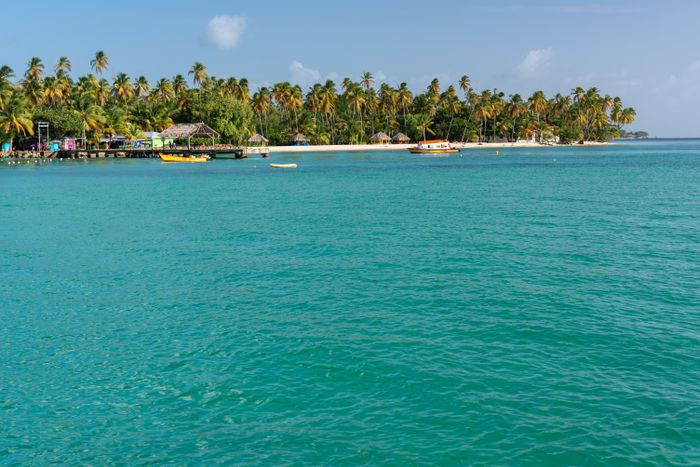
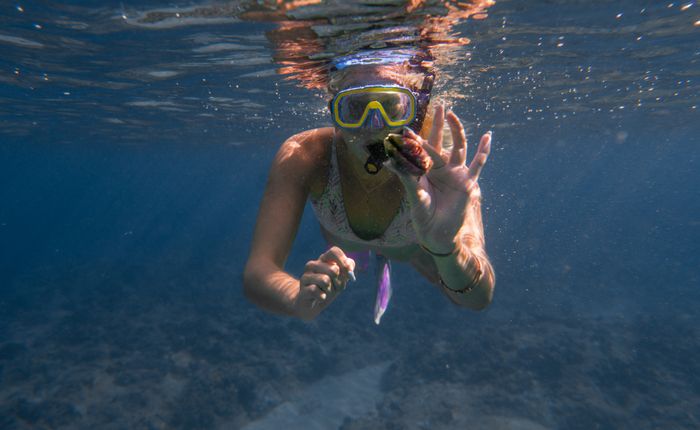
Bastimentos is the largest island in the archipelago and the one most travellers picture when they imagine Bocas del Toro at its best. Red Frog Beach — a sweeping arc of orange-red sand backed by rainforest — is here. So is Playa Larga, a protected sea turtle nesting beach inside Bastimentos National Marine Park. The snorkelling at Hospital Point (just off the island's tip) is among the best accessible reef diving in the archipelago.

There are two main bases on Bastimentos:
Old Bank (Bastimentos Town): A Creole Afro-Caribbean village of about 1,000 people on the western tip of the island. Colourful wooden houses on stilts, a handful of restaurants serving rice and beans and fresh fish, a small surf break, and a genuinely warm community. Water taxi from Bocas Town: 10–15 minutes, $3–5 each way. Last boat back to Bocas Town typically departs around 5:30–6 p.m. — confirm daily. Budget guesthouses run $20–40/night; midrange overwater lodges $80–160. Old Bank has no cars, no roads, and no ATM. Bring enough cash for your entire stay.
Red Frog Beach area: A private-access beach with a resort complex (Red Frog Beach Island Resort) and a few independent lodges including Palmar Beach Lodge. To get here from Old Bank you walk 20–25 minutes through the jungle on a well-worn path, or take a separate water taxi that docks at the resort's pier. Staying here means paying resort prices ($180–400/night) and accepting that you're somewhat isolated — the resort has a restaurant and bar, but your options end there. Nayara Bocas del Toro, the archipelago's most luxurious overwater villa property, is also in this zone.
Bastimentos has the best beaches of any island you can realistically base yourself on. The trade-off is logistics: every trip to Bocas Town costs time and money, and the last water taxi is unforgiving. Plan your days around it.
Section 05Isla Solarte — the quiet achiever
Solarte (also called Nancy's Cay) runs parallel to Bastimentos and is covered almost entirely in rainforest. It's quieter than anywhere else in the inner archipelago, the water on the western end is calm enough for swimming and paddleboarding year-round, and sloths, howler monkeys, and toucans are genuinely common sightings from your deck. This is the island that converts sceptics into Bocas believers.

The western end — where Sol Bungalows, Bambuda Lodge, and a handful of small guesthouses cluster — is 15–20 minutes by water taxi from Bocas Town, costing $3–5 each way. Boats run roughly 6 a.m. to 6 p.m.; after that, you need to arrange a private transfer ($20–30). The east end of the island is more remote and harder to reach without your own boat.
Accommodation skews toward eco-lodges and overwater bungalows. Sol Bungalows (the operator behind much of the Solarte tourism infrastructure) offers well-reviewed overwater rooms at $120–200/night. Bambuda Lodge is the budget option at $30–60/night, with a social hostel vibe and hammock-heavy common areas. There's a small restaurant scene on the western tip but no supermarket; stock up in Bocas Town before you arrive.
One note on nightlife: Filthy Friday — the weekly floating party — technically passes near Solarte, and the Blue Coconut bar on the island occasionally hosts events. But on most nights, Solarte is silent by 9 p.m. That's a feature, not a bug, for the right traveller.
Section 06San Cristóbal, Isla Popa, and the outer islands
San Cristóbal is the fifth island with meaningful tourist infrastructure. It sits further west than Solarte, roughly 30–45 minutes by water taxi from Bocas Town ($8–12 each way). The Ngäbe-Buglé indigenous community lives here, and several community-run tourism projects offer homestays and guided tours of the mangroves and coral gardens. Accommodation is limited — a handful of small guesthouses and one or two eco-lodges — and you should expect intermittent electricity and no reliable WiFi. This is for travellers who want genuine immersion over convenience.

Isla Popa, further south, is home to Popa Paradise Beach Resort — an adults-only property on a semi-private island with its own beach and dock. The boat transfer from Bocas Town takes 45–60 minutes. It's a legitimate escape, but you're paying for isolation: $200–350/night, and every excursion requires a boat. Not practical for short stays.
The Zapatilla Cays — two uninhabited islands inside the national marine park with the most postcard-perfect beaches in the archipelago — cannot be slept on. They're a day-trip destination only, accessible from any island base for $5 park entry plus boat costs.
Section 07Cost comparison by island
| Island / Zone | Budget (dorm/basic) | Midrange | Luxury | ATM? |
|---|---|---|---|---|
| Bocas Town (Colón) | $15–25/night | $60–110/night | $150–250/night | Yes |
| Saigon Bay / Paunch (Colón) | $40–60/night | $80–150/night | $180–300/night | Taxi to town |
| Playa Bluff (Colón) | — | $80–130/night | $160–250/night | Taxi to town |
| Isla Carenero | $35–55/night | $70–130/night | $160–220/night | No — cash only |
| Bastimentos (Old Bank) | $20–40/night | $80–160/night | $200–400/night | No — cash only |
| Isla Solarte | $30–60/night | $120–200/night | $200–350/night | No — cash only |
| San Cristóbal | $25–50/night | $60–100/night | — | No — cash only |
The practical upshot: withdraw cash in Bocas Town before heading to any outer island. The two ATMs in town (one near the main dock, one on Calle 3) occasionally run dry on holiday weekends — hit them on arrival, not the morning you're leaving.
Section 08Water taxi logistics and last boats
The water taxi network is the archipelago's circulatory system. Understanding it prevents the most common Bocas disaster: being stranded on the wrong island after dark and paying $30 for a private boat you didn't budget for.
| Route | Cost (one-way) | Journey time | Last scheduled boat | Notes |
|---|---|---|---|---|
| Bocas Town ↔ Carenero | $1 | 1–2 min | ~9–10 p.m. | Most flexible |
| Bocas Town ↔ Old Bank (Bastimentos) | $3–5 | 10–15 min | ~5:30–6 p.m. | Confirm daily |
| Bocas Town ↔ Solarte (west end) | $3–5 | 15–20 min | ~6 p.m. | Confirm daily |
| Bocas Town ↔ San Cristóbal | $8–12 | 30–45 min | ~4–5 p.m. | Limited frequency |
| Bocas Town ↔ Boca del Drago (Colón) | $5–8 by taxi | 45 min by road | Bus: ~4 p.m. | Bus or taxi only |
| Almirante ↔ Bocas Town | $6 | 20–25 min | 6 p.m. | Runs frequently |
A few things the schedules don't tell you: boats on the outer routes run on demand more than on a fixed timetable. If you're the only passenger heading to Solarte at 5 p.m., the driver may wait for a few more people or charge you a higher rate. During high season (January–March), boats are frequent and finding a seat is easy. In the rainy season shoulder months (May–June, November), frequency drops and some operators stop running after 5 p.m. regardless of demand. Always ask your accommodation what time the last boat runs the day before you plan to use it.
Section 09Which island by traveller type
Party travellers and social backpackers: Bocas Town on Isla Colón. Filthy Friday, Barco Hundido, Selina's rooftop — it's all within walking distance. Dorms from $15/night. Accept the noise as part of the deal.
Couples on a first trip: Saigon Bay or the Paunch area of Isla Colón for a three-night base, then one or two nights on Solarte or Bastimentos. You get convenience plus the romantic overwater-bungalow moment without being fully committed to the logistics of a remote island for your entire stay.
Families with young children: Old Bank on Bastimentos or Solarte's west end. Both have calm water for swimming, no traffic, and a pace that suits early bedtimes. Old Bank has a small community with a school and a medical post; Solarte has slightly better accommodation quality. Neither has an ATM — bring cash for the full stay.
Surfers: Carenero (right-hand break, 1 min from Bocas Town), Playa Bluff on Colón (powerful beach break, best October–March), or Old Bank on Bastimentos (Playa Primera, a reliable left). Carenero is the most practical base because you can check the break from your guesthouse and still access Bocas Town easily.
Wildlife and nature travellers: Bastimentos or Solarte. Both have howler monkeys, sloths, toucans, and access to the national marine park. Bastimentos has better snorkelling at Hospital Point; Solarte has calmer water and easier kayaking. For serious birding, Bastimentos is the stronger choice.
Digital nomads and long-stayers (1+ month): Saigon Bay or Paunch on Isla Colón is the pragmatic answer — reliable WiFi is most consistent here and in Bocas Town, you're close to the ATM and supermarkets, and you can escape to quieter islands on weekends. Solarte and Bastimentos have inconsistent internet; Carenero is hit-or-miss. No outer island is suitable as a primary base for remote work.
Budget travellers: Bocas Town for the cheapest beds ($15–25 dorm), but consider Old Bank on Bastimentos for a slightly higher per-night cost that eliminates daily water taxi expenses and puts you closer to the best beaches. The math often works out similarly over a week.
Luxury travellers: Nayara Bocas del Toro on Bastimentos (overwater villas with plunge pools, the archipelago's most polished property) or Punta Caracol Aqua Lodge on Isla Colón's northwest coast (overwater bungalows, quieter than town). Both sit at $250–500+/night. A Viceroy property with 42 overwater villas is planned for late 2026 — watch that space.
Section 10Weather, seasons, and which islands suffer most
Bocas del Toro has two dry seasons and two rainy seasons, and the pattern matters more on some islands than others.
Peak dry season (January–March): The best weather in the archipelago. Calm seas, reliable sunshine, and the clearest water for snorkelling. All islands are at their best. This is also the most crowded and most expensive period — book accommodation at least six to eight weeks ahead for Bastimentos and Solarte properties.
Mini dry season (September–October): A second, shorter window of good weather that most travellers overlook. Prices drop 20–30%, crowds thin, and the islands feel more like they belong to you. Water visibility is slightly lower than January–March but still excellent. This is arguably the best time to visit if you have flexibility.
Rainy season (May–June and November–December): Rain falls in heavy afternoon bursts rather than all-day drizzle. Mornings are often clear. The outer islands — San Cristóbal, Solarte, Bastimentos — bear the brunt of Atlantic swells during these periods, and water taxi cancellations are more common. Bastimentos' Atlantic-facing beaches (Playa Larga, Playa Primera) can see rough surf and murky water from October through December. Playa Bluff on Colón is almost unsurfable in the dry season but comes alive in the rainy season for experienced surfers.
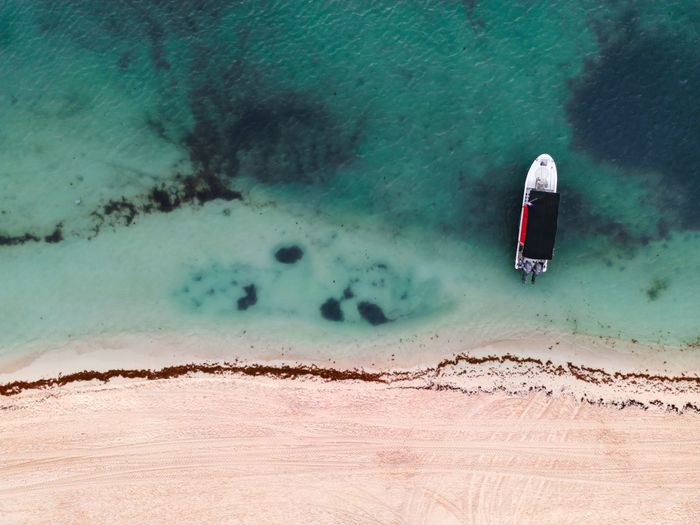
Sargassum: Floating seaweed affects Caribbean beaches broadly, but Bocas del Toro is generally less impacted than the eastern Caribbean. The worst months are April–June on exposed Atlantic-facing beaches. Starfish Beach (Boca del Drago), Hospital Point, and the Zapatilla Cays tend to stay cleaner because of their orientation and water circulation. If sargassum is a dealbreaker for you, avoid Playa Bluff and the exposed north coast of Bastimentos in late spring.
Infrastructure note: Power outages are more frequent on outer islands during heavy rain. Solarte and San Cristóbal run on a mix of solar and generator power; expect occasional evenings by candlelight. Bastimentos' Old Bank has mains electricity but it can be unreliable. Isla Colón and Carenero have the most stable power supply. If you need uninterrupted electricity for medical equipment or remote work, stay on Colón.