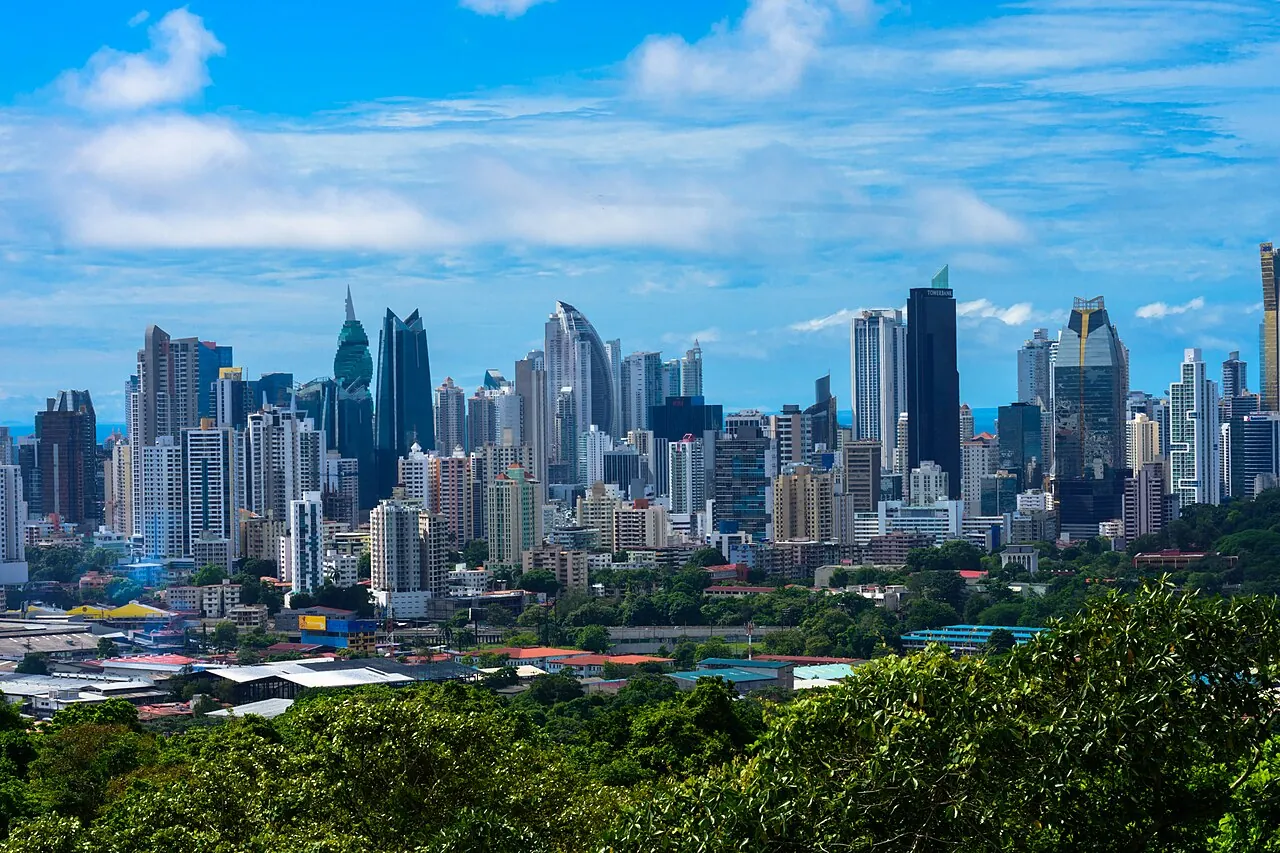
Yes. Foreigners can buy property in Panama with the same ownership rights as Panamanian citizens, in their own name or through a corporation, with one hard limit: no land within 10 kilometers of a national border.[1] Indigenous comarcas, the public beach strip and some untitled land are also off limits. The safe way to buy is titled property checked at the Public Registry by your own lawyer, a promise to purchase with a deposit of about 10%, payment through a bank letter rather than straight to the seller, and a deed recorded in your name.
If you buy property in Panama, most of the process will feel familiar from home. You make an offer, sign a contract, a lawyer checks the title and the deed gets recorded. The differences are what catch people out: title insurance is rare, a financing contingency isn't standard, the deposit often goes straight to the seller, and much of the beach and island land isn't titled at all.[2]
Prices are in US dollars, which Panama uses as its currency, so US buyers carry no currency risk (Canadians do).[1] Three rule changes in 2026 also matter to buyers: a new Qualified Investor decree in September, Ecuador's addition to the Friendly Nations list, and a transfer-tax break on new homes under Law 546. This guide covers all three, along with real closing costs, the mistakes that cost foreign buyers money, and which guide to read next for each town.
Can foreigners buy property in Panama? Yes, with four exceptions
Yes. Foreigners have the same property rights as Panamanian citizens and can buy in their own name or through a corporation.[1] You don't need residency to buy a house, a condo or land, and you can rent it out or resell it on the same terms as a local owner.[2]
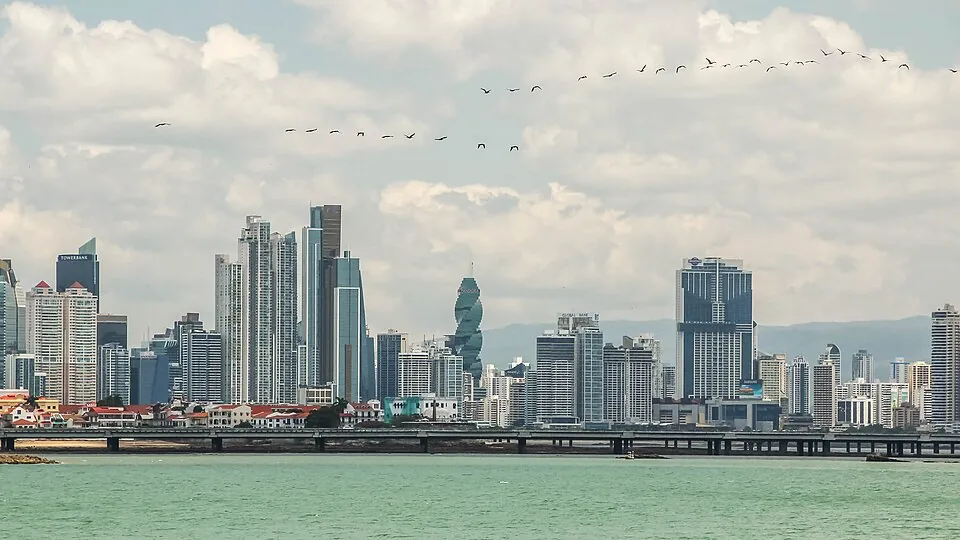
US and Canadian citizens buy the same way as everyone else. Nationality only matters if you later want a residency visa tied to the property. The four exceptions below apply to every foreign buyer.
The four places foreigners can't buy
- Within 10 kilometers of a land border. The Constitution forbids foreign ownership of land within 10 kilometers (6.2 miles) of an international border.[3] The article is numbered 291 in the current consolidated text, and older guides cite it as Article 286. This affects rural land along the Costa Rican border in Chiriquí and Bocas del Toro and along the Colombian border in Darién, so have your lawyer measure the distance for any property in those areas.
- Indigenous comarcas. Comarcas are indigenous territories such as Guna Yala (the San Blas Islands) and Ngäbe-Buglé, and they are not open to property purchase.[3] Anyone offering to sell you an island in San Blas is not offering real estate.
- The beach itself, mangroves and protected areas. Under Law 80 of 2009, the first 22 meters inland from the high-tide line on the Pacific and the first 10 meters on the Caribbean stay public and can't be titled. Mangroves and protected areas can't be titled either. Beachfront owners must also leave a public right of way from the highest tide to the property line.[3] Our guide to beachfront and land in Panama and what foreigners can own covers coastal concessions and raw land in detail.
- Some untitled land and islands. Untitled land must have been owned by a Panamanian citizen for at least two years before it can be sold to a foreign buyer.[3] Islands have their own restrictions on what foreigners can acquire, and much island and coastal land is held only as rights of possession, covered next.
Titled property vs ROP (rights-of-possession) land
Titled property is land registered in Panama's Public Registry with full ownership rights. ROP, or derechos posesorios, means someone has long-standing use of land that is not titled or formally owned.[1] On most of Panama's coasts and islands, what is for sale is ROP: a possession right recognized by the government, not a title.[2]
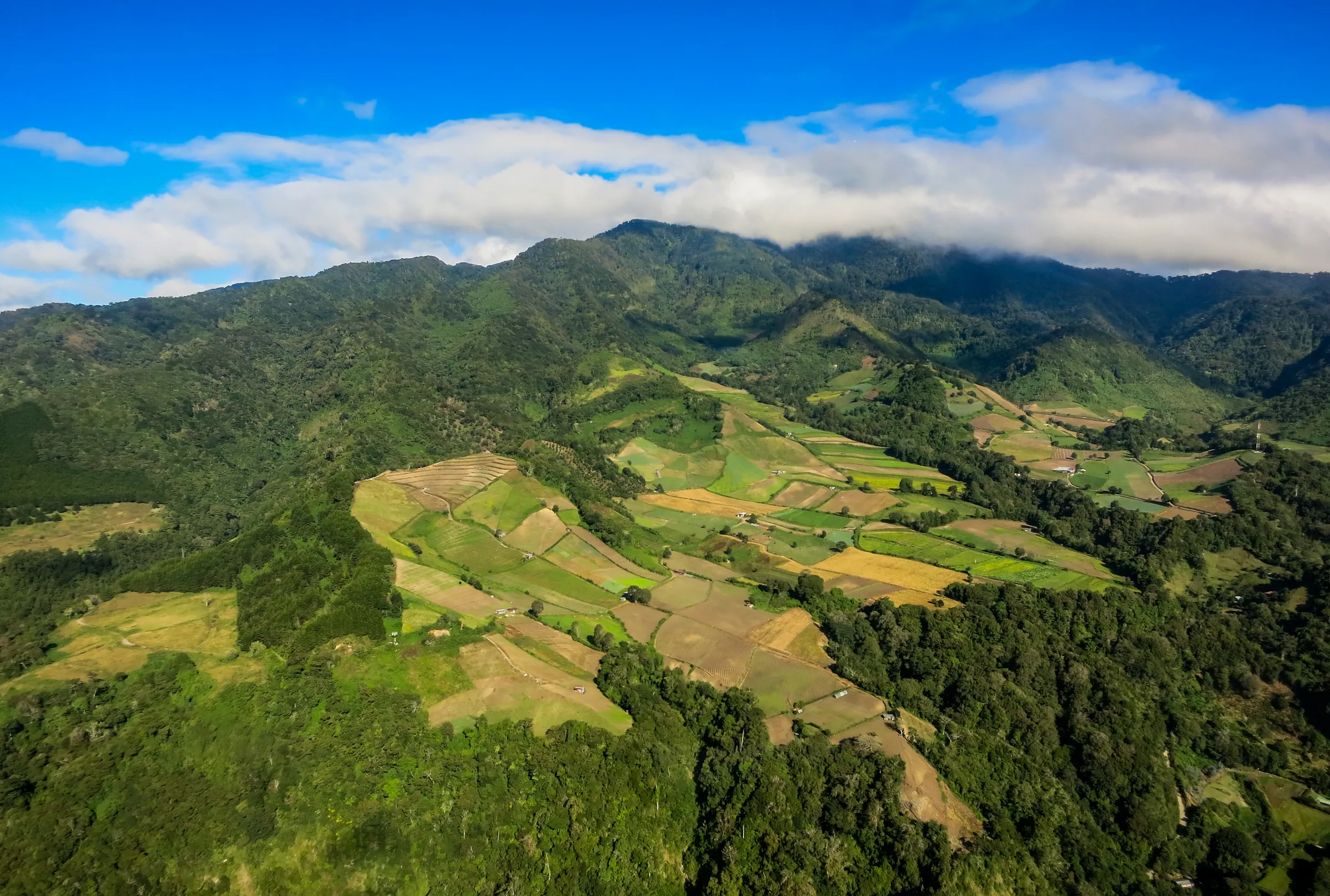
The rest of this page assumes titled property. Condos are titled too, under the horizontal property regime (propiedad horizontal, or PH). Each unit is its own registered property with a share of the common areas.
| Type | What you hold | Bank mortgage | Residency visa | Main risk | Best for |
|---|---|---|---|---|---|
| Titled property (a finca in the Public Registry) | Full, registered ownership | Yes | Counts | Liens, boundary errors, unpaid bills | Safest |
| Condo under the PH regime | A titled unit plus a share of common areas | Yes | Counts | Unpaid HOA dues, pre-construction delays | Most Panama City buyers |
| Rights of possession (ROP) | Recognized possession of state land, not a title | No | Doesn't count | Competing claims, forged papers, titling that never happens | Experienced buyers who price in the risk |
| Beach strip, mangroves, comarcas | Nothing: can't be privately owned or bought | No | Doesn't count | Sellers offering what they can't sell | Nobody |
As of October 2026. "Residency visa" means the property routes of the Friendly Nations and Qualified Investor visas.
Why ROP is riskier
You can't get a Panamanian mortgage on ROP land, because a property must have a legal title registered in the Public Registry to qualify for a bank loan.[4] ROP also doesn't count toward any residency-by-investment visa, so a $300,000 ROP beach lot does nothing for your immigration file.
The bigger risk is the claim itself. Neighbors, heirs or the state can dispute possession, and on coastal and island property, owners or heirs holding old titles going back to 1903 can surface and claim the land.[2] In Bocas del Toro, where much of the untitled land is ROP, many foreign buyers have lost both property and money.[3]
Don't expect a big discount for taking on that risk. Possession rights don't necessarily sell for less than titled land. State land can't be acquired by prescription, so ROP transfers are usually documented through a possession certificate from the competent authority.[5] For example, a 7.5-acre ROP beach lot on Cayo de Agua in the Bocas archipelago, with 500 feet of beach, was listed at $290,000.[6]
Can ROP land be turned into a title?
Sometimes. Law 80 of 2009 recognizes rights of possession and regulates titling in coastal zones and on islands. ANATI, the national land authority created by Law 59 of 2010, handles the titling.[7][8] The possessor generally has to show more than five years of public, peaceful and uninterrupted possession and submit a survey plan. There is also a notice period during which neighbors can object.
The timeline is the big unknown. Panamanian firms quote anywhere from six to twelve months up to one to three years or more. The difference depends on whether the land falls under a mass-titling program or goes through individual adjudication. Smaller parcels under mass titling can be titled at little or no state cost. Beach strips, mangroves and protected areas are excluded no matter how long someone has held them.
Some claims stall for years. A parcel of about 40 hectares at Boca de Yorkin, in the Changuinola district, entered titling in 2013 and received an adjudication in 2021. That adjudication is now being challenged in court over alleged Bribri ancestral claims.[9]
If you want an ROP property anyway, make the seller responsible for completing ANATI titling before you pay the balance, and use a lawyer who handles ROP cases regularly. Price the deal as if the title might never come.
How to buy a house in Panama, step by step
A purchase of titled property goes from offer to promise to purchase, then due diligence, a bank payment guarantee, a public deed signed before a notary, and recording at the Public Registry.[3] For cash buyers, the Registry recording takes from about a week to a month. A mortgage stretches the whole process to three months or more.[2]
Before you make an offer
Real estate agents in Panama must be licensed by law. The usual 5% commission is paid by the seller and split with the listing agent.[3] That means the agent showing you homes is paid from the sale, and your protection comes from your own lawyer. Ask any Panama real estate agent for their license number. The Junta Técnica de Bienes Raíces, the real estate board, publishes its notices through the Ministry of Commerce and Industry (MICI).[10]
Hire your own Panamanian lawyer before you sign anything, not one introduced by the seller or the developer. Title insurance is rarely used in Panama because the Public Registry is treated as the final proof of ownership. The lawyer's search is your main protection.[2] Banks, lawyers and realtors will also ask for know-your-client documents and proof of your economic activity at three points in the process.[2]
For listings, check Encuentra24, the main local classifieds site, to get a sense of asking prices. Negotiate below asking.[3] Realtor.com's international section alone lists around 4,700 properties for sale in Panama City as of 2026.[11] On Zillow and Trulia, a search for "Panama City" mostly returns Panama City, Florida.
Outside the capital, check the basics before you fall for a view. Ask whether the house is on a public aqueduct, a community system or a private well, and whether the supply holds up in the dry season. Rural and highland areas lose power more often than the city. The rainy season exposes roof leaks, mold and drainage problems, so see the house in the rain if you can, and consider renting in the area for a season before buying.[12]
The nine steps from offer to registered deed
Agree on a price Not binding yet
A verbal acceptance isn't legally binding. Until a promise to purchase is signed and the deposit paid, the seller can accept other offers.[2] Get the finca (property registration) number at this stage.
Run a preliminary title search Before any money
With the finca number, you or your lawyer can search the Public Registry's website (registro-publico.gob.pa) and request the Certificado de Registro to confirm the owner, mortgages and liens.[13] This is the first check that the person selling is the person on the title.
Sign the promise to purchase About 10% deposit
A lawyer drafts the promesa de compraventa, which costs about $300 to $500 and is normally paid by the buyer.[13] You pay a deposit of about 10%. If you back out, you lose it. If the seller backs out, they pay you back double.[13] Add a specific-performance clause so the seller can't simply pay double and sell to someone else.[2] Also add a latent-defects clause that lets you cancel with a full refund if hidden flaws or title problems aren't fixed.[13]
Due diligence Your lawyer's job
Your lawyer runs the full title search, checks the cadastral maps, and looks for unpaid taxes, utility debts and encumbrances.[2] For raw land or a house lot, a licensed surveyor places a marker at each corner, usually at the buyer's expense.[13] There is no standard financing contingency. If the property doesn't appraise at the price, you pay the difference and close, or you lose the deposit.[2]
Get the bank's payment guarantee Your bank
Instead of paying the seller directly, you give the seller an irrevocable letter of payment (carta promesa de pago) from a Panamanian bank. The bank releases the balance when the deed is presented.[2][3] With a mortgage, the bank issues the letter only after approving the loan.
The seller clears taxes and certificates Seller's job
The seller pays the property taxes, transfer tax and capital gains tax, clears any liens, and obtains the clearance certificates (paz y salvos) for water, property tax and condo fees.[13] The deposit often pays for exactly this, which is why sellers want it up front.[2]
Sign the public deed Before a notary
Your lawyer runs a final lien search and draws up the final contract as a public deed (escritura pública), which both parties sign before a Panamanian notary.[3] Contracts are normally in Spanish. If yours is bilingual, it should state which language is binding.[13]
Record it at the Public Registry 10 days to 3 months
The property is yours once the deed is recorded. With a lawyer filing, recording can take as little as 10 days, and next-day registration costs about $250 extra if the documents are in order.[13] Allow a week to a month for a cash purchase and at least three months with a mortgage.[2]
The clearance certificates the seller must deliver
The Public Registry won't record a sale until the property is shown to be clear with the tax authorities, and it rejects filings with incomplete documents.[15][16] The IDAAN water certificate is required by law wherever IDAAN provides service, and it is required even for raw land without water service.[17][13] Make sure your lawyer has each of these before the deed is signed.
- Certificado de Registro
- The Registry certificate for the finca, showing owner, area, mortgages, liens and other encumbrances. Request it at the start and again right before signing.
- Paz y salvo del IDAAN
- Proof that water and sewer charges are paid, required before any property registration where IDAAN serves the area (Law 77 of 2001, art. 49).
- Property tax clearance
- Shows that the annual property tax, collected by the DGI, is paid up to date.
- PH or HOA paz y salvo
- Issued by the condo building or gated community administration. If nobody checks it, the seller's unpaid maintenance dues pass to you.
- Carta promesa de pago
- The bank's irrevocable letter promising to pay the balance once the deed is presented. It does the job escrow does elsewhere.
Practice varies. Some brokers say deposits are usually released straight to the seller and that Panama has no formal escrow service, while others route funds through a bank escrow, a disbursement company or the lawyer.[2][13] Ask for your deposit to be held by your lawyer or a bank until closing, and write that into the promise.
What it costs to buy a house in Panama: closing costs, transfer tax and property tax
On a cash resale, the buyer's closing costs usually come to under 2% of the price, because the seller pays the big items. The buyer generally pays the notary and Public Registry fees. The seller pays the property taxes, the transfer tax and the capital gains tax, and clears any mortgages or liens.[13]
Who pays what on a $350,000 resale
The table below uses a titled $350,000 resale bought for cash. Legal fees vary the most. One brokerage quotes a flat $1,200 for the legal work.[4] Other estimates put legal fees at 0.5% to 1% of the price. One brokerage puts the Registry transfer fee at $250 to $350.[4] However, registration charges are calculated on the higher of the sale price and the cadastral value, so expect more on an expensive home.[18] Appraisals run $150 to $1,000 and home inspections $50 to $300.[4]
| Cost | Who pays | On a $350,000 resale | Notes |
|---|---|---|---|
| Promise-to-purchase contract | Buyer | $300-500 | Drafted by a lawyer |
| Lawyer: title search, due diligence, deed | Buyer | $1,200-3,500 | Flat fee or 0.5-1% of price |
| Notary fees | Buyer | A few hundred dollars | For signing the public deed |
| Public Registry recording | Buyer | From $250-350 | Rises with the higher of price or cadastral value |
| Next-day registration (optional) | Buyer | $250 | Only if documents are in order |
| Home inspection (optional) | Buyer | $50-300 | Not standard, but worth it |
| Transfer tax (ITBI), 2% | Seller | $7,000 | Reduced on some new homes since September 2026 |
| Capital gains advance, 3% | Seller | $10,500 | Advance on the 10% tax on the gain |
| Agent commission, about 5% | Seller | $17,500 | Split between agents |
| Realistic total for you, cash purchase | Buyer | About $2,000-6,500 | Under 2% of the price |
Typical amounts as of October 2026. Seller figures assume a resale with no new-home exemption. Ask your lawyer for a written closing statement before you sign the deed.
Transfer tax (ITBI) and the 2026 new-home exemption
The property transfer tax (ITBI) is 2% of the higher of the sale price and the cadastral value, and the seller owes it.[13][19] Some brokers say it can be negotiated onto the buyer, but ITBI legally owed by the seller can't be shifted to the buyer by contract.[4][20]
Since 1 September 2026, Law 546 exempts the first B/.120,000 (US$120,000) of the taxable base on the first sale of a new home, provided the sale is formalized within two years of the occupancy permit.[21][22] Between $120,000 and $200,000, the tax applies only to the amount above $120,000, at reduced rates of 0.5% to 1.8%. Above $200,000, the first $120,000 stays exempt and the excess falls under the general rules.[21][23] The seller declares under oath in the deed that the property is a new home and a first sale, and no prior DGI certificate is needed.[20]
On a new $300,000 condo, the exemption cuts the developer's transfer tax from $6,000 to $3,600. Resales get no relief. Because the seller pays the tax, the saving reaches you only if the developer passes it on in the price. A first sale formalized under the new law can still qualify if it closes within 30 months of an occupancy permit issued earlier.[21]
Capital gains when you sell
When you sell, capital gains tax is 10% of the gain, payable along with the 2% transfer tax.[19] An advance of 3% of the price is paid before the deed can be registered. Developers pay a 3.75% advance.
Panama property tax: the annual bill
Annual property tax under Law 66 of 2017 runs from 0% to 1% of the cadastral value, including improvements. The rate depends on whether the home is your registered main residence.[24] Investment and second homes are exempt up to $30,000. A main residence registered under the Patrimonio Familiar Tributario or Vivienda Principal regime is exempt up to $120,000.[24]
| Cadastral value | Second home or rental | Registered main residence |
|---|---|---|
| Up to $30,000 | 0% | 0% |
| $30,001-120,000 | 0.6% | 0% |
| $120,001-250,000 | 0.6% | 0.5% |
| $250,001-500,000 | 0.8% | 0.5% |
| $500,001-700,000 | 1.0% | 0.5% |
| Above $700,000 | 1.0% | 0.7% |
DGI rates as of October 2026. Each slice of value is taxed at its own rate, and the slices are added together.
Each bracket applies only to the slice of value inside it.[25] On a home with a $350,000 cadastral value, that works out to $2,120 a year as a second home or rental (0.6% on $220,000 plus 0.8% on $100,000). As your main residence, it is $1,150 (0.5% on $230,000).
The main-residence rate isn't automatic. You apply to the DGI, which has three months to rule on the request.[24][14] The tax is payable in three installments, due 30 April, 31 August and 31 December. Paying the whole year before 30 April with no arrears earns a 10% discount under Law 208 of 2021, art. 9, which brings the two examples above down to $1,908 and $1,035.[24] Before paying, check that ANATI's cadastral value for the property is up to date.[24]
Condo and gated-community fees
Condo fees in Panama start at around $2 per square meter, so a 100 m² apartment begins near $200.[2] In a gated community, ask what the monthly fee covers, how healthy the reserve fund is, and what the rules say about building and renting.[12]
Can a foreigner get a mortgage in Panama?
Yes, but expect a larger down payment and an extra 1% a year. Loan-to-value for non-residents varies by bank, and guides put it anywhere from 50% to 70% of value, which means 30% to 50% down.[26][27] Banco General, for one, doesn't finance 100% of the price and offers terms of up to 30 years, depending on the borrower's age.[28]
The extra 1% is FECI, an annual surcharge on loans above $5,000 created by Law 4 of 1994. Main-residence mortgages are exempt, but loans to foreign clients without permanent residency pay it.[28] On a $200,000 loan, that adds roughly $2,000 in the first year, falling as the balance goes down.
What banks ask foreign buyers for
The typical document list for a foreign applicant is below.[26]
- Passport, including the pages with entry and exit stamps
- Panama migration card, if you have one
- Two bank reference letters from your home country
- The last two years of tax returns, or audited statements if you are self-employed
- Recent bank statements showing the source of funds
- The signed promise to purchase or purchase contract
The catches
Banks lend only on titled property, and the price paid can't exceed the appraised value.[4] Age matters: many banks keep your age plus the loan term at or below about 75.[26] Life insurance is required for all mortgages, and a physical by a Panamanian doctor is expected, especially for loans above $500,000. You don't have to use the bank's suggested insurer.[2] Closing costs on a mortgage add about 1% of the loan.[2]
Because there's no financing contingency, get the bank's approval before you sign the promise to purchase, or negotiate a clause that returns your deposit if the loan falls through. Paying cash avoids all of this and shortens a three-month closing to a few weeks.
The balboa is at par with the US dollar, so US buyers simply wire dollars.[29] Canadian buyers carry exchange-rate risk between signing and closing. Wherever the money comes from, banks and lawyers will want to see its source.
Where foreigners buy homes in Panama: Panama City, Boquete, Coronado, Bocas and Pedasí
The markets foreign buyers look at most are Panama City condos, the Boquete highlands, Coronado and the Pacific beaches near the capital, the islands and waterfront of Bocas del Toro, and the Azuero coast around Pedasí and Playa Venao. Each has its own title issues and price levels. For day-to-day costs once you're there, our guide to living in Panama as an expat and the cost of living by city compares the towns.
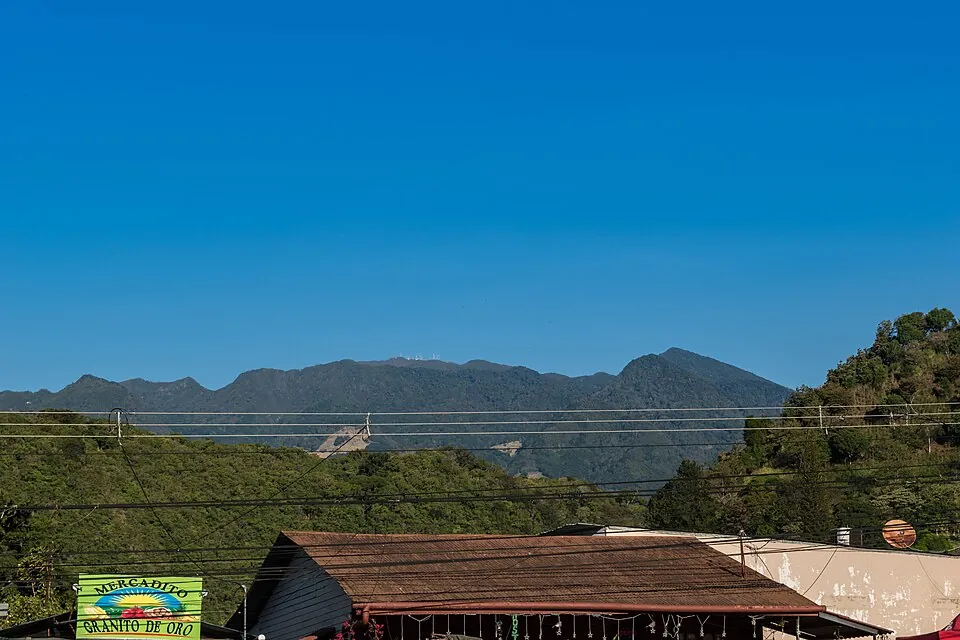
Asking prices for houses for sale in Panama span a wide range. Single 2026 listings run from a $125,000 two-bedroom condo in David to a $1,175,000 apartment in Costa del Este.[11][30] These are asking prices, not sale prices or market averages, and they are usually negotiated down.
Furnished 2-bed, 1,000 sq ft, gated community.
2-bed, 162 m², Boquete Country Club.
3-bed at Coronado Golf Club.
3-bed, about 4,500 sq ft, Panama City.
Panama City
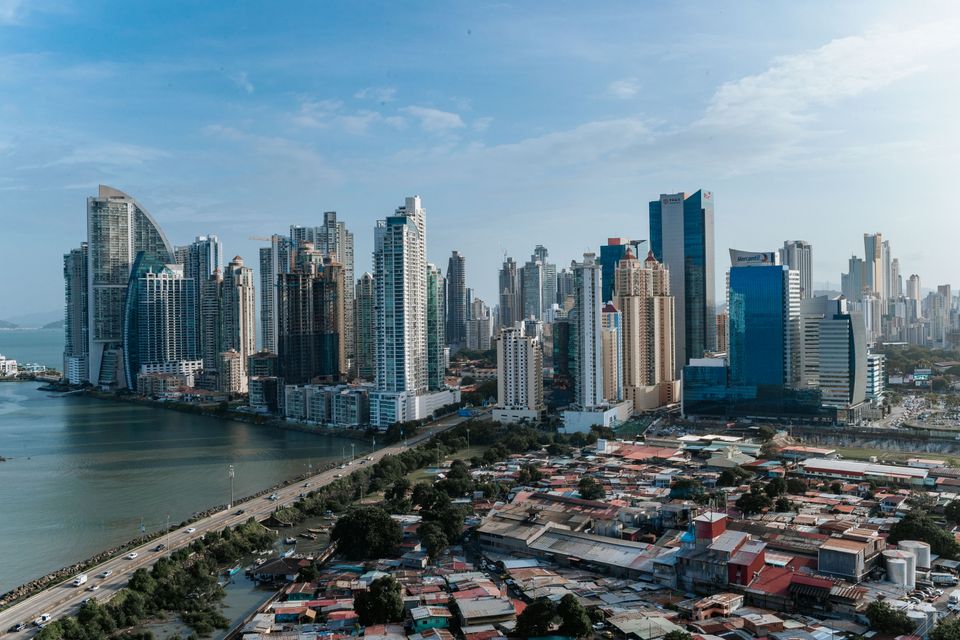
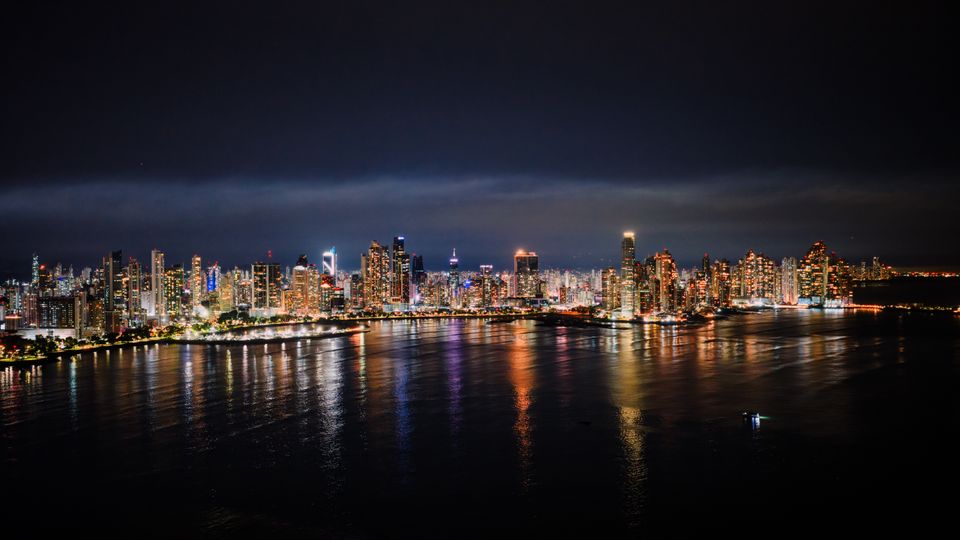
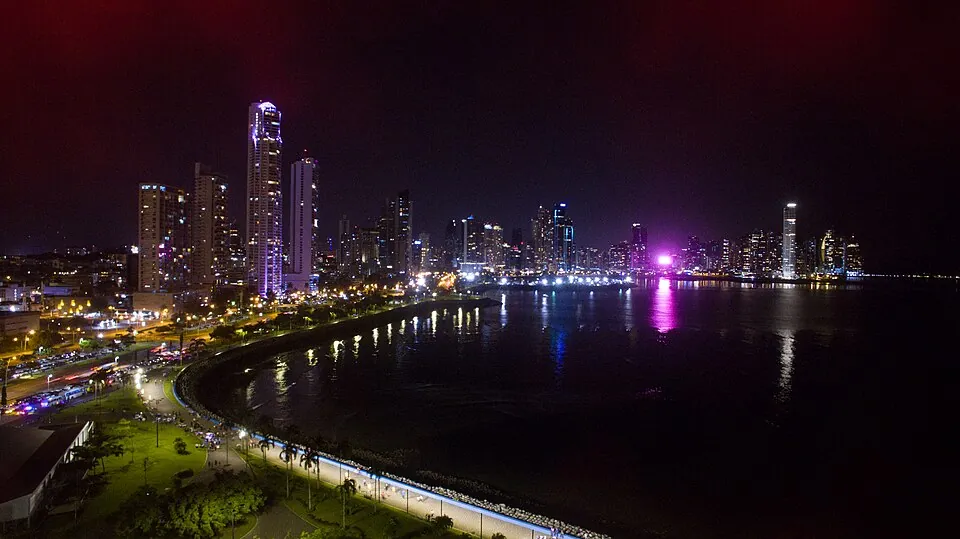
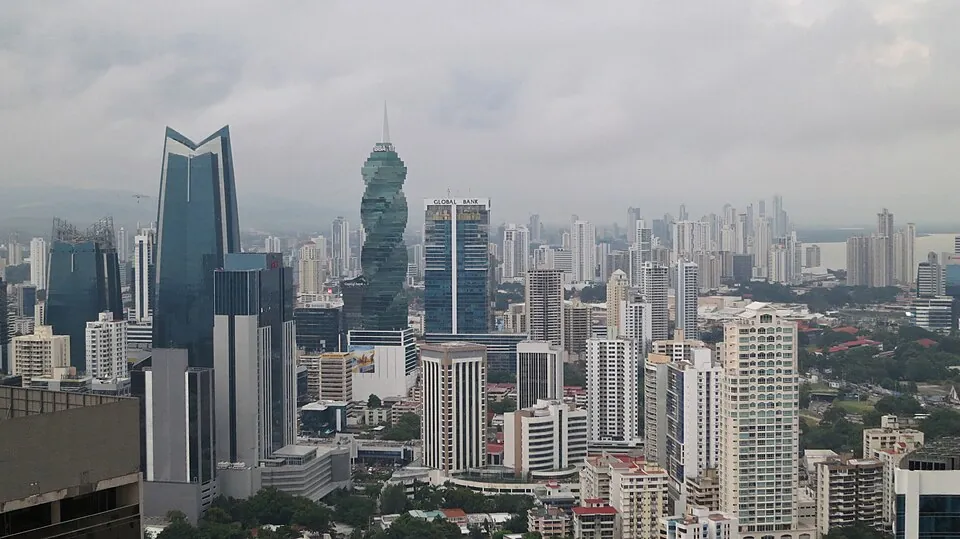
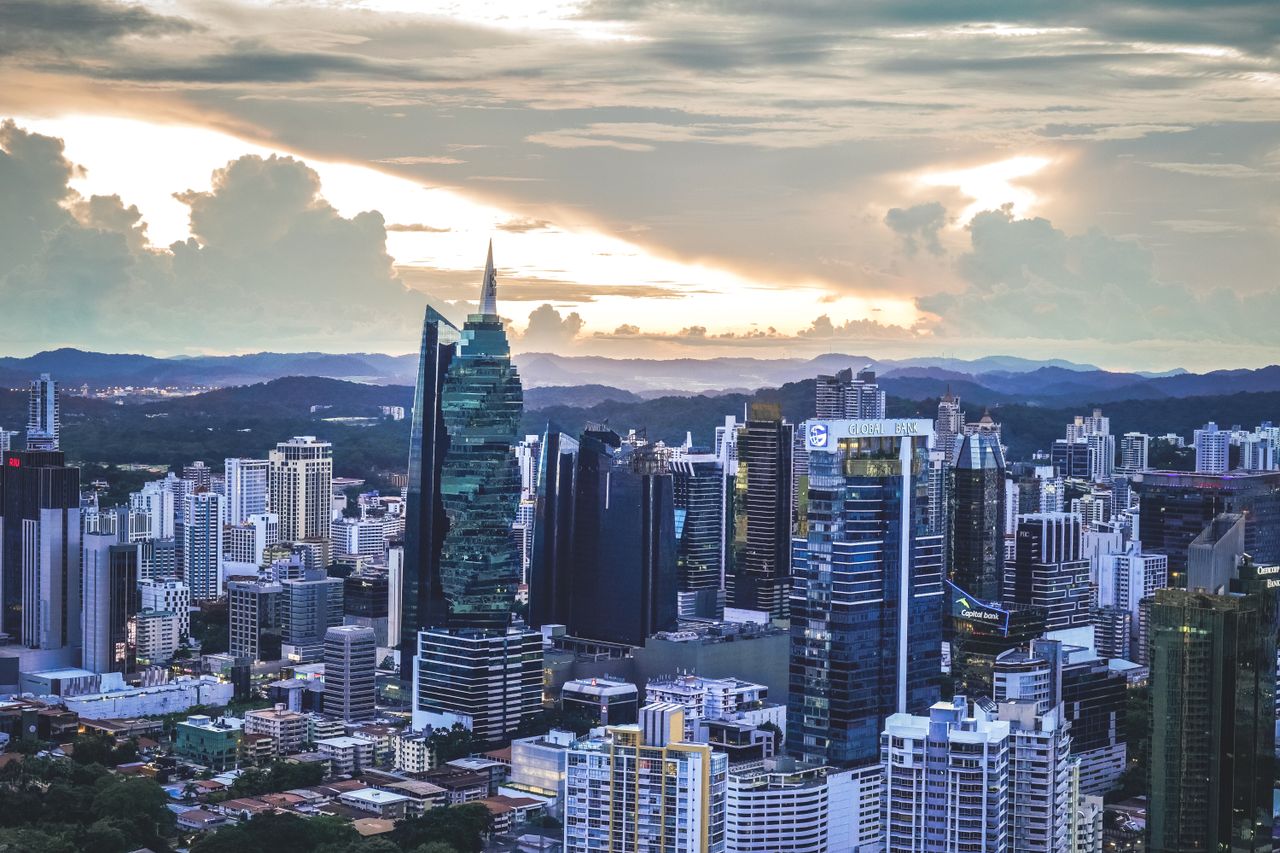
Panama City has full urban services, the country's best hospitals and the main airport links, and most foreign buyers there buy a condo.[12] Homes for sale in Panama City on Realtor.com's first page ranged from a $95,000 two-bedroom in PH Plaza Toledo to a $2,350,000 four-bedroom house in Santa María.[11] In Bella Vista, a 34 m² one-bedroom near the Carmen metro station was listed at $108,000 and a 91 m² three-bedroom at $262,000. A 118 m² two-bedroom in San Francisco was listed at $230,000.[31] West of the canal, Panamá Pacífico had houses from $355,000.[32]
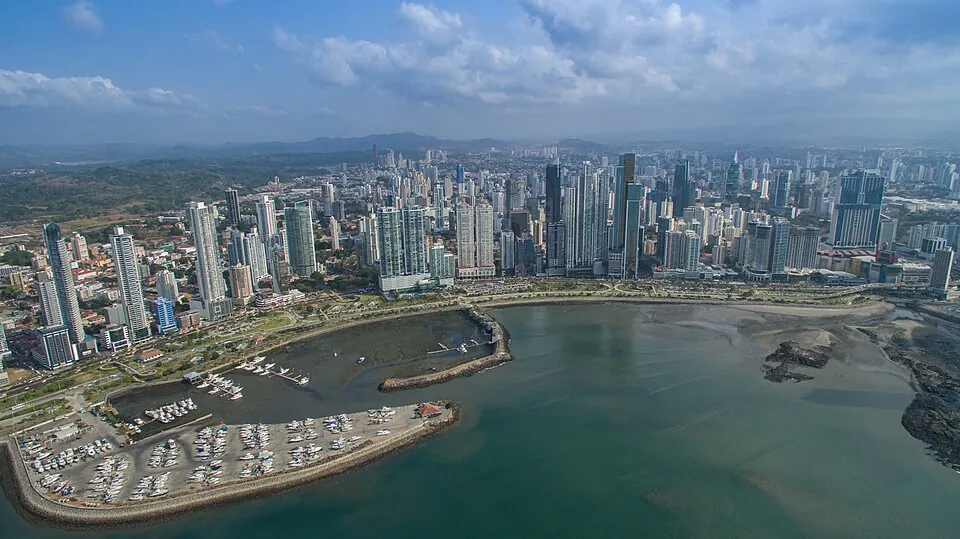
The city is also where pre-construction sales and the new Law 546 transfer-tax break matter most. Our guide to Panama condos for sale and what foreigners pay covers HOA fees, pre-construction risks and rental rules.
Boquete and David
Boquete's draw is spring-like weather all year, with no need for air conditioning. Volcancito and Alto Boquete offer more land just outside town, while Volcán and Cerro Punta are cooler and quieter.[12] A two-bedroom, 162 m² home in the gated Boquete Country Club was listed at $324,900, and a furnished family home in Bajo Boquete, a five-minute walk from the central park, was listed at $350,000.[30] At the top end, a four-bedroom home in the Lucero Homes community was listed at $1,300,000. In Volcán, a house on a 724 m² lot with clear title was listed at $240,000.[6] For neighborhoods, water and price ranges, read our guide to Boquete real estate and buying a home in Boquete.
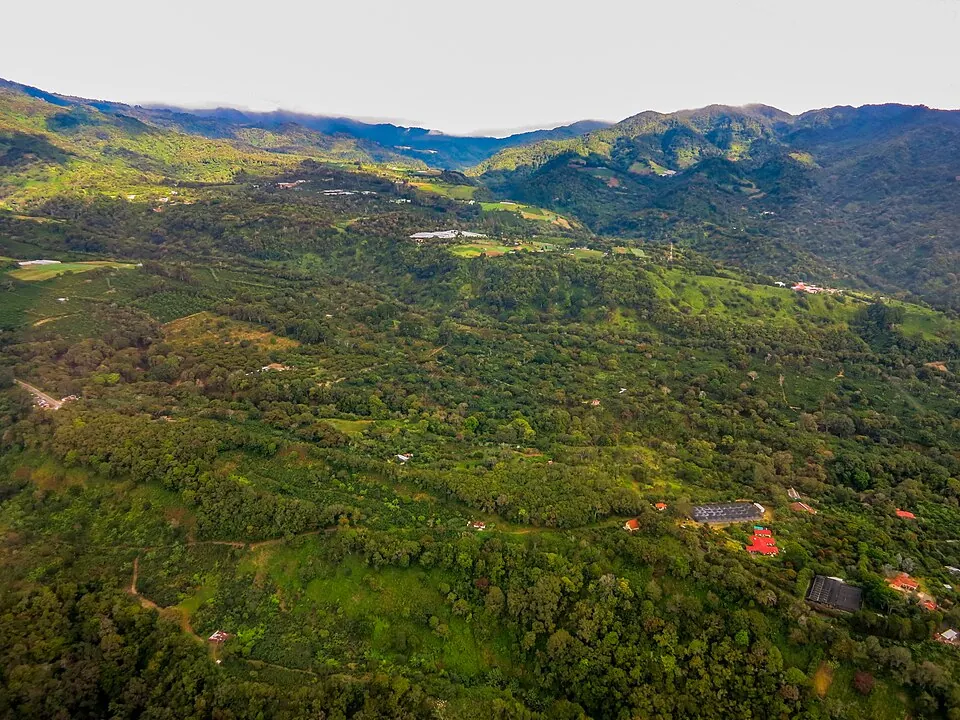
Real estate in David, Panama's second city and the practical hub of Chiriquí, costs far less than in the capital.[12] A furnished two-bedroom, 1,000 sq ft condo in a gated community there was listed at $125,000.[30]
Coronado and the Pacific beaches
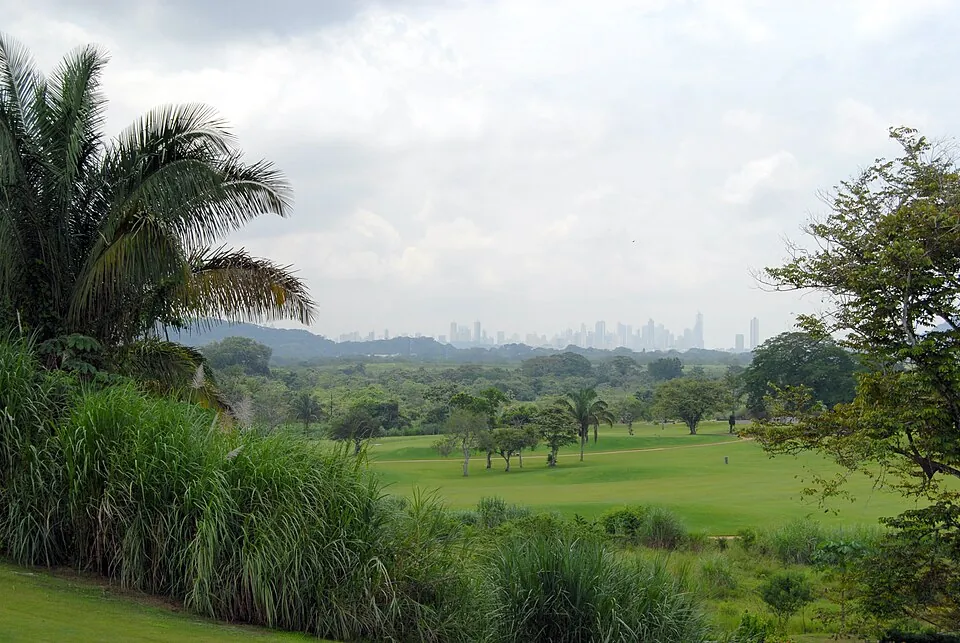
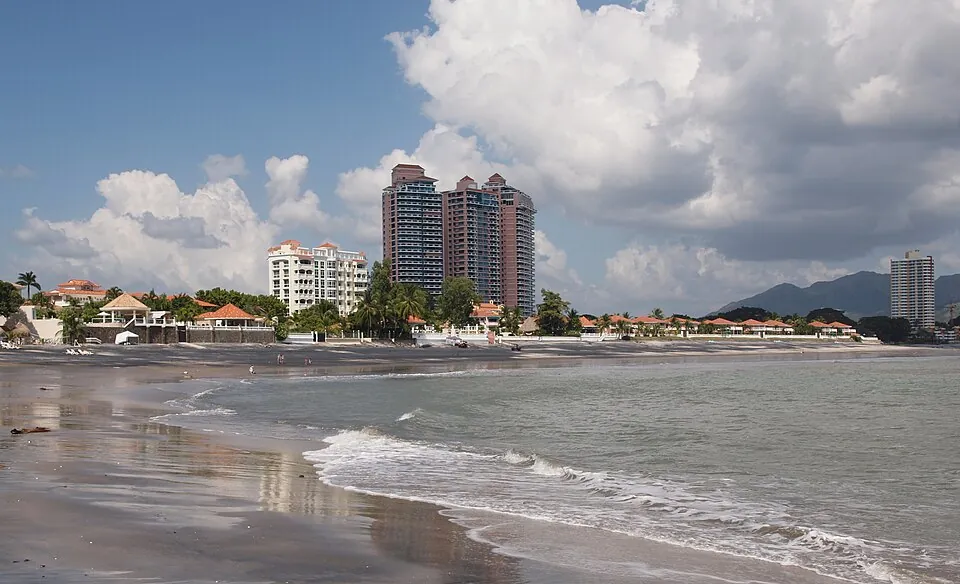
Coronado is about 90 minutes from the capital and has supermarkets, medical services and an international school.[12] It has been a Panamanian beach-home community since the 1940s, and its black-sand beach isn't the safest for swimming. San Carlos, about 80 minutes from the city, and Punta Chame, under an hour away, have better beaches.[3] A three-bedroom beach residence at Coronado Golf Club was listed at $695,000, and an oceanfront compound on Playa Corona at $680,000.[30] Inland, a four-bedroom lakefront house with a pool in San Carlos was listed at $250,000.[33] Our guide to Coronado, Panama real estate, homes, condos and gated communities compares the developments.
Bocas del Toro
Bocas is where the ROP warning matters most, because much of the island and waterfront land for sale is possession rights, not title. Titled options do exist. A titled 2,498 m² mainland waterfront home with road and water access, off-grid with solar panels, was listed at $199,000.[30] A newly built two-bedroom home on Isla Colón was listed at $425,000, and a three-bedroom house on Dolphin Bay at $450,000.[6][31]
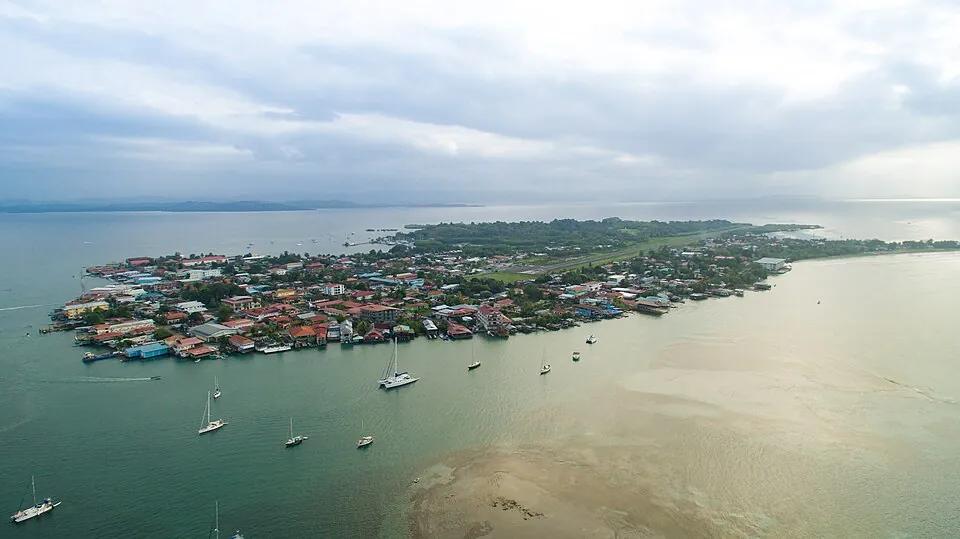
Factor in the boat: a 19-acre property at Loma Partida, for example, sits a 30 to 40 minute boat ride from Bocas town.[30] ANATI, which handles ROP titling, has a regional office in Changuinola.[34] Our guide to Bocas del Toro real estate, island homes and land for sale goes island by island.
Pedasí and Playa Venao
The Azuero Peninsula offers some of the lowest beach-area prices and plenty of raw land. Lots in the gated Los Islotes community start at $80,000, and two-bedroom houses in Villas Coco del Mar near Las Tablas start at $199,000. Four hectares of beachfront land near Salud were listed at $659,000.[35] A villa in an 18-villa complex at Playa Venao, eight minutes' walk from the beach, was listed at $590,000. A two-bedroom house at Bahía de Achotines near Pedasí was listed at $655,000.[6][31] Beachfront land here is subject to the 22-meter public strip on the Pacific. Our guide to Pedasí and Playa Venao real estate on the Azuero coast covers each town.
Buying property to get residency in Panama
Buying a home can get you residency through two visas: Friendly Nations, with titled property of at least $200,000, and Qualified Investor, with $300,000 in a new property or $500,000 in a resale.[29] Retirees can also qualify for the Pensionado visa with a smaller pension if they own a home worth $100,000.[18]
Friendly Nations: $200,000 in property
Executive Decree 16 of 31 August 2026 added Ecuador to the Friendly Nations list, taking it from 50 to 51 countries.[36][37] Colombia, Venezuela, Italy and India are not on the list, so confirm your passport is. You qualify through a job in Panama, a property, or a $200,000 fixed-term deposit held for three years.[29]
The property route requires a Registry certificate showing real estate worth at least B/.200,000 in your name, in a company you are the ultimate beneficial owner of, or in a private-interest foundation. A local bank may finance the purchase.[29] Government fees are B/.250 to the National Treasury and B/.800 to the National Immigration Service.[29] You hold provisional residency for two years and then apply for permanent residency.
Qualified Investor: the new 2026 rules
Executive Decree 17 of 8 September 2026 (Gaceta Oficial 30613) replaced Decree 722 of 2020 and has been in force since 16 September 2026. The minimums are $300,000 in a new, first-sale property, $500,000 in a resale property or securities, or a fixed-term deposit of $500,000 at Banco Nacional or Caja de Ahorros or $750,000 at a private bank. MICI certifies the investment within 15 business days, the Immigration Service decides within 30, and you must keep the investment for five years.
The details matter for buyers. The lower of the price you paid and the market value counts, minus any mortgage or lien, so a financed or overpriced unit may fall short. The funds must come from abroad, and ROP land doesn't qualify. Fees are $5,000 to the National Treasury and $5,000 to the Immigration Service for the main applicant, plus $1,000 and $1,000 per dependent. Applications filed before 16 September 2026 follow the old rules. If you signed an investment or contract before that date, you can still use the old rules if you file within six months, by March 2027.
Pensionado: the retiree route
The Pensionado visa needs a lifetime pension of at least $1,000 a month, or $750 if you own titled Panamanian property worth more than $100,000.[18] Each dependent adds $250 a month to the required income.[38] Savings, IRAs and 401(k)s don't count. Under Law 9 of 1987, art. 2(3), the main applicant is exempt from the government fee and the repatriation deposit.[38] Dependents pay B/.250 plus an $800 repatriation deposit, which children under 12 don't pay.[18] Our guide to retiring in Panama, with visas, costs and the best places to live, covers the retiree side in full.
Keeping it, and the offers that don't add up
Permanent residency can be cancelled if you spend more than two years outside Panama, which matters if you plan to spend only winters there. Naturalization requires five years of permanent residency, renouncing your original nationality and passing an exam. The reforestation visa needs $100,000 for provisional residency or $350,000 for direct permanent residency under Law 24 of 1992. Be wary of plantation shares sold as a path to residency for far less: one teak plantation stake was listed at $27,180 and described as allowing permanent residency.[35] For every route side by side, read our comparison of Panama residency visas: Friendly Nations, Pensionado and Investor.
Your name or a corporation, rental income and taxes
You can hold the property in your own name, through a Panamanian corporation, or through another entity such as a US LLC or a Nevis LLC.[39] A Panamanian corporation costs about $1,000 plus tax to set up.[4] Every sociedad anónima then pays a single annual fee (tasa única) of B/.250 in its first year and B/.300 in later years.[19]
Corporations are often recommended to foreigners for asset protection and tax reasons. Whether those benefits apply depends on your home country's tax rules and on keeping the company in good standing, so speak to a lawyer who knows both Panamanian and US or Canadian tax before buying through one. A company you beneficially own still works for the Friendly Nations property route.[29]
Panama taxes only Panamanian-source income, and you become a tax resident after 183 days in the country. Rent from a property in Panama is Panamanian-source income, so a rental condo is taxable in Panama whether or not you live there. What your home country taxes is a separate question for a cross-border accountant.
Common mistakes and scams when buying property in Panama
The most expensive mistakes are handing over money before the title is checked and buying ROP land as if it were titled. Fraud is rising: Panama's Public Ministry recorded 4,547 complaints of estafa and other frauds from January to August 2026, up 14% on the same period a year earlier.[40]
Recent cases show the patterns. In Operación Huellas, eight people were arrested for allegedly selling land with supposed rights of possession through social media, using forged ANATI documents. Victims lost about $177,685.[41] A four-woman network allegedly collected cash payments to "reserve" presale homes at the Ciudad Atenas project in Villa Grecia that were never delivered, with losses of up to $40,000.[42] In Chiriquí, a man has been charged, but not convicted, with using a false ID card and signature at a notary office to "sell" a 40-hectare parcel valued at B/.200,000 for B/.246.[43]
The mistakes to avoid
- Paying a reservation or "separation" fee to hold a property. Fraud rings advertise on social media and ask for advance payments for "separation" and legal procedures, then never deliver.[40] Pay nothing until your lawyer has seen the Registry certificate and the project's permits.
- Using the seller's or developer's lawyer. With no title insurance, an independent lawyer's Registry search is the only real check on liens, boundaries and who actually owns the property.
- Paying the seller directly. Use an irrevocable letter of payment from a Panamanian bank, so the money moves only when the deed is ready.[3]
- Skipping the final title check. Liens and competing deals can appear between the promise and the deed, which is why the lawyer runs a final lien search just before signing.[3] Complaints of mortgaging someone else's property rose from 3 to 21 between the first eight months of 2025 and of 2026.[43]
- Forgetting the condo or HOA clearance. If nobody checks the building's paz y salvo, the seller's unpaid maintenance dues pass to you.[16]
- Signing before your mortgage is approved. Without a financing contingency, a low appraisal or a rejected loan can cost you the deposit.[2]
- Treating ROP as a title. It can't be mortgaged, it doesn't qualify for residency, and titling can take years or never happen.
- Assuming a beachfront lot includes the beach. The first 22 meters on the Pacific and 10 meters on the Caribbean stay public.
- Buying a house you've only seen in the dry season. Leaks, mold, drainage and water supply problems show up in the rains.[12]
If you are defrauded, file a written complaint with the Fiscalía or the Juez de Paz where the crime happened. Include your ID, a detailed account of the facts, the name of the alleged fraudster if you know it, and any evidence.[44]
Before you go
Can US citizens and Canadians buy property in Panama?
Yes, on the same terms as Panamanian citizens. Americans and Canadians can buy houses, condos and land in their own name or through a corporation, with no residency requirement. The limits that apply to all foreigners are land within 10 kilometers of a border, indigenous comarcas, the public beach strip and some untitled land.
Is it safe to buy property in Panama as a foreigner?
It is safe when you buy titled property, use your own lawyer and pay through a bank letter. Most losses come from ROP land sold as if it were titled, reservation payments for presales that never get built, and forged documents. Fraud complaints in Panama rose 14% in the first eight months of 2026, so check the title at the Public Registry before paying anything.
How much does it cost to buy a house in Panama?
On a cash resale, expect buyer closing costs of roughly $2,000 to $6,500 on a $350,000 home, under 2% of the price. You pay the lawyer, the promise-to-purchase contract, the notary and the Public Registry. The seller pays the 2% transfer tax, the 3% capital gains advance and the agent's commission of about 5%.
How much is property tax in Panama, and is there a primary-home exemption?
Annual property tax runs from 0% to 1% of the cadastral value, and a registered main residence is exempt up to $120,000. Above that, a main residence pays 0.5%, rising to 0.7% above $700,000, while second homes pay 0.6% to 1% above a $30,000 exemption. The main-residence rate must be requested from the DGI, and paying the full year before 30 April earns a 10% discount.
Do I need a lawyer to buy property in Panama?
Yes, and it should be your own, not the seller's. Title insurance is rarely used in Panama, so the lawyer's search of the Public Registry for liens, boundaries and unpaid taxes is your main protection. Legal fees range from a flat fee of about $1,200 to 0.5% to 1% of the price.
How long does it take to close on a property in Panama?
About 10 days to a month for a cash purchase, and at least three months with a mortgage. The deed is signed before a notary and then recorded at the Public Registry. Next-day recording costs about $250 extra if every document is in order.
Can foreigners get a mortgage in Panama?
Yes, usually with a 30% to 50% down payment. Non-residents pay a 1% annual FECI surcharge, and banks lend only on titled property, up to its appraised value. Expect to provide your passport with entry and exit stamps, two bank references, two years of tax returns and proof of funds.
Does buying property in Panama give me residency?
It can, if the property is titled and meets the minimum. Friendly Nations needs $200,000 in property. The Qualified Investor visa needs $300,000 in a new, first-sale property or $500,000 in a resale, under rules in force since 16 September 2026. ROP land never qualifies; our comparison of Panama residency visas covers fees and timelines.
Can foreigners buy beachfront property in Panama?
Yes, but not the beach itself. The first 22 meters from the high-tide line on the Pacific and 10 meters on the Caribbean are public, and much coastal and island land is rights of possession rather than titled. Buy titled beachfront, or make titling a condition before you pay for an ROP property.
Is Panama a tax-free country for property owners and retirees?
No, but Panama taxes only Panamanian-source income. Rent from a property in Panama is taxable there, and you become a tax resident after 183 days in the country. Owners also pay annual property tax, and sellers pay 10% capital gains tax and the 2% transfer tax.
Sources
Prices, schedules and rules change. The small numbers in the text point to these sources.
- 1Ama Panama Realty - Step-by-step guide to buying real estate in Panamaamapanamarealty.com
- 2Arco Properties - How to buy property in Panama guidearcoproperties.com
- 3International Living - Panama real estate buying guideinternationalliving.com
- 4PanaCrypto - Guide to buying real estate in Panamapanacrypto.com
- 5
- 6Viviun - Houses for sale in Panamaviviun.com
- 7SINIA - ANATI institutional profilesinia.gob.pa
- 8ANTAI - Ley 80 de 2009 on derechos posesoriosmonitoreo.antai.gob.pa
- 9Gaceta Oficial 30597-B - Bribri adjudication court record, 2026s3-legispan.asamblea.gob.pa
- 10
- 11Realtor.com - Panama City property listingsrealtor.com
- 12Casa Solution - Homes for sale in Panamacasasolution.com
- 13Premier Casa - Panama properties and buying processpremiercasa.com
- 14Panavanti - Impuesto de inmueble guide 2026inmobiliariapanavanti.com
- 15Registro Público - Manual de Calificaciónregistro-publico.gob.pa
- 16Pinnock & Pinnock - Documents needed to buy property in Panamalegalpinnock.com
- 17Panamá Digital - IDAAN paz y salvo procedurepanamadigital.gob.pa
- 18
- 19Contraloría - Código Fiscal de la República de Panamáparticipacionciudadana.contraloria.gob.pa
- 20
- 21
- 22
- 23KPMG - Panama tax bulletin, August 2026assets.kpmg.com
- 24DGI - Impuesto de inmueble tariffs and exemptionsdgi.mef.gob.pa
- 25
- 26Oldemar Villarreal - Hipoteca en Panamá para extranjerosoldemarvillarreal.com
- 27
- 28Banco General - Préstamo hipotecario and FECIbgeneral.com
- 29Intercommerce - Friendly Nations visa requirements 2026intercommerce.consulting
- 30
- 31realestate.com.au - Panama property listingsrealestate.com.au
- 32Engel & Völkers - Houses for sale in Panama Cityengelvoelkers.com
- 33DoPanama - Panama property listingsdopanama.com
- 34ANATI - Normativas and regional officesanati.gob.pa
- 35EscapeArtist - Panama property listingsrealestate.escapeartist.com
- 36Gaceta Oficial 30601-B - Decreto Ejecutivo 16 on Friendly Nations lists3-legispan.asamblea.gob.pa
- 37Legalys - Ecuador joins Panama's Friendly Nations listpanama.legalys.com
- 38
- 39LatinCarib - Panama real estate investment opportunitieslatincarib.com
- 40Destino Panamá - Operación Ciclo housing fraud arrestsdestinopanama.com.pa
- 41
- 42
- 43Brax Panamá - Verifying property title before buyingbraxpanama.com
- 44Ministerio Público - Denuncias y delitos complaint procedureministeriopublico.gob.pa
Image credits
- Panama City , PanamaMattias Hill · CC BY-SA 3.0
- Panama City Skyline 1Dr. Thomas Liptak · CC BY-SA 4.0
- Aerial view of the Province of Chiriqui, Republic of Panama 09FranHogan · CC BY-SA 4.0
- Vulkan Baru Boquete (27238202851)dronepicr · CC BY 2.0
- Panama City skyline with Cinta Costera coastal roadPexels · Pexels License
- Panama City skyline at nightPexels · Pexels License
- Cinta Costera Panama Agosto20019Ciudad PMA500 · CC BY-SA 2.0
- GOLF COURSE AND PANAMA CITY SKYLINE - panoramioTEDBARTH · CC BY-SA 3.0
- Panama City Skyline 180107Eric Titcombe · CC BY 2.0
This guide is general information, not legal advice. Laws, fees and requirements change; confirm the details for your situation with a Panamanian lawyer before you act.