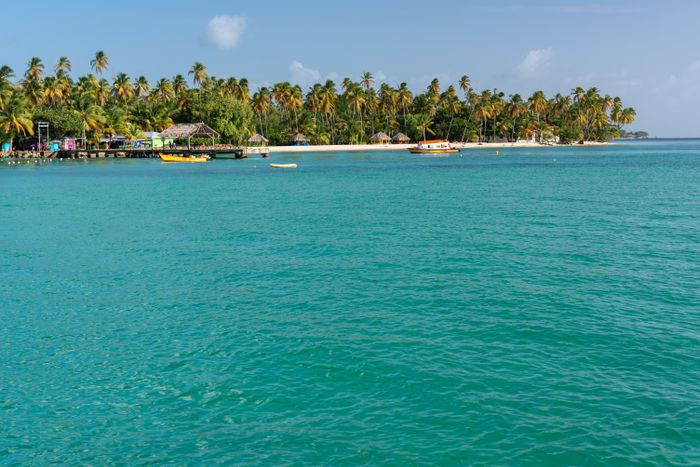
Playa Estrella sits on the northwest corner of Isla Colón, about 14 kilometers from Bocas Town by road. The water is shallow, glass-calm, and warm. Dozens of large orange starfish rest on the sandy bottom in water that barely reaches your knees. It is, by most measures, one of the most photogenic beaches in Panama — and one of the most visited. Getting the experience right requires knowing exactly when to show up, how to get there without overpaying, and what not to do once you're in the water.
This guide covers everything the short posts don't: the ecology behind the starfish, month-by-month water conditions, specific food options with prices, GPS coordinates, and the precise window each day when the beach is quiet enough to actually enjoy.
Section 01Why Starfish Beach is worth the trip
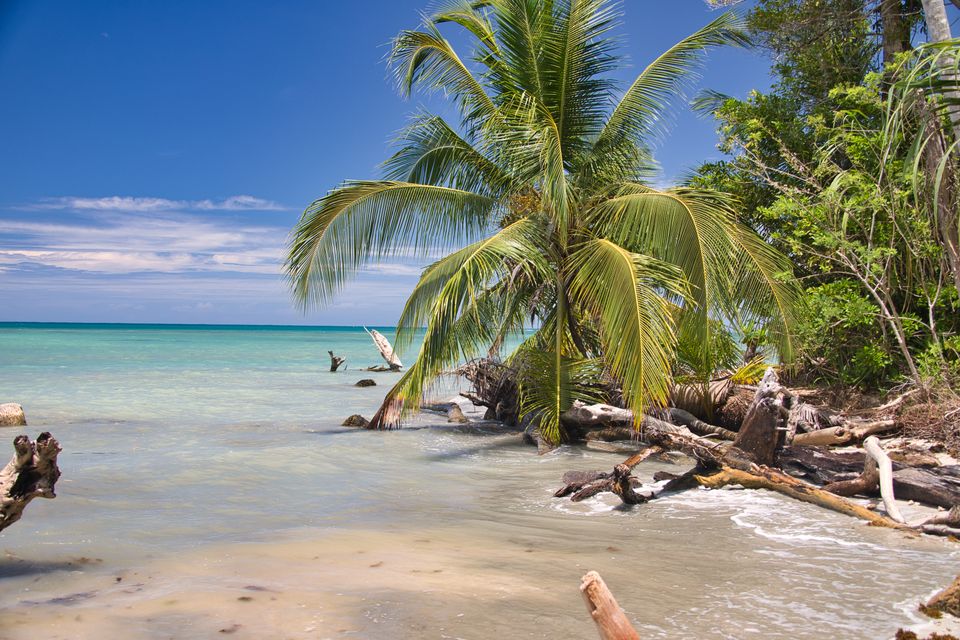
The appeal is immediate and obvious. The beach faces northwest toward the Panamanian mainland rather than the open Caribbean, which means the water is protected from ocean swell for most of the year. The result is a lagoon-like stretch of turquoise water so calm that children can wade out twenty meters and still be in knee-deep water. The sand is pale gold, the palm trees lean at the photogenic angles that postcards require, and the whole scene is backed by dense jungle rather than development.
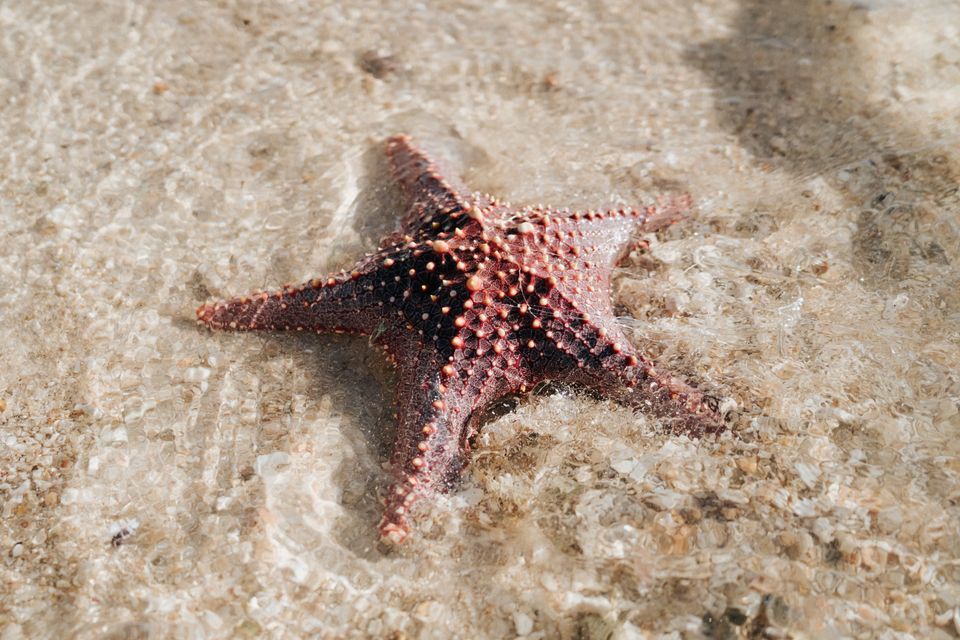
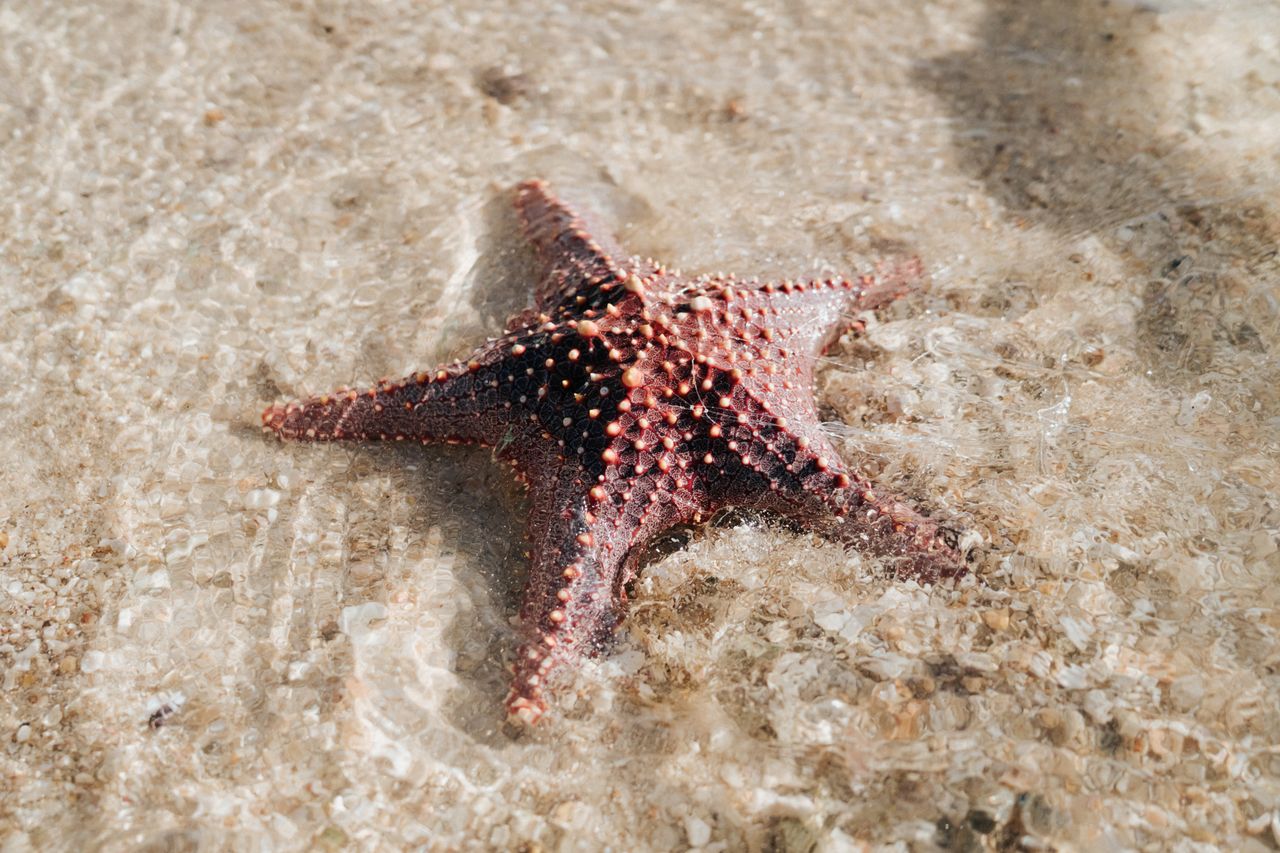
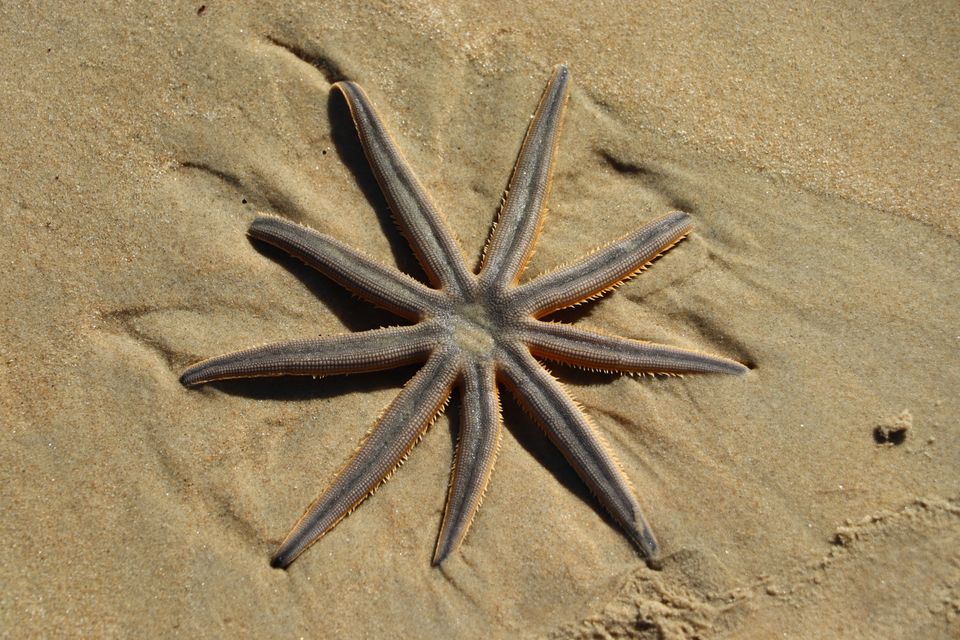
What makes Playa Estrella genuinely unusual, though, is the concentration of Oreaster reticulatus — the cushion sea star, known locally as estrella de mar. These are large, five-armed echinoderms that can reach 50 centimeters across and weigh over a kilogram. Their coloring ranges from deep orange-red to mottled brown, and they are visible from the surface without a mask. In calm conditions, you can see them from the shoreline. No other beach on Isla Colón has them in comparable numbers, which is why this one has its own name in two languages.
The beach is also a reliable spot for sloth sightings. The jungle canopy behind the restaurants and along the trail from Boca del Drago village is prime three-toed sloth habitat, and locals who know the trees well can point them out — often a mother with a juvenile clinging to her chest, motionless thirty meters up.
Section 02Getting there from Bocas Town
There are three ways to reach the beach from Bocas Town. The cheapest is the public colectivo bus; the most flexible is a taxi; the most scenic overwater approach is a private water taxi directly to the beach. All three work, but they suit different situations.
| Route | Cost | Time | Verdict |
|---|---|---|---|
| Colectivo bus (public) | $5 round trip | 35–45 min each way | Best value |
| Taxi (shared, up to 4) | $25–35 one way | 25–30 min | Good for groups |
| Water taxi (Boca del Drago to beach) | $2–3 per person | 5 min | Skip if you can walk |
| Rented scooter/ATV | $30–50/day | 25–30 min | Most flexible |
By colectivo bus: This is the standard approach and it works well. Find the bus at the northwest corner of Parque Simón Bolívar in Bocas Town — GPS coordinates approximately 9.340254, -82.240767. The bus runs on even hours: departures at 6:00, 8:00, 10:00, 12:00, 14:00, 16:00, and 18:00. Return buses from Boca del Drago run on odd hours, with the last bus back at 17:00. The fare is $5 round trip, paid to the driver. The ride takes 35 to 45 minutes depending on road conditions and how many stops the driver makes. The road has been under intermittent repair for years and remains rough in sections, so expect a bumpy ride.
By taxi: A private taxi from Bocas Town to the beach costs $25 to $35 for the vehicle (not per person), accommodating up to four passengers. The driver will typically wait at Boca del Drago for a negotiated fee, or you can arrange a pickup time. If you have a group of three or four, the per-person cost becomes competitive with the bus and you gain full schedule flexibility. Negotiate the round-trip price before you leave.
By scooter or ATV: Several rental shops in Bocas Town rent scooters from around $30 per day and ATVs from $50. This gives you complete freedom — leave when you want, stay as long as you like, and stop along the road for sloth or bird sightings. The road to Boca del Drago is paved but narrow and hilly in sections; a scooter handles it fine, but the road is not suitable for regular bicycles unless you are very fit.
From Boca del Drago village to the beach: The colectivo drops you at Boca del Drago village, not at the beach itself. From the bus stop, the beach is a 15 to 20 minute walk along a well-marked coastal trail. The path is flat, shaded by palms, and genuinely pleasant — the water laps at the edge of the trail in places and you will likely see herons and egrets. There are no significant obstacles. Alternatively, small water taxis wait at the Boca del Drago pier and charge $2 to $3 per person for the five-minute boat ride directly to the beach restaurants. The walk is better; the boat adds unnecessary traffic to an already pressured marine environment.
Section 03The starfish: what they are, why they're here, and why you must not touch them
The species at Playa Estrella is Oreaster reticulatus, the cushion sea star. It is the largest sea star in the Caribbean, capable of reaching 50 centimeters in diameter, and it is immediately recognizable by its thick, pillow-like body and vivid orange or reddish-brown coloring. Adults feed primarily on microorganisms, detritus, and small invertebrates in seagrass beds — exactly the habitat that the protected bay at Playa Estrella provides.

The concentration here is not random. The northwest-facing bay creates a sheltered, shallow-water environment with a sandy, seagrass-covered bottom that is ideal for this species. Other beaches on Isla Colón face the open Caribbean and have rockier or more wave-exposed substrates that Oreaster reticulatus does not favor. Playa Estrella is, in effect, a natural aggregation point.
The population has declined noticeably over the past decade, and the reason is tourism pressure. When visitors lift a starfish out of the water — even briefly — several things happen simultaneously. The animal is exposed to air, which causes desiccation stress. The abrupt temperature change between water and air triggers a physiological shock response. The natural mucus layer that protects the animal from bacteria and infection is disrupted by human skin oils and sunscreen. A starfish that has been handled multiple times in a single day — which is common at a beach that receives hundreds of visitors — can die within hours of being returned to the water. The signs posted throughout the beach are not suggestions.
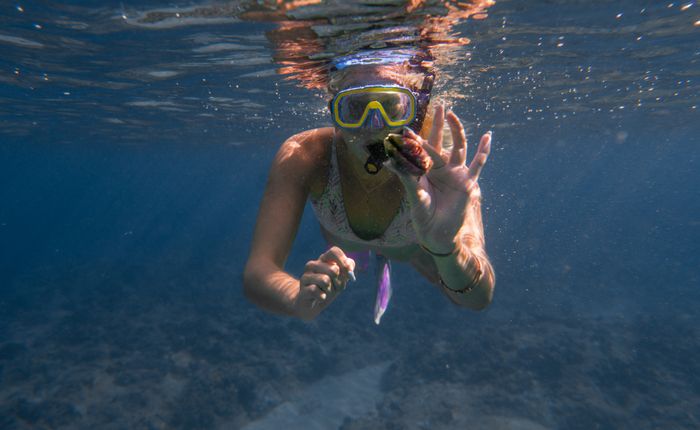
The best way to see them is with a mask and snorkel, floating face-down in the shallows without touching the bottom. In clear conditions you can observe them from 30 to 50 centimeters away without any contact. The far eastern end of the beach, near the mangroves, consistently has more starfish and fewer people — this is where the seagrass beds are densest and the water is shallowest.
When are the starfish most visible? Visibility is best in the dry season, January through April, when rainfall is minimal and the water column is clearest. The starfish are present year-round, but during the rainy season (May through November) river runoff and wave action can reduce underwater visibility to two or three meters. In the dry season, visibility in the shallows can reach eight to ten meters, and the starfish are clearly visible from the surface without a mask. Early morning — before 10:00 — also tends to have better visibility than the afternoon, when boat traffic stirs up sediment.
Section 04Best time of year to visit
Bocas del Toro does not have a simple dry season and wet season. The archipelago receives rain year-round, but the intensity and pattern vary significantly by month. For Starfish Beach specifically, the relevant factors are water clarity, wave height, and crowd levels.
January to April (dry season): The best months. Rainfall is lowest, seas are calmest, and underwater visibility is at its peak. Water temperature sits around 27–28°C. This is also peak tourist season, so weekends can be crowded, but weekday mornings are manageable. January and February tend to be the clearest months overall.
May to June (early rainy season): Rain increases but is often concentrated in afternoon downpours rather than all-day drizzle. Mornings are frequently clear. Water visibility drops slightly but remains acceptable. Fewer tourists mean quieter beaches on weekdays.
July to August (mid rainy season): Heavier rainfall and more consistent cloud cover. Water visibility is reduced. Seas remain relatively calm because the bay is protected, but the experience is less photogenic. Still swimmable, but not ideal for starfish spotting.
September to October (short dry spell): A genuine secondary dry season that many travelers overlook. Rainfall drops, skies clear, and the beach is at its least crowded of the year. Water visibility recovers. This is arguably the best-value time to visit — good conditions with a fraction of the January crowds.
November to December (roughest months): The most challenging period. November and December bring the strongest winds and the highest wave action of the year. Even the protected bay at Playa Estrella can see waves of 0.5 to 1 meter during this period, which stirs up sediment and makes starfish spotting difficult. Swimming is generally still safe, but the experience is diminished. If your trip falls in this window, go on a calm morning and check conditions before committing to the bus ride.
Section 05Water conditions month by month
The bay at Playa Estrella faces northwest and is partially sheltered by the coastline of Isla Colón, which means it is significantly calmer than the east-facing beaches like Playa Bluff. However, it is not entirely immune to seasonal variation.
Water temperature: Ranges from 26°C in the coolest months (January–February) to 30°C at the height of the rainy season (September–October). The water is warm enough for extended swimming year-round without a wetsuit.
Wave height: Typically 0 to 0.3 meters from January through October — essentially flat. November and December can see 0.5 to 1 meter waves on the windiest days, though these are still modest by open-ocean standards. The beach is not suitable for surfing under any conditions.
Underwater visibility: At its best (8–12 meters) from January through April. Drops to 3–6 meters during the heaviest rainy season months (July–August). Recovers to 6–9 meters during the September–October dry spell. Morning visits consistently offer better visibility than afternoons regardless of season, because boat traffic increases sediment suspension.
Sandflies (no-see-ums): A persistent issue that almost no guide adequately addresses. The fine-grained sand at Playa Estrella harbors biting midges (jejenes) that are most active at dawn and dusk. Sitting directly on the sand without a towel or chair is inadvisable, particularly in the late afternoon. DEET-based repellent applied to ankles and lower legs significantly reduces bites. The midges cannot penetrate the water, so time in the sea is bite-free.

Section 06Food, drinks, and what it costs for a full day
A string of open-air restaurants lines the beach, most of them family-run operations with plastic chairs, thatched roofs, and coolers full of cold beer. The food is straightforward Caribbean-Panamanian: rice and beans (arroz con frijoles), fried fish (pescado frito), grilled chicken, lobster when in season, and ceviche. Quality is consistent across most of the establishments — this is not a destination for gastronomy, but the food is fresh, generous, and inexpensive.
Typical prices in 2026: a plate of fried fish with rice and salad runs $8 to $12. Grilled lobster (seasonal, roughly December through June) costs $15 to $22 depending on size. A cold Balboa or Panama beer is $2 to $3. Fresh coconut water, served straight from the nut, is $2. Soft drinks are $1 to $2. A full day of eating and drinking — two meals and several drinks — will typically cost $25 to $40 per person.
The restaurants closest to the bus drop-off (the western end of the beach) tend to be slightly more expensive and more crowded. Walking to the eastern end of the beach, past the main cluster of shacks and toward the mangroves, you will find quieter spots with similar menus and occasionally lower prices. The far eastern restaurants also have the best starfish viewing directly in front of them.
Beach chairs and umbrellas: Several restaurants rent plastic lounge chairs for $3 to $5 per day, sometimes with a minimum drink purchase. Umbrellas are typically included with chair rental. You are not required to rent anything — bringing your own towel and setting up under the palm trees is perfectly acceptable, though be mindful of falling coconuts (genuinely not a joke; position yourself accordingly).
Bathrooms: Available at most of the beach restaurants for a fee of $0.50 to $1.00 whether or not you are eating there. There are no public bathrooms independent of the restaurants. Budget this into your day.
Total cost of a day trip from Bocas Town: Bus $5 + food and drinks $25–40 + chair rental $3–5 + bathroom $1 = approximately $34 to $51 per person, all-in. Groups arriving by taxi will pay more for transport but can split the cost.
Section 07Crowd strategy: when to arrive and where to position yourself
This is the information that most guides either omit or handle vaguely. Starfish Beach gets genuinely crowded, and the experience at 11:30 on a Saturday in February is materially different from the experience at 8:30 on a Tuesday in October. Here is the precise breakdown.
Peak hours: 10:00 to 14:00, any day. This is when the organized boat tours from Bocas Town arrive, typically in groups of 15 to 30 people per vessel. Multiple boats arrive simultaneously, disgorging passengers directly onto the beach and into the water. Noise levels increase sharply, the starfish are subjected to the most handling pressure, and the water becomes murky from foot traffic. If you arrive during this window on a weekend in high season, the beach will be at capacity.
Best window: Arrive on the 8:00 bus from Bocas Town. You reach the beach by approximately 9:00 to 9:15, giving you 60 to 90 minutes of relative quiet before the first tour boats appear. The water is clearest at this hour, the light is excellent for photography, and the starfish are undisturbed. Plan to eat lunch at one of the restaurants around 11:00 and leave on the 13:00 odd-hour bus from Boca del Drago, before the afternoon crowds peak.
Best days: Tuesday through Thursday. Weekends bring both local families from Bocas Town and the highest concentration of tour groups. Friday and Monday are intermediate. Mid-week visits in the shoulder season (May–June or September–October) offer the best combination of manageable crowds and acceptable conditions.
Best position on the beach: Walk past the main cluster of restaurants to the eastern end of the beach, near the mangroves. This section is consistently quieter, has more natural shade, and has the densest starfish population. The tour boats tend to deposit passengers at the western and central sections of the beach. The eastern end requires a five-minute walk but is worth every step.
The difference between arriving at 8:30 and arriving at 11:00 is the difference between a quiet Caribbean morning and a crowded pool party. The beach is the same; the experience is not.
Section 08Families, non-swimmers, and accessibility
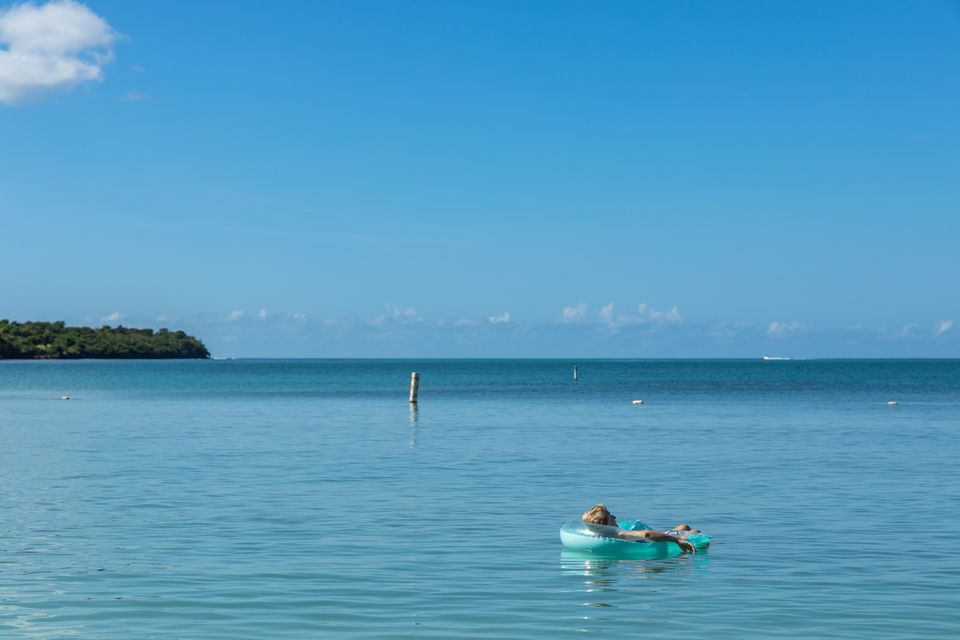
Playa Estrella is one of the most genuinely family-friendly beaches in Panama, and not just in the marketing-copy sense. The water depth gradient is exceptionally gradual — you can walk 30 meters from shore and still be in water below waist height for an adult. There are no sudden drop-offs, no significant currents, and no rip tides in the protected bay. Children who cannot swim can wade and observe starfish safely in 30 to 60 centimeters of water.
Water depth: The shallowest starfish are in 20 to 40 centimeters of water at the eastern end of the beach. The swimming area in front of the restaurants is 60 centimeters to 1.2 meters deep for the first 40 meters from shore. Beyond that it deepens gradually. The bottom is sandy throughout with no rocks or coral in the swimming area.
Lifeguards: There are none. This is standard for Panamanian beaches outside of resort properties. Parents of young children should maintain direct supervision at all times. The calm water significantly reduces risk, but the absence of lifeguards means there is no backup.
First aid: There is no first aid station at the beach. The nearest medical facility is in Bocas Town. For minor cuts or jellyfish stings, the restaurant staff can usually help with basic supplies. Bring a small kit if you are traveling with children or have medical concerns.
Mobility: The trail from Boca del Drago to the beach is flat and well-packed, but it is a natural surface trail, not a paved path. Wheelchairs and strollers will find it difficult. The water taxi from Boca del Drago pier to the beach restaurants is a better option for visitors with limited mobility — boats pull up close to the shore and the landing area is relatively flat.
Shade: Abundant. The palm trees along the beach provide significant natural shade, and the restaurant areas have thatched roofing. Visitors who burn easily can spend a full day here without excessive sun exposure if they position themselves thoughtfully. That said, the Caribbean sun at midday is intense; reef-safe sunscreen is essential both for your skin and for the marine environment.
Section 09Boca del Drago village and what else is nearby
Boca del Drago village sits at the end of the main road on Isla Colón, about a kilometer from Playa Estrella. It is a small, quiet community of perhaps 200 residents, with a handful of restaurants, a small pier, and the kind of unhurried atmosphere that Bocas Town had before it became a tourist hub. If you arrive early and have time before the beach fills up, the village is worth a brief exploration.
The road from Bocas Town to Boca del Drago passes through the interior of Isla Colón, and the drive itself is worthwhile. The jungle canopy on either side of the road is prime sloth habitat. Three-toed sloths (Bradypus variegatus) are regularly spotted in the cecropia trees along this stretch — look for an improbably still, shaggy mass about 10 to 20 meters up. The colectivo driver will sometimes point them out if asked.
Bird Island (Isla Pájaros) is visible from the Boca del Drago pier and is accessible by water taxi for approximately $10 to $15 round trip. The island is a roosting site for magnificent frigatebirds, brown boobies, and other seabirds, and the short boat ride passes through mangrove channels where you may see herons, kingfishers, and the occasional caiman. Several tour operators in Bocas Town combine Bird Island with a stop at Starfish Beach in a half-day itinerary — this is a reasonable option if you want to cover both without organizing separate transport.
For visitors who want to see more of Isla Colón beyond Starfish Beach, Playa Bluff on the island's eastern coast offers a completely different experience: a five-kilometer stretch of wild, wave-pounded beach with almost no facilities and almost no people. It is not safe for swimming due to strong currents, but it is spectacular for walking and is a nesting site for leatherback sea turtles from March through September. Getting there requires a separate taxi or scooter from Bocas Town — it is not accessible from Boca del Drago by land.
The broader Bocas del Toro archipelago has much more to offer beyond Isla Colón. Isla Bastimentos is home to Red Frog Beach and the Bastimentos National Marine Park, both accessible by water taxi from Bocas Town in 20 to 30 minutes. Dolphin Bay, between Isla Colón and Isla Cristóbal, is a reliable spot for bottlenose dolphin encounters on morning boat tours. These are best organized through the established tour operators on the Bocas Town waterfront, where half-day and full-day itineraries run $25 to $45 per person depending on the number of stops.