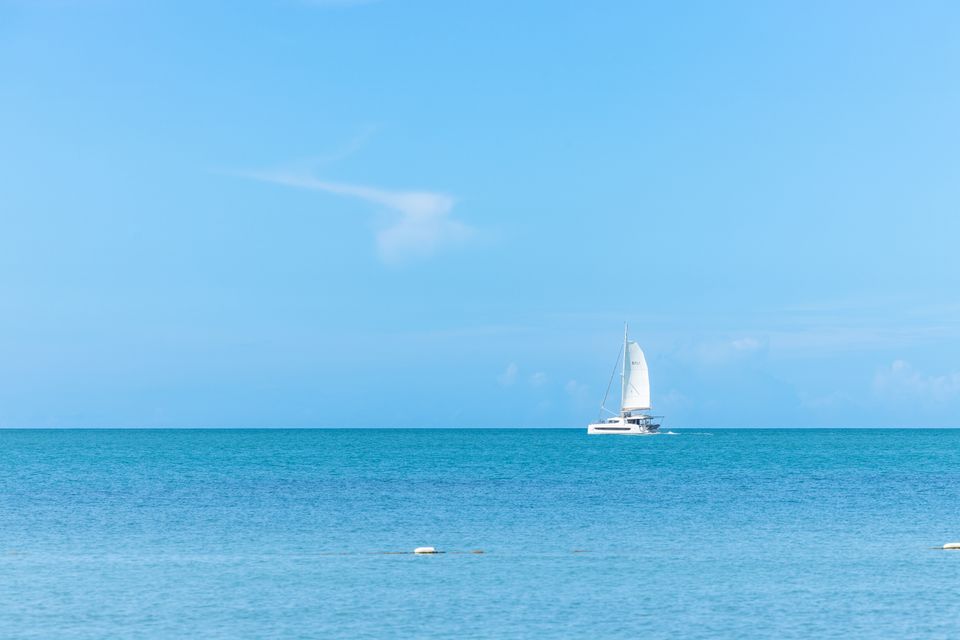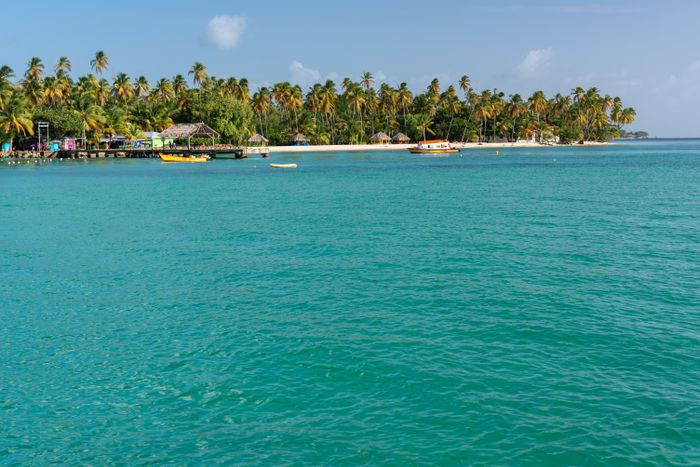
There is no road between Panama and Colombia. The Darién Gap — roughly 100 kilometers of roadless jungle — makes that impossible. Your options are a one-hour flight or a five-day sailboat passage through one of the last genuinely unspoiled island chains in the Caribbean. The flight is cheaper. The sailboat is the one you'll talk about for the rest of your life.
The San Blas sailing passage — Panama to Colombia via the Guna Yala archipelago — has become one of the defining overland-traveler experiences in the Americas. Done well, it delivers three days of postcard-perfect island hopping followed by a 24-to-36-hour open-water crossing that deposits you in Cartagena's colonial harbor. Done poorly, it is a miserable, seasick, underfed ordeal on a leaking boat with a captain of questionable judgment. This guide exists to help you do it well.
Section 01Why sail, not fly
The honest answer: you don't have to. Copa Airlines and other carriers fly Panama City to Cartagena in under an hour for $80–$180 depending on the season. If you are short on time, prone to severe seasickness, or simply not interested in living aboard a boat with strangers, fly. Nobody will judge you.

But the sailing passage offers something a flight cannot. The San Blas archipelago — officially Comarca Guna Yala — stretches for roughly 160 kilometers along Panama's northeast Caribbean coast and contains more than 360 coral islands. Most are uninhabited. The inhabited ones are home to the Guna people, one of the most politically autonomous indigenous nations in the Americas, who won self-governance from the Panamanian government in 1925 and have maintained it ever since. There are no resort hotels here, no cruise ship terminals, no beach clubs. The only way to spend meaningful time in the archipelago is by boat.
The passage also solves a practical problem for travelers moving overland through the Americas: it gets you and your luggage from one continent to the other without flying, in a way that feels earned. Arriving in Cartagena by sea, with salt on your skin and the walled city rising off the bow, is a genuinely different experience from stepping off a jet bridge.
Section 02The standard itinerary
The vast majority of commercial passages follow a five-day, five-night format departing from the Panamanian Caribbean coast and ending in Cartagena. Here is what a typical Panama-to-Colombia sailing trip looks like, day by day.
Day 1 — Getting to the boat. Most operators arrange a 4×4 jeep transfer from Panama City (usually departing around 5:00–6:00 a.m.) to the port at Portobelo, Puerto Lindo, or Linton Bay Marina on Panama's Caribbean coast. The drive takes roughly two to three hours over a road that becomes increasingly rough as you approach the coast. You board the boat in the late morning or early afternoon, complete safety briefings, and motor or sail to your first anchorage in the western San Blas — typically arriving by late afternoon. First night is spent at anchor.
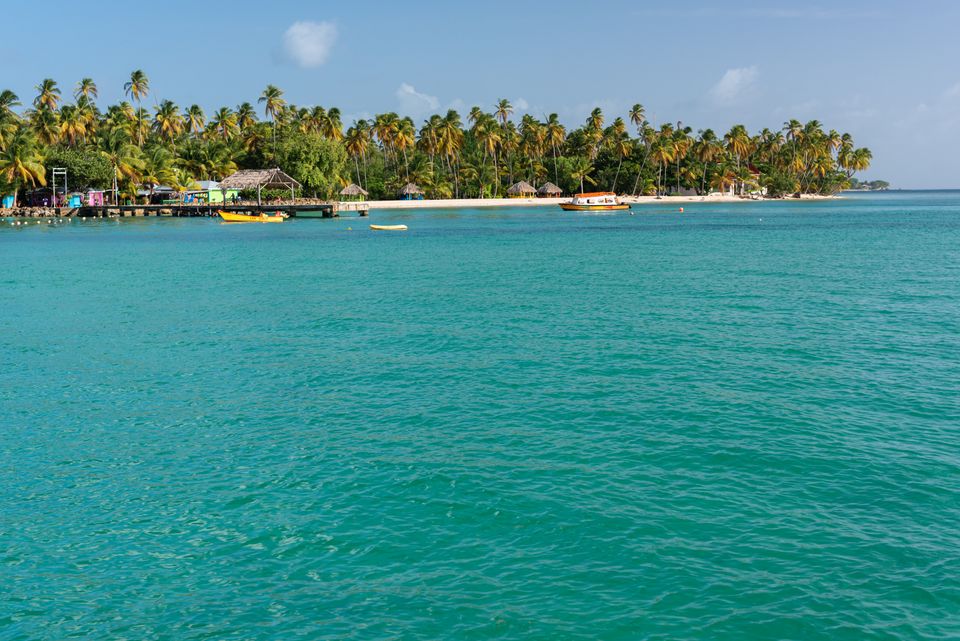
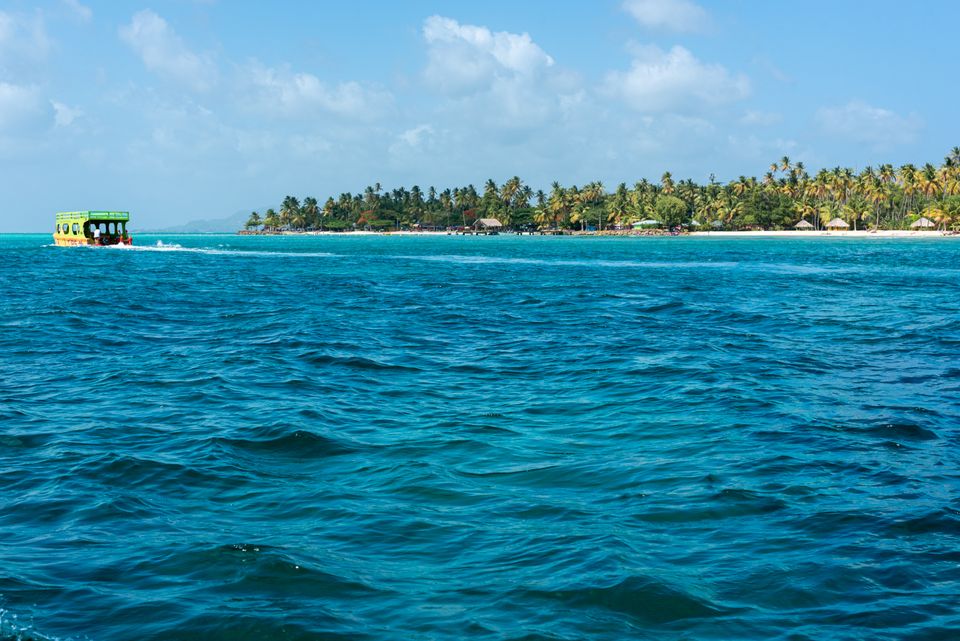
Days 2–3 — Island hopping in the San Blas. These are the days most people come for. Each morning the captain weighs anchor and moves to a new island or anchorage. Typical stops include the Chichimé Cays (classic postcard palm-and-sandbar islands), the Lemmon Cays (a Guna village with a small market), and the Cayos Holandeses (Dutch Cays), which offer the best snorkeling in the archipelago — coral gardens in water so clear you can see the anchor chain from 10 meters up. Days are unstructured: snorkeling, swimming, reading, buying fresh lobster from Guna fishermen who paddle out to the boat in dugout canoes. Nights are at anchor with dinner cooked aboard.
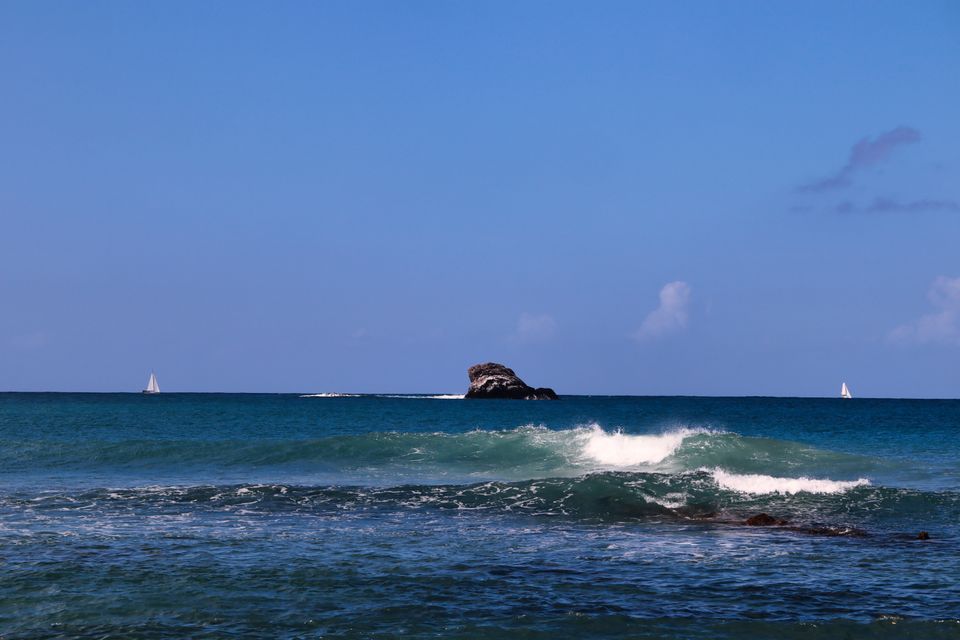
Day 4 — The open-water crossing begins. From the eastern San Blas (around Coco Bandero or Cayos Holandeses), the boat leaves the protection of the reef and enters the open Caribbean. This is the serious part of the trip. The trade winds blow 15–25 knots from the east-northeast, and seas can build to 2–3 meters. The crossing to Cartagena covers approximately 150–180 nautical miles. Most boats leave in the late afternoon or evening of day 4 to arrive in Cartagena the following morning.
Day 5 — Arrival in Cartagena. You motor into Cartagena harbor in the morning, typically docking at Club Náutico or the marina at Manga. Immigration and customs procedures follow (see Section 09). Most passengers are cleared and free to explore the city by early afternoon.
The reverse direction — Cartagena to Panama — follows the same route in reverse. The open-water crossing comes first (days 1–2), then three days in the San Blas, then arrival on the Panamanian coast. Many travelers prefer this direction because the rough part is over before you have settled into boat life, and you arrive in the islands feeling relieved rather than dreading what's ahead.
Section 03Monohull vs catamaran
This is the most important decision you will make when booking the passage, and most guides gloss over it. The vessel type affects your comfort, your seasickness risk, your living space, and — to some degree — your safety during the open-water crossing.
| Factor | Monohull | Catamaran | Verdict |
|---|---|---|---|
| Motion in open water | Rolls significantly — 20–30° heel is normal in trade winds | Pitches fore-and-aft but stays level; far less rolling | Cat wins |
| Seasickness risk | High during the crossing, especially in windy season | Meaningfully lower — the stable platform helps | Cat wins |
| Living space | Narrow cabins, cramped saloon, limited deck space | Wide beam, two hulls with cabins, large cockpit | Cat wins |
| Price | $500–$600 per person typical | $650–$750 per person typical | Mono wins |
| Sailing experience | More dynamic — you feel the boat working | Smoother, more like a floating apartment | Preference |
| Capacity | Typically 6–10 passengers | Typically 8–12 passengers | Similar |
| Speed | Slower — crossings can run 36–50 hours | Faster — crossings typically 24–32 hours | Cat wins |
The practical upshot: if you have any history of motion sickness, or if you are traveling in the windy season (December through April), spend the extra $100–$150 and book a catamaran. The difference in comfort during the open-water crossing is not marginal — it is the difference between a memorable adventure and a genuinely miserable 30 hours.
On a monohull in rough conditions, sleeping is difficult, cooking is nearly impossible, and simply walking from the bow to the stern requires two hands on the grab rails at all times. On a catamaran in the same conditions, you can sit at the table and eat a meal without holding your plate.
Section 04Operators compared
Dozens of boats run this route commercially. Quality varies enormously. The following are the operators with the longest track records and the most consistent recent reviews — but the sailing world changes fast, and you should always cross-reference current TripAdvisor and Hostelworld reviews before booking.
Blue Sailing — The largest and most visible operator on the route, Blue Sailing functions as a booking agency that matches passengers with vetted captains running both monohulls and catamarans. Prices start around $660–$700 per person. They have a strong social media presence and consistent reviews. The agency model means boat quality can vary between departures, so ask specifically which vessel you are assigned to and read reviews for that boat.

San Blas Adventures — Primarily a speedboat operator (not a sailing operator), San Blas Adventures runs a 4-day, 3-night island-hopping trip that ends in Capurgana on the Colombian coast — not Cartagena. From Capurgana you still need to travel overland or by small boat to reach Cartagena, which adds roughly 11 hours by bus from Necocli. The price ($495–$545) is lower, but factor in the additional transport cost and time. This is a genuinely different product from a sailing passage: you spend more time on islands and less time at sea, which suits travelers who are primarily there for the San Blas experience rather than the sailing.
Ave Maria Sailing — A classic 50-foot Alden Offshore ketch operated by Australian captain Paul and his partner Sindry, departing from Portobelo. With 12+ years on the route, this is one of the most experienced operations available. Registered as a commercial vessel meeting international safety standards. Price: from $550 per person for 5 nights. Departures roughly every three weeks; limited to a small group, which means a more personal experience.
Wild Card Sailing — One of the longer-established operators on the Panama-Colombia route, Wild Card runs both directions and has built a reputation for a social, party-friendly atmosphere on the islands. Good option for solo travelers who want to meet people.
San Blas Dreams — Functions as a broker connecting travelers with independent captains. Prices range $525–$750 depending on the boat. Useful for finding departures when the main operators are full, but the brokerage model adds a layer of uncertainty — confirm all details directly with the captain before paying a deposit.
La Gitanita — A smaller, more boutique operation with a strong following among travelers who want a quieter, less party-oriented experience. Worth checking if you prefer a calmer group dynamic.
Section 05What's included (and what isn't)
The standard price covers more than most travelers expect — but there are consistent hidden costs that catch people off guard. Here is an honest breakdown.
Typically included in the base price:
- Three meals per day, cooked aboard (quality varies significantly by boat)
- Drinking water and non-alcoholic beverages
- Snorkeling gear (mask and fins — quality varies)
- Bunk or cabin berth with bedding
- Immigration paperwork handling (the captain collects passports and coordinates with port authorities)
- 4×4 jeep transfer from Panama City to the departure port
Typically NOT included — budget accordingly:
- Guna Yala entry permit: $20–$25 per person, paid in cash at the port of entry (Porvenir or Cartí). Non-negotiable — this is an autonomous territory with its own entry fee structure.
- Alcohol: Almost universally excluded. Bring your own from Panama City; provisioning options en route are limited and expensive.
- Lobster and fresh fish from Guna vendors: $5–$15 per lobster bought from canoes — one of the great pleasures of the trip, but it adds up. Bring $30–$50 in small bills.
- Tips: The captain and crew work hard. A tip of $20–$40 per passenger is standard and genuinely appreciated.
- Cartagena port fees: $10–$20 per person, paid on arrival.
- Immigration agent in Cartagena: Optional but recommended — $50–$80 speeds up a process that can otherwise take half a day (see Section 09).
- Seasickness medication: Buy this in Panama City before departure. It is not provided.
Total out-of-pocket beyond the base price: budget an additional $100–$150 per person for a realistic all-in cost. On a $650 catamaran booking, expect to spend $750–$800 total.
Section 06Seasickness: honest advice
This is the section most guides skip or treat with a single sentence. Do not skip it. The open-water crossing from the eastern San Blas to Cartagena crosses the southern Caribbean in the full force of the trade winds. In the windy season (December through April), seas of 2–3 meters are routine. Even in calmer months, the swell can be uncomfortable. Seasickness is the single most common reason people describe the passage as a negative experience.

Here is what actually works, in order of effectiveness:
Scopolamine patches (Transderm Scop): The most effective prescription option. Applied behind the ear 4–6 hours before the crossing begins, they provide 72-hour protection. Require a prescription in the US; available over the counter at pharmacies in Panama City (ask for "parches de escopolamina"). Side effects include dry mouth and mild blurred vision — manageable. Apply the night before the crossing, not the morning of.
Meclizine (Bonine) or dimenhydrinate (Dramamine): Over-the-counter antihistamines that reduce nausea. Less effective than scopolamine but widely available and with fewer side effects. Take 1–2 hours before the crossing. Drowsiness is common — on a rocking boat at night, this is not necessarily a problem.
Acupressure wristbands (Sea-Bands): Surprisingly effective for mild to moderate susceptibility. Apply before symptoms start — they do nothing once you are already sick. Cheap, no side effects, worth packing regardless.
Ginger: Ginger capsules (1,000mg) or crystallized ginger taken 30 minutes before the crossing and every few hours during it have solid evidence behind them. Not a replacement for medication if you are seriously prone to motion sickness, but a useful supplement.
Positioning on the boat: Stay in the cockpit or on deck, in the fresh air, with a view of the horizon. The worst place to be is below decks in a cabin — the motion is amplified and there is no visual reference point. If you feel nausea coming on, get outside immediately. On a catamaran, the wide beam and central cockpit give you a stable, well-ventilated position that is far better than any spot on a monohull.
What to eat: Light, bland food before and during the crossing. Crackers, plain rice, bananas. Avoid alcohol for 24 hours before departure. Stay hydrated — dehydration worsens nausea dramatically.
Physical fitness and accessibility: The passage requires the ability to board and disembark from a boat via a ladder or dinghy, often in swell. There are no accessibility accommodations. Most operators set a minimum age of 5–8 years; some require passengers to be able to swim. Ask your operator directly about any specific physical requirements. The San Blas islands are flat coral sand — walking is easy once ashore — but the boat itself involves steps, hatches, and occasional scrambling on deck.
Section 07Weather and best months
The Caribbean coast of Panama has two distinct seasons, and they affect the crossing very differently. Most guides reduce this to "windy season good, rainy season bad" — which is both oversimplified and partly wrong.
| Month | Wind | Seas | Rain | Verdict |
|---|---|---|---|---|
| December – January | Strong NE trades, 20–30 kts | 2–3m, rough crossing | Dry | Windy, bumpy |
| February – March | Peak trades, 25–35 kts possible | 2–4m, roughest months | Dry | Roughest crossing |
| April | Trades easing | 1.5–2.5m | Dry to transitional | Improving |
| May – June | Light, variable, 10–15 kts | 0.5–1.5m, calm | Moderate rain | Best crossing |
| July – August | Light to moderate | 0.5–1.5m | Moderate | Excellent |
| September – October | Light, some squalls | 1–2m | Heaviest rain | Wetter but calmer |
| November | Transitional, building | 1–2m | Easing | Good window |
The counterintuitive truth: the "dry season" (December through April) is the roughest time to make the crossing. The northeast trade winds are at their strongest, seas build to 3–4 meters in February and March, and the open-water crossing on a monohull in these conditions is genuinely punishing. The San Blas islands look beautiful — sunny skies, clear water — but getting there and getting to Cartagena is the hard part.
The rainy season (May through November) brings calmer seas, lighter winds, and a much more comfortable crossing. You will get some rain, usually in afternoon squalls that pass quickly. The islands are greener and the water is just as clear. For the open-water crossing specifically, May through August is the sweet spot: calm enough to be comfortable, with enough wind to sail rather than motor.
Hurricane season technically runs June through November in the Caribbean, but the San Blas and Cartagena are both south of the main hurricane belt and historically see very little direct hurricane activity. Operators monitor conditions and will delay departures if a system approaches — build flexibility into your schedule.
Section 08Guna Yala culture and etiquette
The San Blas archipelago is not a national park or a resort zone — it is the autonomous homeland of the Guna people (also spelled Kuna), who number around 35,000 and have lived in these islands for centuries. The Guna Yala comarca operates under its own governance structure, separate from the Panamanian national government, with its own congress (Kuna General Congress) and its own laws. Travelers are guests here, not customers.
A few things to understand before you arrive:
Photography requires permission. This is not a suggestion. Photographing Guna people — particularly women in traditional mola dress — without asking first is considered disrespectful and, on some islands, will result in a fine of $1–$5 per photo. Ask with a gesture and a smile; most people will agree and some will ask for a small payment, which is entirely reasonable. Never photograph a person who has declined.
The entry fee is legitimate and goes to the community. The $20–$25 Guna Yala entry permit is not a tourist trap — it is a fee collected by the Guna General Congress to fund community services and maintain control over who enters their territory. Pay it without complaint.
Molas are the primary craft economy. Molas are the reverse-appliqué textile panels sewn by Guna women, depicting animals, geometric patterns, and traditional imagery. They are sold on virtually every inhabited island, ranging from $5–$10 for small pieces to $30–$80 for large, finely worked panels. Buying directly from the maker is the most direct economic support you can offer. Bargaining aggressively is considered rude — these women spend weeks on a single mola.
Alcohol consumption on inhabited islands is generally prohibited or at minimum strongly discouraged. Drink aboard the boat, not on shore.
What you will actually experience versus what you might expect: The Guna are not a museum exhibit. They have smartphones, watch football, and run small businesses. Some islands have basic tiendas selling cold drinks and snacks. The "untouched paradise" framing in most tour marketing is partly true (the islands are genuinely beautiful) and partly projection. Approach with curiosity rather than expectation.
Section 09Immigration and paperwork
The immigration process for the sailing passage involves two countries and several steps. It is not complicated, but it requires your passport to be out of your hands for most of the trip — which unsettles some travelers.
Departing Panama: Most operators handle Panama exit stamps before departure, either at the port in Portobelo or at the Porvenir port of entry in the western San Blas. Your captain will collect passports and coordinate with the immigration officer. This process typically takes one to three hours. Your passport is returned to you before the open-water crossing begins.
Guna Yala entry: Separate from Panamanian immigration, the Guna entry permit ($20–$25) is paid at the first port of call in the archipelago — usually Porvenir or Cartí. The captain handles the paperwork; you pay the fee in cash.
Arriving in Colombia: Colombian immigration for arriving boats is processed at the Capitanía del Puerto (Port Authority) in Cartagena, typically at the Club Náutico dock or the marina at Manga. The captain submits a crew and passenger list (zarpe) and coordinates with the maritime authority. Your passport is then stamped by Colombian immigration (Migración Colombia).
The full process in Cartagena can take anywhere from two hours to a full day, depending on how busy the port authority is and whether your captain has an established relationship with the officials. An immigration agent — a local fixer who knows the process and the people — can reduce this to two to three hours for a fee of $50–$80 per boat (split among passengers, this is $5–$10 each). Most experienced captains either have an agent they work with or will recommend one. It is almost always worth it.
Important: Do not lose your Guna Yala entry receipt. It is sometimes requested as proof that you paid the indigenous territory fee. Keep it with your passport until you are through Colombian immigration.
Visa requirements: Most Western passport holders (US, EU, UK, Canada, Australia) do not require a visa for Colombia and receive a 90-day tourist stamp on arrival. Check current requirements for your specific nationality before departure — Colombian visa policy changes periodically.
Section 10Arriving in Cartagena
The approach to Cartagena by sea is one of the great arrivals in travel. The city appears slowly on the horizon — first the towers of the Bocagrande high-rises, then the old city walls, then the dome of the cathedral above the rooftops of the walled city. After five days at sea and among islands, it feels like arriving somewhere that matters.
Most sailing boats dock at one of two locations: Club Náutico (in the Manga neighborhood, a 10-minute taxi ride from the old city) or the marina at Manga (same area). A few boats anchor in the bay and tender passengers ashore. Your captain will tell you which applies.
Once immigration is cleared, you are free. Practical next steps:
- Luggage: Your bag has been in a damp marine environment for five days. Air it out immediately. Check electronics for moisture.
- Accommodation: Do not book non-refundable accommodation in Cartagena for the night of your arrival — boat arrivals can be delayed by weather or immigration queues by 12–24 hours. Book a flexible rate or book one night and extend if needed.
- Cash: Colombian pesos. The marina area has ATMs; the old city has more. The exchange rate from USD is favorable — withdraw a reasonable amount on arrival.
- Onward travel: Cartagena's Rafael Núñez Airport is 15 minutes by taxi from the old city. Buses to Medellín (12–14 hours) and Bogotá (20+ hours) depart from the Terminal de Transportes. If you are heading to Medellín, the 1-hour flight is worth the cost over the bus.
One final note on timing: if you have an onward flight or bus booked from Cartagena, leave at least 48 hours of buffer after your expected boat arrival. Weather delays, immigration queues, and the general pace of Caribbean maritime life mean that "arriving Tuesday morning" can easily become "arriving Wednesday afternoon." The passage is worth every minute of it — just don't let a tight connection turn the last chapter into a stressful one.