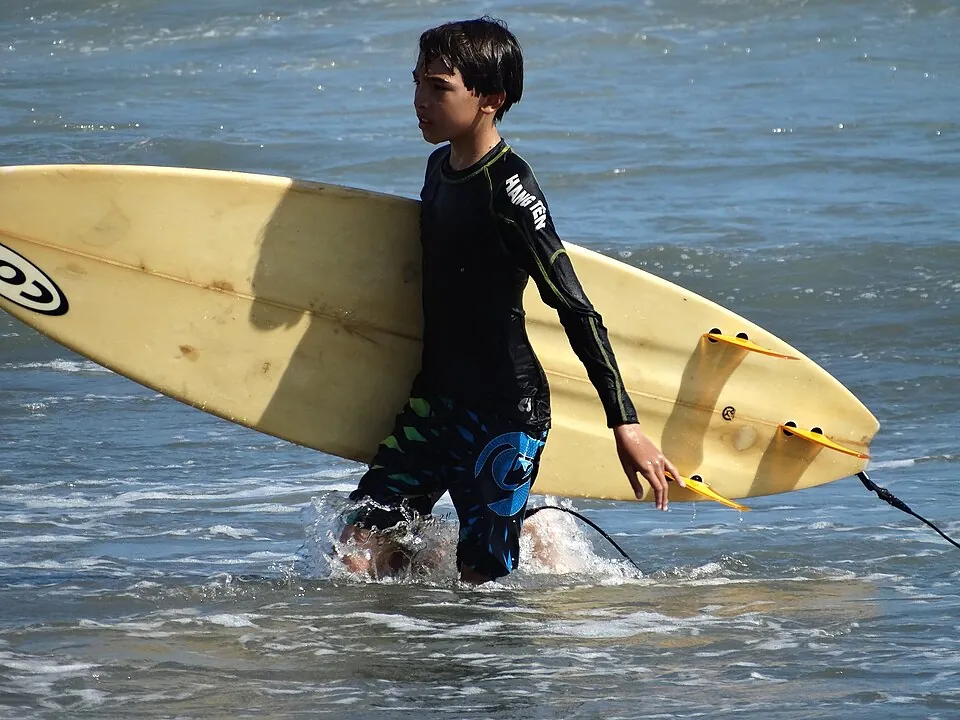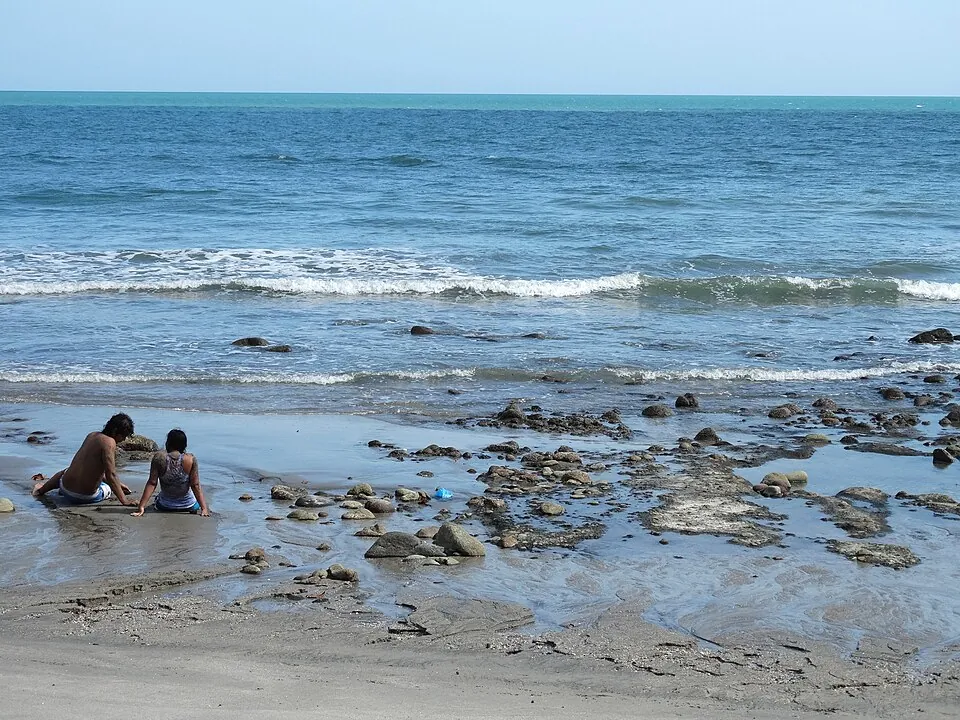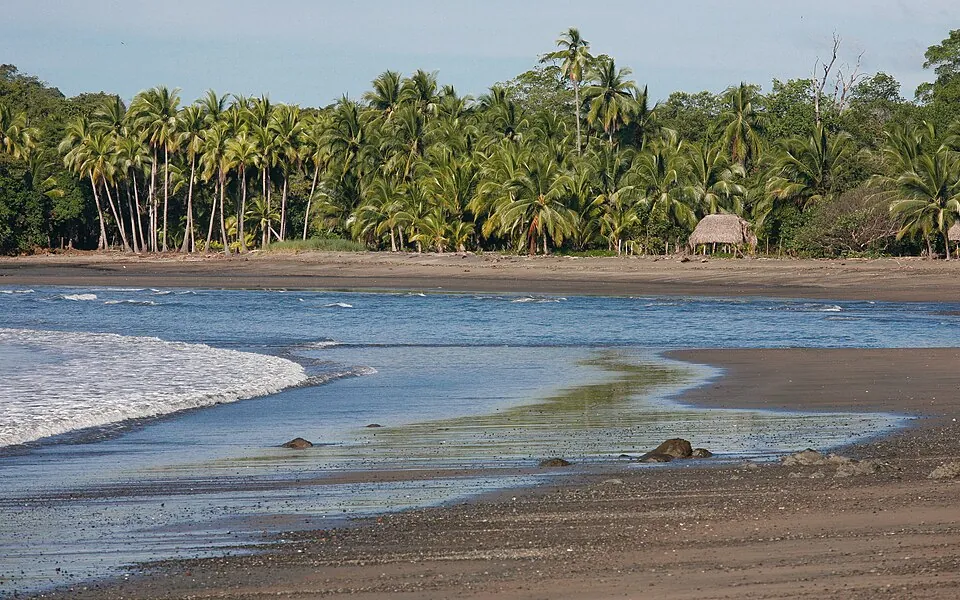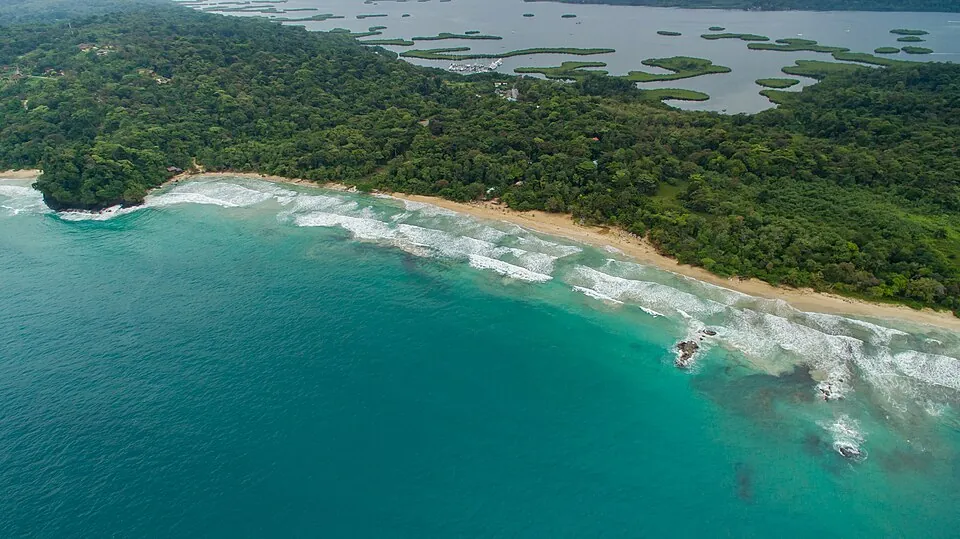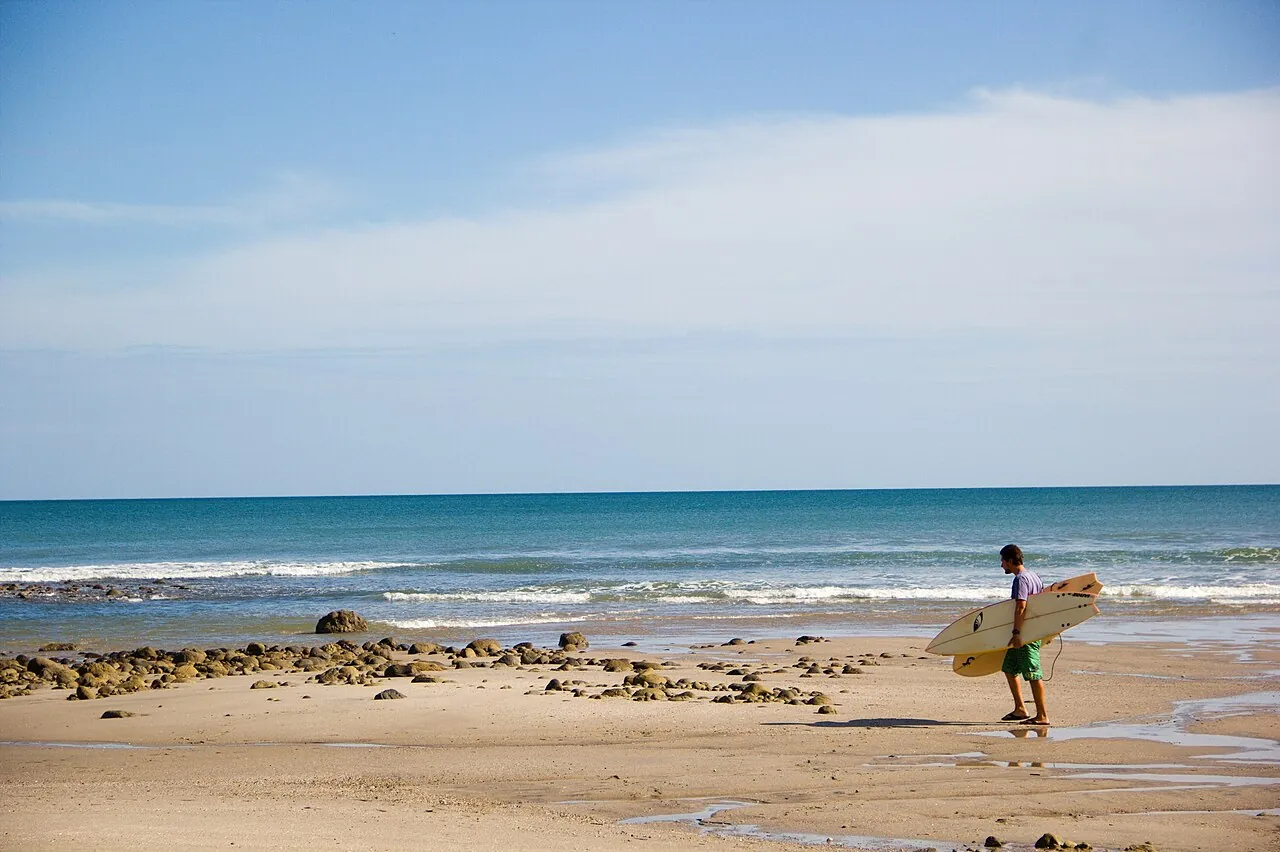
The right surf camp in Panama depends on your level. Beginners do best on the beach break at Playa Venao, where Selina's coached 7-day camp starts at $750 for six nights. Intermediate and advanced surfers head to Santa Catalina's reef and point breaks, where Waluaa's all-inclusive six-night retreats cost $2,350 to $2,800. Bocas del Toro, on the Caribbean side, is a separate trip with a separate season, December to April, and its reef waves suit experienced surfers.
Panama has two surf coasts, and their seasons run at different times of year. The Pacific side covers the Chiriquí islands, Santa Catalina, the Azuero Peninsula and the beaches west of Panama City, and it picks up south and southwest swell from April to October. The Caribbean side, mainly Bocas del Toro, is reef-heavy, and its main season runs from December to April.[1]
This guide compares the surf camps in Panama that publish enough detail to judge. For each one it covers what a stay costs, how much coaching you actually get, which level the nearby waves suit, and how long the trip takes. Prices are the camps' own published starting rates or booking-site rates, checked as of October 2026, unless a different year is given.
Surf camps in Panama compared: price, level and what's included
A coached week at a Panama surf camp runs from $750 at Selina in Playa Venao to $2,350–2,800 at Waluaa in Santa Catalina.[2][3] Room-only surf stays, where you add lessons yourself, start at about $300 a week. The biggest difference between camps is how much coaching the price includes, not the room.
| Camp | Area | Level | Stay and starting price | Lessons | Best for |
|---|---|---|---|---|---|
| Waluaa Classic Oceanfront | Santa Catalina | Beginner to early intermediate | 6 nights, $2,350-2,800, all meals | 5 lessons, 2 h+ each | Small-group coaching, 2:1 ratio |
| Rancho Estero | Santa Catalina (Playa Estero) | Mixed | Packages about $700-1,000 per person (2025) | 4 lessons in total | Cabin stay with light coaching |
| Oasis Surf Camp | Santa Catalina (Playa Estero) | Any, beach break out front | Rooms from about $54 a night, camping area | Extra cost | Budget beachfront base |
| Selina 7 Days Surf Camp | Playa Venao | Beginner to intermediate | 6 nights from $750, breakfasts and yoga | Daily, plus video analysis | Learning in a week Best value |
| Selina Venao Escape | Playa Venao | Beginner | 5 nights from $446 | 4 private lessons | A short first try |
| Beach Break Surf Camp | Playa Venao | All levels | Week from $308 per person, room only (2025) | Extra cost | Beachfront room, lessons as you go |
| Safari Surf School | Playa Venao | Beginner | 8 days in a hostel dorm, price not published | 1.5-hour lessons | Dorm-based learning week |
| El Ranchito Surfcamp | Guanico | Beginner to intermediate | Price not published | Daily 90 min, board included | Quiet coached stay |
| Sansara | Cambutal | Beginner to advanced packages | Price not published | Two sessions a day | Surf, yoga and all meals |
| Bocas surf lodges | Bocas del Toro | Intermediate to advanced | Hostels $15-20; Bastimentos lodges $220-530 a night | Usually extra | Caribbean reefs, Dec-Apr |
Prices per person unless noted, from published starting rates as of October 2026. The Rancho Estero and Beach Break week figures date from 2025.
What your money buys
A 2025 week at Beach Break, Playa Venao. Lessons are added on arrival.
Selina Venao Escape: 5 nights, 4 private lessons, board, daily yoga.
Selina 7 Days: 6 nights, daily lessons, full gear, video analysis.
Waluaa shared room: 6 nights, all meals, 2:1 coaching.
The jump from $750 to $2,350 buys all three meals, a cap of 10 surfers with two surfers per coach, and longer lessons. Waluaa's lessons run at least two hours each, against the 90-minute sessions common elsewhere.[3] A room-only week can still be the cheapest route if you only want a few lessons. Five lessons at the usual $50–80 rate add $250–400, and a week of board rental runs $100–140.[1]
Which camp fits your level
- Never surfed: Playa Venao is the default. Its consistent beach break is rated for beginners and intermediates.[1] Cambutal's beach break is also gentle enough to catch waves close to shore.[4] In Santa Catalina, only book a camp that teaches on Playa Estero, the beach break, rather than on the reef.
- Early intermediate: Guanico has a beach break plus a point that suits progressing surfers. Santa Catalina works if your camp moves you from Estero to the points as you improve. El Ranchito's Intermediate Surf Progress Retreat is capped at six spots and visits different surf spots around Panama.[5]
- Advanced: Santa Catalina's points, Bocas del Toro's reefs and the boat-access camps in Chiriquí. Morro Negrito, open since 1998, sits on an island surrounded by breaks that range from sand-bottom beach breaks to fast, hollow points.[6] The access is boat-only through mangroves and described as very hard.[1] Another long-running camp on a river islet in the Gulf of Chiriquí takes guests to the breaks by boat every day, and its electricity runs only a few hours a day.[7]
Surf lessons and board rental without a camp
A standard surf lesson in Panama costs $50–80 and lasts about three hours: one hour of theory and two in the water.[1] Board rental runs from $15 for two hours or $20–25 a day.[1] Camp lessons are usually shorter and come every day. El Ranchito coaches for 90 minutes a day, Safari Surf School teaches 1.5-hour sessions, and Waluaa runs two-hour lessons.[5][7][3]
Panama surf map: where the waves are
- Chiriquí islands (Pacific, far west)
- Boat-access breaks around Morro Negrito. Mostly for experienced surfers who want empty, remote waves.
- Santa Catalina, Veraguas (Pacific)
- Reef and point breaks, including La Punta, Punta Roca and Punta Brava, plus the Playa Estero beach break. It is the jumping-off point for Coiba National Park.
- Southern Azuero, Los Santos (Pacific)
- Playa Venao, Cambutal and Guanico. These are mostly beach breaks, and this is the main beginner region.
- West of Panama City (Pacific)
- El Palmar, Malibu and Punta Chame. This is the closest surf to the capital.
- Bocas del Toro (Caribbean)
- Reef and point breaks around Isla Colón, Carenero and Bastimentos, including Bluff, Carenero Point and Silverbacks.
- Colón (Caribbean)
- Maria Chiquita, a reef break with rights and lefts that works on a northeast swell.
Santa Catalina surf camps: Oasis, Waluaa and Rancho Estero
Santa Catalina is Panama's best-known surf town, but its famous waves are reefs and points better suited to intermediate and advanced surfers. Beginners learn on Playa Estero, the beach break a short walk from town. Most of the area's surf camps sit on or near Estero for this reason.
The waves at Santa Catalina
The main break off town is a reef with mostly rights and some lefts. It works best on a south or southwest swell with north winds, at mid tide pushing high. Low tide is for experienced surfers only, and the lineup gets crowded on perfect days.[8] Punta Roca is a heavy, barreling point about a 30-minute walk northeast of town and is best at mid or low tide. Punta Brava is a hollow left over a rocky bottom, about 30 minutes' walk southeast.[1]
The camps sell this town to beginners, and that is fair as long as the lessons happen on Estero. Waluaa, for example, coaches beginners on an uncrowded beach break a few minutes away.[9] If a camp doesn't say where lessons take place, ask before you pay. First-timers should not be paddling out at La Punta.
Waluaa: the most coaching, at the highest price
Waluaa's Classic Oceanfront surf retreat costs $2,800 in a private room, $2,450 in a double and $2,350 in a shared room for six nights.[3] Groups are capped at 10 surfers with two surfers per coach.[3] The price includes five lessons of at least two hours each, three "surf studio" theory sessions, a 40-plus board quiver, rash guards and all meals. It also covers an arrival dinner and departure breakfast.[3] The remaining 2026 start dates are November 15–21, November 22–28 and December 13–19, with January 2027 weeks also listed.[3]
The property sits above the La Punta break, under 10 minutes' walk from Playa El Estero.[7] Day 5 is an optional Coiba National Park trip, priced separately and not listed.[3] Waluaa lists an optional group shuttle at $100 per person each way and private transfers from $250 one way.[10] It has also run a women's-only version: the January 2026 edition was listed at $3,100 for seven nights, with a Coiba snorkeling trip included.[11] Waluaa's yoga-retreat pages quote different rates for the same properties, so confirm the price for your specific property and week.
Oasis Surf Camp: the beachfront budget option
Oasis Surf Camp sits right on Playa El Estero, 0.1 km from the water. It has 10 rooms with private patios and ceiling fans but no air conditioning of their own.[12] Air conditioning can be added for $10 or $15 per room, and rooms sleep one to six people.[13] Rooms are listed from about $54 a night, but no date or room type is given, so treat that figure as a starting point rather than a firm rate.[14] There is also a camping area, and older guest reviews mention about $10 per person a night.
Breakfast is not included and costs about $4–8 per person.[12] Expect a $60 deposit at check-in.[12] Check-in is from 1 PM and check-out by 11 AM.[12] Cancellation terms depend on where you book: one booking site allows cancellation with 72 hours' notice, while another lists the stay as non-refundable.[13][12] The property has a restaurant and also offers horseback riding and massage.[15]
Oasis rents boards and gives lessons, but it doesn't publish lesson prices. The usual rate in Panama is $50–80 per lesson.[1] Think of Oasis as a surf hotel with the beach break out front rather than a structured coaching camp. It suits travelers who want to check the waves from the patio and set their own schedule.
Rancho Estero: cabins with light coaching
Rancho Estero packages started at around $700 per person in 2025 for a private room in a bamboo cabin with no meals. They rose to about $1,000 for upscale cabanas with full or half board.[7] Each package includes four surf lessons in total and no scheduled yoga.[7] It sits between Oasis and Waluaa: more structure than a room, far less coaching than a daily program.
How to get to Santa Catalina
Santa Catalina is 5 to 7 hours by road from Panama City, with about 6 hours the most common estimate.[16][17] The last stretch from Soná, about 50 km, is the slowest part of the trip.[16] That road is narrow and winding.[18] In the national tourism authority's visitor survey, roads and transport ranked among Santa Catalina's worst-rated features.[19]
Albrook bus terminal to Soná 5 h
Take the bus west from Panama City's Albrook terminal to Soná, listed at $9.65.[20]
Soná to Santa Catalina 1 h 30
Change to the local bus to Santa Catalina, listed at $4.65.[20]
If you miss the last bus about 1 h
A taxi from Soná costs about $40.[20] Leave Panama City early to avoid this.
Driving takes about the same time as the bus. If you are weighing a car for this route and the Azuero beaches, the guide to renting a car in Panama covers mandatory insurance and road conditions by route.
Flat days: diving and Coiba
Santa Catalina is the gateway to Coiba National Park, and dive shops such as Panama Dive Center are based in town. When the swell drops, many camp guests spend a day snorkeling or diving. The guide to diving Coiba National Park from Santa Catalina compares day and multi-day trips.
Panama's national protected-area tariff charges foreign visitors $5, but Coiba-specific sources quote $20 for non-resident foreigners, so budget for the higher figure.[21][22] MiAmbiente began rehabilitation works at Coiba on April 20, 2026 and limited visitor access, so ask your camp whether trips are running for your dates.[23]
For medical care, you go inland. Soná is a little over an hour away, and the Health Ministry describes its hospital as working on scheduled appointments, so a serious emergency may mean a longer drive.[24] That is one more reason to carry insurance that covers evacuation.
Playa Venao surf camps: Selina, Beach Break and the best beginner wave
Playa Venao is Panama's strongest pick for learning to surf. It is a black-sand bay on the southern Azuero Peninsula with a consistent beach break suited to beginners and intermediates.[7][1] The trade-off is crowds: it fills up on weekends and is quiet on weekdays.[1] For the wider picture, including hotels outside the surf camps and what else to do nearby, see the full Playa Venao travel guide.
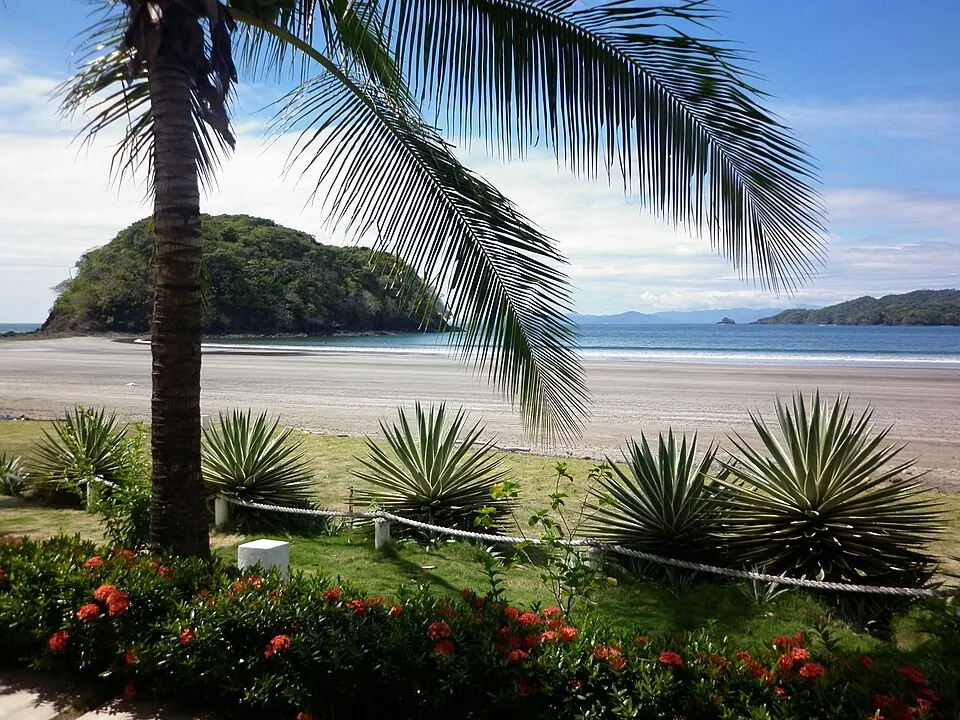
Selina Playa Venao surf camps
Selina sells two package lines, and they are easy to confuse. The 3, 6 and 11-day camps are built around a few private lessons. The 7, 10 and 15-day camps include a lesson every day, plus full gear, video analysis and theory.[2] The 7-day camp is aimed at beginner and intermediate surfers.[2] Rooms on the longer camps can be private or shared, with up to five people in a dorm.[2]
| Package | Nights | From | Surf lessons | Also included |
|---|---|---|---|---|
| First Wave | 2 | $234 | 2 private | Board, 1 massage, 1 yoga class, breakfasts |
| Venao Escape | 5 | $446 | 4 private | Board, 1 massage, daily yoga, breakfasts |
| Surf Immersion | 10 | $715 | 6 private | Board, 1 massage, daily yoga, breakfasts |
| 7 Days Surf Camp | 6 | $750 | Every day | Board, leash, wax, rash guard, video, yoga, breakfasts Most coaching |
| 10 Days Surf Camp | 9 | $950 | Every day | Full gear, video, yoga, breakfasts |
| 15 Days Surf Camp | 14 | Not published | Every day | Full gear, video, yoga, breakfasts |
Selina starting prices as of October 2026. Lunch and dinner are not included in any package.
Selina River Venao, the property, has a large pool, a shared kitchen, a small shop and a mix of private doubles and mixed dorms. Its Wi-Fi is reported as more reliable than most in town, though not always.[7]
Beach Break Surf Camp
Beach Break Surf Camp is a 14-room beachfront hotel on Playa Venao with a pool, beach bar and restaurant.[25][26] In 2025, a week's stay started at $308 per person, room only, with lessons added on arrival.[7] Current nightly rates vary by site: one lists rooms from $105 a night for two adults, and another shows offers from $94 with a recent weekday average of $131.[26][27] Check-in is at 3 PM and check-out at 1 PM.[27] Beach Break also advertises Brazilian jiu-jitsu and Muay Thai classes alongside the surf.
The camp is roughly five hours southwest of Panama City by road. Its private car from the airport costs $250 one way for one or two people, $270 for three, $330 for six, and $75 per person for groups of seven or more. A round trip costs double.[28] Its "Standard Plus" packages include the round-trip airport shuttle, but package prices aren't published.[28]
Safari Surf School
Safari Surf School's main option is an 8-day package with shared dorms in a beachside hostel. Lessons last 1.5 hours, with sessions early in the morning and late in the afternoon.[7] It suits beginners who want a social, structured week and don't mind a dorm.
Selina's $446 Venao Escape and $750 7-day camp are both six days long, but the cheaper one includes four lessons and the dearer one includes a lesson every day plus video analysis.[2] Count the lessons before you compare prices.
How to get to Playa Venao
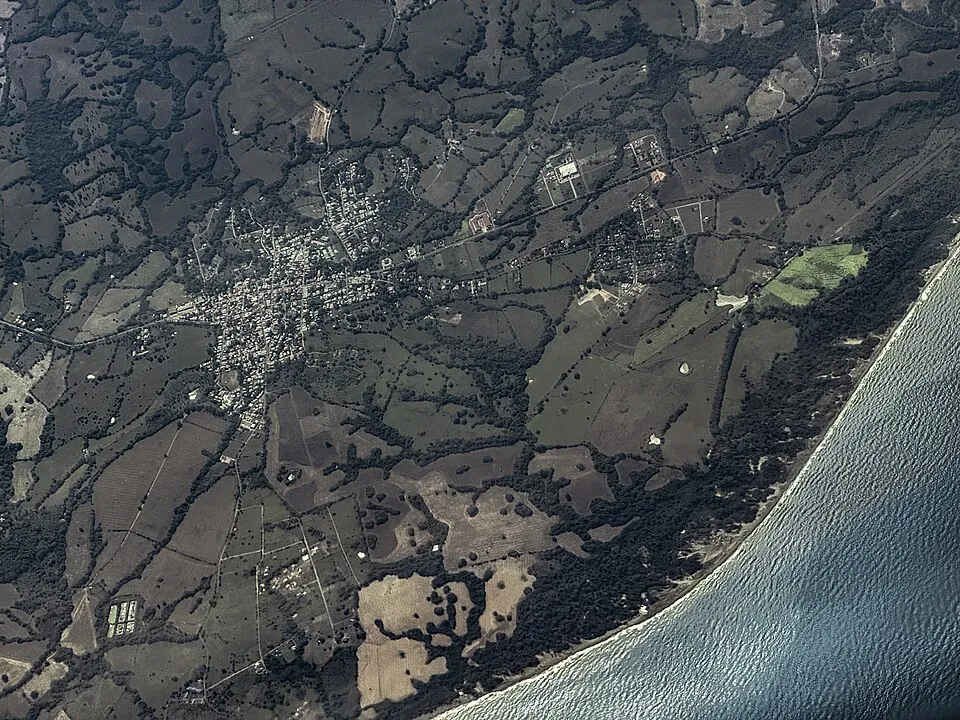
The bus from Albrook to Chitré or Las Tablas costs about $9–9.40 and takes around four hours.[29] Other estimates put the Chitré leg closer to five hours, with departures about every three hours.[30] From Las Tablas, a local bus to Pedasí costs $3–8 and takes 45 minutes to an hour. A taxi from Pedasí to Venao, about 30 km, costs $10–25 and takes 30–45 minutes.[29] Allow about six hours in total.[31] The local "busitos" around Las Tablas take cash only and have no published timetable.[32]
Aero Albrook's shared transfer leaves Hostal Loco Coco Loco in Panama City at 10 AM, with a 9:30 meeting time, and takes 5 to 5.5 hours to reach Pedasí.[33] If a surf trip here turns into thoughts of staying longer, the guide to Pedasí and Playa Venao real estate explains what foreigners can buy on this coast and what it costs.
Surf camps in Guanico and Cambutal: the quieter end of Azuero
Guanico and Cambutal sit west of Venao on the same Azuero coast, in Tonosí district. They are smaller and quieter than Venao, with beach breaks that work for beginners and points for better surfers.[34] Guanico's beach break is long and exposed and gets consistent waves all year. Its south groundswell produces lefts and rights across several peaks, and it is most playful at mid tide.[35]
El Ranchito Surfcamp
Price not published90 min coaching daily4 min drive to beachDaily 90-minute coaching with a certified coach and full-day board rental are included, with shared meals in a garden. Rooms range from private en-suites to shared rooms and a safari bell tent.[5]
Best for beginners and intermediates who want a quiet baseGuanico Beach Resort
Free demo boardsPool and cold plungeOn the beachGuests can borrow boards for free through the demo program, and there's a wood-fired restaurant on site. Guided surf, horseback riding and boat trips cost extra and are priced at the front desk.[35]
Best for surfers who want hotel comfortsSurf Camp Guanico
Price not publishedAir-conditioned roomsPoolThe beachfront lodge has sea-view and garden-view rooms with private bathrooms and air conditioning. It also has a pool with hammocks and a transfer service.[34] One room was listed as under renovation.
Best for longer, independent staysSansara (Cambutal)
Price not published2 sessions a dayMeals and yoga includedPackages include accommodation, daily lessons, a board, yoga and meals. Weeks are built for beginner, intermediate or advanced surfers.[4] Airport transfers from Panama City are arranged when you book.[4]
Best for a surf-and-yoga week with no planningEl Ranchito's own beach-side school, Guanico Surf Academy, also takes non-guests. This is useful if you are staying elsewhere and only want lessons.[5]
The Guanico surf hostel has been advertised for sale as a going business. Before paying a deposit, check that the place is still operating and who runs it now.
A typical camp day
Sansara's published sample schedule, dated July 2024, shows how a full-board surf week usually runs, with two sessions a day in small groups.[4]
Getting there and medical access
Cambutal is a 5 to 6-hour drive from Panama City. By bus, it takes about four hours to Las Tablas, then another bus or taxi for roughly 1.5 hours.[4] Public transport to Guanico takes around 4.5 to 5 hours, and a small bus from Tonosí stops close to the camps. For serious medical problems, the nearest facilities from Cambutal are in Las Tablas, about 1.5 hours away.[4] Tonosí has a district hospital roughly 15 minutes by car from Guanico.
Bocas del Toro surf camps: Caribbean reefs for experienced surfers
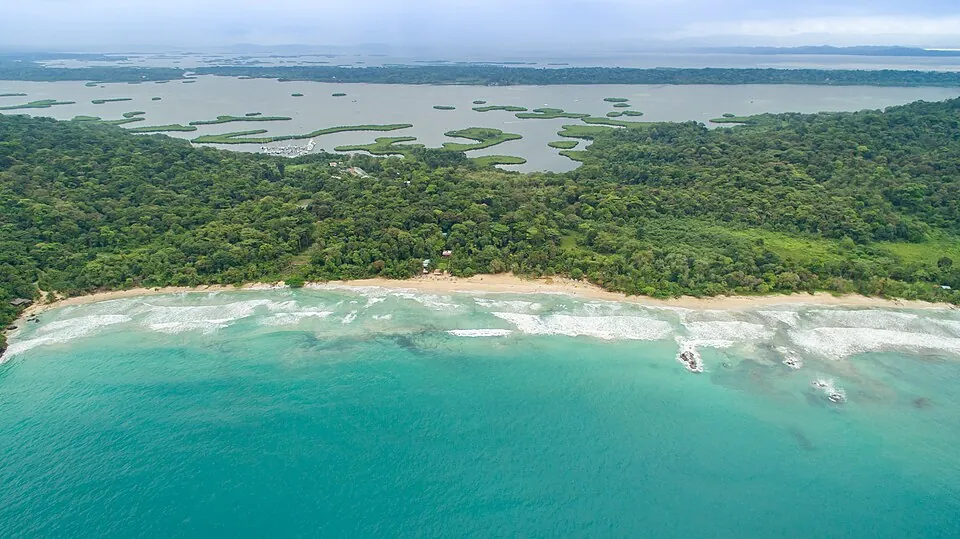
Bocas del Toro is Panama's Caribbean surf zone. Its powerful reef, point and beach breaks around Isla Colón, Carenero and Bastimentos work mainly from December to April, with a smaller season from June to August.[36] It suits intermediate and advanced surfers far better than first-timers. For the rest of the archipelago, the guide to which Bocas del Toro island to stay on compares Isla Colón, Carenero and Bastimentos.
The breaks
Bluff Beach on Isla Colón is a beach break, but an advanced one: heavy and powerful, breaking in very shallow water.[36] Carenero Point is a left point for intermediate and advanced surfers, and Old Man's is a more forgiving A-frame reef that suits most levels when small. Silverbacks, off Isla Bastimentos, is a heavy right and the area's most famous wave.[1]
Sources disagree about how accessible Silverbacks is. One surf magazine calls it beginner-friendly when the dry-season waves are small.[8] A local surf guide describes it as "not for the faint-hearted": it breaks far out over reef, the wind between the islands chops it up, and it had not properly broken for three years.[37] Plan a Bocas trip around Bluff and Carenero, and treat Silverbacks as a bonus if it shows up.
Where surfers stay
Bocas has surf lodges and surf houses rather than the week-long coached camps of Venao or Santa Catalina. Most surfers book a room and arrange lessons, boards or a boat guide separately. Hostels cost about $15–20 a night, and the upscale lodges on Bastimentos run $220–530 a night.[1] Budget surf clubs on Red Frog Beach and small surf houses on Isla Colón fill the middle ground. Water taxis to the other islands take 10–45 minutes and cost $3–10, depending on the island.[38]
Getting to Bocas
The flight takes about an hour, with around three departures a day, and seats fill quickly in high season.[39] One-way fares have been around $150, and booking sites showed fares from €65 in March 2026.[39][38] Overland by bus and boat takes more than 10 hours.[39] The guide to getting to Bocas del Toro by flight, bus and boat compares every route with costs.
Most domestic flights to Bocas leave from Albrook (PAC), Panama City's domestic airport, not from Tocumen (PTY), where international flights land. Check which airport your ticket uses and allow time to cross the city.
El Palmar and surfing near Panama City
Panama City itself has no surf. The nearest regular waves are at El Palmar, a small beach west of San Carlos, which is mostly surfed by locals and works best from mid to high tide.[1] It is usually about a two-hour drive from the city, depending on traffic. That makes it the practical choice if your trip is mainly the capital and you want a few days of lessons without traveling down the Azuero Peninsula.
El Palmar has three breaks: Frente Palmar, Punta Palmar and Hawaiisito.[1] The bottom is rock, and the rights work best on a south-southwest swell with northwest winds, at mid tide pushing high.[8] It is often recommended for beginners, but because of the rock bottom, a lesson with a local school is safer than paddling out alone. Hotel Palmar Surf Camp is the best-known place offering both rooms and lessons on the beach.
Nearby Playa Malibu has long rights on a sandbar at the mouth of the Chame River. Watch for debris in the water after heavy rain.[1] On the Caribbean side, Maria Chiquita in Colón is a reef break with rights and lefts that needs a northeast swell and south winds.[8] It is a different coast with a different season from the Pacific beaches.
When to surf in Panama: Pacific vs Caribbean season
For the Pacific camps, April to October is the main swell season, with 3–12 ft south and southwest swells.[1] For Bocas, December to April is the main season.[36] Beginners on the Pacific often do better in the dry season: the rainy months bring much bigger surf, and the dry months are better for learning.[8]
| Months | Pacific (Santa Catalina, Azuero, El Palmar) | Caribbean (Bocas del Toro) | Best for |
|---|---|---|---|
| December-March | Dry season, smaller surf, northerly winds, cooler water | Main season | Learning on the Pacific; experienced surfers in Bocas |
| April | Swell season starts | End of main season | Both coasts |
| May | Rainy season, swell building | Off season | Intermediate and up on the Pacific |
| June-August | Steady south and southwest swell | Small secondary season | Pacific points; Bocas beach breaks |
| September-October | Swell continues, wettest months | Off season | Pacific only |
| November | Rainy, end of main swell season | Off season | Camps with flexible spots |
The two seasons are defined slightly differently: one source runs the rainy season from May to December, another from May to January.[1][8] For Bocas, one guide narrows the best window to December through March.[40] The months to skip there are May, September, October and November.[36]
Water is warm all year, averaging 27–30°C. Northerly winds in the dry season can cool it to 24–25°C.[1] Other measurements put the low at about 80°F (27°C) in February and the high at about 84°F (29°C) in June.[8] Either way, you don't need a wetsuit.
Camps schedule around these patterns. Waluaa picks its retreat weeks for tides and seasonal conditions, and its remaining 2026 weeks fall in November and December.[9][3] For rain, crowds and holidays beyond the surf, see the month-by-month guide to the best time to visit Panama.
Before you go: boards, gear, safety and insurance
Most surfers don't need to fly with a board, because the camps have quivers. Waluaa has more than 40 boards, and Guanico Beach Resort lends demo boards to guests for free.[3][35] If you do bring your own, check your airline's sports-equipment fee before booking. Also check the limits on the small domestic flights to Bocas.
What to pack
- A long-sleeve rash guard or surf suit for sun protection. Cold-water gear isn't needed.[8]
- Reef booties for Santa Catalina's points and the Bocas reefs. Ask locals where the shallow sections are before paddling out.[1]
- Reef-safe sunscreen.[4]
- A basic first-aid and pharmacy kit, since several camps are an hour or more from a hospital.[1]
- Cash in US dollars, Panama's legal tender, for local buses and small shops.[1]
Forecasts and local knowledge
Check the forecast about a week before you travel.[1] Many Panamanian breaks have little information online and few surf cameras. Hiring a guide or asking your camp is usually more reliable than a forecast app, especially for reefs that need specific tides.[8]
Safety and insurance
The main surf risks are rock and reef bottoms, which many Panama breaks have, and river-mouth debris after rain at spots like Malibu.[8][1] For general safety by region and on the roads, see is Panama safe for tourists. Choose travel insurance that covers medical emergencies, surfing and adventure sports, and ideally medical evacuation.[4] This matters most in Cambutal, Guanico and Santa Catalina, where serious cases mean a long drive.
Everyday costs at the beach
A set lunch (comida corriente) costs about $6–7, and $12–20 a day covers food if you skip the fancier restaurants.[1] A prepaid SIM costs from about $3 to $15 depending on data, and +Móvil and Movistar have the best coverage.[1]
Before you go
Where is the best place to surf in Panama for beginners?
Playa Venao is the best place to learn. Its beach break is consistent and suits beginners and intermediates, and it has several coached camps, including Selina's 7-day camp from $750. Cambutal and Guanico are quieter alternatives on the same coast. El Palmar is the closest option to Panama City.
How much does a surf camp in Panama cost per week?
A coached week costs about $750 to $2,800 per person. Selina's 7-day camp in Playa Venao starts at $750 for six nights with daily lessons. Waluaa's all-inclusive retreat in Santa Catalina costs $2,350 to $2,800. Room-only surf stays such as Beach Break started around $308 a week in 2025, with lessons at $50 to $80 each on top.
Is Santa Catalina good for beginners?
Only if you learn on Playa Estero, the beach break. Santa Catalina's famous waves, La Punta, Punta Roca and Punta Brava, are reef and point breaks for intermediate and advanced surfers. Camps such as Waluaa teach beginners on the beach break nearby. Ask any camp where its lessons take place before you book.
How much does Oasis Surf Camp in Santa Catalina cost?
Rooms are listed from about $54 a night, though no date or room type is given, and older reviews mention camping at around $10 per person. Breakfast costs about $4 to $8 extra, air conditioning is a $10 to $15 add-on, and a $60 deposit is taken at the property. Lessons and board rental are sold on site, with prices not published.
What is included at Beach Break Surf Camp in Playa Venao?
The basic stay is a room only, with lessons added on arrival. Beach Break is a 14-room beachfront hotel with a pool, bar and restaurant, and it also advertises jiu-jitsu and Muay Thai classes. Its Standard Plus packages include a round-trip airport shuttle. Otherwise, the private car costs $250 one way for one or two people.
What is the best month to surf in Panama?
On the Pacific coast, April to October brings the most consistent swell, from south and southwest. Beginners often prefer the smaller waves of the dry season, December to April. In Bocas del Toro, the main season is December to April, with a smaller window from June to August. See the best time to visit Panama for weather beyond the surf.
Is there good surfing in Panama in December?
Yes, especially in Bocas del Toro, where the main Caribbean season starts in December. On the Pacific side, December is the start of the dry season, with smaller, cleaner waves that suit learners. Waluaa also runs a Santa Catalina retreat in mid-December 2026.
Is there surfing in Panama City?
No, not in the city itself. The closest regular surf is at El Palmar, a small beach west of San Carlos usually about two hours' drive away, with local surf schools and three breaks. Playa Malibu near Punta Chame is another option, but watch for debris after heavy rain.
Do I need a wetsuit to surf in Panama?
No. The water averages 27 to 30°C and only dips to around 24 to 25°C when the dry-season winds blow. A long-sleeve rash guard for sun protection is enough. Reef booties help at the reef and point breaks.
Is Bocas del Toro good for a surf camp?
It suits experienced surfers more than beginners. The main breaks, including Bluff, Carenero Point and Silverbacks, are powerful reef and shallow beach breaks. Most stays are surf lodges where you add lessons or a guide yourself. See which Bocas del Toro island to stay on to choose a base.
Sources
Prices, schedules and rules change. The small numbers in the text point to these sources.
- 1Nomad Surfers - Surfing in Panama guidenomadsurfers.com
- 2Selina Playa Venao - Surf camp packages pageselinapanama.com
- 3
- 4Sansara Resort - Beginner's guide to Panama surf campsansararesort.com
- 5El Ranchito Surfcamp - Surf camp homepagepanama-surfcamp.com
- 6Morro Negrito Surf Camp - Home pagemorronegrito.travel
- 7Surf Atlas - 7 surf camps in Panama for 2025thesurfatlas.com
- 8American Surf Magazine - Ultimate surf guide for Panamaamericansurfmagazine.com
- 9Waluaa - Learn to surf in Panama pagewaluaa.com
- 10Waluaa - Wellness retreat FAQwaluaa.com
- 11
- 12
- 13Hostelworld - Oasis Surf Camp prices and policieshostelworld.com
- 14Planet of Hotels - Catalina Cabins listinges.planetofhotels.com
- 15Panamahotel24 - Hotel Oasis & Surf Camp, Santa Catalinaoasis-surf-camp.panamahotel24.com
- 16Pacific Advent - Santa Catalina travel guidepacificadvent.com
- 17Coiba Island - Santa Catalina visitor guidecoiba-island.com
- 18Coiba Island - How to reach Isla Coiba from Panama Citycoiba-island.com
- 19
- 20Panama Dive Center - How to get to Santa Catalinapanamadivecenter.com
- 21MiAmbiente - Resolución DM-0013-2024 protected-area tariffsmiambiente.gob.pa
- 22Wikivoyage - Parque Nacional Coiba entry feeses.wikivoyage.org
- 23
- 24MINSA Veraguas - ASIS health services analysisminsa.b-cdn.net
- 25
- 26
- 27KAYAK - Beach Break Surf Camp room rateskayak.com.pa
- 28Beach Break Surf Camp - Getting here and FAQ infobeach-break.vibepreview.com
- 29Viaja con Gus - Pedasí travel guideviajacongus.com
- 30Rome2rio - Panamá to Las Tablas bus schedulesrome2rio.com
- 31Viaja con Gus - Playa Venao travel guideviajacongus.com
- 32Viaja con Gus - Las Tablas travel guideviajacongus.com
- 33Aero Albrook - Playa Venao transfer packagesaeroalbrook.com
- 34Guanico Surf Camp - Lodge and surf camp pagenew2025.guanico.com
- 35Guanico Beach Resort - Surf and beach stay pageguanicobeachresort.com
- 36Sol Bungalows - Bocas del Toro surf guidesolbungalowsbocas.com
- 37The Inertia - Quentin Turko interview on Silverbackstheinertia.com
- 38
- 39Packlightly - Domestic flights in Panama guidepacklightly.es
- 40Surf Atlas - Bocas del Toro surf guidethesurfatlas.com
Image credits
- SurferRIoMarBeachPanamaAyaita · CC BY-SA 3.0
- Panamá-PlayaInzay20 · CC BY-SA 3.0
- Pedasí, Pedasí, PanamaWMrapids · CC0
- Red Frog Beach Bastimentos 3Dronepicr · CC BY 3.0
- Surfer Boy - Playa El PalmarAdam Jones · CC BY-SA 2.0
- Playa El Palmar (02)Adam Jones · CC BY-SA 2.0
- The Beach at Santa Catalina, Panama (8369739920)Alex Proimos from Sydney, Australia · CC BY 2.0
- Red Frog Beach BastimentosDronepicr · CC BY 3.0
- Santa Catalina Panama (151666813)Dronepicr · CC BY 3.0