The easiest way to taste Geisha coffee in Panama is on a farm tour around Boquete, where most farms include a Geisha cup in tours of about $20-35 per person, and Café Kotowa's $35 tour pours eight coffees including Geisha. If you only want a taste in town, a Geisha flight at Café Ruiz runs about $10-15, compared with $3-5 for a regular cup of Panamanian coffee (as of 2026).[1]
Panama's Geisha coffee is best known for its auction records. What most visitors actually want is simpler: a cup of it, brewed by the people who grow it. Around Boquete you can get that at a dozen or so farms and at a few places in town, and the prices range from a $10 flight to a $75 private tour.
This guide lists the places that serve Geisha, what each costs as of November 2026, how to reach them and book, and when a regular cup of Panamanian coffee is the smarter order. Advice on buying beans has its own section, because tasting Geisha and taking a bag home are separate decisions.
Geisha coffee in Panama: what it is and why Boquete grows it
Geisha (also spelled Gesha) is a variety of Arabica coffee named after the village of Gesha in southwestern Ethiopia. Panama made it famous because it grows unusually well on the cool, high, volcanic slopes around Boquete.[2] "Gesha" is the Ethiopian place name, and "Geisha" is the spelling that took hold as the coffee became famous in Panama. Both refer to the same plant, and you will see both on Boquete menus and bags.
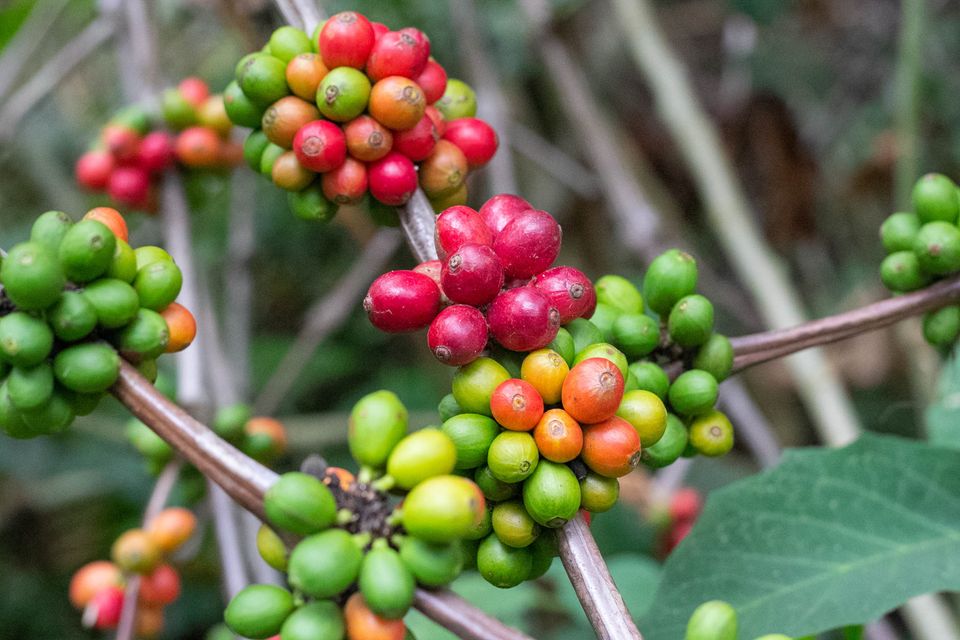
How it got from Ethiopia to Boquete
British colonial expeditions collected Geisha in Ethiopia in the 1930s while looking for disease-resistant coffee plants.[2] One roaster's history says the variety reached the CATIE research center in Costa Rica in 1953, by way of Kenya and Tanzania.[3] From there, in 1963, a young Boquete grower named Francisco "Don Pachi" Serracín brought it to Panama, hoping it would resist coffee leaf rust.[4]
His family says he took one kilo of seed, planted half on his own farm and gave the rest to other Boquete producers.[5] He went on to raise thousands of trees, including the ones planted on Hacienda La Esmeralda's Jaramillo plot.[6] For decades the variety was just one more tree on the hillside. Then in 2004 the Peterson family entered a small Geisha lot from Esmeralda in the Best of Panama competition.[6] It won, and the variety's reputation changed overnight.[2]
What Geisha tastes like
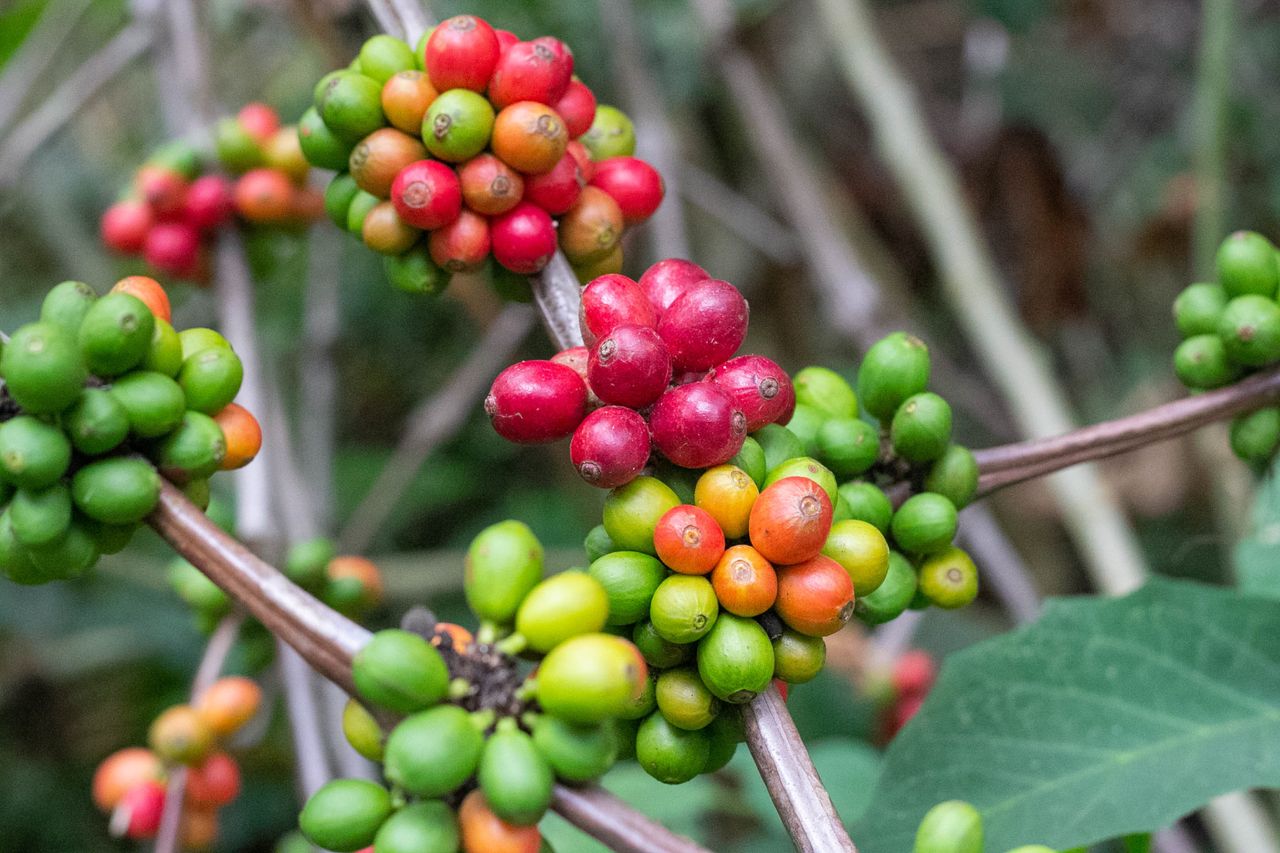
Expect a floral, jasmine-like aroma, with bergamot, citrus, peach or tropical fruit such as mango and papaya. The body is light and tea-like and the acidity is bright.[2] It does not taste like a typical dark, chocolatey cup. Coffee drinkers who try it tend to praise how clean and floral it is, and some find it too thin if they are used to heavier coffee with milk.
Altitude: how high the Boquete farms grow
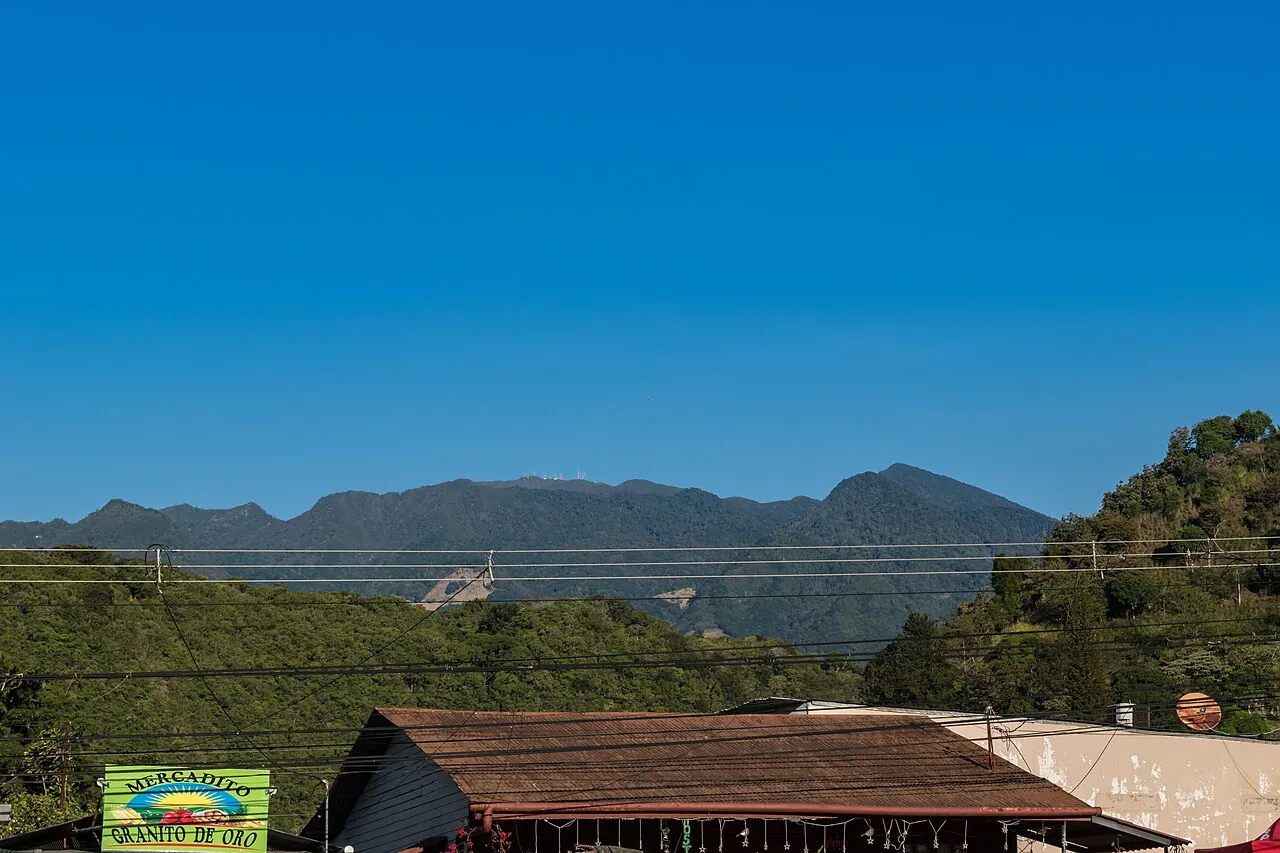
Boquete town sits at about 1,130 meters, and most coffee farms around it and on the flanks of Volcán Barú are between 1,600 and more than 2,000 meters.[7] Published figures for individual farms vary. Don Pepe Estate in Volcancito gives 1,500 to 2,000 meters,[8] and Black Moon Farm in Alto Quiel sits at 1,700 meters.[9] Panama's tourism authority puts the Lamastus family's Finca Elida at 2,100 meters, one of the highest farms in the country,[10] although one business magazine gives Elida a range of 1,700 to 2,500 meters.[9]
The tourism authority's coffee-circuit guide says volcanic soils above 2,200 meters produce excellent Geishas.[10] The auction results point the same way: the top lot at the 2026 Best of Panama auction was a Geisha from Lamastus's Elida farm.[11] Many Boquete farms grow several varieties at different elevations on the same property,[12] so at a cupping it is worth asking which part of the farm your Geisha came from.
Why Geisha is so expensive
Geisha yields less than other coffee plants, which makes it labor-intensive and costly to produce.[2] Limited supply, careful processing and strong demand from collectors keep prices high.[13] Most of the money you hear about changes hands at wholesale auctions. The cup in front of you on a farm tour costs far less, as the price section below shows.
Where to taste Geisha in Boquete
The surest places to taste Geisha are the Boquete farm tours that include it in the standard price: Café Kotowa, Finca Dos Jefes, Finca Casanga, Finca Elida and Finca Don Pachi.[12] Finca Lérida and Café Ruiz pour it too, but usually as an extra. Hacienda La Esmeralda, the farm that made Geisha famous, receives visitors only by appointment.
| Where | Price per person | Time | Geisha | Best for |
|---|---|---|---|---|
| Café Kotowa (Tree Trek tour) | $25-35 | 2-3 hrs | Included | Eight-coffee cupping, transport from town Best comparison |
| Finca Dos Jefes | $30 | About 2 hrs | Included | Owner-led depth; three coffees, cash only |
| Finca Casanga | $35 | 2.5 hrs | Included | Tour plus a farm shop for beans |
| Finca Elida (Lamastus) | $25-35 | 2-3 hrs | Included | Highest-altitude farm, family guides |
| Finca Don Pachi | $20-25; private about $75 | Varies | Included | The family that brought Geisha to Panama |
| Boquete Coffee Tours | $25-35 | About 2 hrs | Included | Washed vs natural Geisha side by side |
| Finca Lérida | $20-30, plus $5-10 for Geisha | 2-3 hrs | Add-on | Cloud-forest setting, bilingual guides |
| Café Ruiz | $20 tour; Geisha flight $10-15 | Short | Extra cost | A quick taste without a full tour |
| Finca Cafeto Arábica | About $45 | Varies | Tasting of two varieties | Small-group farm visit |
| Hacienda La Esmeralda | Not published | About 4 hrs | Caturra vs Geisha tasting | The famous name, by appointment |
Prices per person as of 2026, from farms' published rates and typical listing prices. Confirm the price and whether Geisha is included when you book.
For farm-by-farm detail on setting, guides and what each tour walks you through, see our comparison of seven Boquete coffee farm tours.
Farms that include Geisha in the standard tour
Café Kotowa gives the widest tasting. Tree Trek's Kotowa tour costs $35 per person, includes round-trip transport from central Boquete and finishes with a guided cupping of eight coffees, Geisha among them.[1] Kotowa's Geisha has scored 91-92 on the SCA scale.[12] Some listings give a range of $25-35 for the tour, so check the current rate.[12]
Finca Dos Jefes charges $30 for an owner-led tour of about two hours with Geisha in the tasting. Tours run most mornings and must be reserved in advance.[12] Payment is cash only, and the tasting covers three coffees rather than a long lineup.[1]
Finca Casanga runs a 2.5-hour tour for $35 with Geisha included. Finca Elida, run by the Lamastus family, charges $25-35 for a 2-3 hour visit, also with Geisha.[12] Finca Don Pachi, the Serracín family farm, lists standard tours at $20-25 with Geisha.[12] It also offers a private tour of about $75 with a Geisha cupping, plus shorter visits or a tasting only.[14]
Boquete Coffee Tours, an operator that sells guided farm visits, lists a $35 entry with a farm walk of about two hours and a seated cupping of washed and natural Geisha.[15] Its own pages also list a $25 fee and give two different sets of hours (7:00-16:00 and 8:00-17:00), so confirm both when you book.[16][17] It also sells a 2-hour-45-minute hands-on Geisha workshop and a 3-hour private specialty tour.[18]
Farms where Geisha is extra or a premium option
Finca Lérida, in Alto Quiel, runs farm tours of $20-30, and the Geisha tasting is sometimes a $5-10 add-on.[12] It offers a 1-hour-45-minute farm tour, a 45-minute tasting and a separate Geisha experience whose price it does not publish.[14] A cup of Geisha at Lérida costs about $15.[1] One regional tour company also sells a 3-hour premium tour at Lérida with a side-by-side tasting of Caturra and Geisha.[19]
Café Ruiz charges about $20 for its tour, with Geisha at extra cost. A standalone Geisha flight there costs about $10-15.[12] Booking platforms also sell Geisha tours that do not always name the farm in the title. One Geisha plantation tour with tasting is listed at $47 for 2.5 hours with pickup, and a hands-on experience in Palmira at $50 for 165 minutes.[20] Finca Cafeto Arábica lists its experience at about $45, with a tasting of two varieties.[14]
Hacienda La Esmeralda: appointment only
Esmeralda is the name on most auction headlines, and it has a cupping room in the Boquete highlands.[21] It does not publish a walk-in tour. One regional operator describes a 4-hour premium visit by strict appointment, booked in advance, that includes a Caturra-versus-Geisha tasting.[19] If Esmeralda is the reason for your trip, arrange it well before you arrive. Kotowa, Elida or Don Pachi will give you a Geisha cup with far less planning.
Other farms with coffee tours
The national tourism authority's agro-tourism registry lists more Boquete farms that offer a coffee tour, including Don Pepe Estate, Castelara, Hacienda Mamecillo, Cafelino and La Rosita.[22] Don Pepe, in Bajo Boquete, lists Geisha among its varieties, and Castelara and Mamecillo are in Jaramillo.[23] These farms publish less, so ask directly whether a visit includes a Geisha cup.
Farm tastings versus café cups: what you get for each
A farm tour gets you the coffee in context and, at most farms, several cups side by side for about $20-35. A café cup or flight gets you the taste alone for $10-15. Most visitors with half a day free get more from the farm, and the farm tour usually works out cheaper than paying for Geisha separately.
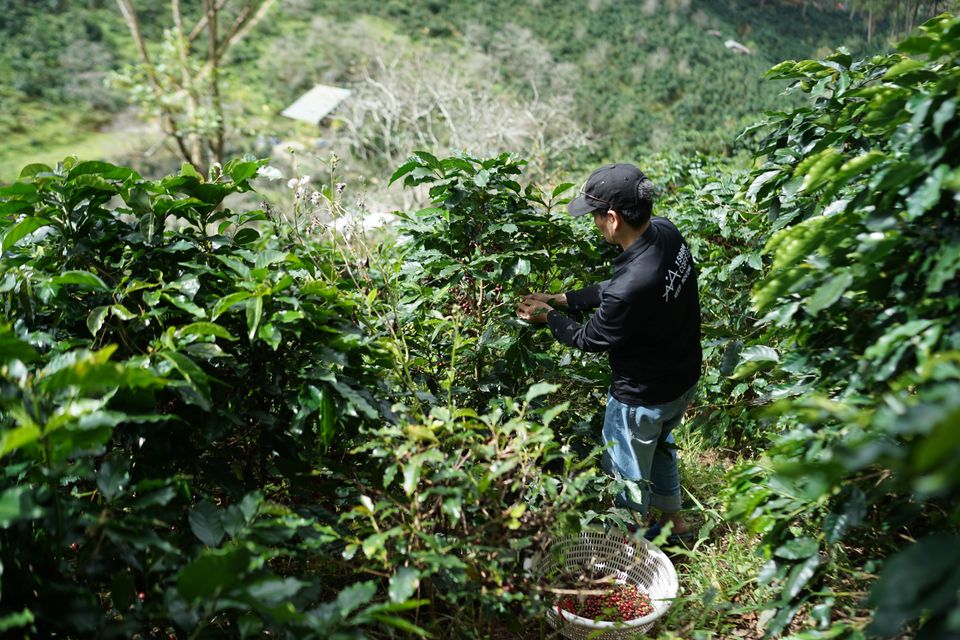
On a farm, the walk usually follows the coffee from tree to cup. Farms that open their Geisha plots to visitors show picking, washing, drying, roasting and then the cupping.[19] The best tastings put Geisha next to something else, such as an eight-coffee lineup at Kotowa or washed and natural Geisha side by side at Boquete Coffee Tours. A comparison makes the difference far easier to taste than a single cup does.
A café flight works if you are short on time, staying in town without transport, or simply curious. You skip the farm walk and the explanation, and you will rarely taste more than one or two lots.
Is Geisha worth paying for?
For someone curious about coffee, yes, as part of a farm tour that already includes it. Paying $15 for a single cup makes less sense, because the same money gets you most of a guided cupping. If you drink your coffee dark, strong and with milk, Geisha may taste weak or tea-like to you, and a regular Boquete cup at $3-5 could be the better order.[1] If you have a pour-over habit and want to know what the fuss is about, a side-by-side tasting is one of the better uses of a morning in Boquete.
Ask for Geisha next to a Caturra or Catuai from the same farm. Tasted alone, Geisha can seem merely light. Next to a traditional cup, the floral and citrus notes stand out.
What a Geisha tasting costs: Geisha coffee prices in Boquete
In Boquete, Geisha costs from about $10-15 for a flight in town to $20-35 for a farm tour that includes it, and about $75 for a private farm tour (as of 2026).[12] A regular cup of Panamanian coffee at a Boquete café costs $3-5.[1]
Panamanian coffee, not Geisha.
Café Ruiz flight; about $15 a cup at Lérida.
Kotowa, Dos Jefes, Casanga, Elida, Don Pachi.
Don Pachi private tour with Geisha cupping.
Booking-platform tours sit above the farms' own prices. Tours with a cupping are listed at roughly $30-80 per person depending on the farm and format.[24] The $47-50 Geisha listings mentioned above often include pickup, which can save a taxi fare.[20]
Buying Geisha beans to take home
Bean prices vary more than tasting prices. Half a pound of Geisha in Boquete costs around $25 at the Café Kotowa shop, the Finca Casanga store and The Perfect Pair Coffee & Chocolate.[1] Top farm lots cost far more: natural-process Geisha from a reputable Boquete farm runs about $40-120 per 100 g, and washed Geisha about $30-80 per 100 g.[12]
For reference, one online seller of Boquete coffee lists Finca Lérida Geisha at $49 for 250 g, Janson at $49 for 200 g, Elida at $69 for 120 g and Café Victoria at $28 for 250 g.[25] Buy whole beans, keep them in an airtight container away from light, heat and moisture, and grind just before brewing. Pour-over, siphon or French press bring out the floral side best.[13]
Auction prices versus what you pay
The figures in headlines are wholesale prices for tiny, competition-grade lots of green coffee, not the price of a cup.
At the 2025 Best of Panama auction, a 20 kg lot of washed Geisha from Hacienda La Esmeralda sold to Julith Coffee of Dubai for $30,204 per kilo, triple the previous year's top price of $10,013.[26] The whole 2025 auction brought in about $2.86 million.[27] In 2026 the top lot, a Geisha from Lamastus's Elida farm, sold for $18,004 per kilo.[11] Back in 2017, the record was $601 a pound.[28]
Geisha vs other Panamanian coffees: what to order
Order Geisha when you want something floral and light. If you want a fuller, more familiar cup, order one of Boquete's other varieties, and on a tasting, ask for both side by side. Boquete grows more than ten varieties, including Geisha, Pacamara, Caturra, Catuai, Typica and Bourbon, often on the same farm.[12] Panama's agriculture ministry names Geisha, Pacamara, Catuai and Typica as the specialty varieties of the Chiriquí highlands.[29]
- Geisha (Gesha)
- The floral, tea-like variety this page is about, and the most expensive coffee you will see on a Boquete menu.
- Caturra and Catuai
- The workhorse varieties of Panamanian farms. They produce more coffee per tree, and most regular $3-5 café cups in Boquete use them. They make a good baseline to taste next to Geisha.
- Pacamara, Typica, Bourbon
- Other specialty varieties grown around Boquete. Ask the farm which of these it grows, because lineups differ from farm to farm.
- Laurina
- Not a Geisha, but it set its own record at the 2025 auction, $8,040 per kilo, so a few farms now feature it.
- Washed vs natural
- Two ways of processing the same beans. Washed coffee tends to taste cleaner and brighter, natural coffee fruitier. The two best-selling lots at the 2025 auction were both Esmeralda Geisha: a washed lot at $30,204 per kilo and a natural at $23,608.
A simple ordering plan for one Boquete visit:
- In a café: start with a regular Boquete pour-over, then a Geisha if you liked it. The contrast is the point.
- On a farm tour: pick a farm with several coffees on the table, such as Kotowa's eight-cup lineup, over a single Geisha pour.
- If both processes are offered: taste washed and natural Geisha together, as Boquete Coffee Tours does in its cupping.[15]
Best time of year to visit the Boquete coffee farms
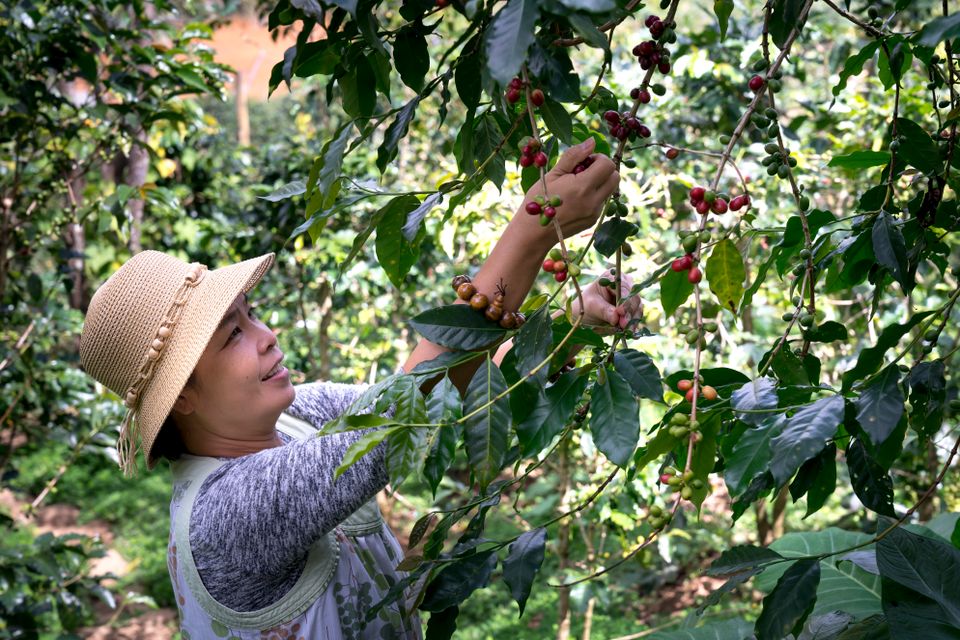
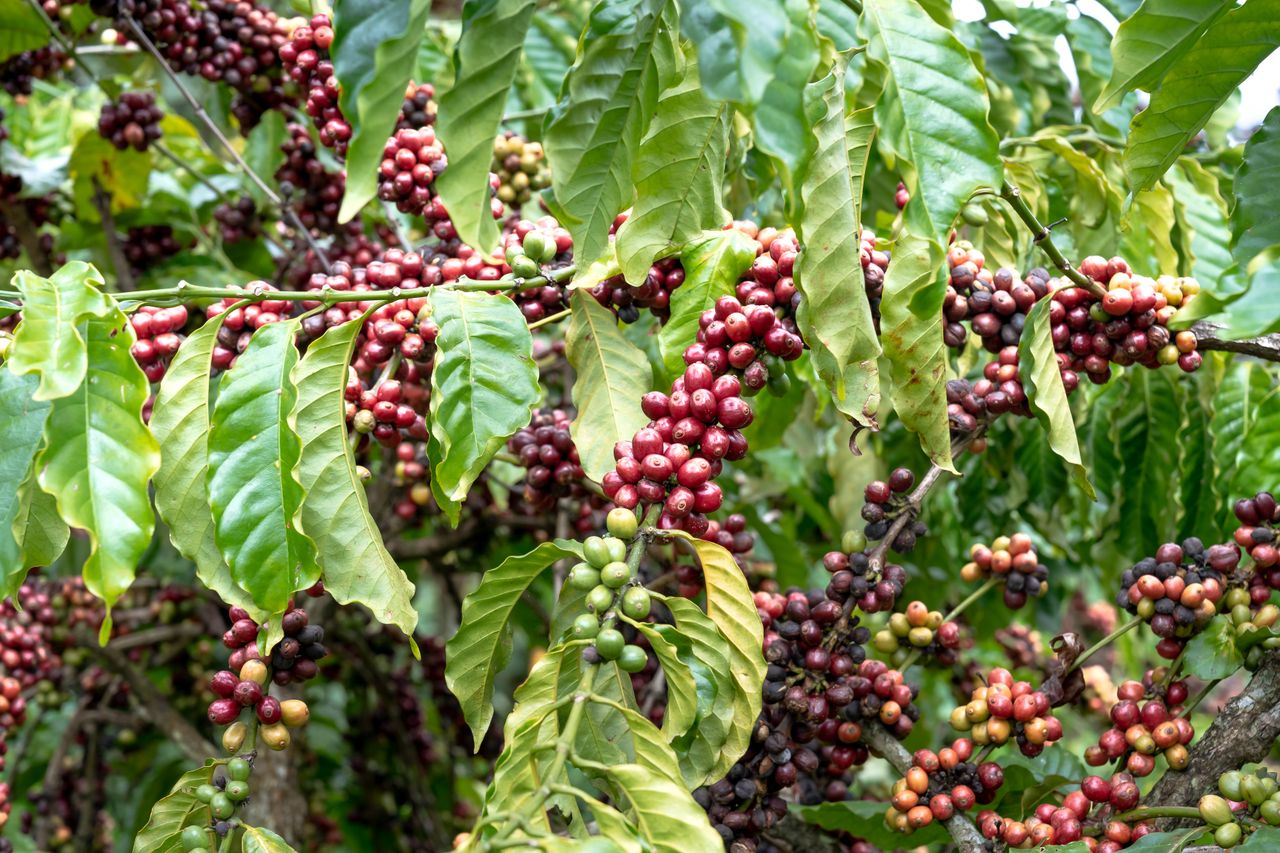
The best time to see Geisha being picked is the harvest, roughly October to January in the Boquete valley.[30] The agriculture ministry puts Boquete's main picking in December and January, a little later than Renacimiento's November-December harvest.[29] One tour operator markets December to March as the best season.[18] Farm tours and tastings run year-round, so you can taste Geisha in any month. Outside harvest, you just won't see as much picking and processing.
October and November are often cloudy in the highlands.[29] December through March is drier and brings the most visitors, so book tours further ahead then. For month-by-month weather, crowds and the bajareque mist, see the best time to visit Boquete.
January is also when Boquete holds its flower and coffee fair. Our Boquete Flower and Coffee Fair visitor guide covers dates and how to move between the fair and the farms. Coffee lovers planning further ahead might also look at La Cosecha, an event in the Chiriquí highlands that ran July 17-19 in 2025, with farm tours and Geisha as the centerpiece.[31]
Getting to the coffee farms from Boquete town
You will need a taxi, a tour with transport or your own car, because the farms are spread across El Salto, Palmira, Jaramillo and Palo Alto and are rarely within walking distance of town or of each other.[12] Lérida is in Alto Quiel and Don Pepe in Bajo Boquete, while Esmeralda's Geisha plots and farms like Castelara are in Jaramillo.[23] Drive times depend on which side of the valley you are heading to, so ask the farm or your hotel when you book.
Taxis within Boquete cost $2-8 per short trip, and there is no formal Uber or inDrive in town. You hail a taxi on the street or have your hotel call one, and you pay in cash.[32] Farm-to-farm hops cost roughly $5-10.[12] Kotowa's tour includes round-trip transport from the town center,[1] and several booking-platform tours include pickup.[20]
Where you stay changes these numbers. Bajo Boquete keeps you close to taxis and cafés, while Jaramillo puts some farms on your doorstep. Our guide to where to stay in Boquete compares the areas. If you have not reached Boquete yet, getting from Panama City to Boquete covers the bus, the flight via David and the drive.
Carry small bills. Taxis are cash-only, Finca Dos Jefes is cash-only, and smaller farm shops may not take cards.
How to book a Geisha tasting and what to bring
Book directly with the farm at least a day ahead, and confirm in writing that Geisha is part of the tasting. Boquete Coffee Tours advises booking at least one day in advance,[16] and Finca Dos Jefes requires a reservation.[12]
Choose your tasting before you arrive
Decide between a farm that includes Geisha (Kotowa, Dos Jefes, Casanga, Elida, Don Pachi) and one where it costs extra (Lérida, Café Ruiz). If you want Esmeralda, arrange the appointment first and plan the rest of your stay around it.
Take a morning slot 2-3 hrs
Many farms run tours in the morning. Dos Jefes runs most mornings.[12] A morning tour leaves the afternoon free for a second farm or the hot springs.
Sort out transport same day
Pick a tour that includes pickup, or arrange a taxi through your hotel for the return trip, since farms on the valley edges are not always on a taxi route.
Pack for a farm walk on the day
Wear closed shoes for sloping coffee rows, bring a light rain layer for the highland mist, and carry cash plus room in your bag if you plan to buy beans.
If you are deciding how a coffee morning fits around hiking, rafting or biking, Boquete tour prices for coffee, bike and rafting compares them. Our three-day Boquete itinerary puts the farms and the Caldera hot springs on the same day. For everything else in the valley, see 33 things to do in Boquete.
Published hours and fees for Boquete coffee tours do not always match from one page to the next. Confirm the time, the price and what the tasting includes when you book, not on the day.
Before you go
What is Geisha coffee?
Geisha (or Gesha) is a variety of Arabica coffee that originated in southwestern Ethiopia and became famous in Boquete, Panama. It is known for a floral, jasmine-like aroma, citrus and stone-fruit notes and a light, tea-like body. Both spellings refer to the same plant.
Where can I taste Geisha coffee in Boquete?
On a farm tour, or as a flight at Café Ruiz in town. Café Kotowa, Finca Dos Jefes, Finca Casanga, Finca Elida and Finca Don Pachi include Geisha in their standard tours, while Finca Lérida usually charges extra. Our Boquete coffee farm tour comparison covers each farm in detail.
How much does a Geisha tasting cost in Boquete?
About $10-15 for a flight or cup, and $20-35 for a farm tour that includes Geisha, as of 2026. A private tour at Finca Don Pachi costs about $75. A regular cup of Panamanian coffee at a Boquete café costs $3-5.
Why is Geisha coffee so expensive?
The plant yields little, needs a lot of labor and attracts intense demand from collectors. Most headline prices come from competition auctions, where a 20 kg lot of Esmeralda washed Geisha sold for $30,204 per kilo in 2025. The cup you drink on a farm tour costs a tiny fraction of that.
How much does Geisha coffee from Panama cost to buy?
Around $25 for half a pound at Boquete shops, and much more for top farm lots. Natural-process Geisha from a reputable Boquete farm runs about $40-120 per 100 g and washed Geisha about $30-80 per 100 g. Prices vary a lot by farm, lot and processing.
Do Boquete coffee farm tours include a Geisha cupping?
Most do, but not all. Kotowa, Dos Jefes, Casanga, Elida and Don Pachi include Geisha in the standard tour, while at Finca Lérida and Café Ruiz it is usually an add-on. Confirm when you book.
Is Panama Geisha coffee worth it?
Yes, if it comes as part of a farm tour that already includes it. It suits people who like light, floral pour-overs. If you prefer dark, strong coffee with milk, a regular Boquete cup may suit you better.
When is the Geisha harvest in Boquete?
Roughly October to January, with Boquete's main picking in December and January. Farm tours and tastings run all year, but visiting during harvest lets you see picking and processing. See the best time to visit Boquete for weather by month.
Does Geisha coffee have less caffeine?
That claim comes from sellers' marketing, not from published measurements. One online retailer says its Costa Rican Geisha has 30% less caffeine, without citing evidence. Plan on a Geisha cup affecting you like any other coffee.
What is the most famous coffee in Panama?
Geisha, and especially the Geisha from Hacienda La Esmeralda in Boquete. Esmeralda's 2004 win at the Best of Panama competition made the variety famous, and its lots still set auction records. Farms such as Lamastus's Elida also top recent auctions.
Sources
Prices, schedules and rules change. The small numbers in the text point to these sources.
- 1Blueprint Travelers - Geisha coffee Panama, Boquete farms and tastingsblueprinttravelers.com
- 2Hayman Coffee - Is Geisha coffee arabica or robusta guidehaymancoffee.com
- 3Caffenation - Geisha coffee pagecaffenation.be
- 4Mercanta - Panama origin page on Geisha historycoffeehunter.com
- 5Excelencias Panamá - El café Geisha entra a Panamá con Don Pachi Estateexcelenciaspanama.com
- 6Coffee Review - Understanding the Geisha Cultivar (Miguel Meza)coffeereview.com
- 7Gaceta Oficial - Plan del Parque Nacional Volcán Barú (Gaceta 28075-A)gacetaoficial.gob.pa
- 8Don Pepe Estate Coffee - homepagedonpepestatecoffee.com
- 9Revista Inversiones y Negocios - Las 10 manos que mueven el café panameñorevistainversionesynegocios.com
- 10
- 11SCAP - Best of Panama auction results 2025 and 2026scap-panama.com
- 12Panamaspot - Boquete coffee farm tours comparison (2026)panamaspot.com
- 13Paradise Coffee Roasters - Geisha coffee product pageparadiseroasters.com
- 14Tourism Panama - 11 Boquete coffee farms to visit (Spanish blog)es.tourismpanama.com
- 15Boquete Coffee Tours - best coffee tours in Boquete (Spanish page)boquetecoffeetours.com
- 16Boquete Coffee Tours - homepage prices and hoursboquetecoffeetours.com
- 17Boquete Coffee Tours - plantation tour pageboquetecoffeetours.com
- 18Boquete Coffee Tours - plantation tour page (Spanish)boquetecoffeetours.com
- 19Toucan Discovery - Boquete and Volcán Barú tour guidetoucandiscovery.com
- 20GetYourGuide - Boquete coffee tours listinggetyourguide.com
- 21Fine Dining Lovers - Why Panama Geisha is the world's most coveted coffeefinedininglovers.com
- 22
- 23
- 24Jettova - Boquete travel guidejettova.com
- 25Boquete Coffee Traders - Panama Geisha coffee collectionboquetecoffeetraders.com
- 26
- 27Excelencias Gourmet - ¿El café más caro del mundo?excelenciasgourmet.com
- 28Wikipedia - Geisha (café)es.wikipedia.org
- 29
- 30IDIAP - Diagnóstico agrario Nole Düima, Comarca Ngäbe Bugléproyectos.idiap.gob.pa
- 31
- 32Viajá con Gus - Boquete travel guide (Spanish)viajacongus.com
Image credits
- Ripening coffee cherries on branchesPexels · Pexels License
- Ripening coffee cherries on branchesPexels · Pexels License
- Woman harvesting coffee cherriesPexels · Pexels License
- Worker picking coffee cherries on a hillside farmPexels · Pexels License