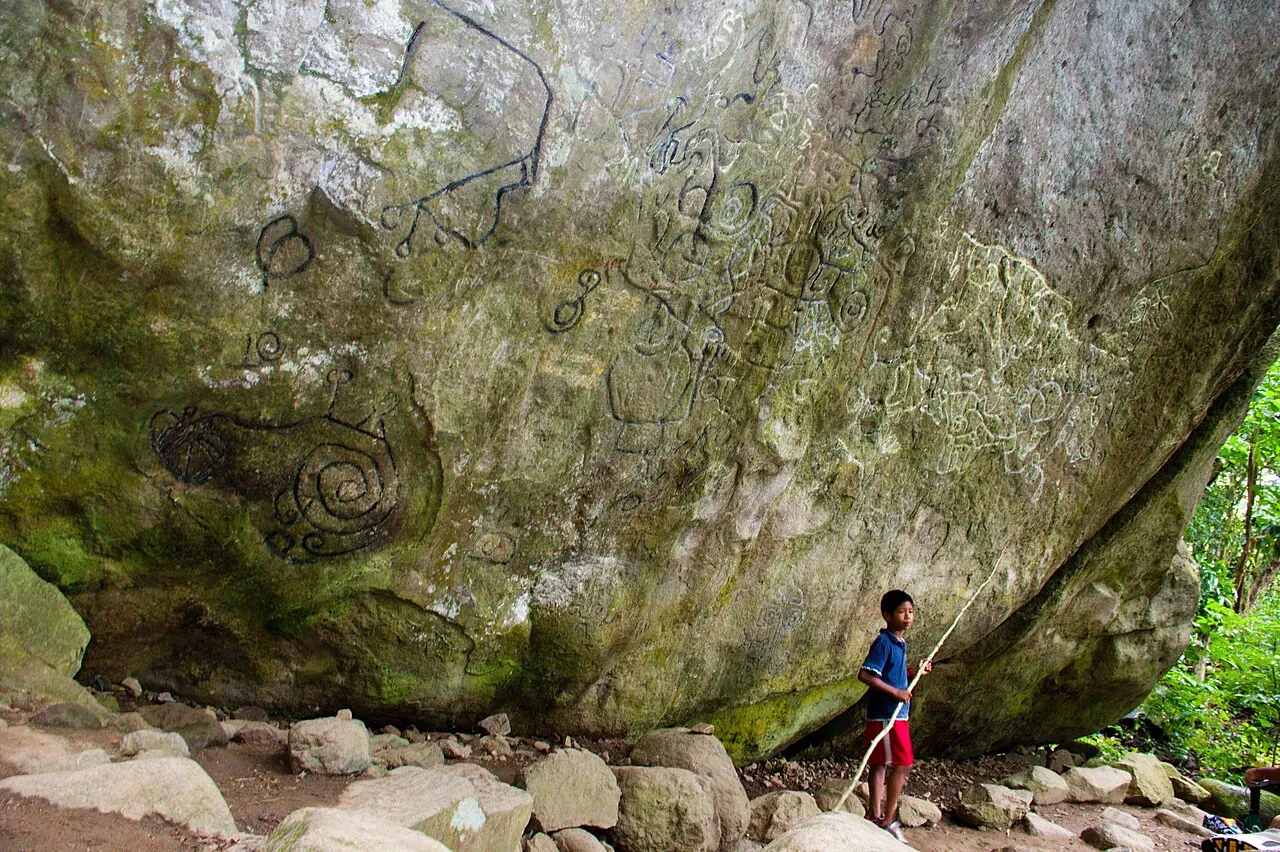
The Piedra Pintada in El Valle de Antón is a large volcanic boulder covered in undeciphered pre-Columbian petroglyphs, about 300 m up a paved path at the start of the La India Dormida trail, a five-minute taxi ride from town. Plan 45 to 60 minutes and a small cash entry fee of about $1 to $3. Trail listings reported access closed from October 2026 with no reopening date, so confirm it is open locally before you go.
The Piedra Pintada in El Valle is in La Pintada, a neighborhood in the northwest corner of the crater, a few minutes from the town center.[1] It is the first stop on the La India Dormida trail. Most visitors see the rock on the way up the ridge rather than as a separate trip.
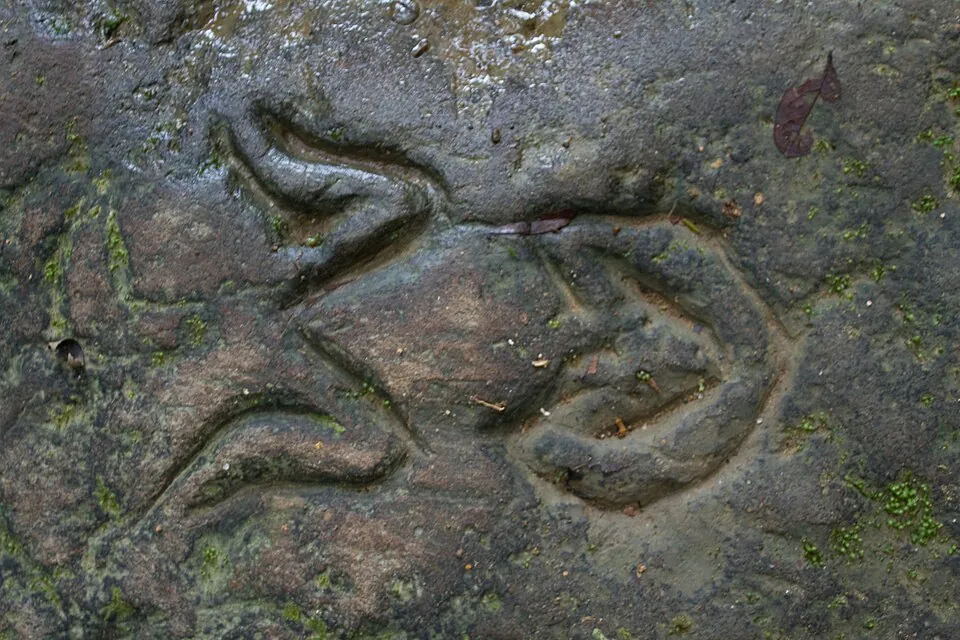
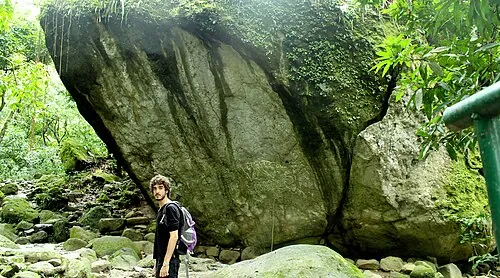
Despite the name, the designs are carved, not painted. They are petroglyphs cut into a boulder several meters high.[2] Nobody has worked out what they mean. That mystery is the main draw, and it also limits how long most people stay. For the rest of the crater town, our El Valle de Antón travel guide covers what else to see.
What the Piedra Pintada in El Valle is and why it's famous
The Piedra Pintada is the largest and most visited of several petroglyph stones in the valley. It is a volcanic rock with pre-Columbian engravings, lying on the slope that leads up to La India Dormida.[3] Lonely Planet, as quoted by La Estrella de Panamá, calls it the best-known petroglyph rock in Panama.[1]
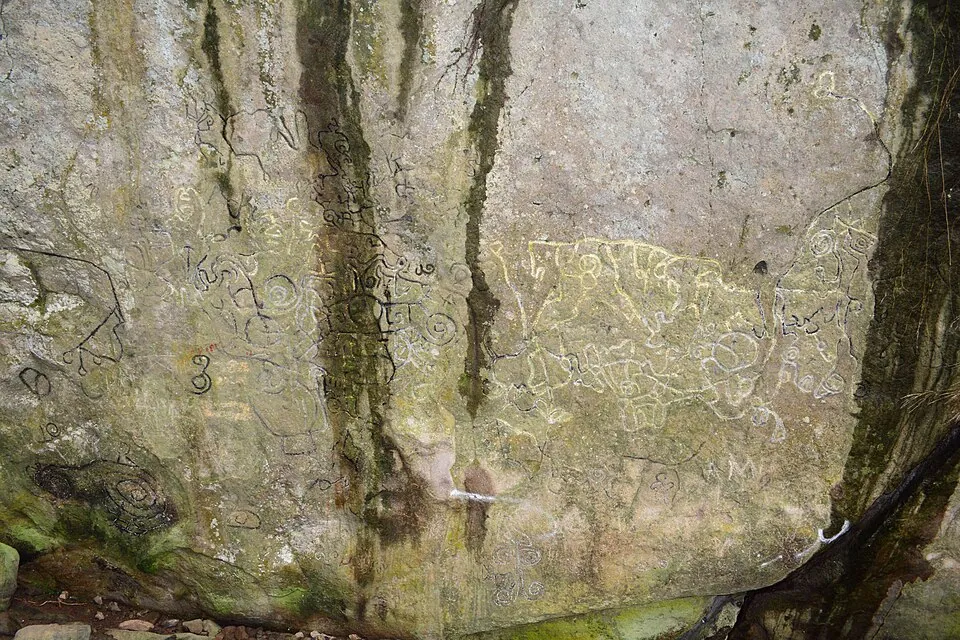
It has been on the record for a long time. A 1960 survey of Central American rock art already listed El Valle among Panama's petroglyph sites.[4] The rock also appears on Wikimedia Commons as a Panamanian cultural heritage monument, with the ID 10-001-DMHN.[5] It ranks among El Valle's most-visited attractions on TripAdvisor, according to the tourism authority's destination plan.[6]
What the carvings might mean
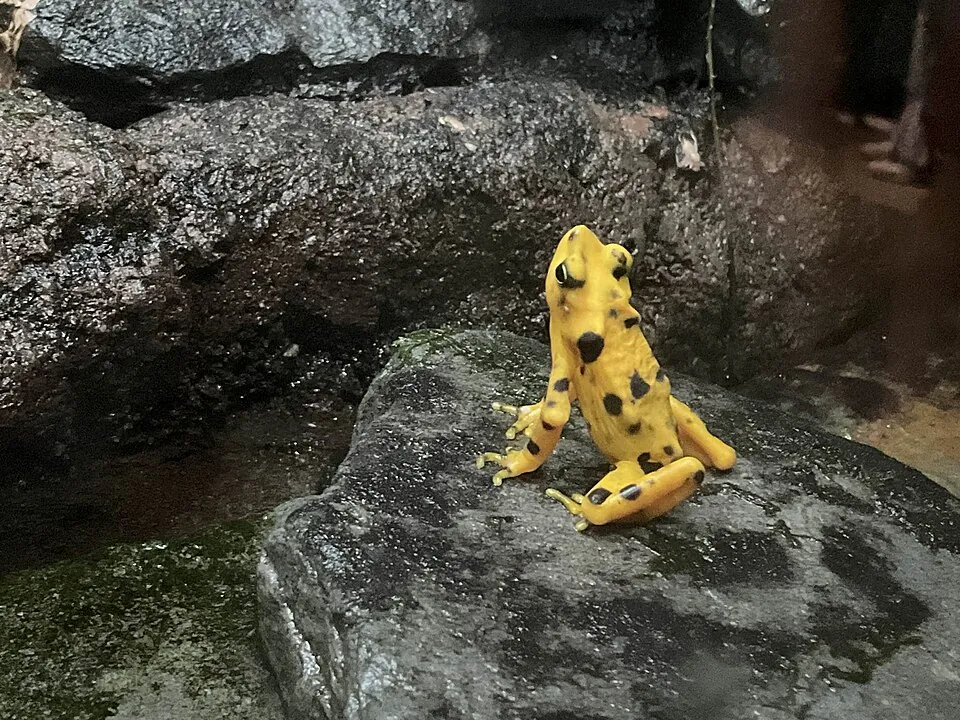
The Autoridad de Turismo de Panamá (ATP) describes the symbols as not yet deciphered.[7] Local guides and directories usually give three readings: a map of the valley, religious symbols, or a calendar for planting and harvest.[3] Some visitors also see animal figures among the lines. None of these readings comes from a published study of this rock, so treat them as ideas, not answers.
How old the petroglyphs are
Everyone agrees the carvings are pre-Columbian. One tour operator suggests they may be about 8,000 years old but gives no source.[8] No published dating study of this rock exists, so the age you hear on site depends on who is telling the story.
The legend of the Piedra Pintada
The best-known local story says the rock hides a treasure guarded by an Indian.[9] Guides tell several versions. If the legends interest you more than the carvings, they are a good reason to hire one of the community guides at the site.
Is the Piedra Pintada open? Hours, entry fee and the 2026 closure
As of November 2026, the Piedra Pintada may be closed. Notices on the AllTrails trail listings say that from October 2026, access to the Piedra Pintada is prohibited and temporarily closed, with no reopening date.[10] One listing calls it a partial closure that also covers the Chorro de los Enamorados and the La India Dormida trail.[11] No reason has been made public.
ATP has been rehabilitating the Ruta de la Caldera, the long hiking circuit around the valley, and that work includes areas around the Piedra Pintada.[12] Whether the closure is linked to this work has not been announced. Ask your host or a local taxi driver whether the entrance is open before you plan your day around it.
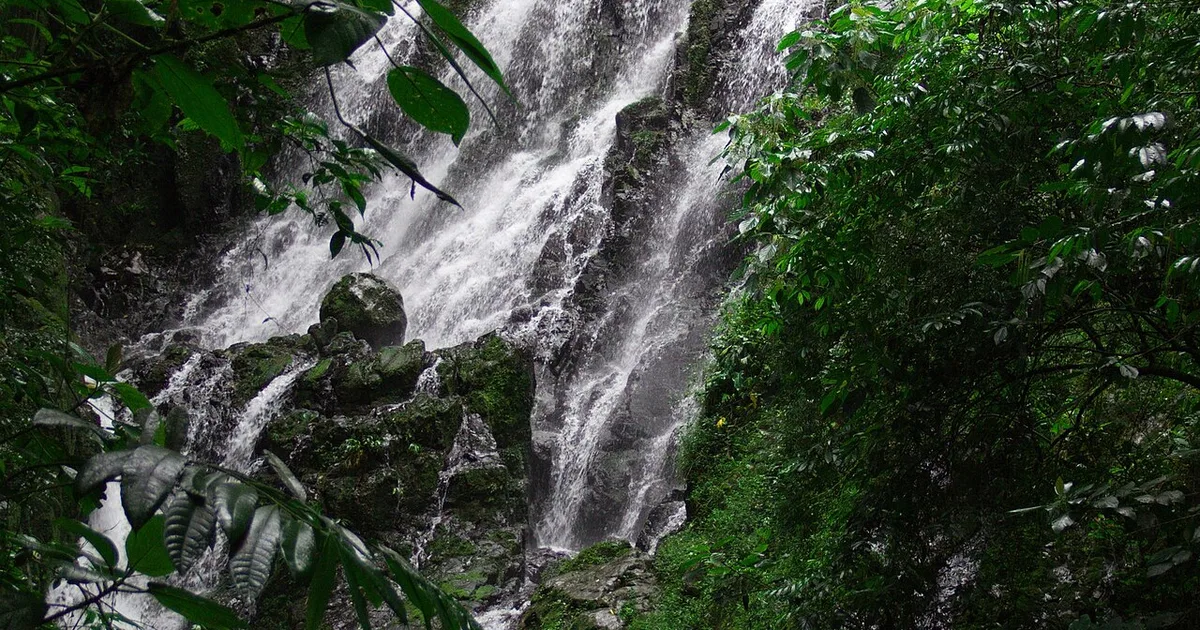
If the Piedra Pintada entrance is shut, the India Dormida climb from this side is probably shut too, since both use the same entrance. Have a waterfall or hot springs plan ready as a backup.
When the site is open, these are the practical details:
- Hours
- Daily from 8:00 am to 5:00 pm, based on figures compiled in June 2026.[13]
- Entry fee
- Sources disagree. One guide gives $2 per person for the Piedra Pintada area and the India Dormida trail.[2] Another lists $1 for adults, $0.75 for retirees and $0.50 for children.[13] Some local listings and reviews quote up to $3. Expect to pay between $1 and $3, and check the sign at the kiosk.
- Past rates
- The fee used to be $0.50 for Panamanians and $1 for foreigners, so the price has gone up over time.[2]
- Payment
- Cash only. The entrance has no electronic payment point, so bring small bills.[2]
- Guide
- Not required. A community guide service works at the site, and visitors are encouraged to listen to a local guide during the visit.[14]
- Permission
- You don't need landowner permission for this rock. Some other petroglyph stones in the valley are on private or hard-to-reach land, which is a separate matter.[14]
Where the Piedra Pintada is and how to find it from town
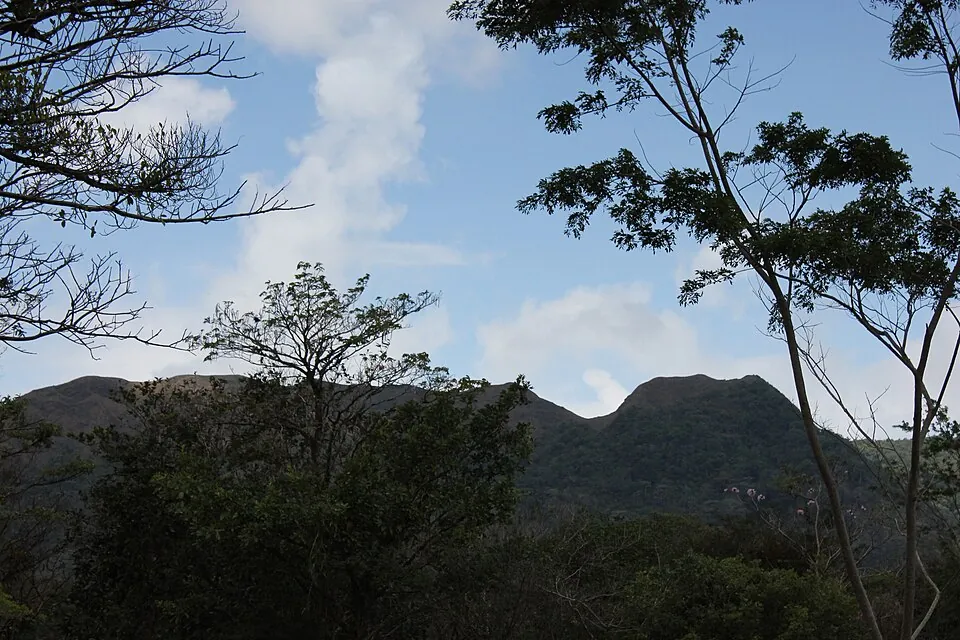
The rock is in the barrio of La Pintada, a few minutes from El Valle's town center.[7] It sits at the foot of La India Dormida, the ridge that closes the crater on its northwest side. The road from town ends at a small parking area. From there, a paved path about 300 m long climbs to the rock in 10 to 15 minutes.[14]
From the main street, cross the bridge and turn toward La Piedra Pintada. Stay on that road until it ends at the entrance. No official figure gives the distance from the center. Walking from the bus terminal to the trailhead takes about 20 minutes, and an e-bike takes about 10 minutes on mostly flat ground.[14]
If you use a map app, search "Piedra Pintada El Valle de Antón", not just "Piedra Pintada Panama". The shorter search can send you to two other sites with the same name, explained further down this page.
Distances inside the crater are short, so almost any base works for this stop. If you haven't booked yet, our guide to where to stay in El Valle de Antón compares the town center, the crater rim and the outskirts.
Getting to the Piedra Pintada: walking, taxi, bike or guided tour
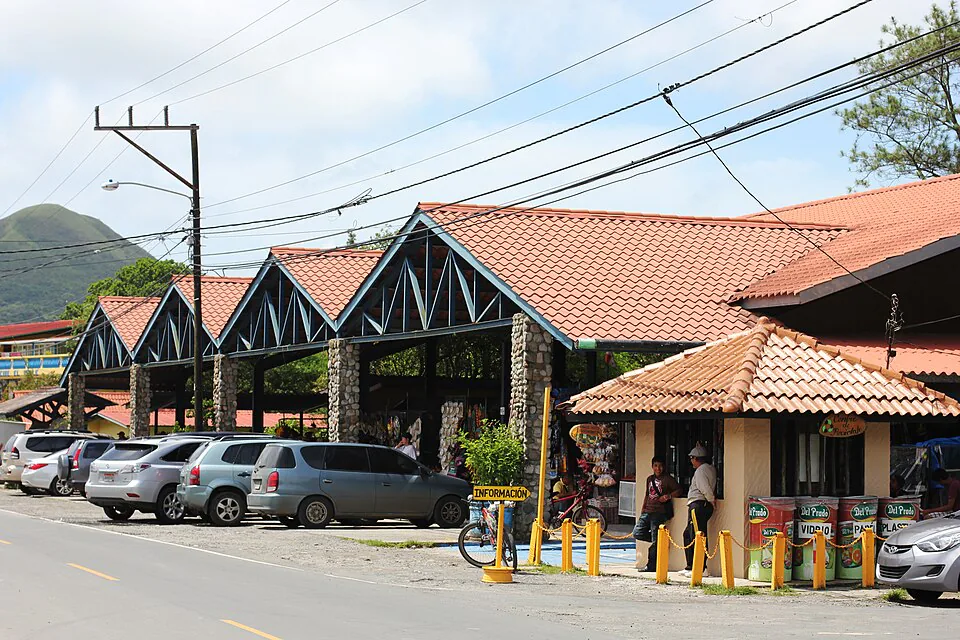
A local taxi is the easiest way to get there: about five minutes and a few dollars from the center. Walking is free and takes about 20 minutes. Cycling is the best choice if you plan to continue to the waterfalls or hot springs afterward.
| Option | Cost | Time from town | What you get | Best for |
|---|---|---|---|---|
| Local taxi | $1.50-3 each way | About 5 min | Drop-off at the parking area | Easiest |
| Walking | Free | About 20 min from the bus terminal | No waiting for a ride | Dry mornings, travelers staying centrally |
| Bike or e-bike | Rental rates vary | About 10 min, mostly flat | Your own transport for the rest of the day | Combining several sights |
| Tour from Panama City | $95-195 per person | Full day, including the drive | Transport and guide, sometimes several stops | Visitors with no car and one free day |
Prices as of November 2026. The site entry fee is extra in every case.
Walking
The walk from the bus terminal to the trailhead takes about 20 minutes.[14] It is an easy way to start a morning on India Dormida. Wear closed shoes, because the trail past the rock is rocky and muddy.
Taxi
A taxi from the center costs about $2 to $3 and takes around five minutes.[2] Some listings quote $1.50 for the same ride.[15] Short local rides in the valley generally run $2 to $5.[16] Finding a taxi is harder than paying for one. There is no local taxi app, cars wait near the market, and they get scarce on busy weekends.[16]
No fixed rule covers waiting time. If you want the driver to wait during your visit or come back for you, agree on that and on the price before you leave town.
Bike or e-bike
Cycling from the town center to the Piedra Pintada is a standard option.[17] It makes the most sense as the first stop of a loop that also takes in a waterfall or the hot springs. Our page on El Valle tours, e-bike rentals and guided hikes compares rental and guided prices.
Guided tours from Panama City
Day tours from the capital often include the rock along with other crater sights. Listed prices run from $95 to $110 per adult on one booking site.[18] Viator lists an Antón Valley volcano crater tour from $195 per person.[19] Private eight-hour tours start from about €148.[20] Entrance fees are often not included.[21]
Listings titled "Piedra Pintada, Panama City" are tours that leave from the capital. The rock itself is in El Valle, so check the itinerary to confirm the stop is actually included.
What you see at the rock and how long to allow
Allow 45 to 60 minutes for the full visit, including the paved walk up and back.[14] What you find is a single large boulder. It is several meters high and covered in pre-Columbian engravings.[2] The designs are lines cut into gray volcanic stone, not colored paint, and many are hard to pick out without someone pointing them out.
Pay at the entrance 5 min
The kiosk sits at the parking area at the end of the road. Pay in cash and ask whether a community guide is available.
Walk the paved path 10-15 min
About 300 m of paved ramp leads up to the rock. Take it slowly in wet weather.
Look at the carvings 20-30 min
Walk around the boulder, then listen to a guide's take on the map, calendar and treasure stories. Keep your hands off the stone.
Optional: continue to the falls 20-30 min
The Chorro de los Enamorados is about 800 m farther up the trail, and it is the natural next stop.
One guide describes the path as a paved ramp without stairs that works for wheelchairs and strollers.[14] Other visitors say the access is not suitable for wheelchairs. If mobility matters, ask locally about the current state of the path.
Don't touch the carvings, because the oil from your skin speeds up erosion.[14] Limited control over access has already led to vandalism and litter at the Piedra Pintada, according to a sustainability study published by ATP.[22] Recent reports don't describe the current state of the carvings in detail, so set your expectations accordingly.
Is it worth it?
If you are hiking La India Dormida, yes. The rock is on the way and adds only a few minutes and a few dollars. As a stop on its own, it is a quick, cheap hour, and it works well with children because the walk is short. If you expect bright paintings or a museum-style site with signs, it will feel modest.
Best time of day to visit and weather considerations
Go early, ideally right when it opens at 8:00 am. You get cooler air, softer ground before any rain, and the whole morning free if you want to climb India Dormida afterward. Day-trip groups from the capital tend to arrive later, after the drive described in our El Valle day trip from Panama City guide.
The rainy season is long here. The Antón district plan puts it at 10 months, from mid-March to mid-January. October is the wettest month at about 202 mm on average, and February is the driest at about 6 mm.[23] In the wet months the path can be slippery, so closed shoes are a good idea.[14]
The rock itself stays reachable in rain because the path to it is paved. The India Dormida trail beyond it is another story. It runs over rocks, river crossings and slippery ground, and it gets harder after heavy rain.[24] On sunny middays the volcanic rock heats up, which is another reason to go early.[25] Temperatures can change quickly and it can get windy, so bring a light layer.[17]
Combining the Piedra Pintada with other El Valle sights
The natural pairing is La India Dormida, because the rock shares its entrance with that trail.[3] Beyond the rock, the Chorro de los Enamorados is about 800 m and 20 to 30 minutes on. The summit is roughly 2.5 km and 2.5 to 3 hours beyond that.[14] Our India Dormida hike guide covers the full ridge walk.
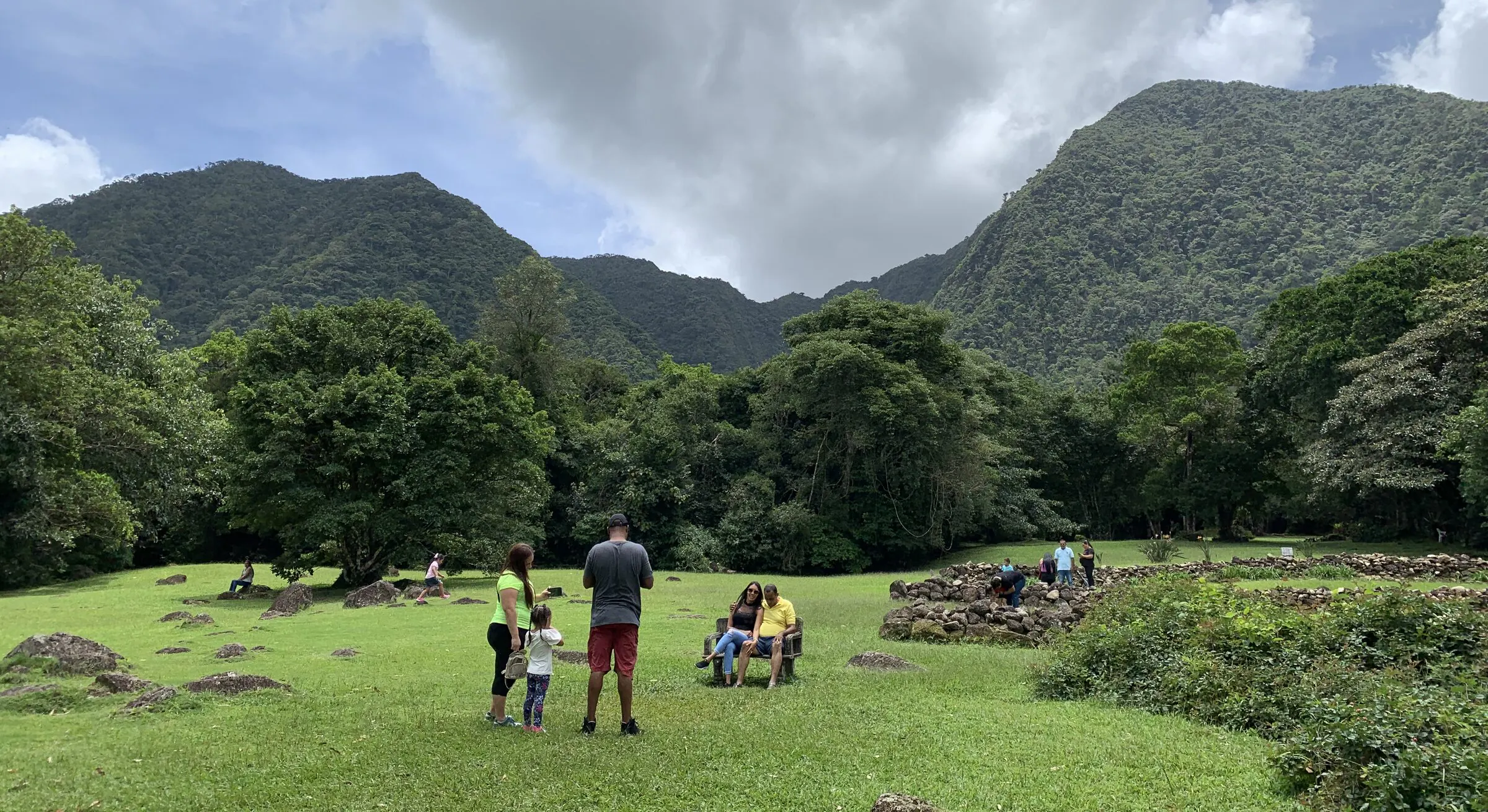
For the afternoon options, our El Valle de Antón waterfalls guide compares entry fees and swimming at each fall. If you only have one day, the El Valle de Antón one-day itinerary shows what realistically fits around a mid-morning arrival. For a longer stay, the list of things to do in El Valle de Antón covers the markets, zoo, butterfly garden and other trails.
Don't hike the ridge alone. ATP's destination plan notes occasional attacks on visitors on the India Dormida trail and says certified guides are rarely used.[6] The national tourism site advises relying on authorized local guides if you are not an experienced hiker.[17] If you only go as far as the rock and the first waterfall, a group or a guide matters less.
The rock is also part of the Ruta de la Caldera, the long hiking route around the valley rim. ATP's manual puts that route at about 30 km, and a 2024 press item says about 40 km.[26] Few visitors attempt more than a section of it.
Piedra Pintada Panama: the El Valle rock vs Caldera and La Pintada
At least three places in Panama go by the name Piedra Pintada, and search results often mix them up. This page covers the El Valle de Antón rock, at the start of the India Dormida trail in Coclé province.
Piedra Pintada de Caldera
ChiriquíNear BoqueteIn open pastureThis is a separate rock in the Caldera area of Chiriquí, described as having the most notable petroglyphs in its area and possibly marking the passage of the year.[1] Local tradition recorded by Beatriz Miranda de Cabal links it to the Doraces people and a buried gold treasure.
Best for travelers based in Boquete, not El ValleLa Pintada, Coclé
13 km from PenonoméSeparate townPetroglyphs nearbyLa Pintada is a town and district seat about 13 km northwest of Penonomé, with a range of pre-Columbian petroglyphs about 2 km from town.[27] It has nothing to do with El Valle's La Pintada neighborhood, even though the names are the same.
Best for a detour from PenonoméThe name also turns up outside Panama. The best-known example is an archaeological park in Carabobo, Venezuela, and its published dates do not apply to El Valle.[28] If a search for "Piedra Pintada Córdoba" or similar comes up, it points to another country entirely.
Before you go
Where is the Piedra Pintada in El Valle de Antón?
It is in the La Pintada neighborhood, at the start of the La India Dormida trail on the northwest side of the crater. The road from town ends at a parking area, and a paved path about 300 m long leads up to the rock. It is about five minutes by taxi or 20 minutes on foot from the bus terminal.
Is the Piedra Pintada open in 2026?
Possibly not. Trail listings report that access to the Piedra Pintada has been closed temporarily since October 2026, with no reopening date, and the closure may also cover the India Dormida trail from this side. Ask your host or a local taxi driver before you go.
How much does it cost to visit the Piedra Pintada?
Expect about $1 to $3 per person, paid in cash. Published figures differ: one lists $1 for adults, $0.75 for retirees and $0.50 for children, while others quote $2 to $3. There is no card payment at the entrance.
Do I need a guide to visit the Piedra Pintada?
No, a guide is not required. Community guides work at the site and can point out figures that are hard to see on your own and tell the local legends. A guide is more useful if you continue up the India Dormida ridge.
What do the petroglyphs at the Piedra Pintada mean?
Nobody knows for sure, because the carvings have never been deciphered. Common readings are a map of the valley, religious symbols or a calendar for planting and harvest. A petroglyph is a design carved or pecked into rock, which is why the 'painted' rock shows engraved lines rather than color.
What is the legend of the Piedra Pintada?
The best-known story says the rock hides a treasure guarded by an Indian. Guides tell several versions. A different Piedra Pintada in Caldera, Chiriquí, has its own legend about buried gold figures and the Doraces people.
How long should I spend at the Piedra Pintada?
About 45 to 60 minutes, including the walk up and back. Add 20 to 30 minutes each way to reach the Chorro de los Enamorados, or a half day to climb La India Dormida.
How much is a taxi to the Piedra Pintada, and will it wait?
A taxi from the town center costs about $1.50 to $3 each way and takes around five minutes. Waiting is not standard, so agree on a wait or a pickup time, and the price, before you leave. Taxis can be scarce on busy weekends.
Is the Piedra Pintada worth visiting?
Yes, if you are hiking La India Dormida or want a cheap, short stop. It is a single carved boulder, not a large archaeological site, so it works best combined with the trail, a waterfall or the hot springs. Our El Valle one-day itinerary shows how it fits into a day.
Is the Piedra Pintada in El Valle the same as the one in Caldera?
No, they are different rocks in different provinces. The El Valle rock is in Coclé, at the foot of La India Dormida. The Caldera rock is in Chiriquí, near Boquete, and there is also a separate town called La Pintada near Penonomé with its own petroglyphs.
Sources
Prices, schedules and rules change. The small numbers in the text point to these sources.
- 1La Estrella de Panamá - Un pasado escrito en roca (article)laestrella.com.pa
- 2PanamaSpot - La India Dormida trail guidepanamaspot.com
- 3Ven al Valle - Piedra Pintada directory listingvenalvalle.com
- 4
- 5Wikimedia Commons - Petroglyph at La Piedra Pintada, El Valle de Antón (photo)commons.wikimedia.org
- 6
- 7
- 8The Real Deal Tours - Piedra Pintada petroglyphs blog posttherealdealtours.com
- 9Municipio de Antón - Sitios turísticosanton.municipios.gob.pa
- 10
- 11
- 12
- 13PanamaSpot - Precios y horarios El Valle de Antón 2026panamaspot.com
- 14
- 15Planet of Hotels - El Zumbito, Antón travel informationes.planetofhotels.com
- 16
- 17Visit Panamá - Anton Valley 4-day itineraryvisitpanama.com
- 18
- 19
- 20GetYourGuide - Antón private tours listinggetyourguide.com
- 21GetYourGuide - Things to do in El Valle de Antóngetyourguide.com
- 22
- 23Gaceta Oficial - No. 30330-A, Antón district plan (25 July 2025)gacetaoficial.gob.pa
- 24Ven al Valle - India Dormida trail directory listingvenalvalle.com
- 25
- 26
- 27Wikipedia - La Pintada (Coclé) articlees.wikipedia.org
- 28Wikipedia - Parque arqueológico Piedra Pintada articlees.wikipedia.org
Image credits
- PetroglifoElValleAyaita · CC BY-SA 3.0
- Petroglyph at La Piedra Pintada, El Valle de Anton, Cocle-PanamaGualberto107 · CC BY-SA 3.0
- 10-001-DMHN Los petroglifos en PanamáAlmudena Díaz Pagés · CC BY-SA 3.0
- Atelopus zeteki petroglyph, India Dormida, El Valle. Golden Frogbrian.gratwicke · CC BY 2.0
- Atelopus zeteki VABloopityboop · CC BY-SA 4.0
- LaIndiaDormidaAyaita · CC BY 3.0