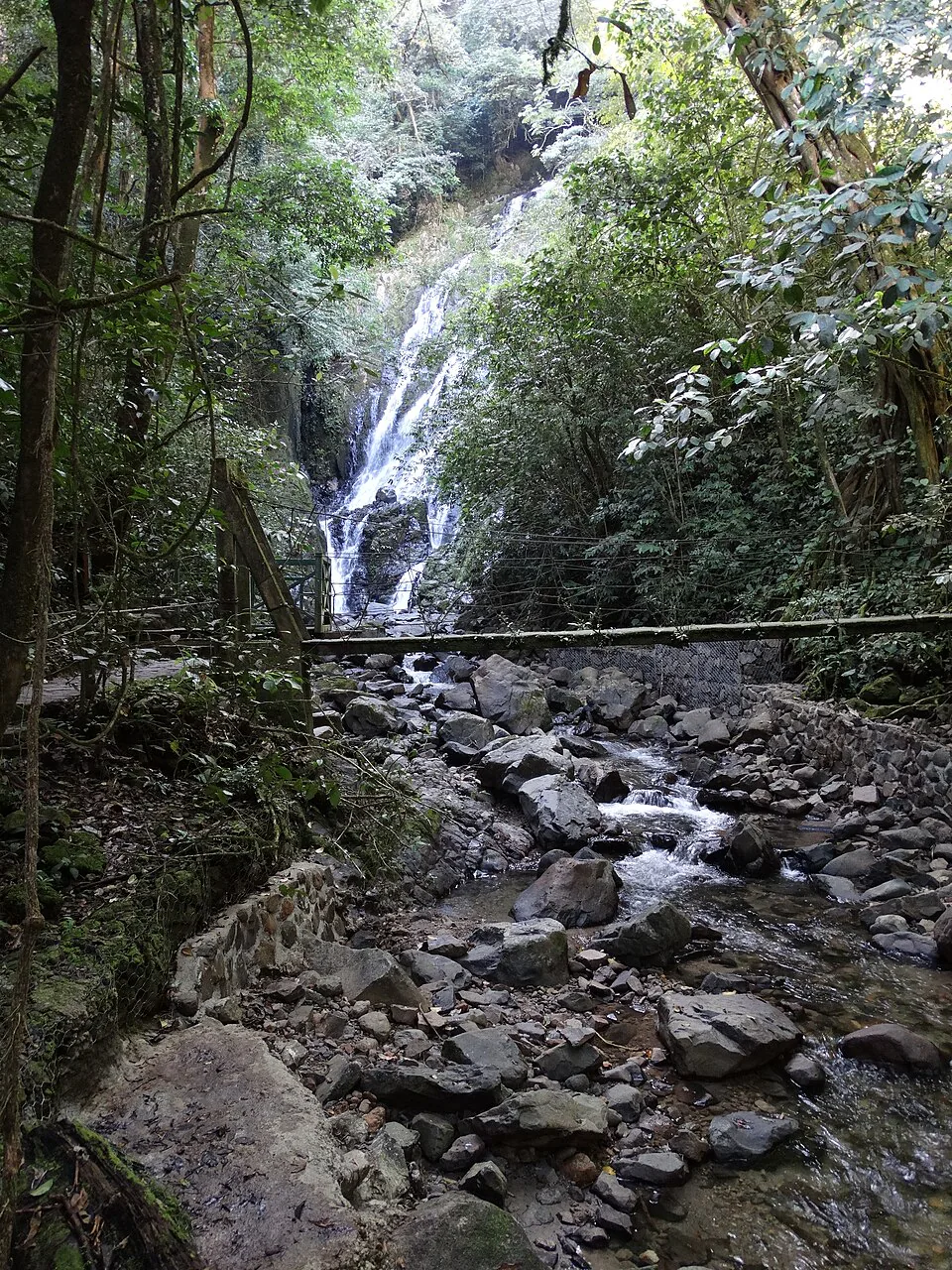
Chorro El Macho is the most visited waterfall in El Valle de Antón — a thundering cascade buried inside a small eco-park about two kilometers north of the town square. The trail is short and easy enough for families with young children. The zipline that crosses directly in front of the falls is one of the most photographed adventure experiences in central Panama. And the natural swimming pool at the base is cold, clear, and genuinely refreshing after the walk in. Here is everything you need to know before you go.
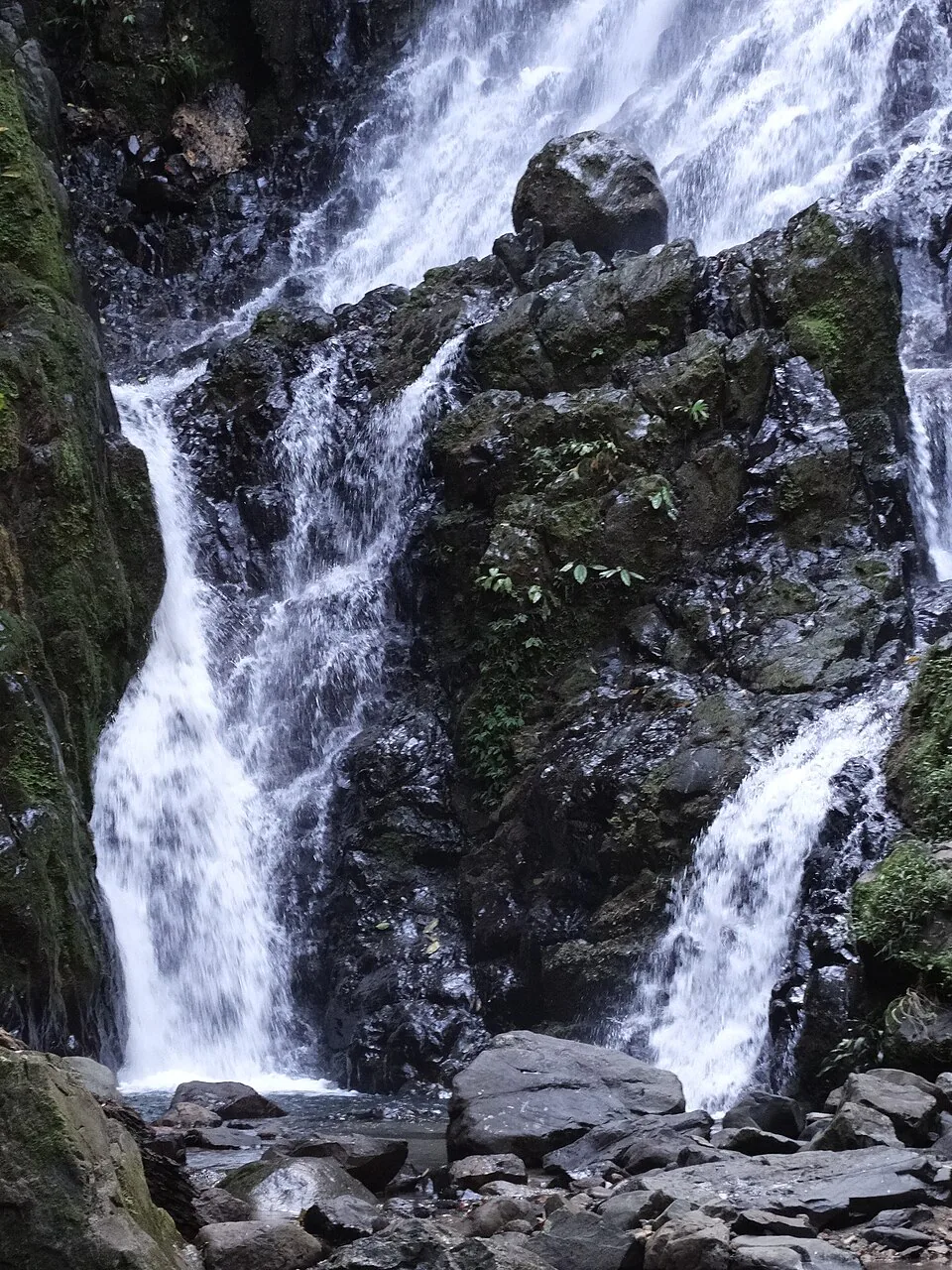
El Valle de Antón sits inside the crater of an extinct volcano, and the rivers that drain its forested walls drop fast and hard before leveling out on the caldera floor. Chorro El Macho is the most dramatic of those drops — a single curtain of white water that hits a rocky plunge pool and sends mist drifting through the surrounding cloud forest. It is not a remote wilderness experience; there is a parking lot, a ticket booth, and a zipline operator. But the waterfall itself is genuinely spectacular, and the setting — dense tropical forest, hanging bridges, orchids on every trunk — earns its reputation.
Section 01The waterfall at a glance
Chorro El Macho is a single-drop waterfall on the Río Antón, located inside a privately managed eco-park on the northern edge of El Valle de Antón. The falls plunge into a natural plunge pool surrounded by rainforest, and the site includes a network of wooden suspension bridges, a man-made swimming pool fed by the river, a zipline course, and a short hiking trail. Operating hours are typically 8:00 am to 5:00 pm daily, though the zipline operation follows its own schedule and is best confirmed on arrival or by phone. The site is family-friendly, accessible to most fitness levels, and can be covered in as little as 45 minutes or stretched into a two-hour visit if you swim and take the full trail loop.
Section 02The height question: 35 meters or 70 meters?
You will find both figures online, and the discrepancy is real. The most widely cited measurement — used by Lonely Planet, TripAdvisor, and most travel writers who have visited — puts the main cascade at 35 meters (approximately 115 feet). The 70-meter figure that appears on some local tourism sites likely refers to the total vertical drop of the Río Antón through the entire gorge section, including a series of smaller cascades above and below the main falls. When locals and guides say "Chorro El Macho," they mean the single main drop that is visible from the viewing platform and the suspension bridges. That drop is 35 meters. It is still an impressive waterfall — roughly the height of a ten-story building — and the volume of water coming over it during the wet season is substantial. The 70-meter claim is not wrong so much as misleading; it conflates the full gorge system with the signature single drop.
Section 03Getting there from El Valle town center
The eco-park entrance is approximately 2 kilometers north of El Valle's main square (Parque Municipal). From the square, take Avenida Central north past the Sunday market and El Nispero zoo, continue past the hot springs turnoff, and follow the road as it bends left toward the northern valley wall. The entrance gate and parking lot appear on the right side of the road, marked with a sign for "Canopy Adventure" and "Chorro El Macho." The GPS coordinates for the entrance are approximately 8.6195° N, 80.1285° W — plug these in before you leave town as cell signal can be patchy on the northern road.
| How to get there | Cost | Time from town | Verdict |
|---|---|---|---|
| Walk from town center | Free | 25–35 min | Good option |
| Taxi from town | $3–5 one way | 5–8 min | Easiest |
| Rental car / own vehicle | Parking free | 5 min | Most flexible |
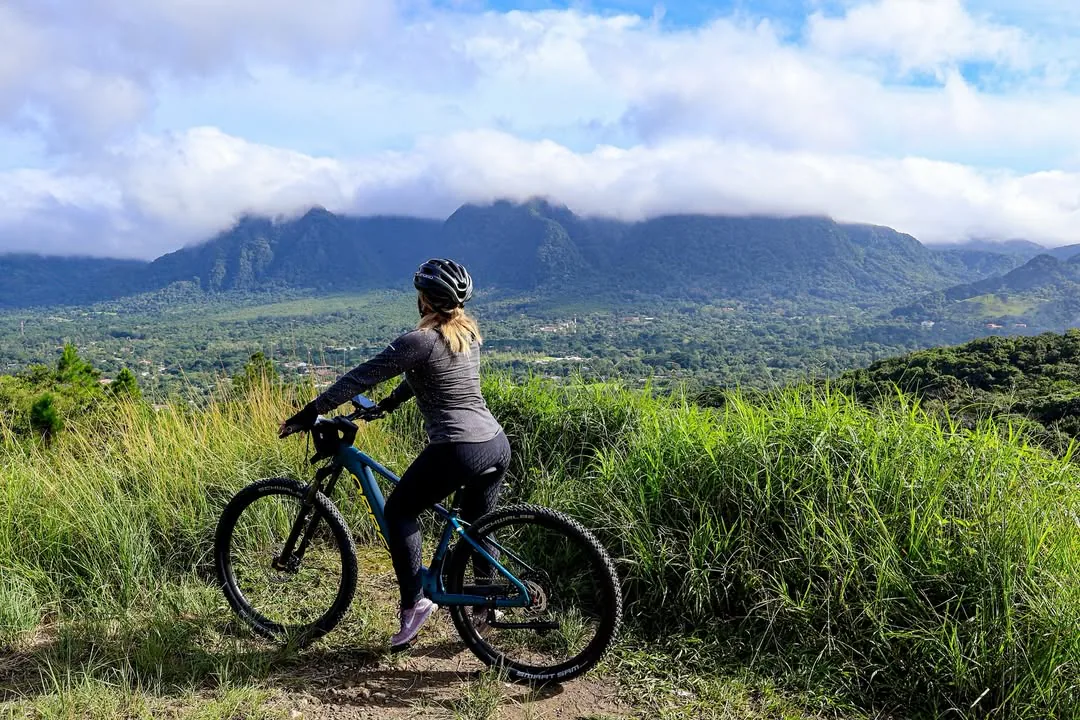
| E-bike from E-Valley Bikes | From $30/bike | 10–15 min | Best value day |
The walk from town along the main road is pleasant and flat — El Valle's caldera floor has almost no gradient. It takes about 25 to 35 minutes on foot and passes the entrance to El Nispero zoo and botanical garden, making it easy to combine both stops in a single morning without a vehicle. If you are renting an e-bike through E-Valley Bikes, the waterfall is a natural first stop on a longer loop of the valley's northern attractions.
Four ways to do El Valle by bike.
Self-guided freedom with a GPS audio guide that does the narrating — no group, no fixed itinerary. Helmet, lock and front basket included.
Town & Art Loop
Historic center, the artisan market and the church. Flat, easy, perfect for a first ride.
Falls & Wildlife
Chorro El Macho waterfall, the Butterfly Haven and the Níspero Zoo. Built for groups with kids.
Crater Ridge
Up to the panoramic ridge over the crater. The sunset slot is the one to book.
Mountain & India Dormida
Off-road, real elevation, real views — for experienced riders who want to earn it.
Section 04Entry fees: what you actually pay
The fee structure at Chorro El Macho is tiered, and this is where most online sources fall short — they quote a single number without explaining what it covers. Here is the current breakdown based on reported rates as of 2025–2026:
| Access type | Fee (USD) | What's included | Notes |
|---|---|---|---|
| Trail to waterfall viewpoint | $3 per person | Trail, suspension bridges, viewpoint | Main visit |
| Natural swimming pool (man-made pool) | $5 per person | Pool access + trail | Includes trail fee |
| Zipline / canopy tour | $25–$35 per person | Multiple zip lines over falls | Separate operator |
| Children under 5 | Free | Trail only | No charge |
Cash only at the gate — bring small bills in USD. There is no ATM at the site, and the nearest one is in El Valle town center. The trail fee and pool fee are collected at the same booth; zipline tickets are sold separately at the canopy operator's desk near the trailhead. Combination packages (trail plus zipline) are sometimes available for around $30 to $38 per person, but pricing varies by season and group size, so ask at the gate.
Section 05The trail: what to expect step by step
The trail to Chorro El Macho is short — the main route from the entrance gate to the primary waterfall viewpoint is approximately 200 meters and takes 10 to 15 minutes at a relaxed pace. Do not let the brevity fool you into under-preparing; the path descends via stone steps that can be slick with moisture year-round, and the return involves climbing back up those same steps.
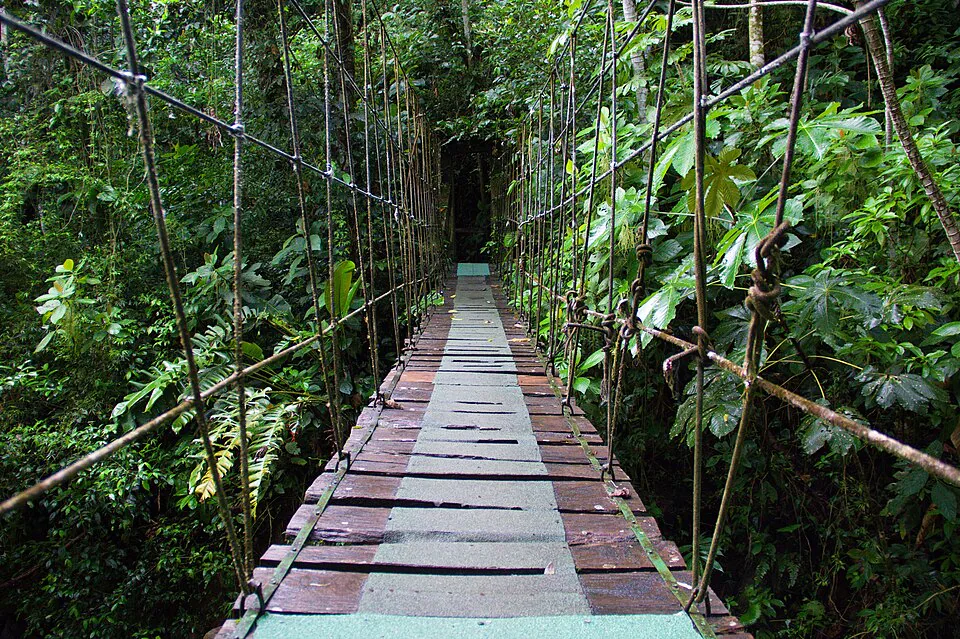
From the entrance gate, the trail drops immediately into dense secondary forest. Within the first 50 meters you cross the first of several wooden suspension bridges over the Río Antón. These bridges are solid and railed but narrow — single file only, and they sway noticeably. Children find them thrilling; anyone with a fear of heights may want to know this in advance. The bridges are not high above the water, but the movement is real.
After the first bridge, the path follows the river upstream through a corridor of enormous old-growth trees draped in bromeliads and orchids. The canopy closes overhead and the temperature drops a few degrees. A second suspension bridge crosses back over the river, and from here the roar of the falls becomes audible. The main viewpoint is a stone platform at the base of the cascade, roughly 20 meters from the curtain of water. At full flow in the wet season, the mist reaches the platform and everything within range gets damp. Bring a light rain jacket or accept that your phone screen will be wet.
Beyond the main viewpoint, the trail continues upstream through the gorge to additional smaller cascades and eventually connects with a longer loop trail through the forest. Most visitors turn around at the main viewpoint. The full loop adds another 30 to 45 minutes and involves some uneven terrain but no technical climbing.
Section 06The zipline: Panama's most dramatic canopy crossing
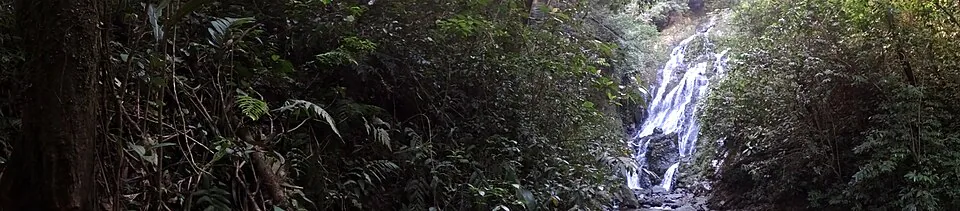
The zipline at Chorro El Macho is operated by Canopy Adventure El Valle, and it is the main reason this waterfall appears on so many Panama bucket lists. The course consists of multiple zip lines through the forest canopy, but the signature run — the one in every photograph — sends you across the face of the falls themselves, close enough to feel the spray. At full flow in the wet season, this is a genuinely exhilarating experience; in the dry season it is still impressive but the falls are thinner.
The course typically includes five to eight zip lines of varying length, with the waterfall crossing being the penultimate or final run depending on the configuration on the day. Total duration is approximately 1.5 to 2 hours including the walk between platforms. The minimum weight is usually around 30 kg (66 lbs) and the maximum around 100 kg (220 lbs); confirm these limits at the desk if you are near either end of the range. No prior experience is required — guides brief you at each platform and control the braking.
Pricing runs approximately $25 to $35 per person for the full course. The canopy desk opens around 8:00 am and the last tour typically departs by 3:00 pm. On busy weekend days, slots fill up; if the zipline is a priority, book ahead or arrive early. The operator can be reached by asking at your hotel in El Valle — most accommodation owners have a direct contact number.
Section 07The swimming pool: conditions and what to expect
Below the main cascade there is both a natural plunge pool and a separate man-made swimming pool fed by the river. The natural plunge pool at the base of the falls is powerful and not recommended for swimming — the current and turbulence from the falling water make it dangerous. The swimmable pool is a constructed concrete basin a short walk downstream from the viewpoint, fed by diverted river water.
The water is cold — consistently around 22 to 24°C (72–75°F), which feels refreshing in El Valle's warm humid air but can be a shock on entry. Depth varies from about 1 meter at the shallow end to 2 meters in the center. There is no lifeguard on duty. The pool floor and entry steps are slippery; move carefully. Children should be supervised closely. The pool is at its most pleasant in the dry season (December to April) when the water runs clearer and the surrounding area is less muddy.
In the wet season (May to November), river levels rise and the pool can become murky with suspended sediment after heavy rain. It is still technically open but less appealing for swimming. After a major rain event — particularly in September and October, the wettest months — the pool may be closed temporarily. Check with your hotel the morning of your visit if there has been significant overnight rain.
The $5 pool access fee includes trail access. Bring a towel and a dry bag for your valuables; there are no lockers at the site, only a basic changing area.
Section 08Best time to visit: seasons, crowds, and water levels
The honest answer is that Chorro El Macho is worth visiting in any month, but the experience differs significantly between seasons.
Wet season (May to November): The falls are at full power. The cascade is wide, loud, and genuinely impressive — this is when the waterfall looks like the photographs. The forest is intensely green. Orchids are in bloom. The downside: the trail is muddier, the swimming pool can be murky, afternoon thunderstorms are common (typically arriving between 2:00 and 4:00 pm), and the zipline may be suspended during active rain. Visit in the morning and you will almost certainly have clear skies. September and October are the wettest months; the falls are at maximum flow but the weather is least reliable.
Dry season (December to April): The falls are thinner — sometimes noticeably so by March and April — but the trail is drier, the swimming pool is clearer, and the weather is predictable. This is also peak tourist season, meaning weekend crowds are at their worst. Weekdays in the dry season offer the best of both worlds: manageable water levels, good weather, and far fewer visitors.
Section 09Wildlife and flora along the trail
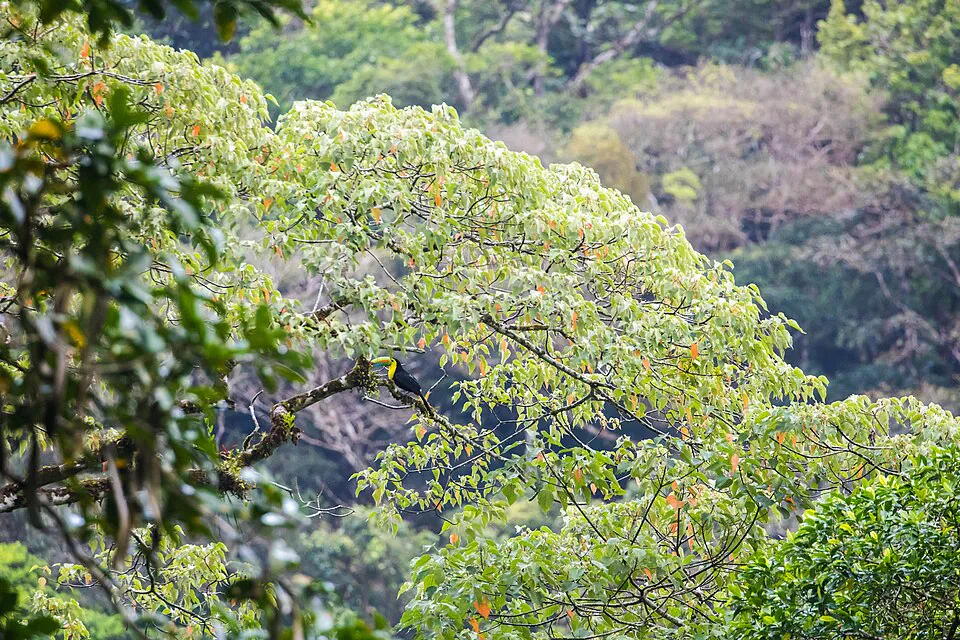
The eco-park sits at the edge of the Cerro Gaital Natural Monument, one of Panama's protected cloud forest reserves, and the trail benefits from that proximity. The species list is genuinely impressive for a 200-meter walk.
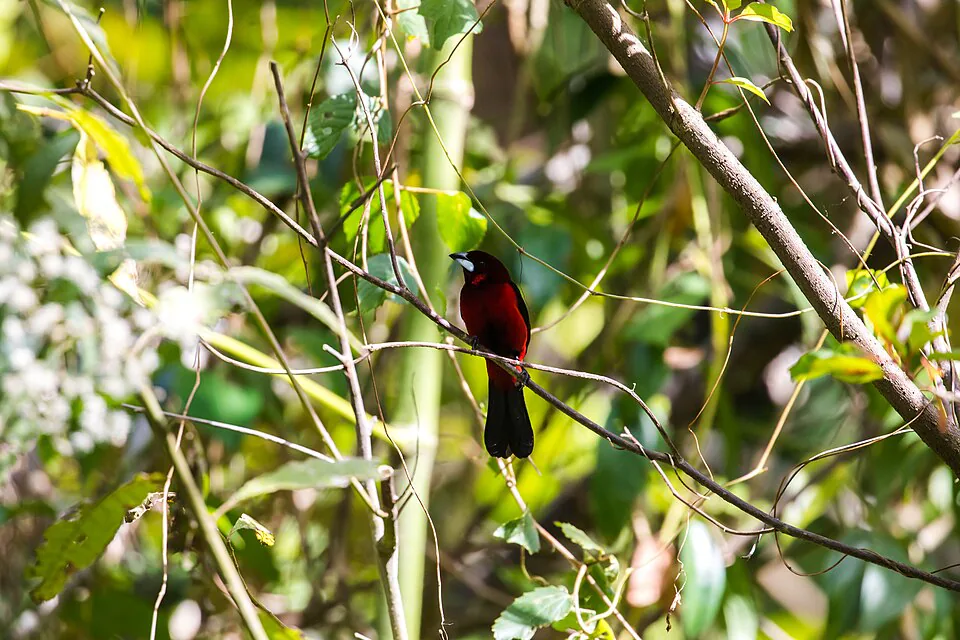
Birds: El Valle sits on a major migratory corridor and has recorded over 339 bird species in the surrounding area. On the Chorro El Macho trail, look for the Rufous-and-white Wren, various tanagers, and the striking Crimson-backed Tanager. Hummingbirds — including the Snowy-bellied Hummingbird and the Violet-crowned Woodnymph — are frequently seen near flowering plants along the path. Early morning (7:30–9:00 am) is the best window for bird activity before visitor noise increases.
Butterflies: The Blue Morpho is the showstopper — its iridescent wings catch the light in the forest clearings near the bridges. You are most likely to see them in the morning when they are most active. The Owl Butterfly and various Heliconia species are also common along the trail edges.
Mammals: White-faced capuchin monkeys are occasionally spotted in the canopy above the trail, particularly in the section between the second suspension bridge and the viewpoint. They are wild and should not be fed or approached. Coatis (a raccoon relative) sometimes forage near the entrance area.
Flora: The trees along the trail are draped in epiphytes — bromeliads, ferns, and multiple orchid species grow directly on the trunks and branches. El Valle is one of Panama's premier orchid habitats; the national flower, the Holy Ghost Orchid (Peristeria elata), is found in the surrounding forest, though it blooms only briefly in the wet season. The massive strangler figs near the first bridge are worth pausing at — their root systems are architectural in scale.
Section 10The enchanted lagoon: the legend behind the falls
TripAdvisor references an "enchanted" legend attached to Chorro El Macho but provides no detail. Here is what the legend actually claims.
According to oral tradition among the Ngäbe people — the indigenous group historically connected to this part of Coclé Province — the plunge pool at the base of Chorro El Macho is inhabited by a spirit that protects the water source for the valley. The spirit is described variously as a serpent or a luminous figure that appears in the mist at dusk. Local accounts hold that the pool is "enchanted" in the sense that it cannot be fully mapped or measured — that its depth changes, and that objects dropped into it do not always resurface where expected.
A more grounded version of the legend, told by older residents of El Valle, connects the pool to the valley's volcanic origin: the water that feeds the falls is said to come from deep within the old volcano, heated and filtered through centuries of rock, and the spirit is the memory of the fire that once filled the crater. This version has a geological plausibility — El Valle's hot springs, located just south of the waterfall road, do draw on geothermal heat — that gives the legend a satisfying layer of truth beneath the mythology.
Whether you find the legend compelling or not, the plunge pool at the base of the falls does have an unusual quality in the wet season: the mist and the angle of morning light combine to produce occasional rainbow effects in the spray that are genuinely striking and feel, for a moment, like something other than physics.
Section 11Chorro Las Mozas: the waterfall most visitors miss
About 1.5 kilometers east of Chorro El Macho, on the opposite side of the valley, lies Chorro Las Mozas — a series of natural rock pools and cascades that most visitors to El Valle never find. The name translates loosely as "The Young Women's Falls," and the site is a local favorite rather than a tourist attraction: a sequence of smooth volcanic rock channels worn into tiered pools by the river, each one swimmable, each one connected by small waterfalls of one to three meters.
Entry is $2 per person, paid at a small gate. Hours are Monday to Friday 10:00 am to 3:00 pm and Saturday to Sunday 8:00 am to 4:00 pm. The site is most popular with Panamanian families on weekend afternoons — if you want it quieter, go on a weekday morning. The rocky path to the pools is narrow and uneven; wear shoes with grip, not flip-flops. In the dry season (January to April), water levels are low but the pools are clear and calm — ideal for swimming. In the wet season, the current between pools can be strong enough to make the upper sections inadvisable; the lower pools remain swimmable.
Las Mozas is not as dramatic as Chorro El Macho but it is more intimate and less commercial. If you have a full day in El Valle, visit Chorro El Macho in the morning and Las Mozas in the afternoon. The contrast between the two — one thundering and vertical, the other horizontal and playful — makes for a satisfying waterfall double-header.
Section 12Building a full day around the waterfall
Chorro El Macho takes 45 minutes to two hours depending on whether you swim and do the zipline. The smart move is to anchor it as the morning centerpiece of a longer El Valle day, using the waterfall visit as the high point and filling the hours before and after with the valley's other attractions.
A well-structured day looks like this: arrive at the eco-park by 8:00 am for the zipline and trail while the light is good and the crowds are thin. Finish by 10:30 am. On the way back toward town, stop at El Nispero Zoo and Botanical Garden ($2 entry), which sits on the same road and houses the famous Golden Frog — Panama's national symbol and critically endangered in the wild. By noon, you are back in the town center for lunch at one of the restaurants on the main square. The afternoon is open for the Sunday market (if visiting on a weekend), the hot springs on the southern edge of town ($3–5 entry), or a hike up La India Dormida, the ridge that forms the valley's iconic silhouette.
The most efficient way to link all of these stops without a car is on an e-bike. The valley floor is flat, the distances between attractions are short (nothing is more than 4 kilometers from the town center), and riding gives you the flexibility to stop wherever you want without waiting for taxis. E-Valley Bikes rents electric bikes from $30 per bike with a helmet, audio guide, and lock included — the audio guide covers the main sites along the route, which makes it a surprisingly good value for solo travelers or couples who want context without a group tour.
If you are based in Panama City and doing El Valle as a day trip — which is entirely feasible given the two-hour drive — leave the city by 6:30 am, arrive at Chorro El Macho by 8:30 am, and you have a full six hours before you need to head back to beat the late-afternoon traffic on the Interamericana. That is enough time for the waterfall, El Nispero, lunch, and either the hot springs or La India Dormida, but not all four. Prioritize based on your interests: the waterfall plus El Nispero for nature; the waterfall plus hot springs for relaxation; the waterfall plus La India Dormida for hikers.