That $8-a-day quote you found online is not what you will pay. Once Panama's mandatory liability insurance, taxes, and airport surcharges land on your bill, a basic sedan runs $55–$85 per day at the counter. This guide gives you the real numbers, explains the insurance rules that catch almost every first-timer, and tells you exactly which routes justify the expense — and which ones don't.
Panama is a small country with a surprisingly wide range of road quality, from a smooth six-lane autopista to a rutted dirt track that requires genuine four-wheel drive. Whether renting a car makes sense depends almost entirely on where you are going. Get that decision right first, then use the rest of this guide to avoid the traps at the counter.
Section 01The real cost of renting a car in Panama
The single biggest source of frustration for visitors is the gap between the advertised rate and the amount charged at the counter. Here is a realistic cost breakdown for a 7-day economy sedan rental picked up at Tocumen International Airport (PTY) in 2025:
| Line item | Daily | 7-day total | Notes |
|---|---|---|---|
| Base rate (economy sedan) | $18–$35 | $126–$245 | Quoted online |
| Mandatory TPL insurance | $17–$25 | $119–$175 | Non-negotiable |
| CDW/LDW (collision waiver) | $12–$20 | $84–$140 | Optional but pushed hard |
| Airport concession fee | $3–$6 | $21–$42 | PTY surcharge |
| ITBMS tax (7%) | variable | $25–$45 | Applied to total |
| Realistic total | $55–$85 | $385–$595 | Budget for this |
If you need an AWD vehicle — strongly recommended for rural Chiriquí, the Azuero interior, or any road to a beach that isn't on the Interamericana — add another $15–$25 per day to the base rate. A Suzuki Jimny or Subaru Forester will run $40–$55 per day before insurance.
Credit card deposit holds are a separate issue. Most companies place a hold of $500–$2,000 on your card at pickup, depending on whether you take their CDW. If you decline CDW and rely on credit card collision coverage, expect the hold to be at the higher end — $1,500 to $2,000 is common. That hold is not a charge, but it will reduce your available credit for the duration of the rental.
One more trap: if you think you might extend the rental, get the daily rate for extension days in writing at pickup. Rental companies have been known to charge significantly higher walk-in rates if you call to extend without a written agreement.
Section 02Insurance in Panama: what's mandatory, what's optional, and what your credit card actually covers
Panama has two distinct insurance products you will encounter at the rental counter. Understanding the difference before you arrive will save you both money and an argument.
Third-Party Liability (TPL) — mandatory, no exceptions
Panamanian law requires every rental vehicle to carry a minimum $10,000–$20,000 third-party liability policy issued by a Panamanian insurer. This covers damage or injury you cause to other people and their property. You cannot decline it, you cannot substitute it with your home country's insurance, and you cannot substitute it with credit card coverage. It does not matter what your US, Canadian, or EU policy says — the law requires a locally-issued policy, full stop.
On your contract it may appear as "Seguro Obligatorio de Daños a Terceros," "TPL," or simply "liability." The daily cost ranges from $17 to $25 at most major companies in 2025. Fox Rent A Car lists TPL at $19/day; National and Hertz typically charge $20–$25/day. Budget and local operators sometimes come in at $15–$18/day, which is one reason to look beyond the airport-brand desks.
Collision Damage Waiver (CDW/LDW) — optional, but complicated
CDW covers damage to or theft of the rental vehicle itself. Panamanian law does not require you to buy it from the rental company. However, if you decline it, the company will place a large security hold on your credit card — typically $1,500 to $2,000 — to cover their deductible exposure.
This is where credit card coverage becomes relevant. Many premium Visa and Mastercard products (Chase Sapphire, Amex Platinum, Capital One Venture X) offer CDW as a cardholder benefit when you pay for the rental with that card. In Panama, this can work — but only if you follow the exact steps:
- Call your card issuer before you travel and confirm in writing that CDW coverage is valid in Panama.
- Decline the rental company's CDW at the counter (accept the higher deposit hold).
- Pay the full rental cost with that card.
- In the event of damage, file the claim through your card issuer, not the rental company.
The problem in practice: rental company staff are trained to push back on credit card coverage, sometimes claiming it is not accepted. It is accepted — it is simply not their preferred outcome. Stand firm, show the card benefit documentation if needed, and accept the larger deposit hold.
One optional add-on worth considering: Supplemental Liability Insurance (SLI), which increases the TPL coverage ceiling from $10,000–$20,000 to $100,000 or more. At $5–$8/day, it is cheap peace of mind if you are driving in heavy traffic or on the Interamericana where accidents can involve multiple vehicles.
Section 03Age restrictions, licence requirements, and deposits
Your home country driving licence is valid in Panama for up to 90 days for tourists. An International Driving Permit (IDP) is not legally required, but carrying one alongside your national licence is useful if you are stopped at a police checkpoint and the officer cannot read your licence. The IDP costs about $20 from AAA and takes ten minutes to obtain — worth it for peace of mind.
Age minimums vary by company and are more strictly enforced than in many countries:
| Company | Minimum age | Young driver surcharge | Notes |
|---|---|---|---|
| Hertz / Dollar / Thrifty | 21 | $10–$15/day (under 25) | Enforced strictly |
| National / Alamo / Enterprise | 21 | $10–$12/day (under 25) | Enforced strictly |
| Budget / Avis | 23 at some locations | $12/day (under 25) | Age 21–22 often refused |
| Fox Rent A Car | 21 | $8/day (under 25) | More flexible |
| Local operators | 25 at many | Negotiable | Varies widely |
If you are under 25, call the specific branch — not the 800 number — before booking. Age policies differ between the airport desk and city locations, and the airport desk is almost always stricter. Drivers aged 21–22 have the most difficulty; some companies will simply refuse at the counter regardless of what the website says.
Additional drivers must be registered on the contract and will each pay a fee of $5–$10/day. Do not let an unregistered driver operate the vehicle — any accident while an unregistered driver is at the wheel voids all insurance coverage instantly.
Section 04Which rental company to use — and which to approach with caution
The "Tocumen Banditos" reputation that circulates on TripAdvisor is real but unevenly distributed. Fake damage claims and aggressive upselling are most commonly reported at the airport desks of Hertz and Budget, where staff turnover is high and the incentive structure rewards add-on sales. That does not mean every experience there is bad — it means you need to document everything.
Before you accept any vehicle, do the following without exception:
- Walk the entire car and photograph every scratch, dent, scuff, and chip on your phone with timestamps on. Do not rely on the paper damage sheet alone.
- Photograph the fuel gauge and odometer at pickup and return.
- If the agent marks damage on the form, make sure it matches what you photographed. If they refuse to note existing damage, photograph the agent declining and note the time.
- Return the car during staffed hours. Never drop keys in a box if you can avoid it — unstaffed returns are where most disputed damage claims originate.
In terms of overall reputation among expats and frequent visitors, National Car Rental (with locations in the city, not just the airport) and Fox Rent A Car tend to generate fewer complaints about fake damage and hidden fees. Local operators like Pana Rent A Car and Delta Rent A Car can offer lower all-in prices, but their vehicles are older and roadside assistance is less reliable — a meaningful consideration if you are driving to Chiriquí or the Azuero Peninsula.
Section 05Road conditions by route — the honest breakdown
Panama's road quality is more variable than most travel guides admit. Here is what you will actually find on the routes tourists drive most.

Interamericana (Pan-American Highway)
The Interamericana runs from Panama City west to the Costa Rica border near Paso Canoas, passing through Santiago, David, and Chiriquí. The main highway is generally well-maintained and divided for most of its length, though sections between Santiago and David have stretches of potholed two-lane road. Speed bumps (reductor de velocidad) appear without warning on the outskirts of every town — they are often unmarked and can be severe enough to damage a low-clearance vehicle at normal speed. Drive at 60 km/h through any town, not 80.
Chiriquí highlands — Boquete and Volcán
The road from David up to Boquete (Route 17) is paved, well-maintained, and genuinely scenic. A standard sedan handles it fine. The road to Volcán via Cerro Punta is also paved but steeper and narrower. Beyond the main towns, roads deteriorate quickly — the track to Sendero Los Quetzales trailhead, for example, requires 4WD in the rainy season (May–November). If you are exploring the highlands extensively, rent AWD.
Azuero Peninsula
The main road to Chitré and Las Tablas is paved and in reasonable condition. The coastal roads — particularly anything heading toward Playa Venao, Cambutal, or the southern tip of the peninsula — range from rough asphalt to packed dirt. A sedan will make it to Playa Venao in the dry season; in the rainy season, the same road can become impassable without 4WD. Budget for AWD if you are going south of Las Tablas between May and November.
El Valle de Antón
The road from the Interamericana up to El Valle is paved and manageable in any vehicle. Within the valley, roads to the waterfall trails and the summit of Cerro Gaital are rough but passable in a sedan during the dry season. El Valle is close enough to Panama City (about 2 hours) that many visitors do it as a day trip from the city rather than renting a car specifically for it.
Bocas del Toro
Do not rent a car for Bocas. The archipelago is islands — you will travel by water taxi between them. The mainland town of Almirante (where the ferry departs) is reachable by road from David, but there is no reason to bring a car onto the islands. Shuttles from David to Almirante cost $8–$12 per person and are the sensible choice.
Panama City
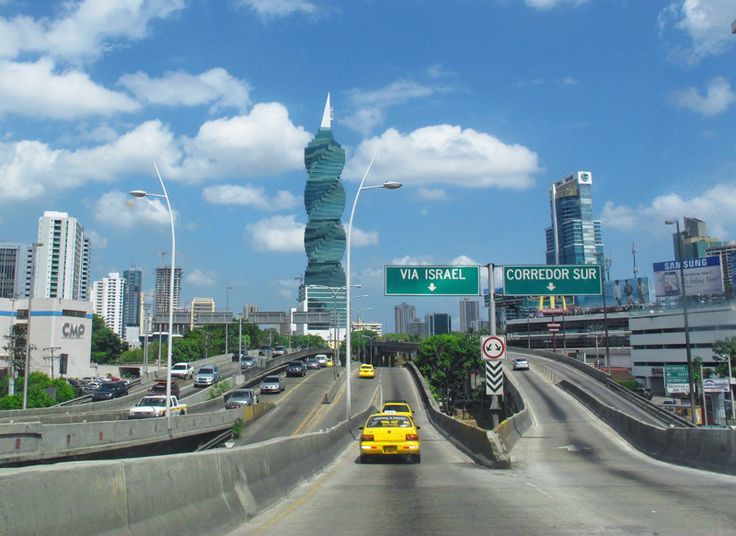
Driving in Panama City is not recommended for visitors. Traffic on the Corredor Sur and Transísmica during rush hours (7–9 AM, 5–7 PM) is genuinely gridlocked. Parking in Casco Viejo is scarce and expensive. Uber and InDriver are cheap, reliable, and available 24 hours. If your itinerary is Panama City only, skip the rental entirely.
Night driving
Avoid it where possible, particularly on rural roads and the Interamericana outside of city limits. Hazards include unmarked speed bumps, livestock on the road (a real and frequent danger), vehicles without working tail lights, and pedestrians in dark clothing. If you must drive at night, reduce speed significantly and use high beams on unlit stretches. The Interamericana between Santiago and David has a documented history of nighttime accidents involving livestock.
Section 06Police checkpoints — what to expect and what to do
Police checkpoints (puestos de control) are common on the Interamericana and on roads entering major towns. They are routine document checks, not targeted stops. Here is the standard procedure:

- Slow down and stop when directed by an officer with a baton or hand signal.
- Roll down your window and greet the officer: "Buenas" is sufficient.
- Have your passport, driving licence, and rental contract ready. The officer will typically ask for "documentos."
- The rental contract serves as proof of vehicle ownership — carry it at all times.
- Do not exit the vehicle unless asked.
- If asked where you are going, answer simply: "Boquete," "David," "Chitré," etc.
- Most stops last under two minutes. Cooperate, stay calm, and you will be waved through.
On the subject of police corruption: it exists in Panama but is less common at tourist-facing checkpoints than in some other Central American countries. If an officer implies a fine can be paid on the spot in cash rather than through official channels, you are being solicited for a bribe. You are not obligated to pay. You can ask for an official ticket (boleta) and pay it at a bank. In practice, most tourists in this situation pay the small amount requested ($5–$20) to move on — that is your call, but know it is not legally required.
Traffic fines for speeding are issued by radar cameras on the Corredor Sur and Corredor Norte in Panama City. Rental companies will pass these fines to you with an administrative fee of $15–$25 on top of the fine itself. Respect the posted limits, which are in km/h: 100 km/h on highways, 80 km/h on secondary roads, 60 km/h through towns.
Section 07Fuel, tolls, and parking
Fuel
Panama uses litres, not gallons. As of mid-2025, regular (91 octane) costs approximately $0.95–$1.05 per litre, which works out to roughly $3.60–$3.95 per US gallon — somewhat cheaper than the US average. Premium (95 octane) runs about $0.10–$0.15 more per litre. Diesel is around $0.85–$0.95/litre.

All rentals are returned full-to-full unless you specifically opt into a prepaid fuel option (avoid it — you will pay above-market rates for the full tank regardless of what you use). Fill up before returning the car. Gas stations are plentiful on the Interamericana; in rural areas, fill up whenever you see a station rather than waiting for the next town.
Tolls
Tolls exist only on roads in and around Panama City — specifically the Corredor Sur, Corredor Norte, and the Autopista Panama-Colón. There are no tolls on the Interamericana west of the city. Toll costs are modest:
| Road | Typical toll | Notes |
|---|---|---|
| Corredor Sur | $0.50–$1.50 | Cash accepted |
| Corredor Norte | $0.50–$1.00 | Cash accepted |
| Autopista Panama-Colón | $2.50–$4.00 one way | Cash or Via card |
Keep small bills and coins in the car for tolls. The Via card (Panama's electronic toll system) is not worth getting for a short visit. A 7-day trip with moderate city driving will cost $10–$15 in tolls total.
Parking
In Panama City, paid parking lots (parqueos) charge $1–$3 per hour in most areas. Casco Viejo has very limited street parking; use the official parqueo on Avenida Central near the entrance to the old city ($2/hour). Malls (Multiplaza, Albrook, Multi Centro) have free parking. In smaller cities and towns across the interior, street parking is generally free and available.
Do not park on red-curb zones or in front of fire hydrants — towing is enforced in Panama City and retrieval from the pound (depósito municipal) is a half-day ordeal involving $60–$100 in fees.
Section 08Car rental vs. shuttles, buses, and Uber
The honest answer is that a rental car is not the right choice for every trip to Panama. Here is a direct comparison:
| Route | Car rental cost | Alternative | Alt. cost | Verdict |
|---|---|---|---|---|
| Panama City → Boquete (one way) | $55–$85/day + fuel | Shared shuttle | $35–$45/person | Shuttle fine for one-way |
| Boquete base, day trips | $55–$85/day | Taxis / tours | $15–$40/trip | Car wins for 3+ days |
| Panama City only | $55–$85/day + parking | Uber / InDriver | $3–$15/ride | Uber wins, always |
| Azuero Peninsula loop | $55–$85/day | No direct shuttle | Buses + taxis | Car wins clearly |
| Panama City → Bocas del Toro | $55–$85/day (useless on islands) | Flight or bus+ferry | $80–$140/person | Skip the car |
| El Valle de Antón day trip | $55–$85/day | Shared shuttle from city | $25–$35/person | Shuttle fine for day trip |
Shared shuttles between Panama City, El Valle, David, Boquete, and Almirante (for Bocas) are operated by companies including Boquete Shuttle, Tropical Tours, and Panama Shuttle Express. They run daily, are air-conditioned, and are reliable enough for most itineraries. The trade-off is fixed departure times and no flexibility to stop along the way.
If your itinerary involves multiple destinations across the country — say, Panama City, then Azuero, then Chiriquí — a rental car for the middle section of the trip (picked up in Santiago or David, not at the airport) can make a lot of sense financially and logistically.
Section 09Where a car genuinely pays off — and where it doesn't
To cut through the noise: here is the clearest possible guidance on when renting a car in Panama is worth the expense and hassle.

Rent a car for:
- The Azuero Peninsula — Chitré, Las Tablas, Pedasi, Playa Venao, and Cambutal are connected by roads with no practical shuttle network. A car is close to essential. Rent AWD if you are going south of Las Tablas.
- Chiriquí highlands based out of Boquete or Volcán — If you want to explore beyond the main towns, visit the coffee farms around Palmira, drive up to Cerro Punta, or reach trailheads independently, a car for 3–5 days is excellent value. A sedan works for the main roads; AWD for anything off the main highway.
- Multi-destination road trips — If you are driving the Interamericana across the country and stopping at multiple points, a car is the only sensible option. Budget 6–7 hours of driving time from Panama City to David.
- Families or groups of four or more — When you split the daily rate four ways, a rental car often undercuts shuttle costs per person while offering far more flexibility.
Skip the car for:
- Panama City — Traffic, parking costs, and the quality of Uber/InDriver make a rental car a net negative here.
- Bocas del Toro — Island destination. A car serves no purpose.
- Boquete as a single base — If you are staying in Boquete for a week and doing guided hikes and coffee tours, local taxis and tour operators cover everything you need. Our guide to things to do in Boquete covers the full range of activities reachable without a car.
- El Valle de Antón as a day trip — Shuttles from Panama City are cheap and frequent. Save the rental budget for a destination that actually needs it.
Whatever you decide, go in with accurate expectations. Panama's mandatory insurance system is not a scam — it is the law, and it applies equally to every visitor. The companies that look cheapest online are not cheaper in reality. Do the math before you book, carry documentation of every pre-existing scratch, and you will have a straightforward experience on roads that, in the right regions, make for genuinely rewarding driving.