Two things happen on a good morning at Finca Lérida: you drink the best coffee of your life, and a resplendent quetzal lands twelve feet above your head. Neither is guaranteed. Both are entirely possible — and that tension is exactly what makes this place worth the trip.
Finca Lérida is a 294-acre coffee estate and cloud-forest reserve sitting at roughly 1,600 to 2,250 metres above sea level on the slopes of Volcán Barú, about 20 minutes by road above the highland town of Boquete. It is simultaneously one of Panama's most celebrated specialty-coffee producers and one of the finest birdwatching sites in all of Central America. Most travel content covers one or the other. This guide covers both — and fills in the logistics that other pages leave out.
Section 01Why Finca Lérida beats every other Boquete birding spot
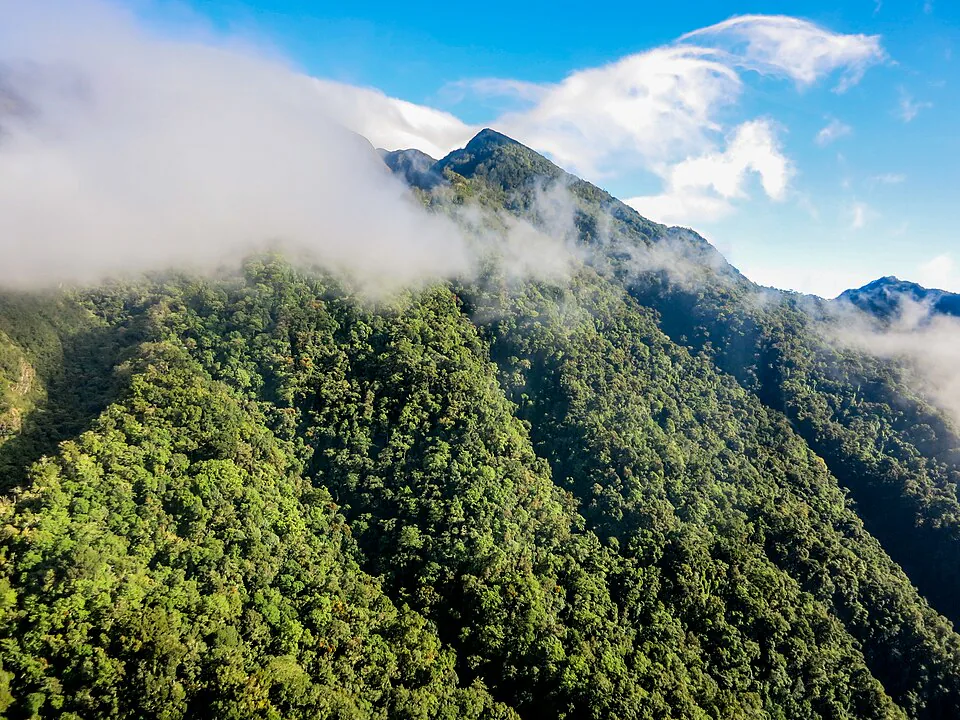
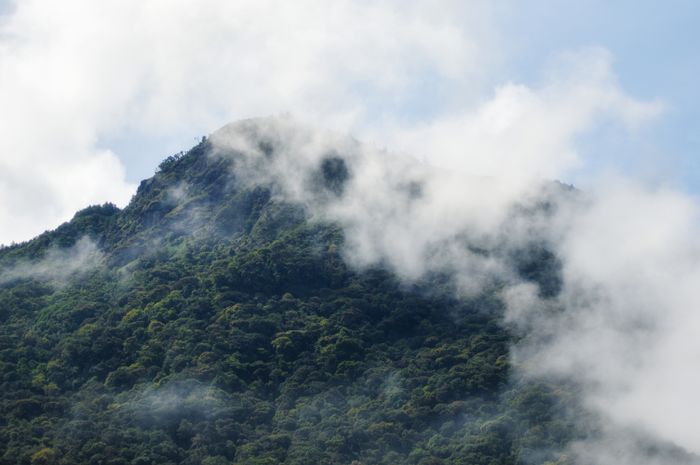
Finca Lérida's competitive advantage is elevation combined with habitat continuity. The estate's private forest reserve connects directly to the buffer zone of La Amistad International Park, a UNESCO World Heritage site that straddles the Panama–Costa Rica border. That means the birds on the property are not isolated — they move through a vast, intact corridor of cloud forest. You are not looking at a fragment; you are looking at the edge of something enormous.
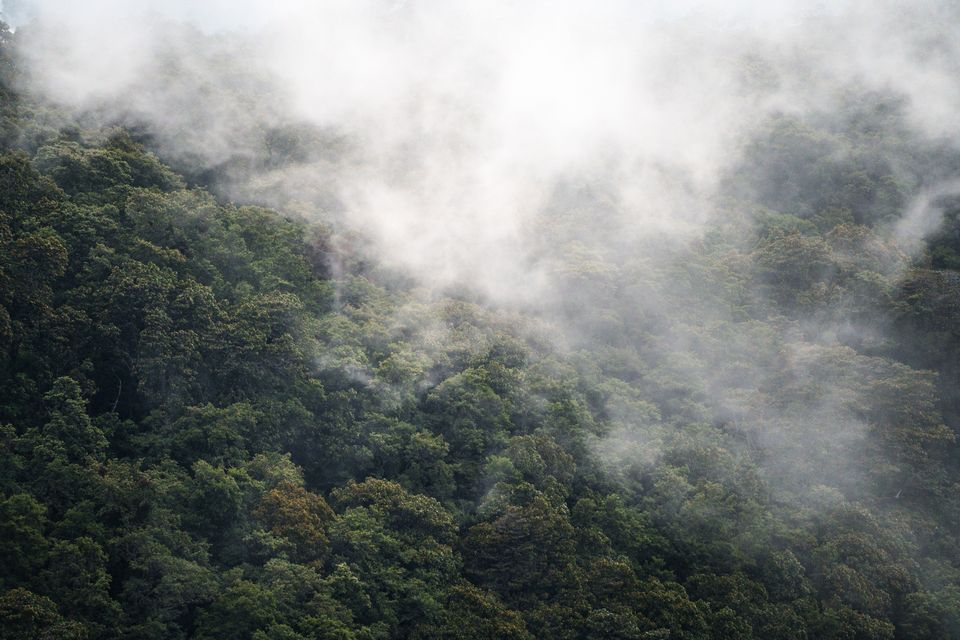
At 1,600–2,250 m, the estate sits squarely in the altitudinal band where the resplendent quetzal is most active. The aguacatillo trees — wild avocados in the genus Persea — that grow throughout the reserve are the quetzal's primary food source during nesting season. The estate has been protecting these trees, and the forest around them, since the 1920s. That long history of conservation is the reason quetzal sightings here are more reliable than at most other Boquete-area sites.
Compare the main alternatives: the Pipeline Trail (lower elevation, better for tanagers and hummingbirds, fewer quetzal sightings), the Pianista Trail (good forest but heavily trafficked and lower down), and independent operators running day trips into Volcán Barú National Park (higher elevation, colder, quetzals present but harder to access). Finca Lérida offers the best combination of reliable quetzal habitat, expert on-site guides, comfortable base, and the ability to be in position at dawn without a long drive.
Section 02The resplendent quetzal: what you actually need to know
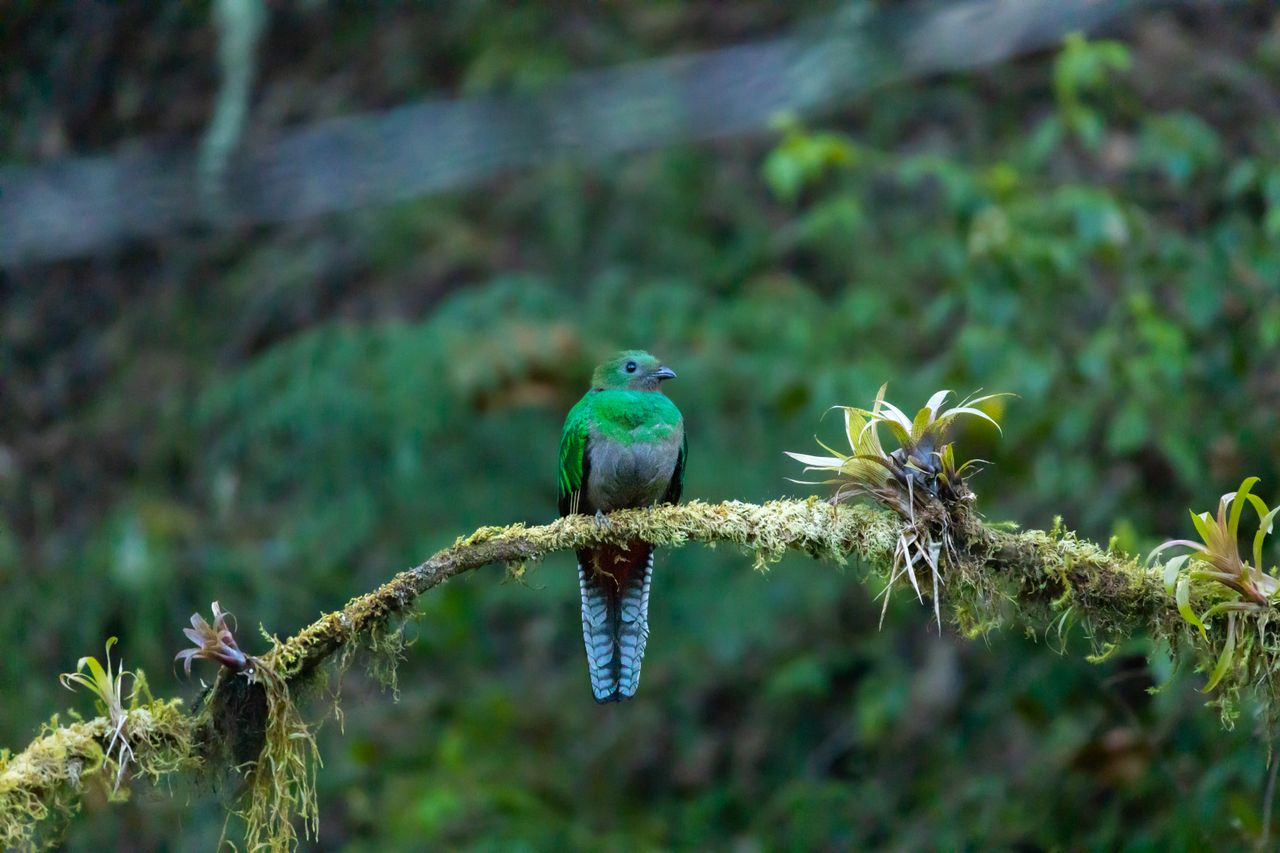
The resplendent quetzal (Pharomachrus mocinno) is not a shy bird — it is a perching bird that sits still for long stretches while it digests fruit. The challenge is not getting close; it is finding one in the first place. Once located, a quetzal will often stay on the same branch for 10 to 20 minutes, giving everyone in the group a clear look. This is why a guide matters so much: they know the trees, they know the calls, and they know which micro-locations have been productive in recent days.

Males are the showstoppers: iridescent emerald-green body, crimson belly, and tail coverts that extend up to a metre beyond the actual tail during breeding season. Females are subtler — green head, barred tail, no long plumes — but no less interesting to watch. Both sexes are present year-round at Finca Lérida, but the density of sightings peaks sharply during nesting season.
Quetzals nest in cavities in dead trees, typically at elevations between 1,500 and 2,500 m. At Finca Lérida, active nests have been documented in the upper reserve, near the boundary with La Amistad. During nesting, the male makes repeated foraging flights to nearby aguacatillo trees, which is why this period produces the most reliable sightings: you find the food tree, you wait, the bird comes to you.
Section 03Month-by-month birding calendar
Boquete's birding is good year-round, but the quetzal calendar drives most visits. Here is what to expect each month at Finca Lérida's elevation:

| Month | Quetzal activity | Trail conditions | Verdict |
|---|---|---|---|
| January | Nesting begins; males displaying | Dry season starting, trails good | Excellent |
| February | Peak nesting, males in full plumage | Dry, clear mornings common | Peak season |
| March | Peak nesting continues | Best dry-season conditions | Peak season |
| April | Chicks hatching; both parents active | First rains possible late month | Excellent |
| May | Fledglings; activity tapering | Rains increasing | Good |
| June–Aug | Post-nesting; birds present but dispersed | Wet, muddy — waterproof gear essential | Moderate |
| Sept–Oct | Lowest density; migration movement | Wettest months, trails slippery | For committed birders |
| November | Pre-nesting movement begins | Rains easing | Good |
| December | Males beginning courtship displays | Dry season approaching | Good |
The window from late January through April is when serious birders schedule their trips. February and March offer the highest probability of seeing males in full breeding plumage — the tail coverts at their longest, the crimson belly at its most vivid — combined with the best trail conditions of the year.
Three rides. One unforgettable Boquete.
Premium Orbea e-bikes that do the climbing for you. Helmet, gloves, water and route support included — and you pay when you arrive.
Coffee Farm E-Bike Tour
Ride to a working farm and see how Geisha — the world's most expensive coffee — is made. Tasting at Altieri Specialty Coffee, geisha ice cream included.
Guided Highlights Ride
Lost Waterfalls, Library Park and the highland viewpoints locals love — the spots most visitors never find.
Self-Paced Rental
Hourly or full-day. Take a recommended route or just wander. The e-bike means hills don't decide your day.
Section 04The other 499 species: highland birds at Finca Lérida
The quetzal gets the headlines, but the supporting cast at Finca Lérida is extraordinary. The Chiriquí highlands sit at the intersection of North and South American avifauna, and the estate's elevation range captures species from multiple habitat zones. Even a moderate birder will log 40 to 60 species on a half-day walk.

Species regularly recorded on the estate include:
- Three-wattled bellbird (Procnias tricarunculatus) — heard before seen; the male's call is one of the loudest bird sounds in the Americas. Listen for it near the forest edge at mid-elevation.
- Black-faced solitaire (Myadestes melanops) — a thrush with a flute-like song that defines the cloud-forest soundscape. Common along shaded trail sections.
- Volcano hummingbird (Selasphorus flammula) — tiny, fast, and endemic to the Chiriquí highlands and adjacent Costa Rica. Look for it at flowering shrubs near the lodge garden.
- Long-tailed silky-flycatcher (Ptiliogonys caudatus) — sleek, crested, and gregarious. Often seen in small flocks in the upper canopy.
- Prong-billed barbet (Semnornis frantzii) — a stocky, loud bird that travels in noisy groups. Unmistakable once you learn the call.
- Flame-colored tanager (Piranga bidentata) — brilliant orange-red; frequently seen around the lodge buildings and café terrace.
- Collared trogon (Trogon collaris) — a close relative of the quetzal, far more common, and a good consolation prize if the quetzal proves elusive.
- Emerald toucanet (Aulacorhynchus prasinus) — green, loud, and usually traveling in pairs through the mid-story canopy.
- Buff-fronted quail-dove (Zentrygon costaricensis) — a ground-dweller, easily missed but regularly seen on the forest floor near the upper trail.
The lodge garden and café terrace are productive even without a guide. Hummingbird feeders attract volcano hummingbirds and scintillant hummingbirds at close range, and the fruit left out by staff draws tanagers throughout the day. If you miss the dawn walk, spend an hour with coffee on the terrace and you will still see a dozen species.
Section 05The Los Quetzales Trail: route, conditions, and honest advice
The Sendero Los Quetzales is a separate entity from Finca Lérida — it is a national park trail that runs through Volcán Barú National Park, connecting the Boquete side of the volcano to Cerro Punta on the Pacific slope. Understanding the distinction matters for planning.

The route
The full Los Quetzales Trail runs approximately 8–9 kilometres one way, with a net elevation loss of around 600 metres when hiked from the Cerro Punta entrance down to the Boquete side. The trail passes through primary cloud forest for most of its length, crossing several streams and skirting the flanks of Volcán Barú at elevations between roughly 2,100 and 2,700 metres. It is not a loop — you exit on the opposite side from where you enter, which requires either a shuttle arrangement or retracing your steps.
Most visitors do the trail as a point-to-point hike, arranging transport at both ends. The Cerro Punta entrance is the more common starting point because the net elevation loss makes the hike easier in that direction. From Boquete, you would need to arrange a taxi or shuttle to the Cerro Punta side (approximately $40–60 one way, depending on the vehicle and negotiation), hike through, and be picked up or take a taxi back from the Boquete trailhead.
Trail conditions — the honest version
The Los Quetzales Trail has a reputation for mud, and it earns it. Even in the dry season, sections of the trail through the cloud forest are wet, rooted, and slippery. In the wet season (May–November), significant sections become genuinely difficult — knee-deep mud in places, stream crossings that can be tricky after heavy rain, and near-zero visibility in cloud. Waterproof boots are not optional; they are mandatory. Trekking poles help considerably.
Trail marking is inconsistent. The main route is generally clear, but junctions are not always well-signed. Solo hiking without prior experience on the trail is not recommended. A guide is strongly advised — not just for birds, but for navigation and safety. Several tour operators in Boquete run guided day trips on the Los Quetzales Trail for approximately $50–80 per person, including transport.
| Route option | Distance | Difficulty | Best for |
|---|---|---|---|
| Cerro Punta → Boquete (full trail) | ~9 km one way | Moderate–hard | Recommended direction |
| Boquete → Cerro Punta (full trail) | ~9 km one way | Hard (net climb) | Fit hikers only |
| Boquete trailhead out-and-back | 4–6 km | Moderate | Day visitors, birding focus |
| Finca Lérida private trails | 2–5 km | Easy–moderate | Best for quetzal sightings |
Here is the key planning insight that most guides miss: the Los Quetzales Trail and Finca Lérida's private trail network are not the same thing. Finca Lérida's own trails — accessible to hotel guests and tour participants — run through the estate's private reserve and are generally better maintained, shorter, and more productive for quetzal sightings than the national park trail. If your primary goal is seeing the resplendent quetzal, Finca Lérida's private trails with a local guide will outperform a solo hike on the Los Quetzales Trail almost every time.
Section 06Birding tours at Finca Lérida: what's included and what it costs
Finca Lérida runs its birdwatching experience as a structured morning tour. The format: depart at 8:00 a.m., duration approximately 4.5 hours, led by a naturalist guide with deep knowledge of the estate's trails and bird populations. A light lunch is included. The tour covers the private reserve trails, with route adjustments based on recent sightings and seasonal conditions.

Pricing for the guided birdwatching tour is approximately $60 per person for non-guests, with variations depending on group size and whether you are staying on the property. Hotel guests typically receive priority booking and may access the trails independently outside of tour hours. Reservations are strongly recommended — walk-in availability is limited, especially January through April.
The coffee tour, which covers the estate's processing facilities and includes a cupping session, runs separately and costs approximately $30 per person. Many visitors combine both in a single day: birdwatching in the morning, coffee tour in the early afternoon. This is an efficient use of time and gives you the full Finca Lérida experience. Read more about the coffee side of the estate in our guide to Boquete coffee farm tours.
For visitors who want a more intensive birding experience — multiple days, targeted species lists, pre-dawn starts — independent birding guides operating out of Boquete can be hired for $100–150 per person per day. These specialists often have relationships with Finca Lérida and can arrange access. The higher price reflects genuine expertise: these are guides who know the difference between a collared trogon and a lattice-tailed trogon at 200 metres in low light.
Section 07Getting to Finca Lérida from Boquete
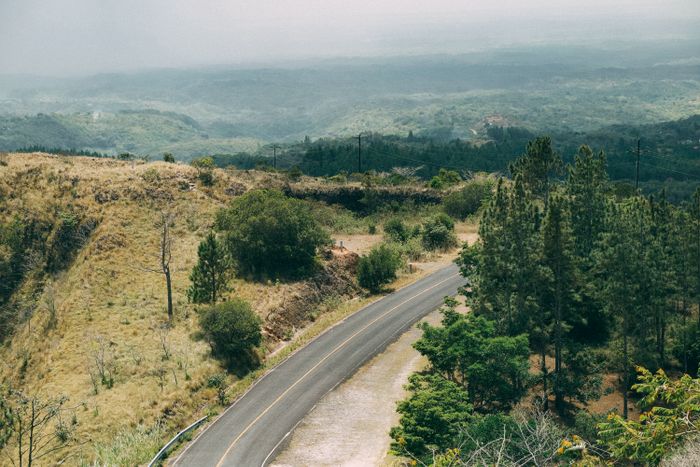
Finca Lérida sits approximately 8 kilometres above Boquete town on a paved road that climbs steeply through coffee farms and secondary forest. The drive takes 20 minutes by car. A taxi from central Boquete costs $8–10 each way — agree on the price before you get in. Most taxi drivers in Boquete know the estate well; it is one of the town's most visited destinations.
There is no regular bus service to the estate. Renting a car in David (the nearest city, about 45 minutes from Boquete) gives you flexibility, but the road is steep and winding — drive carefully in wet conditions. Walking from town is possible but takes 1.5–2 hours uphill and is not practical for an early-morning birding start.
If you want to enjoy the approach at your own pace without the logistics of a car or taxi, E-Valley Bikes operates e-bike tours in the Boquete area that can get you up into the highlands comfortably — a good option for the return leg when you have gravity on your side and want to take in the coffee-farm scenery at a slower pace.
For the Los Quetzales Trail specifically, transport logistics are more complex. If you plan to hike point-to-point from Cerro Punta to Boquete, you need to arrange a taxi or shuttle to Cerro Punta the evening before or very early in the morning. Most Boquete-based tour operators who run Los Quetzales Trail trips handle this transport as part of the package — it is one of the strongest arguments for booking a guided trip rather than going independently.
| Route | Cost | Time | Verdict |
|---|---|---|---|
| Taxi from Boquete town | $8–10 | 20 min | Easiest |
| Rental car from David | $40–60/day | 1 hr total | Most flexible |
| Guided tour with transport | Included in tour price | Varies | Best value |
| Walking from Boquete | Free | 1.5–2 hrs uphill | Not for early starts |
Section 08What to bring: the practical checklist
Cloud forest at 1,600–2,250 m is not tropical beach weather. Boquete's highlands can be cold, wet, and misty even in the dry season — and temperatures drop further as you gain elevation on the Los Quetzales Trail. Prepare accordingly.
- Waterproof hiking boots — non-negotiable for the Los Quetzales Trail; strongly recommended for Finca Lérida's upper trails. Trail runners are acceptable in dry conditions on the estate.
- Waterproof jacket — cloud forest generates its own rain. Even on clear mornings, mist can soak you within an hour.
- Layers — a fleece or light down jacket for the pre-dawn start; you will warm up once moving, but the first hour can be cold at 14–16°C.
- Binoculars — 8x42 is the standard birding specification. Finca Lérida's guides carry binoculars, but having your own means you never have to wait for a look.
- Camera with a long lens — 400mm equivalent minimum if you want frame-filling quetzal shots. Shorter lenses will capture the experience but not the detail.
- Insect repellent — the cloud forest has mosquitoes, especially in the wet season and near stream crossings on the Los Quetzales Trail.
- Trekking poles — optional at Finca Lérida, strongly recommended on the Los Quetzales Trail in wet conditions.
- Cash — for the national park entry fee ($5), taxi fares, and any purchases at the estate café. Card acceptance in the highlands is unreliable.
- eBird app — download the Finca Lérida hotspot checklist before you go. It doubles as a field guide and lets you contribute to the global bird record.
Section 09Staying at Finca Lérida and where to eat
Finca Lérida operates a boutique hotel on the estate — a cluster of well-appointed bungalows and rooms set among the coffee plants and gardens. Staying on-site is the single biggest advantage you can give yourself as a birder: you are in position for the dawn chorus without a taxi ride, you can do a solo walk in the garden before breakfast, and you have access to the trails throughout the day. Rates start at approximately $150–180 per night for a double room, including breakfast. The hotel is managed by the Cayuga Collection, which maintains consistent quality across its Central American properties.
The on-site restaurant, La Brulerie, serves estate-grown coffee and a menu that leans toward international comfort food with local ingredients. It is one of the better restaurants in the Boquete area — not a consolation-prize hotel dining room. The terrace is the best bird-watching seat in the house: flame-colored tanagers and hummingbirds work the feeders while you eat. Budget approximately $15–25 per person for a full meal with drinks.
If you are not staying at Finca Lérida, Boquete town has a solid range of accommodation at every price point — from backpacker hostels at $15–20 per night to boutique guesthouses at $80–120. The town is small enough that you can walk to most restaurants and services, and taxis to the estate are always available. For a deeper look at what to do while you are based in Boquete, see our guide to hiking in Boquete, which covers the Pipeline Trail, the Lost Waterfalls, and the Pianista Trail alongside the Los Quetzales route.
One practical note on connectivity: mobile signal at Finca Lérida is weak, and in-room Wi-Fi can be spotty. This is not a bug — it is a feature. The estate's isolation is part of what makes the birding good. Download your eBird checklists, offline maps, and any field guides before you leave Boquete town.